Maxim (Musician) Biography: Early Life, The Prodigy, Career, Family, Art and Net Worth

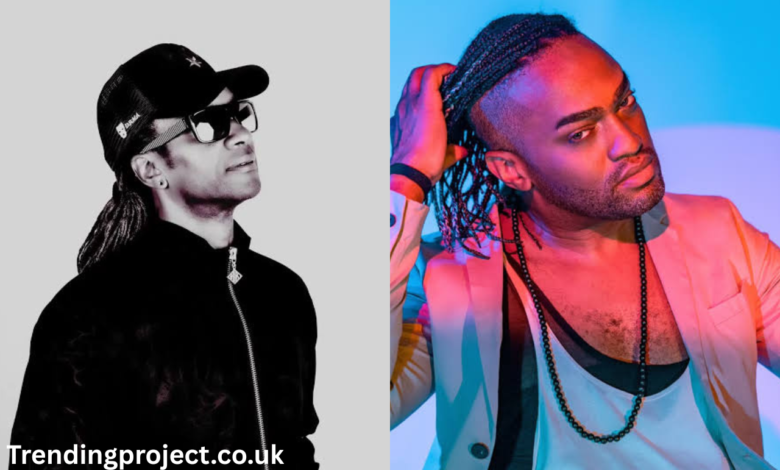
There are performers who sing songs, performers who entertain crowds, and then there are performers who seem to physically change the atmosphere of an entire room. Maxim, born Keith Andrew Palmer, belongs firmly in the third category. For decades, the British musician has stood at the heart of The Prodigy’s famously explosive live performances, using his powerful MC delivery, unpredictable stage presence and unmistakable personality to turn electronic music into something visceral and almost theatrical. His journey from the reggae soundsystem culture of Peterborough to some of the world’s biggest festival stages is one of British electronic music’s most fascinating stories.
Table of Contents
ToggleMaxim’s career is particularly interesting because he did not begin as a conventional pop vocalist. His roots were in MCing, reggae, poetry, hip-hop and soundsystem culture, long before The Prodigy became an international electronic-music powerhouse. He started MCing as a teenager after being influenced by his older brother, and those early experiences gave him an understanding of rhythm, crowd control and live performance that would later become central to his identity. AllMusic describes him as an MC and lyricist renowned for intense live performances, while biographical material about his early career traces his musical development back to Peterborough and reggae culture.
What makes Maxim’s story even more compelling is the way his career has continually expanded. He became a key member of The Prodigy, contributed lyrics and vocals to some of the band’s best-known work, developed a solo career, explored DJing and production, and eventually established himself as a visual artist under the name MM. Rather than remaining locked into one definition of what a musician should be, he has repeatedly experimented with different forms of creativity. That willingness to evolve has helped him remain relevant across several generations of dance and electronic music.
Maxim Musician Facts at a Glance
| Category | Details |
|---|---|
| Full Name | Keith Andrew Palmer |
| Known As | Maxim |
| Former Stage Name | Maxim Reality |
| Born | March 21, 1967 |
| Age | 59 years old in 2026 |
| Birthplace | Peterborough, England |
| Nationality | British |
| Profession | Musician, MC, vocalist, lyricist, DJ, producer and visual artist |
| Best Known For | The Prodigy |
| Genres | Electronic, big beat, breakbeat, trip hop and related styles |
| Early Influence | His older brother and Peterborough reggae soundsystem culture |
| Parents | Public biographies identify his family as having Barbadian/Jamaican Caribbean roots; individual parental names are not reliably documented |
| Siblings | He grew up as one of seven children |
| Wife | Lindz |
| Children | Yes; Maxim generally keeps his children’s private lives away from the spotlight |
| Solo Work | Music releases, DJ projects and production |
| Visual Art Name | MM |
| Estimated Net Worth | No independently verified figure; online estimates should be treated cautiously |
| Current Group | The Prodigy |
| Active Since | 1980s |
| Official Band Presence | The Prodigy official website and social channels |
Who Is Maxim?
Maxim is a British musician, MC and vocalist best known for his role in The Prodigy, the electronic group that became one of Britain’s most influential rave and dance acts. His real name is Keith Andrew Palmer, and he was born in Peterborough on March 21, 1967. While Liam Howlett became synonymous with The Prodigy’s electronic production and Keith Flint became one of its most recognizable visual personalities, Maxim developed a different but equally important role: he became the band’s commanding MC and one of its most distinctive live performers.
The term “MC” can sometimes make Maxim’s contribution sound simpler than it really was. His performance style was not merely about introducing songs or speaking between tracks. He became part of the music itself, using rhythm, repetition, shouted phrases and physical movement to drive the audience forward. His approach was heavily informed by soundsystem culture, where the relationship between performer, music and crowd is central to the experience.
Maxim’s career also demonstrates how different musical cultures can overlap. His early relationship with reggae and hip-hop eventually met The Prodigy’s rave-driven electronic sound, creating something that did not fit neatly into one category. In interviews, he has spoken about how genres that once existed separately increasingly began to merge during the 1990s. His own career became an example of that musical crossover.
Early Life in Peterborough
Keith Andrew Palmer was born in Peterborough, England, in 1967. Biographical accounts describe him as growing up in a large family and being surrounded by a diverse community. Rather than being exposed to just one musical tradition, he encountered reggae, soul, ska, punk and hip-hop during his formative years. That cultural variety would eventually become one of the most important ingredients in his artistic identity.
His older brother, an experienced MC known as Hitman, was particularly influential. Maxim watched him perform within the local reggae soundsystem scene and became fascinated by the way an MC could control a crowd using nothing more than a microphone, timing and personality. Around the age of 14, Maxim began developing his own MC skills. He was also interested in writing poetry and verse, which gave his early performances a lyrical foundation beyond simple crowd interaction.
The Peterborough of Maxim’s youth was therefore much more than a geographical starting point. It became a kind of informal musical classroom. He experienced the energy of reggae soundsystems while also encountering the fashion and attitude of ska, the emerging influence of hip-hop and the rebellious spirit of punk. Looking back, it is easy to see how those seemingly different influences prepared him for The Prodigy’s genre-defying sound.
Education, Poetry and His First Musical Ambitions
Maxim attended Jack Hunt secondary school in Peterborough, but some of his most significant creative education happened outside school. He developed an interest in writing and became increasingly fascinated by words, rhythm and the ability of lyrics to describe real-life situations. Later interviews revealed that the “Reality” part of his earlier stage name, Maxim Reality, was connected to his interest in writing about real issues and contemporary life.
As a young writer, he was interested in subjects that went beyond entertainment. His lyrics could address social situations and issues affecting ordinary people. He has explained that he originally used the name Maxim Reality because “maxim” represented a principle or saying, while “reality” reflected his desire to write about things happening in the real world. Eventually, as his career became more entertainment-focused, he shortened the name to simply Maxim.
His early development demonstrates something important about his personality: he was interested in creative freedom rather than a single musical identity. He could appreciate reggae while exploring hip-hop, absorb punk aesthetics while developing an MC style, and later move into electronic music without abandoning his earlier influences. This flexibility would become one of his greatest strengths.
Becoming an MC
Maxim’s first major step into live performance came while he was still young. According to biographical sources, he performed his first gig in Basingstoke at around 17. He later formed Maxim and Sheik YanGroove with Nottingham musician Ian Sherman, with Sherman handling much of the music while Maxim concentrated on lyrics and vocals. The project did not immediately receive the record-industry attention they hoped for, but the experience gave Maxim valuable knowledge about songwriting and collaboration.
Rather than abandoning music after that early disappointment, Maxim took time away from the scene. He travelled through Europe and North Africa for several months before returning to England and moving toward London’s music environment. His journey was important because it gave him distance from his previous experiences and allowed him to reconsider what he wanted from music.
After moving to London, he became involved with reggae music and worked as a sound engineer at reggae soundsystem festivals. This behind-the-scenes experience was significant. He was not only learning how to perform in front of a crowd; he was learning how live sound systems functioned and how audiences responded to different forms of music.
How Maxim Joined The Prodigy
Maxim’s connection with The Prodigy came around 1990, when the group was developing its live identity. A mutual friend named Ziggy connected him with the Essex rave act, which needed an MC for a live performance. The arrangement was initially supposed to be temporary, but Maxim’s contribution immediately had an impact.
The first performance was an unusual situation. Maxim had not spent years rehearsing with the group, and according to the band’s historical accounts, the first show happened with very little preparation. He stepped onto the stage and worked the microphone while Liam Howlett and the rest of the performers delivered the music. The audience reaction convinced the people involved that something special had happened.
What was supposed to be a few performances gradually became a permanent position. Maxim had found a musical environment where his MC skills could operate at a completely different scale. The Prodigy’s electronic music provided an intense rhythmic foundation, while Maxim supplied the human voice, attitude and crowd interaction that helped transform the group’s concerts into chaotic, physical experiences.
Maxim’s Role in The Prodigy
The Prodigy’s sound was built around Liam Howlett’s electronic production, but Maxim became an essential part of the band’s identity. His contribution was especially important in live performances, where he could react to the crowd and adapt his delivery to the energy of the moment. His style relied heavily on short, sharp phrases rather than long traditional verses, creating a performance language that was immediately recognizable.
His work also moved into the studio. Maxim contributed lyrics to important Prodigy recordings following the band’s early Experience period. His contributions included “Poison” from Music for the Jilted Generation and “Breathe” and “Mindfields” associated with The Fat of the Land. These tracks helped demonstrate that his role extended beyond being a live MC.
Interestingly, Maxim was absent from the 2004 album Always Outnumbered, Never Outgunned. Liam Howlett wanted to approach that record differently and deliberately created an album without vocals from Maxim or Keith Flint. Maxim subsequently concentrated more heavily on his own projects before returning to the Prodigy’s lineup for Invaders Must Die. That return showed how closely his identity remained connected to the group.
The Fat of the Land and Global Fame
The Prodigy’s international breakthrough turned Maxim from a respected underground MC into a globally recognized performer. The Fat of the Land, released in 1997, became a landmark electronic album and helped bring the band’s aggressive combination of breakbeats, rave production, punk attitude and vocal performance to a huge international audience.
For Maxim, this period represented a dramatic change from the local soundsystem culture where his career had begun. He was now performing for massive crowds rather than small venues and reggae gatherings. His intense stage persona became an important part of The Prodigy’s visual identity, especially alongside Keith Flint’s equally theatrical presence.
The significance of this period goes beyond commercial success. The Prodigy helped challenge the idea that electronic music had to be anonymous or purely DJ-focused. The band brought the physicality of punk and rock performance into electronic music, and Maxim was one of the people responsible for making that transition convincing.
Maxim’s Unique Stage Presence
Maxim’s greatest gift may be his ability to make a crowd feel as though he is speaking directly to them. His MC style is based on energy rather than conventional singing technique. He can deliver short vocal phrases, screams and rhythmic commands that become part of the beat itself.
He has described his stage energy as something that comes partly from the music and partly from his personality. In an interview, he jokingly insisted that nobody performs exactly as he does, but behind the humor is a serious artistic principle: Maxim developed a highly individual performance style rather than trying to imitate another MC.
His appearance also became part of that identity. Over the years he experimented with unusual clothing, hairstyles, makeup and accessories. The goal was never simply to look fashionable. He wanted to create a slightly intimidating, unpredictable character capable of matching the intensity of The Prodigy’s music. That theatrical instinct helped make his live performances memorable even for audiences who might not have known the songs beforehand.
Maxim’s Solo Music Career
The Prodigy provided Maxim with an international platform, but he always maintained ambitions outside the band. He had been writing music and lyrics for years and gradually began developing production skills so that he could create music without depending entirely on another producer. His solo career eventually became another important chapter of his artistic development.
His first solo album arrived around 2000, following years of experimentation and earlier limited releases. His solo material allowed him to explore hip-hop, electronic music, trip hop, dub and other influences in ways that were not necessarily possible within The Prodigy’s framework.
One particularly interesting project was Animal Anger, which reflected his continuing interest in heavy, experimental dance music. Maxim explained that he creates because creativity is essential to him and that he enjoys challenging himself rather than simply repeating an established formula.
Maxim as a DJ and Producer
Production became increasingly important to Maxim because he wanted greater control over the relationship between his lyrics and the music supporting them. Rather than waiting for another producer to create a track, he began learning how to construct his own musical foundations. This allowed him to experiment with sounds that reflected his personal interests.
He also explored DJing, although his relationship with it differed from his role as an MC. Maxim explained that performing with The Prodigy gave him an extraordinary degree of direct crowd control, whereas DJing allowed him to stand back and observe how people responded to the music. Both experiences offered different forms of creative satisfaction.
His production philosophy is also revealing. When asked about the equipment he uses, he essentially emphasized the importance of sound rather than obsessing over a specific piece of technology. That attitude fits his wider approach to creativity: the tool matters less than what an artist can do with it.
Maxim’s Career as a Visual Artist
Music is only one part of Maxim’s creative life. He also became a visual artist under the name MM, eventually developing a body of paintings and mixed-media work. His interest in painting began around 2002, initially because he wanted artwork for his home and decided to make it himself rather than simply buying something.
What started as a personal project became a serious artistic pursuit. Maxim experimented with unusual materials including glue, paper, ink and tar, creating dark and sometimes unsettling imagery. He described painting as a form of freedom because it allowed his imagination to operate without the same restrictions he experienced elsewhere.
His first public exhibition, LepidopTerror, took place at I.N.C. Space in Covent Garden, London, in September 2011. The exhibition explored sinister butterfly imagery and combined visual art with an immersive atmosphere. This was more than a celebrity musician casually displaying paintings; it represented another genuine creative discipline that Maxim had developed over years.
Family, Marriage and Personal Life
Despite spending much of his professional life in front of huge audiences, Maxim has generally maintained a degree of privacy around his family. He is married to Lindz and has children, but he has avoided turning his family into a major part of his celebrity persona. This separation between public performance and private life has allowed him to maintain some normality despite decades of international fame.
Earlier biographical material reported that Maxim became a father to a son named Kai in 1999. More recent profiles have continued to emphasize that he lives with his wife and children while keeping many personal details private. Because information about his family is not extensively documented through primary sources, it is more responsible to avoid presenting unverified claims about his children’s lives as fact.
His personality away from the stage can also be surprisingly different from the frightening, aggressive figure audiences see during Prodigy performances. Interviews have shown a more reflective and humorous side, with interests ranging from home life and art to music, design and everyday objects. That contrast is part of what makes Maxim such an interesting personality: the theatrical monster on stage is only one part of the person behind the microphone.
Maxim’s Net Worth and Income
Determining Maxim’s exact net worth is difficult because he does not publicly release detailed financial statements. Online celebrity-estimate websites sometimes provide specific figures, but these numbers are generally not supported by audited accounts, tax records or direct statements from Maxim. For that reason, an exact net worth should not be presented as confirmed fact.
His career has nevertheless provided several potential income streams over more than three decades. These include The Prodigy’s recordings, publishing and songwriting royalties, touring, live appearances, solo releases, DJ work, production, merchandise and visual-art projects. His long-term membership in one of Britain’s most commercially successful electronic acts is obviously an important part of his professional earning history.
The most useful way to understand Maxim’s financial success is therefore not to focus on an uncertain number, but on the breadth and longevity of his career. He has remained active across music and visual art for decades, giving him multiple creative and commercial avenues rather than relying on a single source of income.
Maxim on Social Media and With His Fans
Social media has given Maxim another way to remain connected with audiences beyond concerts. His online presence has historically included platforms such as Instagram, Twitter and Facebook, while The Prodigy’s official digital channels remain particularly important for announcements concerning tours, releases and performances.
For Maxim, social media fits naturally into a career that has always depended on direct audience interaction. His stage performances are built around communication with crowds, and digital platforms extend that relationship beyond the venue. Fans can follow new projects, live appearances, artwork and Prodigy-related announcements without waiting for traditional music media.
The Prodigy’s official website currently provides the clearest source for major band developments. In particular, the band’s 2026 Warriors Dance events in Dublin, Milton Keynes, Edinburgh and Manchester demonstrate that Maxim remains firmly involved in the group’s current touring plans.
Maxim and The Prodigy in 2026
Maxim’s story is far from finished. In 2026, he continues to perform with The Prodigy, and the group has announced its Warriors Dance summer events across the UK and Ireland. The official announcement describes four major dates, including performances in Dublin, Milton Keynes, Edinburgh and Manchester, with major guest artists joining the celebrations.
These performances are particularly meaningful because The Prodigy has continued its journey after the death of Keith Flint in 2019. Maxim and Liam Howlett have had to carry forward the band’s identity while acknowledging the enormous absence of their longtime bandmate. Their decision to continue performing demonstrates how strongly they believe in the music and in the connection they have built with fans over the years.
The 2026 period therefore represents another transformation in Maxim’s career. He is no longer simply the young Peterborough MC who discovered reggae soundsystems as a teenager. He is now a veteran performer whose career stretches across rave, electronic rock, hip-hop, reggae, DJ culture, production and visual art. Yet he continues to occupy the microphone and bring the same intensity to audiences.
The Legacy of Maxim
Maxim’s influence is difficult to reduce to a single song or album. His importance comes from helping establish the idea that an electronic-music performer could be as physically commanding as a rock frontman. The Prodigy’s concerts were not passive listening experiences, and Maxim’s voice became one of the tools through which that philosophy was communicated.
His career also represents the power of musical crossover. He brought reggae soundsystem techniques into an electronic-rock environment and combined them with hip-hop instincts, rave culture and punk energy. The result was not simply a mixture of genres but a new performance language that helped define The Prodigy’s identity.
Perhaps the strongest lesson from Maxim’s career is the value of refusing to become predictable. He moved from poetry to MCing, from reggae to rave, from The Prodigy to solo music, from production to DJing and from music into visual art. Each chapter added another layer to his creative identity rather than replacing what came before.
Conclusion: The Lasting Impact of Maxim
Maxim’s journey from Peterborough teenager to internationally recognized electronic-music performer is a powerful example of what can happen when natural talent is combined with curiosity and persistence. He did not begin with the certainty that he would become part of one of Britain’s most important electronic acts. Instead, he developed his skills gradually through poetry, reggae soundsystems, local performances, experimentation and years of learning.
His contribution to The Prodigy helped redefine what an electronic live performer could be. While Liam Howlett supplied the production and Keith Flint became an unforgettable visual icon, Maxim provided the voice, crowd control and raw physical energy that helped make the band’s concerts legendary. His later solo work and visual-art career further demonstrated that his creativity could not be confined to one group or genre.
As Maxim continues to perform with The Prodigy in 2026, his story remains unfinished. His career is a reminder that longevity does not necessarily come from repeating the past; sometimes it comes from continuing to explore new forms while protecting the qualities that made you unique in the first place. From the microphone of a young MC in Peterborough to enormous international stages, Maxim has built a legacy around creativity, individuality, resilience and an uncompromising connection with the crowd. And that may ultimately be the most important lesson of his journey: a distinctive voice, when nurtured with passion and persistence, can continue to be heard long after the world that first discovered it has changed.