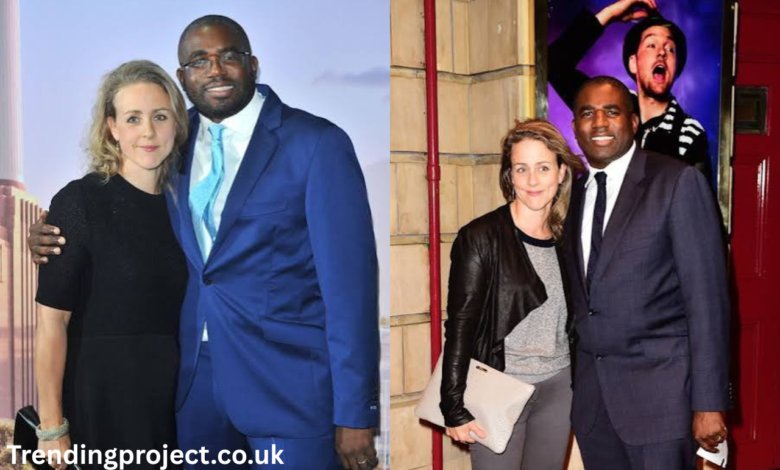
For many people searching for David Lammy’s wife, the name Nicola Green first appears because of her connection to one of Britain’s most prominent political figures. But there is a much more interesting story behind that familiar search term. Nicola Green is an accomplished British artist, social historian and public speaker whose career has taken her into the worlds of politics, religion, culture, identity and social history. Her work has brought her unusually close to some of the most influential people and historic moments of the modern era, including Barack Obama’s 2008 presidential campaign and meetings with major religious leaders around the world.
Green’s professional life is particularly distinctive because she has never treated portraiture simply as a way of creating attractive pictures of famous people. Instead, she uses visual storytelling to explore how individuals, communities and societies understand identity, power, race, religion and belonging. Her official biography describes her as an artist and social historian working at the intersection of contemporary visual storytelling and traditional portraiture. That approach has resulted in work held by institutions including the Metropolitan Museum of Art, the Smithsonian National Portrait Gallery, the Library of Congress and the UK Government Art Collection.
Her marriage to David Lammy has naturally brought additional public attention, especially as Lammy’s political career has progressed into senior government positions. The couple married in 2005 and have three children. Yet Nicola Green has developed a substantial reputation independently of her husband’s political career. Her story is therefore not simply one of being the spouse of a politician; it is the story of an artist who has spent decades documenting people, movements and ideas that she believes will matter to future generations.
Who Is Nicola Green?
Nicola Green is a British artist and social historian born in 1972. Her career has developed around portraiture, visual storytelling and research, but her work has increasingly expanded into questions of history and society. Rather than limiting herself to traditional studio portraiture, Green has created ambitious bodies of work that combine paintings, prints, research, interviews, photography, observation and archival material. Her objective is often to capture not merely what a famous individual looks like, but what that person or moment represents within a much larger historical story.
One of the most defining ideas in Green’s career is the concept of the artist as a witness. She has described her motivation as wanting to record important moments while they are happening and preserve them for future generations. This philosophy became especially significant during her documentation of Barack Obama’s presidential campaign. Instead of approaching the campaign purely as a journalist, Green observed the people, atmosphere and historic circumstances surrounding it and later transformed those observations into a major artistic archive.
Her work has also given her access to extraordinary international figures. Through Encounters, she spent years meeting and documenting religious leaders representing different faith traditions, including Pope Francis, the Dalai Lama, Archbishop Desmond Tutu and Chief Rabbi Jonathan Sacks. These experiences helped establish Green as an artist whose work extends beyond conventional portrait painting into social history, interfaith dialogue and cultural representation.
Early Life and Family Background
Nicola Green was born in Britain in 1972 and grew up in a family with a strong intellectual and cultural background. Her father was Sir Malcolm Green, a respected British physician, while her mother was Julieta Preston. Her family environment gave her exposure to different perspectives and interests, something that would later become relevant to the subjects she explored through art and social history.
Green’s background is also associated with multiple religious and cultural traditions. Her published biographies describe Jewish, Russian Orthodox and Anglican elements within her heritage. Her own exploration of faith and identity later became relevant to her artistic work, particularly Encounters, which examined relationships among different religious traditions and the people who represent them. Rather than treating identity as a simple label, Green’s work frequently explores how identity develops through family, culture, history and personal experience.
Her interest in art eventually led her to the Edinburgh College of Art, where she studied drawing and painting. According to her professional biography, she earned a Bachelor of Arts with First Class Honours in Drawing and Painting in 1996 and later completed a Master of Fine Arts with First Class Distinction in 1998. She also received scholarships during her studies, providing an early indication of the serious artistic path she was beginning to establish.
Education and Artistic Development
Green’s education at Edinburgh College of Art gave her a strong foundation in traditional drawing and painting. Her formal training was important because portraiture demands close observation, technical control and an ability to understand a subject beyond surface appearance. These skills would later become fundamental to her work with political leaders, religious figures and communities.
Her academic background also encouraged a broader understanding of visual culture. Green did not remain confined to producing isolated portraits. Over time, she developed projects involving research, historical interpretation and extensive documentation. Her career consequently became increasingly interdisciplinary, bringing together visual art and social history in ways that allowed her to investigate questions that a conventional portrait commission might not address.
This evolution is one of the most important aspects of Green’s career. She began with the traditional language of painting and portraiture but gradually transformed it into something more ambitious. Her later projects demonstrate a desire to understand why particular people become historically significant and how images can influence the way future generations remember them.
Nicola Green and David Lammy: Marriage and Family
Nicola Green married British politician David Lammy in 2005. By that point, Lammy had already established himself as a Labour politician and Member of Parliament for Tottenham, while Green was developing her career as an artist. Their marriage connected two very different professional worlds: politics and visual culture.
The couple have three children, including two sons and an adopted daughter. Their family life has generally remained more private than Lammy’s political career, and neither Green nor Lammy has made their children the centre of their public identities. This relative privacy is particularly notable because Lammy has spent much of his adult life under intense political and media scrutiny.
There is nevertheless an interesting connection between Green’s family life and her artistic work. Her official speaking biography says her work has been inspired in part by her mixed-heritage children and multi-faith family. This perspective helped shape her interest in representation, identity and how young people understand themselves in an increasingly diverse society.
Nicola Green’s Career as a Portrait Artist
Green’s early professional career established her as a serious portrait artist. Her work appeared in exhibitions associated with the BP Portrait Award, including exhibitions in 2006 and 2008. These appearances helped place her within the British portrait tradition and gave her work wider exposure through major galleries and touring exhibitions.
But Green’s ambitions soon extended beyond producing individual portraits. She became increasingly interested in how art could document historical events and social transformation. Instead of simply asking how to portray a person, she began exploring how a collection of images could preserve an entire story. This shift eventually produced some of the most significant projects of her career.
Her approach has also made her work attractive to major cultural institutions. Her portfolio is represented in public collections around the world, including the Smithsonian National Portrait Gallery, Metropolitan Museum of Art, Library of Congress, Courtauld Institute of Art and other museums and collections.
In Seven Days: Nicola Green and Barack Obama
One of Nicola Green’s most important achievements is In Seven Days…, a major artistic project documenting Barack Obama’s historic 2008 presidential campaign. Between August 2008 and January 2009, Green travelled across the United States on six trips, following Obama’s campaign from major events through election night and ultimately the inauguration in Washington, D.C.
What made Green’s access unusual was that she was not simply working as a conventional journalist or commissioned press photographer. She observed the campaign from a different perspective, making sketches, taking photographs and speaking with people around the campaign. Her goal was to understand the deeper historical meaning of what was happening rather than merely capture the most obvious political images.
The personal dimension was equally important. Green has explained that becoming a mother made her think deeply about how her mixed-heritage children might experience the world and how they might understand race and representation. Obama’s campaign therefore became more than a political story for her; it became an opportunity to consider history, identity and what his election might mean for future generations.
The Historical Importance of In Seven Days
Green eventually transformed her observations into a series of seven large silkscreen prints. Each stage of the work represented a different part of the emotional and historical journey surrounding Obama’s campaign, while the complete project became a visual record of a defining period in American political history.
The work was subsequently acquired by important cultural institutions. In Seven Days… is held in the permanent collections of the Smithsonian National Portrait Gallery, the Metropolitan Museum of Art, the Library of Congress, the International Slavery Museum and the Walker Art Gallery. Such institutional recognition has helped establish the project as more than contemporary political artwork; it is also treated as a historical document.
The significance of the project lies partly in its ability to connect a specific political event with broader questions about democracy, race, representation and collective action. Green’s work asks viewers to consider not only what happened during Obama’s campaign but also why that moment mattered and how its meaning could evolve over time.
Encounters and Global Religious Leaders
Another landmark project in Green’s career is Encounters, a long-term body of work involving major religious leaders. Green spent roughly a decade travelling and meeting representatives of different faith traditions while documenting changes in the ways religious communities interact with one another.
Her subjects included Pope Francis, the Dalai Lama, Archbishop Desmond Tutu, Archbishop of Canterbury Rowan Williams, former Grand Mufti of Egypt Ali Gomaa and Chief Rabbi Jonathan Sacks. Green also engaged with leaders from Jewish, Christian, Muslim, Hindu, Zoroastrian, Sikh, Baha’i, Jain, Confucian, Shinto and other traditions.
The project was designed around the idea of interfaith dialogue. Green was interested in how people can maintain strong religious convictions while still communicating respectfully with people whose beliefs may be fundamentally different. The result was a body of work that connected portraiture with questions of spirituality, tolerance, identity and cultural heritage.
Social Impact and the Diaspora Pavilion
Green’s influence extends beyond her individual artwork. In 2017, she co-founded and directed the Diaspora Pavilion at the 57th Venice Biennale. The project provided a platform for artists exploring themes of diaspora, identity and cultural experience, giving greater visibility to perspectives that have historically been underrepresented in major art institutions.
Her commitment to supporting younger artists continued in 2019 when she founded the Khadija Saye Arts Programme at IntoUniversity. The initiative reflected her belief that access to creative opportunities can have a meaningful impact on young people’s ambitions and career paths. Green has also spoken publicly about mentoring young people and helping those who may struggle to see themselves represented within creative industries.
In 2022, Green became a Principal Artist for The World Reimagined, a UK project focused on Britain’s relationship with the history and legacy of transatlantic slavery. Her involvement in projects like these illustrates how her career has gradually expanded from portraiture into education, social history, public art and cultural dialogue.
Nicola Green’s Work, Collections and Recognition
Green’s artwork has entered some of the world’s most respected public collections. The list includes the Metropolitan Museum of Art in New York, the Smithsonian National Portrait Gallery in Washington, D.C., the Library of Congress, the Courtauld Institute of Art, the International Slavery Museum and the Walker Art Gallery.
Her exhibition history is similarly extensive. Her official biography records solo exhibitions stretching from the late 1990s through a 2025 exhibition at HENI Gallery in London, alongside numerous group exhibitions at institutions and galleries in Britain and internationally.
Green has also appeared in major media and public discussions about art, politics, religion and cultural representation. Her speaking work covers topics such as identity, race, gender, allyship, inclusion and the power of visual imagery. This reinforces the fact that her career is not limited to producing artwork; she has increasingly become an advocate for using art to change conversations about society.
Nicola Green’s Personal Interests and Beliefs
Personal identity is an important thread running through Green’s work. Her professional biography describes her as being influenced by her multi-faith family and mixed-heritage children, and these experiences have shaped her interest in belonging and representation. Rather than treating identity as a fixed concept, she explores how people negotiate different cultural and religious influences throughout their lives.
Her interest in religion became particularly visible through Encounters. The project required her to spend years meeting people from very different religious traditions, attending private meetings and global gatherings, and observing how religious leaders approached questions of difference and coexistence.
Green’s professional interests also include environmental conservation. She is a co-founder and chair of the Sophia Point Rainforest Research Centre in Guyana, which focuses on the Guiana Shield rainforest. This work adds another dimension to her career, demonstrating that her interests extend beyond art into environmental research, cultural preservation and long-term social impact.
Nicola Green’s Net Worth and Income
There is no reliable publicly verified figure for Nicola Green’s personal net worth. As a result, online claims giving a precise fortune should be treated carefully. Her marriage to a senior politician does not provide a legitimate basis for calculating her personal wealth, and there is no authoritative public financial disclosure establishing a specific net-worth figure for Green.
As an established artist, her professional income can potentially come from artwork sales, commissions, exhibitions, prints, speaking engagements and related cultural projects. Her official website specifically provides information about artwork, commissions, prints and speaking opportunities, confirming that these form part of her professional activities.
Her financial story should therefore be understood through the longevity and scale of her career rather than an unsupported net-worth estimate. Works held by major institutions and decades of exhibitions demonstrate professional recognition, but they do not automatically reveal an artist’s personal wealth. Keeping that distinction clear makes any biography of Nicola Green more accurate and responsible.
Nicola Green’s Social Media and Public Presence
Unlike many people connected with high-profile politicians, Nicola Green’s public identity is largely professional. Her website focuses on her artwork, exhibitions, projects, speaking engagements and social-history research rather than providing a constant stream of private family information.
Her online presence is therefore best understood as an extension of her studio and professional work. Her digital platforms provide opportunities for audiences to discover her projects, learn about exhibitions and understand the ideas behind her artwork. This is consistent with the broader character of her career, where the work itself generally receives more attention than celebrity-style personal exposure.
For readers searching specifically for Nicola Green Instagram, Nicola Green artist, or David Lammy wife social media, it is important to distinguish professional accounts from unofficial profiles. Her official website remains the strongest starting point for verifying current projects and professional information.
Nicola Green’s Recent Work and Future Direction
Nicola Green’s career has continued to develop rather than remaining focused solely on her earlier political portraiture. Her official biography records a 2025 solo exhibition at HENI Gallery in London, alongside continuing involvement in projects that connect art with history, culture and social issues.
Her previous projects provide a useful indication of the direction her work may continue to take. In Seven Days… explored political history and race; Encounters explored religion and dialogue; the Diaspora Pavilion addressed representation in contemporary art; and The World Reimagined examined Britain’s relationship with slavery and its legacy. Across these projects, Green repeatedly returns to the question of how societies remember important stories.
That makes her future work particularly interesting. Whether she is producing portraits, historical archives, public art or educational projects, her career suggests that she is interested in subjects that remain relevant long after a news cycle has ended. Her art attempts to preserve conversations about identity, power, history and belonging for audiences who may encounter them years or decades later.
Nicola Green’s Legacy Beyond Being David Lammy’s Wife
The phrase “David Lammy wife” may be what initially introduces many readers to Nicola Green, but it is not an adequate description of her life. Her marriage to Lammy is one part of her personal story, while her artistic career has developed independently through exhibitions, major commissions, historical research and long-term cultural projects.
Her most important contribution may ultimately be the way she uses visual art as a form of historical memory. From Obama’s presidential campaign to global religious dialogue, Green has repeatedly placed herself in situations where important social stories are unfolding and then worked for years to interpret what she witnessed. Her work encourages audiences to look beyond the obvious image and consider the history, people and values behind it.
Nicola Green’s journey offers a powerful reminder that a person’s identity cannot always be captured by the most famous relationship attached to their name. She is David Lammy’s wife, but she is also an artist, social historian, mother, mentor, speaker and cultural documentarian whose work has reached some of the world’s leading institutions. Her career demonstrates how patience, curiosity and purpose can transform creative work into something much larger: a lasting record of people and moments that helped shape the world.