Now start writing unique and authentic content. Without canvas. And in each heading have 3 paragraphs. And if want you can add 2,3 times number or point lines. With full informative and detailed.

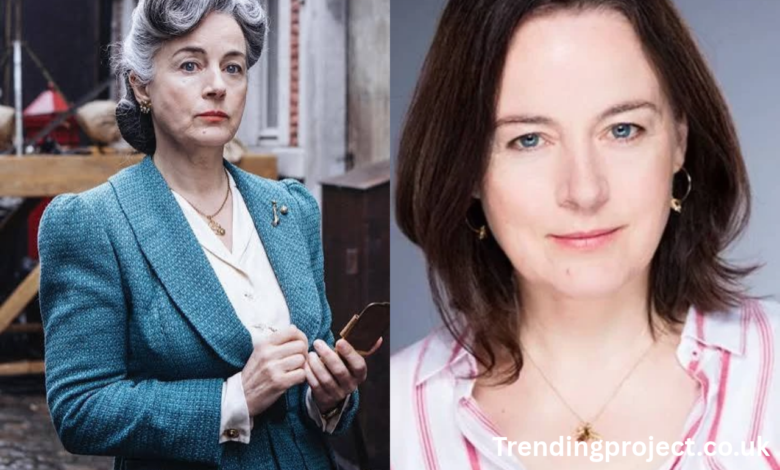
Amanda Drew has built the kind of acting career that rewards patience. She is not an actress whose entire reputation rests on one blockbuster or one headline-making role. Instead, her career has developed across more than three decades through serious theatre, British television, film, streaming dramas and eventually Broadway. From her early discovery of acting through youth theatre to training at the Royal Academy of Dramatic Art, working with the Royal Shakespeare Company and becoming known internationally through productions such as Chernobyl, Gangs of London, Wednesday, The Outlaws and The Girl Before, Drew has consistently demonstrated the versatility of a highly trained character actress. Independent Talent
What makes Amanda Drew particularly fascinating is the contrast between her private, relatively low-profile public image and the intensity of many of the characters she has portrayed. Her performances have ranged from comedy and classical theatre to psychologically difficult dramas and real-world stories. She has also continued to work steadily rather than allowing one successful role to define her career. Her recent credits—including The Bombing of Pan Am 103, A Cruel Love: The Ruth Ellis Story, Bookish, Lynley, The Capture and the 2026 drama Believe Me—show that she remains an active and respected presence on British television. Independent Talent
Amanda Drew Quick Facts
| Category | Details |
|---|---|
| Full Name | Amanda Drew |
| Date of Birth | December 21, 1969 |
| Age | 56 years old |
| Birthplace | Boston, Lincolnshire, England |
| Nationality | British |
| Profession | Actress |
| Years Active | 1992–present |
| Education | Beauchamp College; King’s School, Ottery St Mary; RADA |
| Drama Training | Royal Academy of Dramatic Art (RADA) |
| Parents | Mother was a nurse; father was a vicar |
| Siblings | Three siblings |
| Best Known For | EastEnders, Wednesday, Gangs of London, The Outlaws, Chernobyl, The Girl Before |
| Broadway Debut | The Height of the Storm |
| Major Theatre Work | Royal Shakespeare Company, Royal Court, National Theatre, Almeida, West End, Broadway |
| Awards/Recognition | Clarence Derwent Award; 2003 Evening Standard Theatre Awards nomination |
| Estimated Net Worth | Not publicly verified |
| No reliably verified official personal account found | |
| X/Twitter | No reliably verified official personal account found |
| No reliably verified official personal profile found |
Early Life and Family Background
Amanda Drew was born on December 21, 1969, in Boston, Lincolnshire, England. She grew up in a family of four children, with her mother working as a nurse and her father serving as a vicar. Although neither profession directly points toward the entertainment industry, the environment provided her with an early exposure to caring for others, community life and the emotional complexity of human relationships. Those qualities would later become valuable foundations for an actress whose career has often depended on understanding complicated characters. Wikipedia
Her childhood was not simply a straightforward journey toward becoming a professional actress. When her parents moved to Leicestershire for work, Drew attended Beauchamp College in Oadby. During this period, she became involved with youth theatre and performed as Charity in Sweet Charity. In a later interview, Drew explained that she had been shy while growing up, but she had always enjoyed storytelling and imagining herself as different characters. Youth theatre gave her an opportunity to turn that imagination into something tangible. WhatsOnStage.com –
The importance of that experience should not be underestimated. Drew recalled feeling lonely after moving to Leicester, and theatre became a social and creative outlet. She discovered that performing allowed her to step outside her normal personality and inhabit another identity. That early relationship with acting eventually became a professional ambition, leading her toward formal drama training and a career that would eventually take her from British theatre stages to international television productions. WhatsOnStage.com –
Education and RADA Training
After her school years, Amanda Drew pursued acting seriously and eventually entered the Royal Academy of Dramatic Art, commonly known as RADA. She graduated in 1992, beginning her professional career at an institution famous for producing generations of British actors. RADA’s emphasis on voice, movement, classical texts, character development and performance discipline provided Drew with a strong foundation for the diverse career that followed. IMDb
RADA training was particularly valuable because Drew’s eventual career would require her to move between very different acting environments. Theatre demanded the concentration and stamina to perform live, television required the ability to work quickly and consistently, while film and streaming productions required an often much subtler style of screen acting. Her training helped give her the flexibility to move between these mediums without becoming associated exclusively with one style of performance.
Her professional development also demonstrates why formal training can matter even in an industry where natural talent and opportunity are important. Drew did not simply appear on television and become famous overnight. She spent years building experience through stage productions and progressively more demanding roles. That long apprenticeship became an important part of the credibility she later brought to high-profile television dramas and international productions.
Beginning of Amanda Drew’s Acting Career
Amanda Drew began her professional career in the early 1990s, gradually establishing herself in British theatre. Her stage work included appearances at the Royal Court, the National Theatre, the Almeida Theatre, Chichester Festival Theatre and the Royal Shakespeare Company. These venues exposed her to a wide range of dramatic traditions and helped establish her as a versatile performer capable of handling both serious drama and comedy. WhatsOnStage.com –
Before becoming widely recognized through television, Drew had already accumulated an impressive theatrical résumé. She worked in productions including Dona Rosita the Spinster, John Gabriel Borkman, Mr Kolpert, Love in a Wood, Jubilee, The Roman Actor, The Malcontent and The House of Bernarda Alba. Her early career therefore developed in an environment where acting ability and stagecraft mattered more than celebrity status. WhatsOnStage.com –
This foundation also shaped her professional philosophy. Drew has spoken about the insecurity that can accompany acting, including worrying about whether she was good enough and dealing with the judgment that comes with auditions. Yet rather than allowing those doubts to end her career, she continued to work. That combination of self-questioning and persistence became an important feature of her journey and helps explain how she remained professionally active for decades. Official London Theatre
Royal Shakespeare Company and Theatre Recognition
A major turning point came in 2001 when Amanda Drew joined the Royal Shakespeare Company. For a British actor, working with the RSC represents a significant professional achievement because the organization has played an important role in the country’s theatrical tradition. Drew’s time with the company gave her the opportunity to work on demanding classical material while collaborating with experienced directors and performers. IMDb
One of her standout stage performances was Eastward Ho!, a Jacobean comedy performed by the RSC and later transferred to London’s Gielgud Theatre. Drew played Gertrude, a role that allowed her to explore a highly distinctive and varied character. Her performance attracted critical attention and led to a nomination for Outstanding Newcomer at the 2003 London Evening Standard Theatre Awards. WhatsOnStage.com –
Drew also won the Clarence Derwent Award for her performance in Eastward Ho!. Recognition of this kind was significant because it came during a period when she was establishing herself as one of Britain’s promising stage performers. Rather than being known simply as a television actress, Drew had developed genuine theatrical credentials, something that remained an important part of her identity even after she became more familiar to mainstream television audiences. IMDb
Amanda Drew in EastEnders
For a much wider television audience, Amanda Drew became especially recognizable through the BBC soap opera EastEnders. She played Dr. May Wright, a doctor whose storyline became increasingly dramatic and psychologically intense. Drew appeared in the programme for approximately nine months in 2006–2007 and later returned in 2008. Her character became involved in a complicated storyline involving her husband Rob Minter and Dawn Swann. WhatsOnStage.com –
The role was considerably different from many of Drew’s stage performances. EastEnders demanded an enormous amount of material, rapid production schedules and the ability to sustain a character over a long-running storyline. Dr. May Wright also went through increasingly disturbing emotional developments, eventually becoming known by viewers as “Mad May.” Drew’s performance required her to portray desperation, emotional instability, jealousy and vulnerability without reducing the character to a simple villain. Official London Theatre
Interestingly, Drew later explained that playing May allowed her to explore aspects of her own relationship with her mother and think about how people can sometimes be judged as either good or bad when they are actually struggling with complicated emotional circumstances. Her comments reveal how seriously she approached the psychological dimensions of acting. Rather than simply delivering lines, she attempted to understand what could drive a person toward extreme behavior. Official London Theatre
Career Beyond EastEnders
Leaving EastEnders did not lead Drew into a narrow television career. Instead, she returned to theatre while continuing to expand her screen résumé. She appeared in productions for the Royal Court and West End and continued to take roles that were very different from Dr. May Wright. This was a deliberate part of her professional strategy because she did not want to become permanently associated with one character. WhatsOnStage.com –
Her later stage credits included Parlour Song, ENRON, Blithe Spirit, Otherwise Engaged and other productions. In ENRON, she portrayed Claudia Roe, a fictional composite character inspired by women in executive positions connected to the company’s collapse. The production moved from Chichester to the Royal Court and eventually into the West End, demonstrating Drew’s continued involvement in ambitious contemporary theatre. Wikipedia
This period helped demonstrate the breadth of her acting abilities. She could work in comedy, psychological drama, historical material and contemporary political or social stories. That flexibility would later become one of the biggest advantages of her screen career, allowing casting directors to place her in crime dramas, period pieces, thrillers, dark comedies and prestige television.
Major Television Roles
Amanda Drew’s television career after EastEnders became increasingly diverse. She appeared in respected British dramas including Broadchurch, Silent Witness, Life of Crime, Southcliffe, The Last Post, The Trial of Christine Keeler and Criminal: UK. She also appeared in the internationally acclaimed miniseries Chernobyl and the anthology series Black Mirror. Wikipedia
Her work in Chernobyl placed her within one of television’s most highly regarded historical dramas. She also appeared in Black Mirror in the episode “Smithereens,” adding another high-profile credit to her growing screen résumé. These roles illustrate how her career increasingly intersected with prestige television, where character actors often play important supporting parts that contribute to the credibility and emotional atmosphere of a story.
Drew’s television work continued into the streaming era with projects including The Girl Before, A Very British Scandal, The Peripheral, Vampire Academy, The Power, Wolf, The Lazarus Project, Eric, Ellis, The Gold and The Outlaws. Her current representation lists numerous additional credits, demonstrating that she has remained highly active across BBC, Netflix, Amazon, Sky, Paramount+ and other major production platforms. Independent Talent
Wednesday, Gangs of London and Streaming Success
Among Amanda Drew’s more recognizable modern credits is Netflix’s Wednesday, the dark comedy series starring Jenna Ortega. Drew appeared as Esther Sinclair, adding another distinctive supporting performance to a production that reached a huge international audience. Her involvement demonstrated how her career had successfully moved into the new era of global streaming television. Independent Talent
She also became part of the ensemble of Gangs of London, playing Miss Kane across multiple seasons. The series is known for its violent crime narrative, complicated alliances and highly cinematic action sequences. Drew’s presence in the production represented another departure from the traditional theatre and British domestic drama roles that had characterized parts of her earlier career. IMDb
Her work in The Outlaws similarly showed her ability to operate within dark comedy. The BBC series, created by Stephen Merchant, brought together a group of offenders completing community service, combining humor with crime and social commentary. Drew played Ruth across three seasons, appearing in 11 episodes according to available cast records. Wikipedia
Broadway Debut and The Height of the Storm
One of the biggest milestones in Amanda Drew’s career arrived in 2019 when she made her Broadway debut in Florian Zeller’s The Height of the Storm. The production featured Jonathan Pryce and Eileen Atkins and represented the international expansion of a play that had already received attention in London. For a performer whose career had been rooted so strongly in British theatre, Broadway was a significant professional achievement. IMDb
The Broadway experience also demonstrated the international value of Drew’s stage training. Broadway requires a particularly demanding combination of precision, stamina and emotional consistency. Performing alongside established actors such as Pryce and Atkins placed Drew within an elite theatrical environment and provided another major chapter in her career after years of British stage work.
Her Broadway debut is particularly meaningful when viewed alongside the rest of her career. She did not arrive in New York as a newcomer seeking her first major professional opportunity. She arrived after decades of work at the Royal Court, National Theatre, Royal Shakespeare Company, Almeida, West End and other respected institutions. Broadway therefore represented an extension of an already mature theatrical career rather than a sudden breakthrough. IMDb
Recent Work and 2025–2026 Career
Amanda Drew has remained remarkably active in recent years. Her current professional credits include The Gold, Eric, Ellis, The Outlaws, Gangs of London, A Cruel Love: The Ruth Ellis Story, The Bombing of Pan Am 103, Bookish, Lynley and The Capture. Her agent’s current listing confirms that she continues to be attached to major British and international television productions. Independent Talent
In 2025, Drew appeared in The Bombing of Pan Am 103, portraying Linda Burman. She also appeared as Bertha Neilson in A Cruel Love: The Ruth Ellis Story and as Nerina Bean in Bookish. These projects further underline her ability to move between historical drama, true-crime storytelling and period mystery. IMDb
Her career remained active in 2026 with Believe Me, ITV’s true-crime drama about the victims of John Worboys and the institutional failures surrounding the case. Drew appeared as Josephine in the third episode. Current cast listings identify the episode as a 2026 credit, providing a clear example of her continuing screen activity. Rotten Tomatoes
Personal Life and Personality
Amanda Drew has generally kept her personal life away from the intense public scrutiny that surrounds many celebrity performers. Reliable public information about her romantic relationships, private routines and family relationships is limited, and she has not appeared to make personal publicity a major part of her professional identity. This makes it inappropriate to invent or repeat unsupported claims about her private life.
What is publicly available provides more interesting insight into her personality through her own reflections on acting. Drew has described herself as shy when she was younger and explained that storytelling and acting helped her explore different sides of herself. She has also spoken candidly about the insecurity that can exist beneath a professional actor’s confidence, including the fear of not being good enough. WhatsOnStage.com –
Her approach to acting seems strongly connected with curiosity about human behavior. She has spoken about how particular roles can allow actors to investigate aspects of themselves or understand people differently. Her comments about playing Dr. May Wright are particularly revealing because she did not approach the character simply as a villain; she tried to understand the emotional experiences that could lead someone toward extreme behavior. Official London Theatre
Amanda Drew’s Net Worth and Income
Amanda Drew’s exact net worth has not been reliably disclosed through authoritative financial sources. Online celebrity-net-worth websites sometimes publish specific figures, but these estimates are not independently verified and can create a false impression of financial certainty. A responsible biography should therefore avoid presenting an exact dollar or pound figure as established fact.
Her professional income has most likely come primarily from acting engagements across theatre, television, film, streaming productions and voice work. Her long list of theatre appearances, Broadway experience and television credits indicates a sustained professional career rather than reliance on a single source of income. Her current representation continues to list substantial television work, demonstrating that acting remains central to her professional life. Independent Talent
It is also important to distinguish professional earnings from personal wealth. Actors can earn different amounts depending on the size and length of a production, their contract, representation arrangements, taxes and professional expenses. Consequently, Amanda Drew’s career success can be discussed confidently, while a precise net-worth figure should remain unconfirmed.
Social Media and Public Presence
Amanda Drew has maintained a comparatively private public profile. There is no reliably verified personal Instagram, X/Twitter or LinkedIn account that can confidently be attributed to her, so unofficial pages should not be presented as her personal social-media accounts. Her professional visibility is instead primarily maintained through acting databases, theatre archives, production websites, interviews and talent representation.
This relatively low-key approach is consistent with the way she has built her career. Drew’s reputation comes from performances rather than influencer-style personal branding. Audiences typically encounter her through the characters she plays rather than through daily lifestyle updates, personal photographs or promotional social-media campaigns.
For fans interested in following her work, professional cast listings and production announcements are therefore more useful sources than attempting to track down unverified social profiles. Her career itself provides a much richer record of her professional development than social-media statistics could offer.
Awards and Professional Recognition
Amanda Drew’s theatrical accomplishments include an important recognition for her work in Eastward Ho!. She was nominated for Outstanding Newcomer at the 2003 London Evening Standard Theatre Awards. Her nomination came during a period when she was working with the Royal Shakespeare Company and performing at the Gielgud Theatre, placing her among notable emerging British theatre performers. IMDb
She also won the Clarence Derwent Award for her performance in Eastward Ho!. The recognition helped confirm her position as a serious stage performer at a time when her television profile was beginning to expand. Her theatrical work remained an important part of her identity even as audiences increasingly came to recognize her from television. IMDb
Her Broadway debut should also be regarded as a major professional milestone. Although not technically an award, appearing on Broadway in The Height of the Storm alongside Jonathan Pryce and Eileen Atkins represented a significant accomplishment for an actress who had spent years developing her craft on British stages. Together, her awards, nominations and major theatre credits reflect a career built on professional respect rather than celebrity alone.
What Makes Amanda Drew’s Career Unique?
Amanda Drew’s career is unusual because of its breadth. She has never been restricted to one particular genre or medium. Her résumé includes soap opera, Shakespearean theatre, contemporary drama, comedy, crime thrillers, historical dramas, science fiction, psychological thrillers and major streaming productions. That range is a strong indication of her adaptability as an actress. Independent Talent
Another important quality is longevity. Drew began her professional career in the early 1990s and continues to appear in significant productions more than three decades later. Rather than relying on nostalgia for earlier roles, she has continually added new work to her résumé. Her recent projects demonstrate that she remains relevant to contemporary casting directors and production companies.
Perhaps most importantly, her career illustrates the value of character acting. The entertainment industry often places the greatest attention on leading stars, but television and film depend heavily on experienced supporting performers who can make fictional worlds feel authentic. Drew has repeatedly fulfilled that role, bringing intelligence and emotional credibility to characters who may have limited screen time but remain memorable.
Future Projects and Career Outlook
Amanda Drew’s current professional listings indicate that her career is still developing. Projects such as The Capture 3, Lynley and Bookish demonstrate continued involvement with major television productions, while her recent appearances in The Bombing of Pan Am 103, A Cruel Love: The Ruth Ellis Story and Believe Me show that she remains interested in serious dramatic material. Independent Talent
Her future opportunities are likely to benefit from the growing importance of prestige television and streaming drama. Modern television increasingly offers experienced character actors complex roles that can be as demanding as traditional theatre. Drew’s background gives her the ability to move naturally between intimate psychological performances and larger ensemble productions.
Although future projects should not be predicted until officially announced, her recent work provides plenty of reason to expect continued activity. After more than thirty years in the profession, Drew has demonstrated something more valuable than a short-lived burst of popularity: she has built a durable acting career capable of adapting to changing audiences, technologies and storytelling styles.
Conclusion
Amanda Drew’s story is ultimately a story of persistence, curiosity and craftsmanship. From a shy child discovering the excitement of storytelling through youth theatre to a RADA graduate, Royal Shakespeare Company performer, award-winning stage actress, EastEnders star and Broadway performer, her career has developed through years of learning and reinvention.
Her work across Chernobyl, Black Mirror, Broadchurch, The Girl Before, A Very British Scandal, Gangs of London, The Outlaws, Wednesday, The Gold, Eric, The Bombing of Pan Am 103 and Believe Me demonstrates the remarkable range of a performer who has never allowed herself to be defined by one character. Her recent credits show that she continues to embrace challenging material and work with major British and international production companies.
Perhaps the greatest lesson in Amanda Drew’s journey is that a meaningful acting career does not have to be built around instant fame. It can be built gradually—through training, theatre, difficult roles, setbacks, experimentation and the willingness to keep learning. Her path from youth theatre to some of the world’s most respected stages and screens is a reminder that perseverance can turn early uncertainty into lasting achievement. As Amanda Drew continues to add new chapters to her career, her story stands as an inspiring example of how passion, discipline and the courage to keep growing can create a legacy that lasts far beyond any single role.