Birgit Wetzinger Biography: The Private Life, Career, Family and Legacy of Niki Lauda’s Wife

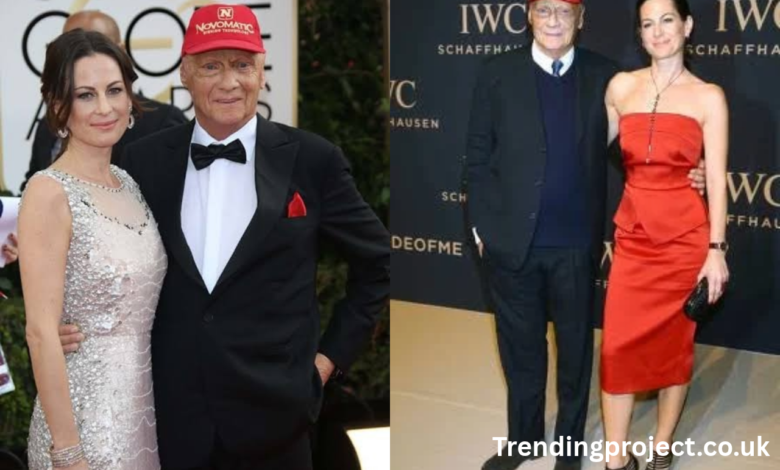
There are certain lives that become publicly known almost by accident. Birgit Wetzinger never pursued international fame, never built her identity around television appearances, and never appeared interested in becoming a celebrity in her own right. Yet her life became closely connected with one of the most recognizable figures in Formula 1 history, Austrian racing legend Niki Lauda. Their relationship eventually became one of the most talked-about personal stories surrounding the three-time world champion, particularly because Wetzinger stood beside Lauda through serious health problems, became his wife, and later raised their children after his death.
What makes Birgit Wetzinger’s story especially compelling is that her life cannot be understood simply through the label “Niki Lauda’s wife.” Before their marriage, she had her own professional life in aviation, working as a flight attendant for Lauda’s airline. Their relationship developed away from the racetrack and eventually survived a major medical crisis when Wetzinger donated a kidney to Lauda in 2005. Three years later, they married, and in 2009 they welcomed twins, Max and Mia. wien.ORF.at
Unlike many people who become connected to famous athletes, Wetzinger has generally chosen privacy over publicity. Even after Lauda’s death in 2019, she rarely spoke publicly about her personal life. One of her most revealing interviews came on the first anniversary of Lauda’s death, when she discussed grief, motherhood and the challenge of helping their children grow up with the memory of their father. Her words offered a rare glimpse into the woman behind the headlines and showed that her story is ultimately one of family, loyalty, resilience and learning to move forward after profound loss. oe3.ORF.at
Birgit Wetzinger Facts at a Glance
| Category | Details |
|---|---|
| Full Name | Birgit Wetzinger Lauda |
| Nationality | Austrian |
| Reported Birth Date | March 4, 1979* |
| Reported Birthplace | Vienna, Austria* |
| Profession | Former flight attendant; later involved in art and philanthropic work |
| Known For | Wife of Formula 1 legend Niki Lauda |
| Husband | Niki Lauda |
| Marriage | 2008 |
| Children | Twins Max and Mia |
| Notable Event | Donated a kidney to Niki Lauda in 2005 |
| Art Project | B.LA – Birgit Lauda Art Foundation |
| Parents | Not reliably documented in authoritative public sources |
| Siblings | Not reliably documented |
| Education | Studied art history, according to contemporary reporting |
| Net Worth | No independently verified public figure |
| No reliably verified official public account | |
| X/Twitter | No reliably verified official public account |
| No reliably verified public account |
*The birth date and birthplace are widely repeated online, but they are not as strongly documented in authoritative sources as the major events of her life. Contemporary reporting confirms her Austrian identity and her relationship with Lauda, while also documenting her later work in art. OTS.at
Who Is Birgit Wetzinger?
Birgit Wetzinger is an Austrian former flight attendant who became internationally recognized because of her relationship with Niki Lauda. Her professional life initially had little connection with the world of celebrity journalism. She worked in aviation, an industry that would become an important link between her and Lauda because Lauda himself had built a substantial second career as an airline entrepreneur after establishing himself as a Formula 1 champion. Wetzinger’s position as a flight attendant brought her into the environment surrounding Lauda’s aviation businesses, and their professional connection eventually developed into a personal relationship. wien.ORF.at
The public became particularly interested in Wetzinger because her relationship with Lauda was very different from the conventional image of a celebrity marriage. Lauda was already internationally famous, while Wetzinger had built a comparatively private life away from the constant attention surrounding Formula 1. She did not attempt to turn her association with him into a media career. Instead, her public identity emerged naturally through major events in their relationship, especially her kidney donation, their marriage and the birth of their twins.
Her life also illustrates why biographies of people connected to famous personalities require some caution. Numerous websites publish exact details about her childhood, education, wealth, parents and personal interests, but some of those claims are repeated without reliable documentation. The strongest available evidence concerns her work as a flight attendant, her relationship with Lauda, her kidney donation, their marriage, their children, her art project and her later comments about family life and grief. Those documented events provide a much more meaningful picture than unsupported celebrity statistics.
Early Life and Austrian Background
Very little has been publicly documented about Birgit Wetzinger’s childhood. This is one of the unusual aspects of her biography because the public knows considerably more about her adult life than about the environment in which she was raised. Her parents’ identities, family circumstances and childhood experiences have not been consistently documented by major Austrian news organizations, and there is no substantial body of interviews in which Wetzinger discusses her early years in detail.
This lack of information should not necessarily be interpreted as a missing chapter in her life. It appears to reflect a deliberate preference for privacy. Unlike many modern public figures, Wetzinger did not grow up as a social-media personality whose childhood photographs, school experiences and family relationships were continuously documented online. Her public visibility came much later, primarily through her association with Niki Lauda.
Austria nevertheless provides important cultural context for understanding her later life. Lauda was not simply a successful racing driver in his homeland. He became a national sporting icon whose career extended into aviation, Formula 1 management and business. When Wetzinger entered his life, she was therefore becoming connected to someone whose name carried enormous recognition throughout Austria and the international motorsport community. That contrast between her relatively private background and Lauda’s extraordinary public profile shaped much of the attention surrounding their relationship.
Education and Professional Development
Reliable information about Birgit Wetzinger’s formal education is limited, although contemporary reporting provides an important clue about her later academic interests. In 2017, Austrian broadcaster Ö3 reported that Wetzinger was close to completing a bachelor’s degree in art history while preparing to open her own gallery in Vienna. This is significant because it demonstrates that her interests extended well beyond the aviation industry and the Formula 1 world surrounding her husband. OTS.at
Her educational interest in art also eventually became connected to a practical project. According to the same contemporary report, Wetzinger planned to establish the B.LA – Birgit Lauda Art Foundation alongside her gallery. The idea was not presented simply as a commercial art business. Lauda explained at the time that proceeds were intended to support social causes, specifically the organization “Frauen ohne Grenzen,” associated with women’s empowerment and social initiatives. OTS.at
This chapter adds an important dimension to her biography. If Wetzinger were described only as a former flight attendant and the wife of a Formula 1 champion, readers would miss the evidence of her own intellectual and philanthropic interests. Her movement from aviation toward art history and contemporary art suggests a willingness to develop a separate professional identity, even while remaining connected to one of the most famous sporting families in Austria.
Career as a Flight Attendant
Before becoming widely known, Wetzinger worked as a flight attendant. Her career in aviation is particularly relevant because it created the professional environment in which she met Niki Lauda. Lauda’s life after Formula 1 was deeply connected to aviation; he founded and operated several airlines, including Lauda Air and later Niki, meaning the airline industry became almost as important to his entrepreneurial identity as racing had been to his sporting career. sport.ORF.at
Working as cabin crew involves much more than the glamorous image sometimes associated with international aviation. Flight attendants are trained to handle safety procedures, passenger communication, emergencies, long working hours and demanding travel schedules. Although Wetzinger’s individual professional achievements in aviation were not extensively reported, her experience in the industry gave her an independent career before she became part of Lauda’s family life.
Her aviation background also helps explain why their relationship developed in a setting different from the Formula 1 paddock. Lauda was frequently surrounded by drivers, team executives, journalists and sponsors, but Wetzinger entered his world through his business interests in aviation. Their relationship therefore emerged during a period when Lauda was no longer simply a racing driver but an entrepreneur whose interests included airlines, business and motorsport management.
Meeting Niki Lauda
Birgit Wetzinger and Niki Lauda’s relationship developed during the early 2000s. At the time, Lauda was already a household name. He had won three Formula 1 World Championships, survived the devastating 1976 Nürburgring accident and later established himself as a successful aviation entrepreneur. His career had therefore already passed through several distinct phases before Wetzinger became his partner.
For Wetzinger, the relationship meant entering the private life of a man whose public identity was enormous. Lauda’s face, voice and distinctive red cap were instantly recognizable to motorsport fans, while his outspoken personality made him a familiar television and media figure. Yet the relationship itself was not built around racing publicity. Much of their life together took place away from the public spectacle of Formula 1.
Their relationship became considerably more serious when Lauda experienced another major health crisis. His first kidney transplant, received from his brother Florian in 1997, eventually failed. In 2005, Wetzinger donated one of her kidneys to him. The donation happened before they were married and became one of the most extraordinary events in their personal history. wien.ORF.at
The Kidney Donation That Changed Their Relationship
The kidney donation is arguably the most remarkable part of Birgit Wetzinger’s public biography. In 2005, she donated a kidney to Lauda after the kidney he had previously received from his brother had failed. The significance of the event goes beyond the medical procedure itself because Wetzinger was not yet Lauda’s wife at the time. Their marriage would come several years later. wien.ORF.at
The decision demonstrated the seriousness of their relationship at a relatively early stage. Organ donation is a major personal and medical decision, and Wetzinger’s willingness to undergo the procedure created a powerful bond between the two. Lauda had already experienced the vulnerability of serious illness, despite his public image as an exceptionally tough and decisive personality.
The kidney transplant also became part of the larger story of Lauda’s remarkable resilience. Throughout his life, he repeatedly faced severe physical challenges, from the 1976 racing accident to later kidney and lung problems. Wetzinger’s role during this period was deeply personal rather than professional. She was not a member of his racing team or business organization; she was someone who made a profound personal sacrifice for the man she loved.
Marriage to Niki Lauda
After several years together, Birgit Wetzinger and Niki Lauda married in 2008. Their marriage represented a new stage in a relationship that had already survived serious health challenges. By the time they became husband and wife, Wetzinger had already demonstrated how deeply committed she was to Lauda, while Lauda was entering the later chapter of a career that had transformed him from racing champion into businessman, airline entrepreneur and Formula 1 statesman. wien.ORF.at
The marriage also brought Wetzinger into a family that already had a complicated history. Lauda had two sons, Mathias and Lukas, from his first marriage to Marlene Knaus, while he also had another son, Christoph, from a different relationship. His family therefore extended across different relationships and generations, making family relationships an important part of his later life. Car and Driver
Wetzinger’s marriage to Lauda lasted until his death in 2019. Although their relationship attracted considerable media attention because of Lauda’s fame and their age difference, Wetzinger generally avoided turning their private life into a public performance. That discretion became particularly noticeable after Lauda’s death, when she initially declined interview requests and remained largely outside the media spotlight. oe3.ORF.at
Children: Max and Mia Lauda
In September 2009, Birgit Wetzinger and Niki Lauda became parents to twins, Max and Mia. Their arrival created a new family chapter for Lauda, who was already a father to older children. The twins were born roughly a year after Wetzinger and Lauda married and became an important part of the couple’s private family life. wien.ORF.at
The twins were still young when Lauda died in 2019. This made Wetzinger’s role particularly difficult because she was not only dealing with the death of her husband but also helping two children understand the loss of their father. In her rare interview with Austrian broadcaster Ö3 a year after his death, she spoke about how strongly the children still felt their father’s presence and how much they resembled him in appearance and personality. oe3.ORF.at
Wetzinger’s comments suggested that preserving Lauda’s memory became part of their family life rather than something they attempted to hide from the children. She explained that professional psychological support had helped her family work through grief and that they tried to become resilient while still allowing positive memories of Lauda to remain part of everyday life. Her approach reflected a deeply personal understanding of motherhood, grief and emotional recovery. oe3.ORF.at
Birgit Wetzinger and the Art World
One of the most interesting chapters in Wetzinger’s life came when she moved toward the world of contemporary art. In 2017, Austrian broadcaster Ö3 reported that she was preparing to open a gallery in Vienna’s Rauhensteingasse. At the same time, she was described as being close to completing a bachelor’s degree in art history, indicating that her interest in art was more than a passing hobby. OTS.at
The project was associated with the B.LA – Birgit Lauda Art Foundation. According to the contemporary report, the gallery would sell contemporary art and direct its profits toward a social cause. The planned beneficiary was “Frauen ohne Grenzen,” an initiative associated with women’s empowerment and social engagement. This combination of art and philanthropy gave Wetzinger a professional identity that was separate from her husband’s Formula 1 reputation. OTS.at
The art project also reveals something about the values surrounding Wetzinger’s public life. While much of the media coverage about her focused on luxury, Formula 1 and the Lauda family, her own professional project incorporated education, contemporary art and social responsibility. It demonstrated an attempt to use her circumstances and interests to create something meaningful beyond celebrity association.
Life After Niki Lauda’s Death
Niki Lauda died on May 20, 2019, at the University Hospital of Zürich at the age of 70. His death followed years of serious health problems, including the consequences of his old racing injuries and later kidney and lung complications. For the international motorsport community, his death marked the passing of one of Formula 1’s most extraordinary personalities. For Wetzinger, however, it meant losing her husband and leaving her children without their father. oe3.ORF.at
For almost a year afterward, Wetzinger declined interview requests. Her decision reflected the private way she had handled much of her life with Lauda. It was only on the first anniversary of his death that she agreed to speak publicly with Ö3. The interview was unusually personal because she discussed not only Lauda’s absence but also how she and the children were attempting to rebuild their lives. oe3.ORF.at
Wetzinger described grief as something that did not simply disappear with time. Instead, she explained that Lauda remained present in their memories and family life. She also emphasized the importance of looking toward a happy future, something she believed Lauda himself would have wanted for his family. Her perspective transformed the story from one of celebrity tragedy into something more universal: the difficult process of accepting loss while continuing to live meaningfully.
Birgit Wetzinger’s Approach to Grief and Family
Wetzinger’s comments after Lauda’s death offer some of the clearest insight into her personality. She spoke openly about receiving psychological help and about actively working with her children to become resilient after their loss. Rather than presenting grief as something that should be hidden, she described an approach in which memories of Lauda could remain part of normal family life. oe3.ORF.at
Her description of the twins was particularly revealing. She said that Max and Mia looked like their father and carried many of his characteristics, creating a strong sense of connection between the three surviving members of their immediate family. For Wetzinger, that connection was not merely sentimental; it became part of the family’s ability to process what had happened.
This period also showed why it is difficult to understand Wetzinger through conventional celebrity-biography categories. Her most important experiences were not awards, television appearances or public achievements. They were deeply personal experiences involving partnership, motherhood, illness, grief and resilience. Those experiences explain why she has remained such a private figure despite having one of the most recognizable Formula 1 surnames in Austria.
Birgit Wetzinger’s Net Worth and Sources of Income
There is no independently verified public figure that can accurately establish Birgit Wetzinger’s current personal net worth. Various celebrity websites publish estimates, but these figures often lack documentation and can confuse family wealth, inheritance claims and the assets associated with Niki Lauda’s estate. A responsible biography should therefore avoid presenting an unverified dollar figure as fact.
Her own professional background included work as a flight attendant, while her later activities included the art project and foundation reported in 2017. Beyond these documented areas, her financial circumstances have remained largely private. The fact that she was married to a highly successful businessman does not automatically mean every asset associated with Lauda formed part of her personal wealth. OTS.at
The subject of Lauda’s estate has also received considerable media attention since his death. In a 2024 interview, Wetzinger discussed the inheritance dispute and her position regarding the estate. Because legal claims and estate proceedings can involve contested valuations and changing judgments, it is more accurate to describe the matter as an ongoing financial and legal issue rather than simply assigning Wetzinger a fixed “net worth.” Kronen Zeitung
Birgit Wetzinger on Social Media
Birgit Wetzinger has never developed the kind of social-media profile commonly associated with the spouses of international sports celebrities. There is no consistently verified official Instagram account, X account or LinkedIn profile that can confidently be identified as her principal public account. This makes her digital footprint considerably smaller than those of many people connected to Formula 1.
Her limited online presence appears consistent with her overall approach to public life. She has generally chosen selective interviews rather than continuous communication with fans. Even when public interest in her family has been substantial, she has not attempted to transform that interest into a personal influencer brand.
For anyone searching online for Birgit Wetzinger Instagram, Birgit Wetzinger social media, or Birgit Lauda official account, caution is important. Unverified profiles, fan pages and accounts using her name should not automatically be treated as authentic. Her lack of a major verified social-media presence is itself an important part of understanding how deliberately private she has remained.
Recent Public Life and Current Status
In recent years, most public reporting about Birgit Wetzinger has focused on her family, Niki Lauda’s legacy and the legal questions surrounding his estate. A particularly significant interview appeared in 2024, five years after Lauda’s death, when Wetzinger spoke publicly about her life with him and the inheritance dispute. The interview provided a rare update from someone who normally avoids extensive media exposure. Kronen Zeitung
Her public appearances remain relatively limited compared with those of Formula 1 personalities. There is no strong evidence that she is pursuing a major media career, influencer business or public entertainment role. Instead, the available record points toward a continued emphasis on family and private life.
That relative silence is worth respecting. In an era when the families of famous people can become almost as visible as the celebrities themselves, Wetzinger has maintained a very different path. Her story continues to attract interest because of Lauda, but she has largely resisted the pressure to turn personal experiences into permanent public entertainment.
The Legacy of Birgit Wetzinger
Birgit Wetzinger’s legacy is closely intertwined with Niki Lauda, but her importance within his story extends beyond being his second wife. Her kidney donation became a defining moment in their relationship, and her role as his partner during his later years placed her beside him during a period when his health and professional responsibilities were increasingly demanding.
Her role as a mother became even more significant after his death. Raising Max and Mia while helping them maintain a connection with their father’s memory required a different kind of strength from the determination associated with Formula 1. Wetzinger’s own account of seeking professional psychological support and consciously building resilience provides one of the clearest examples of how she approached that difficult period. oe3.ORF.at
Perhaps the most enduring aspect of her story is therefore not fame but discretion. Wetzinger had every opportunity to turn her connection with a Formula 1 legend into a public identity, yet she generally chose otherwise. Her journey demonstrates that influence does not always require a huge audience, and that some of the most meaningful forms of strength happen away from cameras.
Conclusion: What Birgit Wetzinger’s Story Teaches Us
Birgit Wetzinger’s biography is ultimately a story about the quieter side of a very public life. She entered the world of Niki Lauda through aviation rather than motorsport, became his partner during a major medical crisis, donated a kidney to him before their marriage, built a family with him and later faced the painful responsibility of continuing that family life after his death. Each stage brought a different challenge, and none of them could be reduced to the glamorous image often associated with Formula 1.
Her story also shows the importance of separating verified history from internet speculation. Many details about celebrities’ relatives are repeated online until they appear factual, but Wetzinger’s biography demonstrates why responsible storytelling matters. The strongest evidence tells us about her work in aviation, her kidney donation, her marriage, her twins, her art project, her experience of grief and her continuing connection to Lauda’s legacy.
As Birgit Wetzinger continues to live largely outside the spotlight, her story remains a powerful reminder that a meaningful life is not necessarily measured by fame, followers or public recognition. Her journey reflects love, sacrifice, family, resilience and personal growth. She became connected to one of Formula 1’s greatest legends, but the chapters she wrote for herself—particularly as a mother, partner and woman rebuilding her life after loss—are what give her biography its deeper human meaning.