Daniel Chatto Biography: Early Life, Acting Career, Art, Family, Net Worth and Life With Lady Sarah Chatto

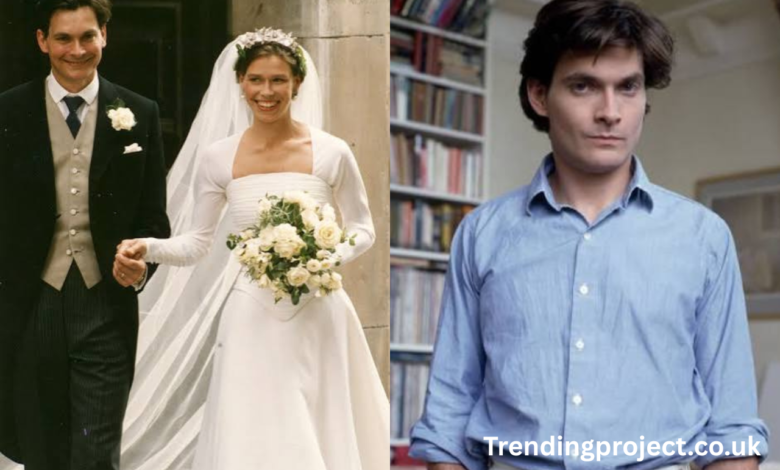
Daniel Chatto’s life is a fascinating story of reinvention. Born into a theatrical family in London, he initially stepped into the world of acting before finding a deeper and more lasting calling in painting. Decades later, he is recognized not only as the husband of Lady Sarah Chatto, daughter of Princess Margaret, but also as a serious British artist whose work is rooted in observation and traditional painting techniques. His journey from film and television to the studio is one of creativity, patience and a quiet determination to establish an identity of his own.
Table of Contents
ToggleBorn Daniel Chatto St George Sproule on April 22, 1957, he grew up with the arts already woven into his family background. His father, Tom Chatto, was an actor, while his mother, Rosalind Joan Thompson, was a theatrical agent. Daniel subsequently developed his own career in acting during the 1980s, appearing in productions including Quartet, A Shocking Accident, Heat and Dust, The Shooting Party and Little Dorrit. His life took another significant turn when he married Lady Sarah Armstrong-Jones in 1994.
Yet acting eventually became only one chapter of his story. Daniel went on to study English at Oxford University and art at The City & Guilds School of Art, ultimately developing a practice centred on painting from life. Today, the Royal Drawing School lists him as a tutor and describes his work as spanning fresco, oil, wax, egg, gum and glue tempera.
Daniel Chatto’s Early Life and Family Background
Daniel St George Chatto was born in London on April 22, 1957, and was originally given the name Daniel Chatto St George Sproule. His parents were Thomas Chatto Sproule, professionally known as Tom Chatto, and Rosalind Joan Thompson, known professionally as Ros Chatto. The Peerage records his birthplace as Princess Beatrice Hospital in Richmond, London.
Growing up in a theatrical household meant that Daniel was exposed to the entertainment world from an early age. His father worked as an actor, while his mother worked as a theatrical agent. Rather than being raised in an environment completely removed from creative professions, Daniel’s childhood was therefore connected to performance, theatre and the people working behind the scenes. His brother James also pursued a creative career, later becoming known as a writer and food expert.
There is comparatively little publicly documented information about Daniel’s childhood, which is itself revealing. Unlike many members of Britain’s extended royal and celebrity circles, he has maintained a remarkably private profile. The available records focus much more heavily on his professional career, marriage and artistic work than on personal childhood memories, allowing his story to remain relatively independent of tabloid-style publicity.
Daniel Chatto’s Education and Artistic Development
Education played an important role in Daniel Chatto’s eventual transition from acting to painting. The Royal Drawing School records that he studied English at Oxford University before studying art at The City & Guilds School of Art. This combination of humanities and practical art education gave him both an academic background and specialist artistic training.
His move into formal art education suggests that painting was not simply a secondary hobby after his acting career. Instead, he developed the technical foundation necessary to establish himself professionally. The City & Guilds School of Art provided an environment in which he could concentrate on artistic discipline, observation and technique, eventually leading toward the traditional methods that became central to his mature work.
The relationship between observation and creativity remains particularly important in Chatto’s philosophy. His profile at the Royal Drawing School emphasizes the importance of drawing as a way of seeing. For him, drawing is not merely about producing an attractive image; it is a process through which an artist learns to observe the world more carefully and ultimately develop an individual visual expression.
Daniel Chatto’s Acting Career
Before becoming established as a painter, Daniel Chatto worked as an actor. His acting career developed mainly during the 1980s, when he appeared in a variety of films and television productions. His credits include Quartet, Priest of Love, A Shocking Accident, Heat and Dust, The Razor’s Edge, The Shooting Party, Dutch Girls, The Death of the Heart and Little Dorrit.
One of the most unusual details in Daniel’s acting history is his appearance in the 1982 television film Charles & Diana: A Royal Love Story. He played Prince Andrew, a role that becomes particularly intriguing in retrospect because Daniel would eventually marry Lady Sarah Armstrong-Jones, the daughter of Princess Margaret and a member of the wider royal family. IMDb also records the connection as one of the notable facts surrounding his career.
Daniel’s acting career was not exceptionally long, however, and his final listed screen role came in Little Dorrit in 1987. Rather than continuing to pursue celebrity status, he gradually moved toward the visual arts. This career change became one of the most important decisions of his life, eventually transforming his professional identity from actor into painter and art educator.
The Transition From Actor to Artist
The transition from acting to painting is one of the most compelling elements of Daniel Chatto’s biography. Acting had introduced him to film sets, performance and the entertainment industry, but painting offered a completely different kind of creative experience. Instead of performing a character written by somebody else, he could develop his own visual language and respond directly to the world around him.
This change also allowed him to build a professional reputation based on artistic ability rather than his family background or future royal connections. Over time, his work became increasingly associated with observational painting and traditional materials. The Royal Drawing School describes his artistic practice as being founded on painting from life, using techniques and materials ranging from fresco and oil to wax and several forms of tempera.
The distinction matters because traditional painting techniques demand considerable patience and technical understanding. Fresco, egg tempera and other historic methods require artists to understand surfaces, pigments, binders and the behaviour of materials. Chatto’s decision to explore these techniques reflects a sustained interest in the physical process of painting rather than simply the finished image.
Daniel Chatto as a Traditional Painter
Daniel Chatto has developed an artistic identity strongly connected with painting from life. Rather than relying solely on imagination or photography, his practice emphasizes direct observation. This approach places him within a long tradition of artists who use drawing and painting as methods of closely examining people, landscapes and objects.
The Royal Drawing School specifically notes that Chatto works across a wide range of media, including fresco, oil, wax, egg, gum and glue tempera. He also teaches students how traditional paints are made and used within contemporary artistic practice.
His artistic work includes pieces displayed through the Royal Drawing School, with works such as Shepherd’s Church and Big Church Field appearing in the school’s collection of examples of his practice. His connection with Long & Ryle in London has also provided an established gallery context for his work.
Daniel Chatto and the Royal Drawing School
A major part of Daniel Chatto’s modern career is his work as a tutor at the Royal Drawing School. The institution describes itself as an independent, artist-led, not-for-profit organization dedicated to observational drawing and high-quality drawing education. Chatto is listed among its practising artist tutors.
His involvement is especially fitting because his own artistic philosophy is strongly connected with drawing from life. The Royal Drawing School’s mission emphasizes drawing as a way of thinking, seeing and understanding, while Chatto’s profile similarly describes drawing as something that can help people see more clearly and express individuality through observation.
Teaching also gives Chatto an opportunity to contribute beyond his own paintings. An artist can leave a legacy through exhibitions and collections, but teaching creates another form of influence by passing knowledge to emerging artists. Through his work at the school, Chatto participates in preserving traditional artistic skills while showing students how those methods can remain relevant in contemporary practice.
Daniel Chatto and Lady Sarah Chatto
Daniel Chatto’s name became much more widely recognized after his relationship with Lady Sarah Armstrong-Jones, the daughter of Princess Margaret and Antony Armstrong-Jones. The couple married on July 14, 1994, at St Stephen Walbrook in London. Their relationship has remained one of the quieter marriages connected to the British royal family.
Their meeting reportedly took place during the 1980s, when Lady Sarah was in India with her father and Daniel was working on Heat and Dust. The relationship eventually developed into marriage, linking Daniel permanently with one of Britain’s most prominent families. Tatler noted in 2026 that July 14 marked the couple’s 32nd wedding anniversary.
There is also an artistic connection between husband and wife. Lady Sarah Chatto is herself an accomplished painter, and her involvement with the Royal Drawing School is significant: the school’s current governance information lists her as its Vice President. Their shared interest in art therefore represents much more than a coincidence; it has been an important part of their family identity.
Daniel Chatto’s Children and Family Life
Daniel and Lady Sarah have two sons, Samuel David Benedict Chatto and Arthur Robert Nathaniel Chatto. Samuel was born on July 28, 1996, while Arthur was born on February 5, 1999. These family details are documented in genealogical records and biographical sources.
Their sons have grown up with an unusual mixture of royal heritage and artistic influence. Samuel in particular has followed the family’s creative tradition, developing an artistic career of his own. Arthur has pursued a different direction, demonstrating that the Chatto family’s interests extend well beyond the visual arts.
Daniel’s approach to family life appears consistent with his overall public character: private, understated and removed from the constant attention associated with celebrity culture. His family connection to the Windsors naturally attracts interest, but he has not attempted to transform that association into a personal publicity machine.
Daniel Chatto’s Connection With the British Royal Family
Through his marriage to Lady Sarah Chatto, Daniel became part of the extended British royal family. Lady Sarah is the only daughter of Princess Margaret and Antony Armstrong-Jones, making Daniel the son-in-law of Princess Margaret and part of the family surrounding the late Queen Elizabeth II.
However, it is important to distinguish being connected to the royal family from being a working member of the monarchy. Daniel has not built his career around royal duties. His professional identity remains that of an artist and former actor, while his public appearances connected to the royal family are generally secondary to his private family role.
His connection to the monarchy has nevertheless resulted in official recognition. Biographical records list him as having received the Queen Elizabeth II Golden Jubilee Medal, Diamond Jubilee Medal and Platinum Jubilee Medal, as well as the King Charles III Coronation Medal in 2023.
Daniel Chatto’s Art, Exhibitions and Creative Reputation
Daniel Chatto’s reputation as an artist rests largely on his commitment to observational painting and traditional materials. His work is represented in the professional art environment through Long & Ryle in London, while the Royal Drawing School provides another important platform through exhibitions and teaching.
His work demonstrates an interest in landscapes and places, with examples such as Big Church Field and Shepherd’s Church appearing on the Royal Drawing School’s profile. These works reflect his broader approach of working from direct observation and using the physical properties of traditional media as part of the creative process.
Rather than chasing fashionable artistic trends, Chatto’s career appears to have developed around craftsmanship. His interest in historic paints and methods makes his work particularly relevant to students and artists interested in the foundations of painting. That commitment to craft gives his career a distinctive character in a contemporary art world increasingly shaped by digital tools and new media.
Daniel Chatto’s Personality and Private Lifestyle
One of the strongest characteristics associated with Daniel Chatto is discretion. There is relatively little reliable public information about his daily routine, private beliefs or personal habits, and it would be inappropriate to fill those gaps with speculation. Unlike many celebrities, he has not made his private life the centre of his public identity.
His professional interests, however, provide some insight into his character. Painting from life requires concentration, patience and sustained observation. Teaching traditional materials requires an additional level of technical knowledge and willingness to communicate that knowledge to others. Those professional choices suggest an individual who values craft, detail and the slow development of expertise.
His relatively low-key public profile also contrasts with the extraordinary family into which he married. Daniel could easily have become known primarily as a royal spouse, yet his career as an artist has remained an important part of his identity. That separation between public status and professional purpose is one of the most interesting aspects of his life.
Daniel Chatto Net Worth and Sources of Income
Daniel Chatto’s exact net worth is not publicly established. Although various websites publish estimated figures for his wealth, there is no reliable public financial statement that confirms a specific number. Consequently, claims presenting an exact Daniel Chatto net worth should be treated cautiously.
His professional income can reasonably be associated with several areas, including his previous acting career, artwork, exhibitions, teaching and other professional activities connected with painting. His work with the Royal Drawing School and his gallery association demonstrate that art is an established professional pursuit rather than simply a private pastime.
It is also important not to assume that his financial position comes primarily from his royal connections. Daniel married into the extended royal family, but his professional identity has developed independently through acting and art. Without access to private financial records, a responsible biography should avoid presenting speculative celebrity-net-worth estimates as fact.
Daniel Chatto’s Social Media Presence
Daniel Chatto maintains a remarkably limited public digital footprint compared with modern celebrities and artists. There is no widely established, reliably verified personal Instagram, X/Twitter or LinkedIn account that can confidently be attributed to him.
This absence is consistent with the way he has conducted his career. His professional visibility is largely institutional, appearing through art schools, galleries and exhibitions rather than through frequent personal social-media posts. For people interested in his paintings, professional art organizations therefore provide much more dependable information than unverified social-media accounts.
The Royal Drawing School remains one of the strongest public sources for information about his current artistic role. Its official profile identifies him as a tutor and provides examples of his artwork, while its faculty directory continues to list him among its practising artist tutors.
Daniel Chatto’s Career and Recent Updates in 2026
Daniel Chatto remains professionally connected with the Royal Drawing School in 2026. The institution continues to list him as a tutor, confirming that his involvement with art education is an ongoing part of his career rather than merely a historical association.
His wife, Lady Sarah Chatto, also remains closely connected with the institution as Vice President. This creates an interesting continuation of the couple’s shared artistic identity and demonstrates how drawing and painting remain central to their professional and cultural lives.
There has also been renewed public interest in the Chatto family during 2026. Tatler reported in July that Daniel and Lady Sarah were marking their 32nd wedding anniversary, while their son Samuel had announced his engagement to Eleanor Ekserdjian. These developments underline the continuing evolution of the family while also showing that Daniel’s story remains closely connected to both art and family.
Daniel Chatto’s Legacy and Influence
Daniel Chatto’s life offers a fascinating example of how a person can move between completely different creative disciplines without losing sight of the importance of craftsmanship. His early career in acting gave him experience in the entertainment industry, but painting eventually became the field in which he developed his strongest and most enduring professional identity.
His influence today extends beyond his own artwork. Through his teaching at the Royal Drawing School, he contributes to the education of artists interested in observational drawing and traditional materials. The school itself emphasizes drawing as a fundamental creative discipline and provides education to beginners as well as practising artists.
Perhaps the most meaningful lesson from Daniel Chatto’s journey is that success does not necessarily mean remaining in the career that first brings recognition. His story moved from theatre and film to painting and education, proving that professional reinvention can lead to a more authentic sense of purpose. His life is also a reminder that a famous family connection does not have to define an individual’s identity.
As Daniel Chatto continues to work as an artist and teacher, his story stands as a quiet example of perseverance, creativity and personal direction. He has experienced the worlds of acting, art, royal family life and education, yet his lasting reputation is increasingly connected with the discipline of painting and the careful practice of drawing from life. His journey shows that a meaningful legacy can be built not through constant publicity, but through years of learning, creating and passing knowledge to the next generation.