There are plenty of great snooker players, but only a handful have ever made the game feel like it was happening at twice the normal speed. Tony Drago was one of them. The Maltese cueist became famous around the world for attacking the table with astonishing speed, fearless shot selection and an intensity that could turn even an ordinary frame into a spectacle. Nicknamed “The Tornado,” Drago developed a reputation that went far beyond his tournament results. Fans remembered him not only for what he won, but for the extraordinary way he played the game. His career eventually stretched across professional snooker and pool, taking him from Malta to the biggest stages of international cue sports.
What makes Tony Drago’s career particularly fascinating is the combination of achievement and individuality behind it. He reached a career-high world ranking of No. 10, reached the final of the 1997 International Open, produced an official competitive 147 break and became one of the most celebrated speed players in snooker history. His career also included major pool successes, including the 2003 World Pool Masters and victories with Europe in the Mosconi Cup. Although he never won a full-ranking snooker title, his influence on the entertainment side of the sport was enormous.
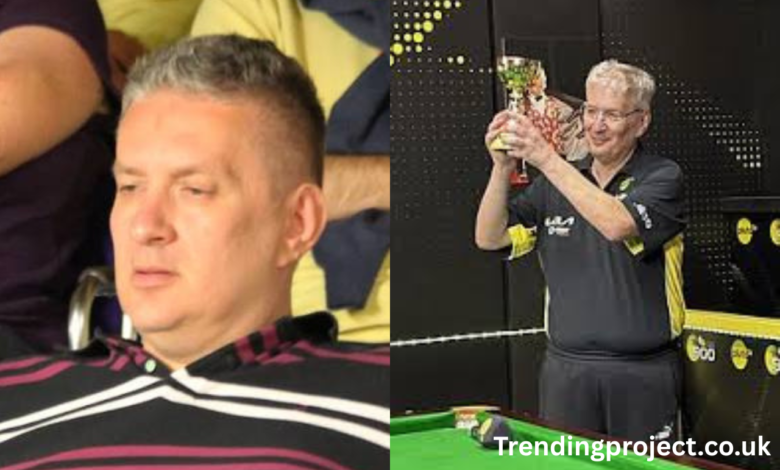
More than four decades after turning professional, Drago remains associated with competitive cue sports. At 60, he continued appearing in senior snooker and captured the Snooker 900 Week 42 title in July 2026, defeating Rebecca Kenna 5–3 in the final. That latest chapter is a fitting reminder of why his career has remained so memorable: Tony Drago has never been an ordinary cueist. He is a player whose speed, personality and determination became part of snooker’s history.
Tony Drago Quick Facts
| Fact | Details |
|---|---|
| Full Name | Tony Drago |
| Date of Birth | September 22, 1965 |
| Age | 60 years old in 2026 |
| Birthplace | Valletta, Malta |
| Nationality | Maltese |
| Profession | Former professional snooker and pool player |
| Nickname | The Tornado |
| Turned Professional | 1985 |
| Highest World Ranking | No. 10 |
| Best Ranking-Event Result | Runner-up, 1997 International Open |
| Highest Competitive Break | 147 |
| Highest Practice Break | 149 |
| World Championship Best | Quarter-finalist, 1988 |
| Major Pool Title | World Pool Masters, 2003 |
| Mosconi Cup | European winner, 2007 and 2008 |
| Education | St Albert College and The Lyceum in Hamrun |
| Parents | Not comprehensively documented in reliable public sources |
| Siblings | No reliably documented public information |
| Relationship Status | Not reliably documented |
| Net Worth | No authoritative current figure publicly established |
| X/Twitter | @Tornadodrago |
| No reliably verified official account identified | |
| No reliably verified public profile identified |
Early Life and Childhood in Malta
Tony Drago was born on September 22, 1965, in Valletta, the historic capital of Malta. His childhood was relatively ordinary by his own description, with football and time spent outdoors forming part of his early years. He has recalled playing football in the streets with friends, and the sport remained something he continued to love. Yet alongside football, another activity was gradually becoming much more important in his life. Snooker seemed to offer Drago a natural outlet for his concentration, instincts and competitive personality.
His first experiences with a cue came when he was still very young. Drago has spoken about learning around Malta’s local snooker scene and specifically remembered playing under the influence of Paul Curmi, known as “il-Pampalun.” He also played at venues such as Fossa, Manderaggio and the Anglo Maltese club in Merchant Street. By approximately 11 years old he was already around snooker tables, while by his early teenage years he had begun competing seriously. His natural talent was obvious enough that people around him started predicting that he could become an exceptional player.
Drago attended St Albert College in Valletta and later The Lyceum in Hamrun, but education gradually took second place to his growing obsession with snooker. In his own recollections, he acknowledged that school was not his main focus because his attention had already become firmly fixed on cue sports. That single-mindedness would become one of the defining characteristics of his professional career. Instead of following a conventional path, Drago increasingly invested his energy into becoming the best player he could be, eventually turning professional in 1985.
Tony Drago’s Early Snooker Career
Drago’s competitive development in Malta was remarkably fast. His early success included victory in the Boys Championship in 1980, when he defeated Arthur Cachia. Rather than being treated like an ordinary developing player, his ability was considered strong enough for him to be placed directly into the Second Division instead of beginning in the Third Division. He won the Second Division in his first season and subsequently moved into the First Division, demonstrating that his progress was not simply the result of enthusiasm but genuine competitive ability.
The young Drago continued making progress through the Maltese snooker structure. He became Malta Amateur Champion in 1984, defeating Alf Micallef 7–3, and the victory helped confirm that he had outgrown the domestic amateur scene. By then, the idea of becoming a professional player was no longer unrealistic. His speed, potting ability and willingness to attack difficult positions had already separated him from many of his contemporaries.
In 1985, Tony Drago made the major transition into professional snooker. For a player from Malta, this was a particularly significant step. The international professional circuit was heavily associated with Britain and Ireland, and Drago had to establish himself against players who had spent years developing within the established snooker system. Instead of being overwhelmed by the challenge, however, he quickly became one of the tour’s most distinctive personalities. His unconventional pace and aggressive style meant that spectators rarely forgot watching him play.
Rise to the Top of Professional Snooker
During the late 1980s and 1990s, Tony Drago developed from a promising Maltese professional into a genuine world-class snooker player. His career-high ranking of No. 10 in the world remains one of the clearest measures of his ability. Reaching the top ten in an era filled with legendary players was a major achievement, particularly for someone who had emerged from Malta rather than one of the traditional snooker strongholds.
His strongest ranking-event performance came at the 1997 International Open. Drago had already reached nine ranking-event quarter-finals before finally advancing to a ranking final. His run ended against Stephen Hendry, who won the final 9–1, but reaching the final was still a major milestone in Drago’s career. It showed that his attacking style could carry him deep into the biggest professional tournaments, even against players known for their tactical discipline and consistency.
Although a full-ranking title ultimately escaped him, Drago did win important professional events outside the main ranking structure. His achievements included the 1993 Strachan Challenge Event 3 and the 1996 Guangzhou Masters, where he defeated Steve Davis 6–2. His record therefore cannot fairly be judged simply by counting ranking titles. He spent many years competing at a high level, reached major finals and became one of the most recognizable players of his generation.
Why Tony Drago Became Known as “The Tornado”
Tony Drago’s nickname, “The Tornado,” perfectly captured the visual experience of watching him play. Most professional snooker players carefully consider their options before committing to a shot, particularly in difficult tactical situations. Drago, however, often appeared to see the table in an instant. He moved quickly, selected shots rapidly and attacked with confidence, producing a rhythm that could make his opponents appear almost motionless by comparison.
His speed produced some extraordinary records. In 1993, Drago defeated Sean Lanigan in just 34 minutes in a best-of-nine-frame match, a remarkable demonstration of his rapid-fire style. At the 1990 UK Championship, he defeated Joe O’Boye 9–0 in only 81 minutes, one of the fastest best-of-17 matches ever recorded. These were not simply fast victories; they became part of the mythology surrounding Drago because they showed how dramatically his approach differed from conventional professional snooker.
Perhaps even more remarkable was the speed with which he could construct individual breaks. At the 1996 UK Championship, Drago made a century break against John Higgins in only three minutes and 31 seconds. The combination of fast cueing, accurate potting and instinctive position play made him an extraordinary spectacle. His speed did not guarantee victory in every match, but it ensured that virtually every appearance had the potential to become memorable.
The Famous 149 Break and Competitive 147
One of the most fascinating achievements associated with Tony Drago is his 149 break in practice. In 1995, while playing Nick Manning at West Norwood Snooker Club, Drago was left snookered after a foul and received a free ball. He took the brown as the free ball and then potted the brown again as the next colour before embarking on a sequence involving 15 reds, 13 blacks, a pink, a blue and the remaining colours. The unusual circumstances allowed him to exceed the standard 147 maximum.
A practice 149 is extraordinary, but Drago also produced the ultimate competitive achievement of a 147 maximum break. He recorded his official competitive maximum at the 2002 Benson & Hedges Championship. A 147 requires the player to clear all 15 reds with blacks followed by the six colours in sequence, and it remains one of the most prestigious individual accomplishments in snooker.
These breaks perfectly illustrate Drago’s attacking philosophy. His game was based around aggressive potting and the confidence to move quickly from one shot to the next. Rather than becoming trapped in a cautious style, he relied heavily on natural cueing ability and instinct. That approach could occasionally produce inconsistency, but on his best days it created spectacular snooker that few players could reproduce.
Tony Drago at the World Championship
The World Championship at the Crucible Theatre represented the ultimate test for professional snooker players, and Drago was able to reach the quarter-finals in 1988. That remains his best World Championship result and demonstrated that his aggressive style could survive the pressure of the sport’s most prestigious tournament. Reaching the last eight in Sheffield was a significant achievement for a relatively young player from Malta.
His Crucible career also produced one of the most memorable matches involving another exceptionally fast player, Ronnie O’Sullivan. At the 1996 World Championship, O’Sullivan defeated Drago 13–4 in only 167 minutes and 33 seconds. The match became notable because of its extraordinary pace and remains associated with the fastest long-format matches staged at the Crucible.
The match was almost symbolic. Drago was famous for speed, while O’Sullivan would eventually become one of the greatest fast players in snooker history. Watching the two compete created a rare spectacle in which the traditional rhythm of a long Crucible match seemed to disappear. Even in defeat, Drago contributed to one of the tournament’s most memorable statistical landmarks.
Career Rivalries and Memorable Opponents
Tony Drago’s career overlapped with some of the greatest players in snooker history. He competed against Stephen Hendry, Steve Davis, Jimmy White, John Higgins and Ronnie O’Sullivan, among many other major names. His encounters with these players were particularly interesting because Drago’s instinctive and aggressive style contrasted with the tactical strengths of many of his opponents.
Stephen Hendry was one of the most difficult opponents in Drago’s early career. According to Snooker.org, Drago lost his first 12 meetings with Hendry before eventually beating him three consecutive times, including victories at the 1998 German Masters, the 1998 Irish Open and the 1999 Masters. Those results demonstrated Drago’s ability to overcome even the most intimidating players once he found his rhythm against them.
His rivalry with the wider generation of elite snooker players helped establish his reputation beyond Malta. Drago was not simply a curiosity from a small country; he was a player capable of defeating established champions and reaching the later stages of major competitions. His results against elite opposition remain an important part of understanding why he reached No. 10 in the world despite never winning a ranking title.
Transition From Snooker to Professional Pool
Tony Drago eventually expanded his cue-sport career into professional pool. He had watched pool on Eurosport for years and became interested in trying the discipline himself. An invitation from Matchroom and Barry Hearn gave him an opportunity to compete in the World Championship in Cardiff, and Drago gradually became increasingly comfortable with the different demands of pool.
His first major pool breakthrough came in 2003, when he won the World Pool Masters. The victory arrived only weeks after he had reached the semi-finals of that year’s World Pool Championship, demonstrating how quickly he had adapted to a different form of cue sport. Instead of treating pool as a secondary activity, Drago developed into a serious international competitor.
Drago’s pool achievements continued with his involvement in the Mosconi Cup. He was part of Europe’s victorious teams in 2007 and 2008, and in 2007 he won all of his singles matches and received the Most Valuable Player award. In 2008, he also won the Predator International 10-ball Championship, defeating Francisco Bustamante 13–10. These achievements demonstrated that his talent was not restricted to the snooker table.
Personal Life, Interests and Personality
Away from competition, Tony Drago has described himself as someone whose interests have always extended beyond cue sports. Football has remained important to him since childhood, and he has also spoken about enjoying tennis and following sport generally. His affection for Malta has remained a consistent part of his identity, even after spending much of his professional career travelling internationally for tournaments.
Drago has also spoken about his family and everyday life in interviews, offering glimpses of a personality that is considerably more relaxed away from the table. He has discussed his mother’s cooking and described Chinese food as a favourite. He has also talked about enjoying conversations with friends and following football and tennis. These details provide a more personal picture of the man behind the famously intense competitor.
Reliable public sources, however, do not provide a complete verified account of his parents, siblings or romantic relationships. For that reason, it would be misleading to fill those gaps with claims from unreliable celebrity-information websites. What is well documented is his lifelong commitment to cue sports, his connection to Malta and his continuing interest in competitive sport. Those elements offer a much stronger and more reliable understanding of Drago’s character than unsupported personal speculation.
Tony Drago’s Net Worth and Income
Tony Drago’s exact current net worth has not been reliably disclosed. Numerous online celebrity and sports websites publish estimated figures, but there is no authoritative financial statement that establishes a precise modern number. A responsible biography should therefore avoid presenting an invented net-worth figure as fact. His financial success is better understood through his professional earnings, tournament victories and decades of involvement in international cue sports.
A historical profile published by The Malta Independent reported that Drago had accumulated more than £1 million in career prize money by the beginning of the 2005–06 season. The same report listed £30,825 in prize money for the previous season. These figures demonstrate that professional snooker had already generated substantial earnings for him, although historical prize money cannot be treated as his present net worth because it does not include taxes, expenses, investments, later earnings or personal assets.
His income over the years has come from several sources associated with professional cue sports. Tournament prize money was naturally central, while pool competitions, exhibitions, senior events and other professional appearances have provided additional opportunities. His continued involvement in events such as Snooker 900 indicates that his name remains commercially valuable within the cue-sport world. Nevertheless, without verified financial records, the most accurate description of his current wealth is undisclosed rather than a speculative dollar amount.
Tony Drago on Social Media
Tony Drago’s social-media presence is much smaller than that of many modern professional athletes. His career began long before social platforms became an important part of sports culture, so his public reputation was originally built through television broadcasts, tournament coverage, newspaper interviews and direct interaction with fans at competitions. That older-school career path partly explains why there is comparatively little verified personal content available online.
Snooker.org lists @Tornadodrago as Drago’s Twitter/X account, giving fans a direct social-media connection to the player. His online presence is therefore useful for supporters who want updates connected with his continuing cue-sport appearances.
There is no similarly reliable evidence from the sources reviewed for an official Instagram or LinkedIn profile that should confidently be presented as his personal account. This is worth noting because searches for public figures often produce unofficial pages, fan accounts and impersonation profiles. For readers interested in following Drago online, verifying the account identity before trusting personal information is especially important.
Tony Drago’s Recent Career in 2026
Tony Drago has continued competing well into his sixties, making his longevity one of the most interesting aspects of his modern career. At the 2026 World Seniors Championship, staged at the Crucible Theatre in Sheffield from May 6 to May 10, Drago returned to the venue where some of the biggest moments of his professional career had taken place. He faced Australia’s Roger Farebrother in the opening round but was beaten 4–2.
The result did not diminish the significance of his appearance. The World Seniors Championship brought together a collection of major names from different generations of snooker, and Drago’s presence demonstrated that his reputation remains strong within the sport. At 60, he was still competing on one of snooker’s most famous stages, decades after first appearing at the Crucible as a young professional.
His biggest 2026 success came shortly afterward in Snooker 900. In July, Drago won the Week 42 event in Reading, defeating Rebecca Kenna 5–3 in the final. He raced into a 4–0 lead before Kenna fought back to 4–3, but Drago eventually produced the decisive contribution to secure the title. The victory was a wonderful reminder that the speed and attacking instinct that created the “Tornado” nickname are still visible in his game.
Tony Drago’s Playing Style and Influence
Drago’s playing style was built around speed, attacking potting and instinctive decision-making. He rarely seemed interested in making a match unnecessarily complicated. When an attacking opportunity appeared, he was prepared to take it, often before an opponent had fully settled into position. This gave his matches an unusually dynamic quality and made him one of the most entertaining players of his generation.
That approach also carried risks. Snooker is a sport in which patience, safety play and tactical discipline can be just as important as potting ability. Drago’s willingness to attack could sometimes expose him to mistakes or allow opponents to take control of frames. Yet those weaknesses were inseparable from the qualities that made him special. A more cautious version of Tony Drago might have been more predictable, but he almost certainly would not have been as memorable.
His influence can therefore be seen in the broader appreciation of fast, attacking snooker. Players such as Ronnie O’Sullivan became famous for extraordinary pace, but Drago had already demonstrated how thrilling rapid-fire snooker could be at the highest professional level. His legacy is not that he invented fast snooker, but that he made speed one of the defining features of his identity and proved that a highly individual style could capture an international audience.
Tony Drago’s Legacy in Cue Sports
Tony Drago’s legacy cannot be reduced to the number of ranking trophies he collected. He reached world No. 10, reached a ranking final, made an official 147, produced a remarkable 149 in practice, reached a World Championship quarter-final and won important events in both snooker and pool. Those achievements represent a career of genuine international quality.
More importantly, Drago became a cultural character within snooker. “The Tornado” was instantly recognizable, not merely because of his results but because of the way he approached the table. His rapid movement, aggressive potting and emotional intensity created an identity that fans could recognize within seconds. Even people who did not follow every tournament knew that when Tony Drago appeared, something fast and unpredictable could happen.
His journey also carries special significance for Malta. Coming from a relatively small country, Drago reached the upper levels of an international sport and competed against the biggest names of his era. His success helped demonstrate that world-class cue-sport talent could emerge from outside the traditional centers of professional snooker. For younger Maltese players, his career offered a powerful example of how far dedication and natural ability could take an athlete.
Conclusion
Tony Drago’s career is ultimately a story about individuality, perseverance and the courage to compete in your own way. From a young boy discovering snooker in Malta to a professional player ranked among the world’s top ten, he built a career that refused to follow a conventional script. He did not need a collection of ranking titles to become one of the most recognizable players of his generation. His speed, attacking style, remarkable breaks and larger-than-life personality created a legacy that statistics alone cannot fully explain.
What makes his story even more remarkable is that the journey has continued long after his peak professional years. His appearances at the 2026 World Seniors Championship and his Snooker 900 title in July 2026 demonstrate that the competitive instinct behind “The Tornado” has not disappeared. Even after decades on the international circuit, Drago remains willing to pick up a cue, step into competition and test himself against another generation of players.
Tony Drago’s story therefore offers a lesson that reaches beyond snooker and pool. Success is not always defined by the biggest trophy or the longest list of championships. Sometimes a lasting legacy comes from becoming unmistakably yourself, continuing to improve, entertaining others and refusing to let age or setbacks end your passion. As Tony Drago continues to add new chapters to an already extraordinary cue-sport career, his journey remains a reminder that resilience, individuality and genuine love for a craft can create a legacy that lasts far beyond the final frame.