Members of Spandau Ballet: Their Early Lives, Rise to Fame, Careers and Legacy

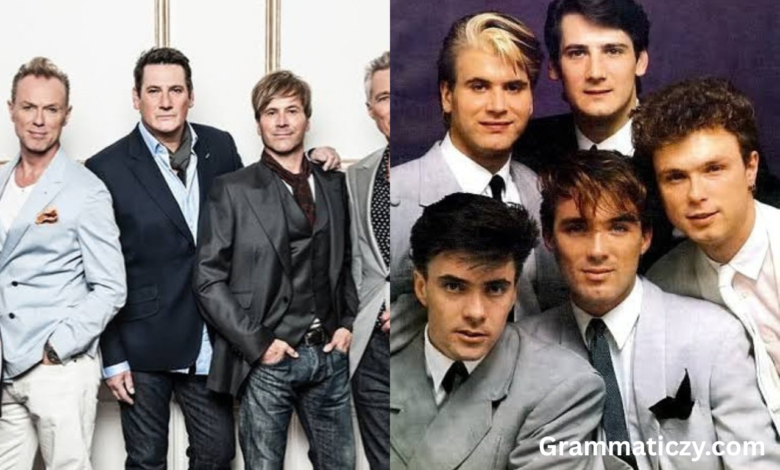
Spandau Ballet did not simply become famous; they helped define what British pop culture looked and sounded like in the early 1980s. Emerging from North London and the fashionable New Romantic nightclub scene, the band transformed itself from a group of ambitious school friends into an international act whose songs such as “True,” “Gold,” “Only When You Leave,” “Chant No. 1,” and “Through the Barricades” became part of the soundtrack of an entire generation. The classic lineup—Tony Hadley, Gary Kemp, Martin Kemp, Steve Norman and John Keeble—combined distinctive personalities and very different musical strengths to create a sound that moved from electronic new wave toward sophisticated pop and soul.
Table of Contents
ToggleWhat makes the story of the Spandau Ballet members particularly fascinating is that their journey was never a simple rise-and-fall celebrity story. The five musicians grew up around the same North London environment, experienced extraordinary international success together, endured serious disagreements, separated professionally, developed individual careers and eventually reunited after almost two decades apart. Their story includes chart-topping records, fashion, acting, songwriting, touring, legal disputes, friendship, personal reinvention and the continuing question of whether the original members might ever share a stage again.
Who Are the Members of Spandau Ballet?
The classic Spandau Ballet lineup consisted of Tony Hadley as lead vocalist, Gary Kemp on guitar and as the band’s principal songwriter, Martin Kemp on bass, Steve Norman on saxophone and other instruments, and John Keeble on drums. The group formed in North London during the late 1970s after several of its members had already been making music together at school. Their early identity was shaped by the rapidly changing London club scene, particularly the venues and audiences associated with the emerging New Romantic movement.
The musical responsibilities inside the group were unusually complementary. Gary Kemp became responsible for the songwriting that supplied the band’s emotional and melodic core, while Tony Hadley’s voice gave those songs their instantly recognizable character. Martin Kemp’s bass provided the foundation, John Keeble supplied the rhythmic drive, and Steve Norman expanded the sound with saxophone, percussion, guitar and other instruments. This combination allowed Spandau Ballet to evolve considerably rather than remaining locked into the electronic dance sound of its earliest recordings.
Spandau Ballet’s original period ran from 1979 until 1990, after which the members pursued separate careers. The five reunited in 2009 and embarked on major touring activity, but the second chapter eventually ended after Tony Hadley departed in 2017 and the remaining members continued with another vocalist for a limited period. The group’s later history therefore contains two distinct eras: the original 1980s phenomenon and the reunion period that began nearly twenty years later.
Gary Kemp: The Creative Force Behind the Songs
Gary James Kemp was born on October 16, 1959, and grew up in Islington, North London. According to Kemp’s official biography, his parents, Frank and Eileen, gave him a guitar when he was 11, helping spark an interest that would eventually become his profession. Two musical experiences were particularly important to his development: seeing David Bowie perform on Top of the Pops and witnessing the Sex Pistols in London during the punk explosion of the 1970s.
Kemp’s creative interests were never limited to music. He had experience with acting from childhood through the Anna Scher Children’s Theatre, giving him an artistic background that would later become extremely important after Spandau Ballet. At school he formed a musical partnership with Steve Norman, John Keeble and Tony Hadley. The group went through several names, including Roots, The Cut, The Makers and Gentry, before eventually becoming Spandau Ballet and adding Gary’s younger brother Martin on bass.
As Spandau Ballet’s principal songwriter, Kemp became responsible for the compositions that defined the band’s commercial peak. “True,” “Gold,” “Only When You Leave,” “Chant No. 1” and “Through the Barricades” all belong to the songwriting legacy associated with him. His work also continued beyond Spandau Ballet, with solo albums, acting, theatre, broadcasting and documentary work forming important parts of his later career. His official biography records roles in The Krays, The Bodyguard, Killing Zoe and numerous stage and television projects.
Martin Kemp: The Bassist Who Became a Television Star
Martin Kemp, Gary’s younger brother, was born on October 10, 1961, and joined the developing band on bass. His arrival completed the classic lineup and added another important family relationship to the group. While Gary increasingly became identified with songwriting and guitar, Martin provided the bass foundation beneath the band’s developing sound and became one of its most recognizable visual personalities during the New Romantic era.
Martin’s career after Spandau Ballet demonstrated just how successfully a musician could reinvent himself. Together with Gary, he returned to acting and appeared in the 1990 film The Krays, with Martin portraying Reggie Kray and Gary playing Ronnie Kray. The role helped establish Martin as an actor in his own right rather than simply a famous musician attempting an occasional screen appearance.
His best-known television role came later with Steve Owen in BBC’s EastEnders. The character became a major part of British television culture and introduced Martin to an audience far beyond Spandau Ballet’s original fan base. His subsequent career has included acting, television presenting, radio and entertainment work, giving him one of the most diverse post-Spandau Ballet careers among the five original members.
Tony Hadley: The Distinctive Voice of Spandau Ballet
Tony Hadley was born on June 2, 1960, and became the voice most immediately associated with Spandau Ballet. His deep, dramatic vocal style gave the group’s most successful songs a sense of scale and emotion that distinguished them from many other New Romantic acts. When listeners hear the opening lines of “True” or the powerful chorus of “Gold,” Hadley’s voice is one of the defining elements that immediately identifies the band.
Hadley had known several of the future members from their school years, and his involvement helped turn the group from an instrumental and songwriting project into a band with a strong frontman. As Spandau Ballet evolved, his vocal range proved particularly effective on Gary Kemp’s increasingly sophisticated compositions. The combination of Kemp’s songwriting and Hadley’s delivery became one of the central creative partnerships of British pop in the 1980s.
After Spandau Ballet’s original breakup, Hadley established a substantial solo career rather than disappearing from the music industry. He continued performing live, recording music and appearing in theatrical productions. His career has included solo albums, orchestral and swing performances and musical theatre, allowing him to remain connected with the audience that first discovered him through Spandau Ballet while also developing a distinct identity as a solo artist.
Steve Norman: The Multi-Instrumentalist Behind the Saxophone Sound
Steve Norman was born on March 25, 1960, in London and became one of the most versatile instrumentalists in the group. Although audiences often associate him most strongly with saxophone, his contributions extended across guitar, percussion, keyboards and vocals. That versatility became increasingly valuable as Spandau Ballet’s sound moved away from its early electronic New Romantic style and toward polished pop and soul.
Norman’s musical journey with the group began alongside Gary Kemp, Tony Hadley and John Keeble during their school years. The band’s early development coincided with London’s rapidly changing nightlife culture. The members were deeply influenced by the experimental atmosphere surrounding clubs such as Billy’s and the Blitz, where fashion and music were becoming inseparable forms of youth expression.
His saxophone became particularly important to the band’s mature sound, adding warmth and sophistication to their arrangements. After the original Spandau Ballet era and later reunion, Norman continued to work as a musician and multi-instrumentalist. His ongoing musical activity illustrates that his identity was never limited to being “the saxophone player from an 1980s band”; he remained an active creative musician in his own right.
John Keeble: The Drummer at the Heart of the Band
John Keeble was born on July 6, 1959, in Hampstead, London, and became Spandau Ballet’s drummer. His involvement goes back to the band’s earliest development, when he joined Gary Kemp, Steve Norman and Tony Hadley in their school-based musical experiments. He reportedly bought his first drum kit at 16, turning an interest in rhythm into the foundation of a professional career.
Keeble’s role was less visible than that of the lead singer or songwriter, but his contribution was fundamental. The drummer establishes the pulse around which the rest of a band operates, and Keeble’s playing helped give Spandau Ballet’s recordings their rhythmic character. His work was particularly important as the group shifted between electronic textures, dance rhythms, pop arrangements and more expansive ballads.
Unlike Gary and Martin Kemp, Keeble generally remained away from acting and mainstream television celebrity. His career has therefore been more closely associated with musicianship and the band itself. His relatively private public profile also makes him one of the less documented members of Spandau Ballet, despite having been part of the group’s core lineup from its formative years.
How Spandau Ballet Became Famous
Spandau Ballet’s rise cannot be separated from London’s New Romantic movement. The group developed at a time when young musicians were deliberately rejecting the visual and musical conventions of previous generations. Fashion became part of the performance, and the band’s early image was just as striking as its experimental electronic sound. Their association with the Blitz club helped place them at the center of a scene that would soon attract international attention.
The band’s first major breakthrough came with “To Cut a Long Story Short” in 1980. The single reached No. 5 on the UK chart, immediately announcing Spandau Ballet as a serious commercial force. Their debut album, Journeys to Glory, established the band’s early synth-pop and New Romantic identity, while subsequent singles continued to expand their audience.
The transformation became complete with the 1983 album True. The title song reached No. 1 in the United Kingdom and No. 4 in the United States, turning Spandau Ballet into an international act. The band’s music was now more polished and romantic, incorporating soul influences alongside their New Romantic origins. “Gold” followed as another major international success, and the band became one of the defining British groups of the decade.
Spandau Ballet’s Biggest Songs and Achievements
Spandau Ballet’s discography contains a remarkable collection of British pop hits. Their early success came through songs such as “To Cut a Long Story Short,” “The Freeze” and “Musclebound,” while “Chant No. 1” and “Lifeline” demonstrated the band’s growing commercial reach. By the time “True” arrived, they had developed from a stylish club act into one of Britain’s leading pop groups.
The band’s major songs include:
- “To Cut a Long Story Short” — their breakthrough UK Top Five single.
- “Chant No. 1” — a major early-1980s hit.
- “True” — their only UK No. 1 single.
- “Gold” — one of their most recognizable anthems.
- “Only When You Leave” — a major hit from Parade.
- “Through the Barricades” — the title track from their 1986 album.
Their cultural importance extended beyond the charts. Spandau Ballet appeared in the original Band Aid lineup and performed at Live Aid at Wembley Stadium in 1985, placing the band alongside some of the biggest musicians in the world during one of the most significant charity music events of the decade.
The Breakup, Legal Dispute and Years Apart
Spandau Ballet’s success eventually became complicated by internal disagreements. One of the most significant disputes concerned songwriting royalties. Gary Kemp had written the band’s major songs, creating a different financial position between him and the other members. In 1999, Tony Hadley, Steve Norman and John Keeble pursued a legal claim concerning royalties, but the action was unsuccessful.
The group had already separated in 1990, ending an extraordinary first chapter that had lasted roughly eleven years. By then, musical trends had changed significantly, and the band’s 1989 album Heart Like a Sky had performed much less strongly than its predecessors. The members subsequently concentrated on separate careers, with the Kemp brothers making particularly successful transitions into acting.
The years apart changed the members’ individual identities but did not erase the band’s cultural significance. Spandau Ballet’s recordings continued to receive radio play, compilation releases and renewed interest, while the members became increasingly established in their own professions. The distance between them eventually made a reunion possible, although the relationships remained complicated by the history of the band’s breakup and legal dispute.
The 2009 Reunion and Later Spandau Ballet Years
After 19 years apart, all five original members reunited in 2009. The reunion was significant because it brought together the same lineup that had created the band’s greatest records. The comeback generated major public interest and led to two sold-out world tours, including five performances at London’s O2 Arena.
The group also released Once More in 2009, their first studio album connected with the reunion era in two decades. The comeback demonstrated that the audience for Spandau Ballet had not disappeared. Instead, the band had become part of the nostalgia and heritage of British pop while still possessing enough musical identity to attract listeners who had discovered the group years after its original peak.
The reunion ultimately did not become permanent. Tony Hadley announced in 2017 that he was leaving the group. The remaining members later performed with vocalist Ross William Wild, but the arrangement was short-lived, and Spandau Ballet’s subsequent activity did not restore the original lineup as a continuing touring unit.
Personal Lives and Careers Beyond the Band
One of the most interesting aspects of Spandau Ballet’s history is how differently the five members developed after their first period of fame. Gary Kemp expanded into acting, theatre, documentary filmmaking, radio and solo music. Martin Kemp became a major television personality and actor. Tony Hadley established himself as a touring solo vocalist, while Steve Norman continued exploring his identity as a multi-instrumentalist and John Keeble maintained a quieter musical career.
Gary Kemp’s official biography provides a particularly detailed look at his life away from the band. He has written an autobiography, worked in theatre and film, presented music documentaries and remained active as a musician. His interests outside entertainment have also included cycling, mountain walking and collecting furniture by designer Edward William Godwin.
The Kemps’ transition into acting is especially notable because it was not merely a temporary experiment. Their performances in The Krays demonstrated that both brothers could successfully build careers beyond pop music. Gary later appeared in The Bodyguard and other productions, while Martin’s work in EastEnders became one of the defining chapters of his professional life.
Spandau Ballet Net Worth and Sources of Income
Determining the exact net worth of the Spandau Ballet members is difficult because their private finances are not publicly audited. Online celebrity-wealth estimates can vary substantially and should not be treated as official financial records. A more useful way to understand their financial success is to consider the multiple income streams created during and after the band’s peak.
Music royalties have historically been important, particularly because Spandau Ballet produced numerous successful recordings. Live performances, catalog sales, songwriting, solo albums, acting, television appearances, radio work and other entertainment activities have also contributed to the members’ individual careers. Gary Kemp’s songwriting catalog, for example, represents a particularly significant part of the band’s commercial legacy.
The financial story also reflects the complicated economics of successful bands. Being a member of a famous group does not automatically mean that every member receives identical income. Songwriting ownership, publishing rights, recording agreements, touring arrangements and later solo activities can create substantial differences. For that reason, specific online net-worth figures should be regarded as estimates rather than definitive statements about any member’s wealth.
Spandau Ballet’s Current Legacy
More than four decades after their breakthrough, Spandau Ballet’s music remains closely associated with 1980s British pop culture. Their catalog continues to appear on streaming platforms, compilation albums, radio playlists and television soundtracks. “True” in particular has achieved an unusually long cultural life, becoming recognizable even to listeners who were born long after its original release.
The band’s legacy is also preserved through the individual careers of its members. Gary Kemp remains active as a musician and broadcaster, Tony Hadley continues performing, Martin Kemp remains a familiar television and entertainment personality, Steve Norman continues his work as a multi-instrumentalist, and John Keeble remains connected to music. Their post-band lives demonstrate that the end of a group’s commercial peak does not necessarily mean the end of an artist’s relevance.
There has also been continuing public interest in the possibility of another reunion. In 2025, Tony Hadley discussed the possibility of a future final tour, while Gary Kemp has expressed openness to another reunion. However, such comments should be distinguished from an officially confirmed full original-lineup tour. The future of Spandau Ballet therefore remains uncertain, while the recorded legacy of the original five members is already firmly established.
The Lasting Legacy of the Spandau Ballet Members
The story of the Spandau Ballet members is ultimately much bigger than a list of 1980s pop hits. These were young people who grew up in North London, discovered music and performance, became part of a revolutionary club culture and eventually turned their ambitions into international success. Their journey shows how quickly an underground movement can become mainstream—and how difficult it can be for personal relationships to survive the pressures that accompany extraordinary fame.
Each member contributed something different to the band’s identity. Gary Kemp supplied the songwriting, Tony Hadley the voice, Martin Kemp the bass and later acting career, Steve Norman the instrumental versatility and saxophone, and John Keeble the drums and rhythmic foundation. Remove any one of those elements and the classic Spandau Ballet sound would have been fundamentally different.
Perhaps that is why their story continues to attract attention decades later. Their career contains success and disappointment, creativity and conflict, separation and reconciliation, reinvention and nostalgia. As the members continue their individual journeys, the story of Spandau Ballet remains a reminder that lasting artistic influence is not measured only by how long a band stays together. Sometimes it is measured by whether the music continues to mean something long after the original moment has passed. For Spandau Ballet, songs such as “True,” “Gold,” “Only When You Leave,” and “Through the Barricades” have ensured that their musical legacy remains part of the history of British pop culture