Posie Parker Biography: Early Life, Career, Activism, Family, Net Worth and Political Journey

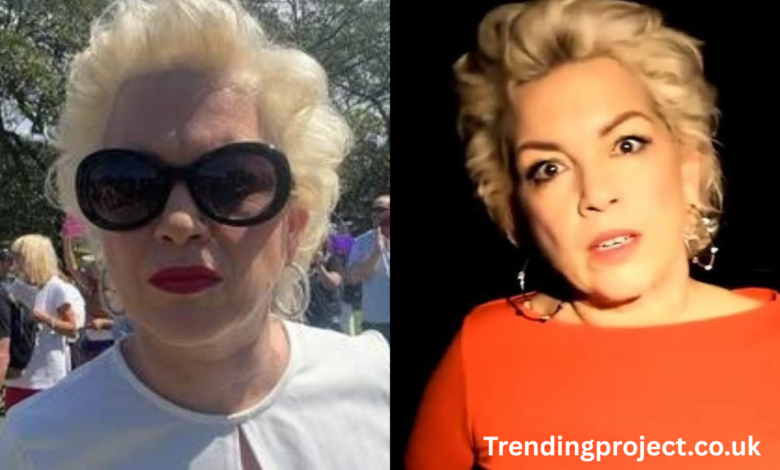
Posie Parker is a name that has become almost impossible to separate from Britain’s increasingly intense debate over sex, gender, women’s rights and free expression. Behind the familiar name is Kellie-Jay Nyishie Keen-Minshull, a British activist who moved from a comparatively private life into the center of one of the country’s most polarizing cultural and political conversations. Over the years, she has built a public profile through campaigning, public speaking, social media, demonstrations and political organizing, eventually becoming the founder and leader of the Party of Women. Her supporters regard her as a determined campaigner for sex-based women’s rights, while critics describe her as an anti-transgender activist. That sharply divided reaction is a major part of understanding both her influence and her controversial public career.
Table of Contents
ToggleThe story of Posie Parker is also a story about how modern activism can develop outside traditional political institutions. Rather than beginning as a professional politician or established public intellectual, Keen-Minshull developed her reputation through grassroots campaigning and direct communication with the public. Her use of slogans, billboards, social media videos, rallies and international speaking events helped her develop an audience that extended well beyond Britain. Her political journey eventually reached the ballot box when she stood for election in Bristol Central in 2024. Although she did not come close to winning the seat, the campaign demonstrated the evolution of her activism from protest and advocacy into formal party politics.
Today, Parker remains an active political figure and continues to lead the Party of Women. The Electoral Commission’s current registration record lists the party as authorised and identifies Kellie-Jay Keen as its leader and treasurer. The record also confirms that the Party of Women is registered to field candidates across Great Britain.
Posie Parker Facts at a Glance
| Category | Details |
|---|---|
| Full name | Kellie-Jay Nyishie Keen-Minshull |
| Common name | Posie Parker |
| Born | June 13, 1974 |
| Age | 52 in 2026 |
| Birthplace | Taunton, Somerset, England |
| Nationality | British |
| Profession | Activist, campaigner, political organiser and public speaker |
| Known for | Gender-critical activism and women’s rights campaigning |
| Education | Theology degree, University of Leeds |
| Parents | Not reliably documented in major public sources |
| Siblings | Older sister |
| Husband | Ryan Miles Minshull |
| Children | Four |
| Organisation | Standing for Women / Let Women Speak |
| Political party | Party of Women |
| Political position | Leader of the Party of Women |
| 2024 election | Candidate for Bristol Central |
| 2024 result | 196 votes, approximately 0.5% |
| Estimated net worth | No independently verified figure available |
| YouTube | @kelliejaykeen |
| X | @ThePosieParker |
| Instagram/TikTok | @kelliejaykeen |
Who Is Posie Parker?
Posie Parker is the public name of Kellie-Jay Keen-Minshull, a British gender-critical campaigner who has become one of the most recognisable figures associated with the British movement opposing aspects of transgender policy. She has consistently presented her work as campaigning for women’s rights and sex-based protections, while major media and advocacy organisations frequently describe her using terms such as anti-transgender activist. The difference between those descriptions reflects the wider controversy surrounding her work: Parker’s supporters focus on her arguments about biological sex and women’s spaces, while her critics argue that her campaigning is damaging to transgender people.
Keen-Minshull is particularly associated with the phrase “adult human female”, a slogan that became closely connected with her activism. Her public campaigning gained considerable attention after she began using the phrase on posters, merchandise and billboards. The strategy was deliberately straightforward: take a question that was increasingly being debated online and place it into highly visible public spaces. This approach helped turn Parker into a recognisable activist brand and gave her campaign a simple phrase that supporters could easily repeat.
Her career has since developed far beyond individual demonstrations. She founded Standing for Women, became associated with the Let Women Speak events and eventually created the Party of Women. The latter represented a significant change because it placed her activism within Britain’s formal electoral system. The Electoral Commission currently lists the Party of Women as an authorised political party, with Kellie-Jay Keen as leader.
Early Life and Family Background
Kellie-Jay Nyishie Keen was born in 1974 and grew up in Somerset in southwest England. Public biographical information about her childhood remains relatively limited compared with the enormous amount of material now available about her political career. Sources identify an older sibling and describe her upbringing in Somerset, but there is not enough reliable public information to construct a detailed account of her parents, household finances or every aspect of her childhood. That distinction matters because online biographies sometimes repeat personal claims without clearly identifying where those details originated.
What is clearer is that her early life was far removed from the political spotlight she would eventually occupy. She did not begin her career as an elected representative or mainstream political commentator. Instead, her background included education and work outside politics before motherhood and later activism became central features of her life story. This makes her transformation particularly notable because she entered public campaigning from outside the traditional political establishment.
Family has remained an important part of Parker’s personal identity. Public sources state that she is married and has four children. She has also spoken publicly about motherhood and family life in connection with her views on children, education and gender-related policies. Nevertheless, much of the family’s private life remains outside the public domain, and there is limited reliable information about the children’s individual lives.
Education and Life Before Activism
One of the less frequently discussed aspects of Posie Parker’s biography is her academic background. Available biographical records state that Keen-Minshull studied theology at the University of Leeds and obtained a bachelor’s degree. Her education in theology may seem far removed from the political activism for which she later became famous, but it forms an important part of her background and demonstrates that her public identity was not originally built around gender politics.
After university, her professional life did not immediately lead toward political activism. Public accounts describe periods of work in sales and other commercial environments, as well as an unsuccessful exploration of teacher training. She eventually became a mother and spent a substantial part of her adult life outside the conventional world of professional politics. In later interviews, she has described her transition from motherhood and private life into campaigning as something that developed gradually rather than through a predetermined political career.
This background helps explain one of the defining characteristics of Parker’s public persona. She has generally presented herself not as a career politician but as an ordinary woman who became politically active after becoming concerned about issues affecting women and children. That personal framing became central to her appeal among supporters, particularly people who felt that mainstream political parties were not adequately addressing their concerns.
The Beginning of Posie Parker’s Activism
Parker’s major rise to public attention began during the late 2010s as debates about transgender rights and gender recognition became increasingly prominent in Britain. One of her most memorable early campaigning tactics involved public advertising. In 2018, she paid for a billboard in Liverpool displaying the definition of “woman” as “adult human female”. The billboard generated significant attention and was subsequently removed following complaints. A similar message was later displayed in Leeds.
The billboard campaigns were important because they represented a different style of political communication. Instead of publishing a lengthy policy document or relying on parliamentary debate, Parker reduced her argument to a short statement that could be read within seconds. Supporters regarded the message as a defence of biological sex, while opponents argued that it excluded and stigmatized transgender people. The resulting controversy gave the campaign far more visibility than a conventional local protest might have achieved.
Parker’s activism also expanded through social media, where she could communicate directly with supporters and critics. Video platforms became particularly important because they allowed her to deliver speeches, discuss political developments and document public events without relying entirely on traditional news organisations. This direct communication became a recurring feature of her political strategy and helped establish the online identity associated with Posie Parker.
Standing for Women and the Growth of Her Movement
Standing for Women became one of the most important organisations associated with Parker’s activism. The campaign began with a focus on the slogan “Woman: Adult Human Female” and developed a broader programme of public demonstrations, speeches and grassroots activity. Sex Matters describes Standing for Women as a grassroots membership campaign that began in 2018 and focused on public direct action and rallies.
The organisation gave Parker a platform from which to turn individual campaigns into a more recognisable movement. Instead of appearing only as an individual activist, she became the central figure in a wider campaign structure. Merchandise, public meetings, social-media activity and speaking events helped create a recognisable identity around the movement.
Her campaign style was intentionally confrontational in the sense that it placed controversial subjects directly before the public. That approach helped her attract attention but also generated opposition. Parker’s events have repeatedly drawn protesters, and some of her public appearances have become highly contentious. Consequently, her career cannot easily be separated from the arguments surrounding both her views and the methods she uses to express them.
Let Women Speak and International Activism
The Let Women Speak format became one of the most recognisable elements of Parker’s later activism. The events were designed around the idea that women should be able to speak publicly about sex-based rights and related political issues. The format eventually expanded beyond Britain, allowing Parker to build an international profile and reach audiences in countries where debates about transgender rights and women’s spaces were also becoming politically significant.
Her international campaigning received particularly strong attention in Australia and New Zealand in 2023. Public events attracted both supporters and opponents, with some gatherings becoming scenes of intense confrontation. The controversy surrounding those appearances transformed Parker from a British activist into a figure followed by international media and political commentators.
The international dimension was significant for another reason. It demonstrated that Parker’s campaigning was no longer dependent on British politics alone. Her social-media audience could follow rallies, speeches and controversies in real time, creating an activist network that crossed national boundaries. Her official social-media hub currently links to YouTube, X, Facebook and other platforms, confirming the continued importance of digital communication to her work.
Party of Women and Political Ambitions
The creation of the Party of Women marked a major turning point in Parker’s career. Rather than restricting her work to campaigning and protest, she moved into formal party politics. The party was founded in 2023 and officially registered in Great Britain in February 2024. The Electoral Commission’s current record identifies Kellie-Jay Keen as its leader and treasurer and confirms that the party is authorised.
The party’s creation showed that Parker wanted her political message to have a formal electoral vehicle. Her activism had previously depended heavily on demonstrations, speeches and online communication. A political party provided a structure through which candidates could contest elections and attempt to turn campaign arguments into political representation.
The transition was not without difficulties. Establishing a political party requires organisation, candidates, finances and a sustainable electoral strategy. The Party of Women’s publicly available financial information illustrates the relatively small scale of the organisation in its early period. Electoral Commission records for its 2024 accounts show net assets of £5,245 at the end of that financial year.
Posie Parker’s 2024 Election Campaign
Keen-Minshull stood as the Party of Women’s candidate in Bristol Central at the 2024 general election. Her candidacy represented perhaps the clearest test of whether the audience built through years of activism could be converted into votes. The campaign attracted attention because of her established public profile and the controversial nature of her political platform.
The result, however, was emphatically unsuccessful in electoral terms. Parker received 196 votes, around 0.5 percent of the vote, and finished last among the candidates. The seat was won by the Green Party’s Carla Denyer. The result demonstrated a significant difference between online visibility and electoral support: although Parker had developed a considerable public following, that visibility did not translate into a large constituency vote.
Nevertheless, losing the election did not end her political career. Her Party of Women remains registered, and Parker continues to lead it. Her own party website still identifies her as its founder and leader and lists her Bristol Central candidacy from the 2024 election.
Controversies and Public Reaction
Controversy has been a constant feature of Parker’s public career. Her views on transgender rights, gender recognition, single-sex spaces, education and gender-related medical treatment have placed her in direct conflict with LGBTQ+ organisations and activists. Critics argue that her language and campaigning contribute to a hostile environment for transgender people, while supporters argue that she is defending women’s sex-based rights and challenging policies they believe have gone too far.
Some of Parker’s public appearances have also been accompanied by allegations concerning associations between elements of the surrounding protest environment and far-right groups. Parker has rejected allegations that she supports extremist ideologies and has publicly distanced herself from Nazi and fascist politics. These disputes have nevertheless become part of the broader discussion surrounding her public events.
The intensity of the reaction to Parker illustrates why she remains a significant, if highly divisive, political personality. She is not a conventional celebrity whose popularity depends primarily on entertainment. Her public profile is built around political disagreement. Supporters see her willingness to speak openly as evidence of courage, while opponents see the same confrontational style as a source of harm. That division has itself contributed to her continued visibility.
Husband, Children and Personal Life
Parker’s personal life is considerably less documented than her activism. Public biographies identify her as married and the mother of four children. Her family has occasionally appeared in discussions about her political journey, especially because she frequently frames issues involving children, education and safeguarding through her experience as a mother.
Her husband has also been identified in publicly available biographical material, but Parker generally keeps the details of her family’s private life separate from her political campaigning. This is particularly understandable given the intense attention and hostility that have surrounded her public activities. Information about the children’s own careers, interests and private lives should therefore be treated cautiously unless supported by reliable sources.
Motherhood is nevertheless an important part of the story she tells about herself. Parker has described her development as an activist in the context of family life and concerns about children. In interviews, she has discussed the transition from being a stay-at-home mother into becoming a public campaigner, presenting that change as one of the defining transformations of her adult life.
Posie Parker on Social Media
Social media has arguably been as important to Parker’s career as physical campaigning. Her official Let Women Speak social page identifies her YouTube channel as @kelliejaykeen and links to her X account at @ThePosieParker, along with Facebook and other platforms. Her online presence allows her to publish speeches, interviews, livestreams and political commentary directly to followers.
This direct-to-audience model has helped Parker remain politically visible despite not holding elected office. Traditional political influence has historically depended heavily on newspapers, television and established party structures. Parker’s career illustrates a different model in which an activist can develop an audience through video platforms, social networks and live events and then use that audience to promote political campaigns.
Her social-media presence also reinforces the highly personal nature of her brand. The name Posie Parker is not simply attached to an organisation; it has become an identity associated with her speeches, slogans, political arguments and public appearances. This means that much of the movement’s visibility remains closely connected to Parker herself.
Posie Parker Net Worth and Sources of Income
Posie Parker’s exact net worth is not publicly verified. This is an important distinction because numerous websites publish celebrity-style net-worth estimates without access to audited personal financial records. Those estimates can differ dramatically and should not be treated as established facts. There is no reliable public evidence that allows a precise figure for Parker’s personal wealth to be stated with confidence.
Her potential income sources are more straightforward to identify conceptually. Her public activities have included political campaigning, speaking engagements, online video content, merchandise and organisations connected with her activism. Her official online presence promotes campaign resources and merchandise, while her YouTube channel provides another potential source of platform revenue. However, income generated by an organisation or political party should not automatically be interpreted as Parker’s personal income.
The available financial records of the Party of Women also provide useful context but do not establish Parker’s personal net worth. The Electoral Commission record for the party’s 2024 accounts shows £6,982 in current assets, £1,737 in creditors and £5,245 in net assets at the end of that year. These are organisational figures, not a valuation of Parker’s personal finances.
Recent Career and What Comes Next
Parker’s political work remains active. The Party of Women continues to operate as a registered political party, and its current website continues to publish political statements under Kellie-Jay Keen’s leadership. The Electoral Commission’s current registration information confirms that the party remains authorised and is able to field candidates throughout Great Britain.
Her digital campaigning also remains central to her public life. The Let Women Speak website continues to direct followers toward Parker’s YouTube, X and other social-media accounts, where she publishes political commentary and video material. This suggests that her future influence is likely to continue developing through a combination of online activism, public speaking and organised political campaigning rather than through traditional parliamentary politics alone.
The biggest question surrounding her future is whether she can turn a highly recognisable activist profile into broader political support. Her 2024 Bristol Central result showed the difficulty of that challenge. At the same time, the continued existence of the Party of Women and Parker’s persistent online activity demonstrate that the electoral defeat did not end her political ambitions. Her next chapter will likely depend on how effectively she can expand beyond her existing audience while maintaining the strongly defined political identity that made her famous.
The Legacy of Posie Parker
Posie Parker’s biography is ultimately a story about transformation. Kellie-Jay Keen-Minshull did not emerge from the traditional political establishment, yet she managed to become one of the most recognisable voices in Britain’s gender-critical movement. Her journey from private family life and professional work into billboard campaigns, grassroots activism, international rallies and formal party politics demonstrates how dramatically political participation has changed in the digital age.
Her legacy will remain complicated because public opinion about her is deeply divided. To supporters, she represents persistence, free expression and an uncompromising defence of sex-based women’s rights. To critics, she represents a form of activism they believe marginalises transgender people. Both interpretations have contributed to the extraordinary attention surrounding her career, and neither can be ignored when assessing her place in contemporary British politics.
Whatever judgment history ultimately makes of Posie Parker, her rise offers a broader lesson about persistence and political communication. She built an influential public identity by repeatedly returning to the issues she believed mattered, even when doing so produced fierce opposition. Her story demonstrates that political influence can begin far outside Parliament and that a determined individual can build an audience through grassroots organising and digital media. As Kellie-Jay Keen continues to lead the Party of Women and develop her public campaign, her journey remains a reminder that conviction, persistence and a willingness to enter difficult debates can shape a lasting public legacy—even when that legacy remains intensely contested.