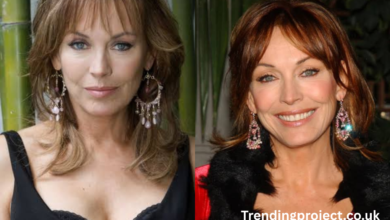
Victoria Tennant Biography: Early Life, Career, Movies, Family, Net Worth and Legacy

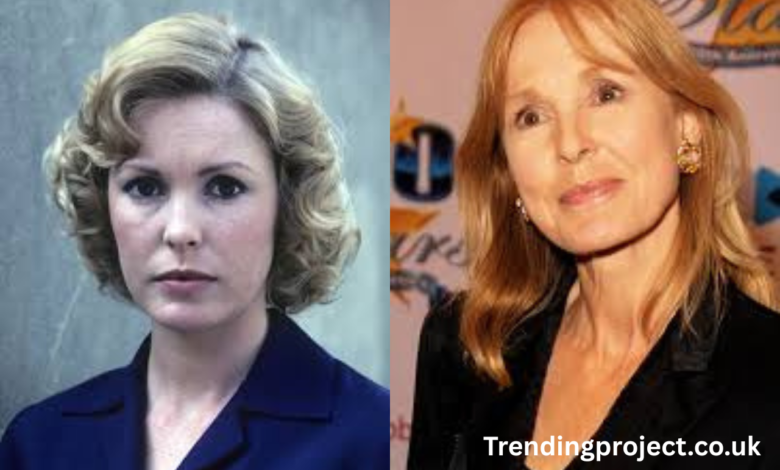
Victoria Tennant has lived a life that seems almost written for the screen. Born in London into a family deeply connected with ballet, theatre, film, and the professional world of entertainment, she grew up surrounded by artists and performers. Yet her eventual success was not simply the result of family connections. She trained seriously, developed her own acting craft, and built a career that carried her from British cinema to major American television productions, Hollywood movies, Broadway, regional theatre, producing, and literary work. Her journey is particularly fascinating because her life has remained closely connected to the extraordinary history of her mother, Russian ballerina Irina Baronova, while Victoria herself established an independent identity as an accomplished actress and writer.
Table of Contents
ToggleVictoria Tennant is perhaps best remembered by television audiences for playing Pamela Tudsbury in the acclaimed miniseries The Winds of War and its sequel War and Remembrance. At the same time, movie audiences recognize her from All of Me, The Holcroft Covenant, Flowers in the Attic, The Handmaid’s Tale, Whispers, and L.A. Story. Her career has never been confined to one genre or medium. She has worked in drama, comedy, historical productions, literary adaptations, television movies, theatre, and behind the camera. That versatility is one of the strongest reasons her career has endured for more than five decades.
Victoria Tennant Facts and Personal Details
| Category | Details |
|---|---|
| Full Name | Victoria Tennant |
| Date of Birth | September 30, 1950 |
| Age | 75 years old as of September 2026 |
| Birthplace | London, England, United Kingdom |
| Nationality | British |
| Profession | Actress, writer, producer |
| Father | Cecil Gordon Tennant |
| Mother | Irina Baronova |
| Siblings | Sister Irina and brother Robert |
| Education | Elmhurst Ballet School; Central School of Speech and Drama |
| Acting Debut | The Ragman’s Daughter (1972) |
| Best Known For | The Winds of War, War and Remembrance, All of Me, L.A. Story |
| Spouse | Kirk Stambler |
| Previous Spouses | Peppo Vanini, Matthew Chapman, Steve Martin |
| Children | Two |
| Years Active | 1972–present |
| Book | Irina Baronova and the Ballets Russes de Monte Carlo |
| Estimated Net Worth | Commonly estimated at around $10 million; not independently audited |
| Social Media | No reliably verified official Instagram, X/Twitter, or LinkedIn account identified |
These facts provide a quick introduction, but they do not fully capture the extraordinary circumstances surrounding Tennant’s upbringing. Her family history reaches from Russia and European ballet to the British entertainment industry, and those influences would become important throughout her life.
Victoria was born on September 30, 1950, in London to Cecil Gordon Tennant and Irina Baronova. Her father was a prominent British talent agent and producer whose professional circle included some of the most important actors of the twentieth century, while her mother was a Russian-born prima ballerina who became one of the famous “Baby Ballerinas” associated with the Ballets Russes de Monte Carlo. Victoria also grew up with a sister, Irina, and a brother, Robert. Her godfather was legendary British actor Laurence Olivier, another indication of how deeply connected her childhood environment was to the performing arts.
Early Life and Family Background
Victoria Tennant’s childhood was shaped by an unusually artistic family environment. Her mother, Irina Baronova, had escaped the Russian Revolution with her family and eventually became a major figure in international ballet. Baronova began dance training as a child and moved to Paris for more advanced instruction. At only thirteen, she joined George Balanchine’s Ballets Russes de Monte Carlo, becoming one of the celebrated young dancers known as the “Baby Ballerinas.” Her career took her across Europe, America, and Australia and placed her among the important dancers who helped popularize classical ballet internationally.
Victoria’s father brought an entirely different but equally influential perspective to her upbringing. Cecil Tennant worked as a producer and talent agent and represented major performers, including Laurence Olivier, Vivien Leigh, John Gielgud, and Michael Redgrave. Growing up around such professionals meant that acting was not an abstract dream to Victoria. She could see the discipline, preparation, pressure, and professionalism behind successful careers. Later accounts of her early life emphasized that she did not view show business as simply glamorous; she understood from childhood that professional performance required hard work and respect for the craft.
A devastating event changed that childhood permanently. Cecil Tennant was killed in a car accident on July 12, 1967, when Victoria and her siblings were still children. Her brother and sister were seriously injured in the same accident. The tragedy became an important part of the family’s later history, and the circumstances surrounding her father’s burial would remain emotionally significant to Victoria decades later. Her mother eventually moved to Australia and died there in 2008, leaving Victoria with both a remarkable artistic inheritance and a complicated family history to preserve.
Education and Ballet Training
Like her mother, Victoria initially entered the world of ballet. She spent eight years training at Elmhurst Ballet School, an experience that gave her a rigorous foundation in movement, discipline, concentration, and performance. Ballet training is famously demanding, and the experience would have required years of repetitive practice and physical conditioning. Even though Victoria ultimately pursued acting rather than a professional ballet career, that early training became an important part of the foundation upon which she built her later artistic identity.
After her ballet education, Tennant turned toward dramatic performance and spent two years at London’s Central School for Speech and Drama. The transition was significant because it combined the physical awareness developed through ballet with formal training in acting and stage performance. Her education therefore gave her a particularly broad understanding of performance, from physical expression to voice, character interpretation, and theatrical discipline.
That background also helps explain why Tennant’s later career became so diverse. She was not limited to screen acting. Her professional life eventually included film, television, Broadway, regional theatre, radio, writing, and producing. The combination of ballet and drama training gave her an artistic versatility that remained visible throughout her career.
Victoria Tennant’s Acting Debut
Victoria Tennant entered professional film in 1972 when she played the title role in The Ragman’s Daughter. The film was written by Alan Sillitoe and directed by Harold Becker, giving the young actress an opportunity to establish herself in British cinema. She was only in her early twenties, and the project marked the beginning of what would become a remarkably long career in entertainment.
Her early career involved working across British film and television before she began gaining wider international attention. Rather than becoming famous overnight, Tennant gradually accumulated experience and screen credits. This period was important because it allowed her to develop professionally before becoming associated with some of the most ambitious American television productions of the 1980s.
The major breakthrough arrived with The Winds of War in 1983. The enormous television miniseries gave Tennant the role of Pamela Tudsbury and placed her opposite Robert Mitchum. The production became a major television event, while Tennant’s performance earned both Emmy and Golden Globe recognition. Her Golden Globe nomination came in 1984 for her supporting performance in a series, miniseries, or motion picture made for television.
The Winds of War and War and Remembrance
The Winds of War was a turning point because it introduced Victoria Tennant to a huge international television audience. The production combined family drama, romance, international politics, and the approach of World War II, requiring its performers to work within an expansive historical narrative. Tennant’s portrayal of Pamela Tudsbury gave the character emotional sophistication while allowing her to remain part of a very large ensemble.
Five years later, Tennant returned to the same character in War and Remembrance. The sequel expanded the story even further and became another major television production. Tennant again worked alongside Robert Mitchum and an impressive ensemble cast, demonstrating that her earlier success was not a one-time achievement. She received another Emmy nomination for the sequel.
These two miniseries remain among the defining achievements of Victoria Tennant’s career. They demonstrated her ability to perform within large-scale historical productions while maintaining a believable emotional presence. At a time when television miniseries could become enormous cultural events, these roles gave Tennant a level of recognition that continued to shape how audiences remembered her work.
Victoria Tennant Movies and Hollywood Career
While television brought her major recognition, Tennant also developed an impressive Hollywood film career. One of her most memorable movies was All of Me, the 1984 comedy directed by Carl Reiner and starring Steve Martin and Lily Tomlin. The film allowed Tennant to display her comedic abilities and placed her in a very different type of production from the serious historical drama of The Winds of War.
Her filmography continued with projects including The Holcroft Covenant, Best Seller, Flowers in the Attic, Whispers, and The Handmaid’s Tale. These films covered a wide range of genres, from thriller and drama to literary adaptation. Rather than being associated exclusively with romantic roles or period productions, Tennant repeatedly demonstrated an ability to work with darker, more complex material.
Another highly recognizable movie in her career was L.A. Story, released in 1991. The romantic comedy reunited Tennant with Steve Martin and became one of her most recognizable feature-film appearances. Later work included Edie & Pen, Legend of the Mummy, Irene in Time, Cold Turkey, Louder Than Words, and Alex & The List. Her later filmography illustrates the remarkable longevity of her career, with work continuing well beyond the period in which she first became famous.
Television Career and The Handmaid’s Tale
Tennant’s television career extended far beyond her two famous historical miniseries. Over the years she appeared in a wide range of television productions and guest roles, demonstrating an ability to move between dramatic and lighter material. Her television credits include programs such as JAG, Providence, Scrubs, Monk, Diagnosis Murder, and The Beast.
One particularly notable role was Aunt Lydia in The Handmaid’s Tale. The story’s dark themes and disturbing social environment required Tennant to inhabit a very different kind of character from the sophisticated women she had portrayed in earlier projects. Her appearance connected her career with one of the most influential literary adaptations of its era.
Her television work demonstrates one of the central qualities of her career: adaptability. Tennant never depended entirely on one franchise or one type of role. She could appear in historical drama, comedy, suspense, literary adaptations, television movies, and episodic television. That flexibility helped her remain active across changing eras of the entertainment industry.
Theatre and Broadway
Victoria Tennant’s achievements extend well beyond movies and television. She has also maintained a substantial connection with theatre. Her Broadway debut came as Lesbia Grantham in Getting Married at Circle in the Square Theatre. She subsequently appeared in productions including Doubt, The Vagina Monologues, Misalliance, Love Letters, and The Taming of the Shrew.
Her performance as Sister Aloysius in John Patrick Shanley’s Doubt was particularly significant. The production at the Santa Barbara Theatre Company earned her the Santa Barbara Independent’s Indie award. The role required a very different kind of performance from film acting because theatre demands sustained concentration and emotional intensity in front of a live audience.
Her stage work also reinforces the importance of her formal training. Ballet had taught her physical discipline, while drama school gave her the tools for theatrical performance. Decades later, those foundations remained relevant. Whether she was performing on Broadway or in a regional production, Tennant’s career demonstrated a continuing respect for theatre as an essential part of an actor’s craft.
Writing and Producing Career
One of the less widely discussed sides of Victoria Tennant is her work behind the camera. In 1996 she wrote and co-produced Edie & Pen for HBO. This represented an important transition because it showed that she was interested not only in interpreting stories created by other people but also in helping shape stories herself.
She also produced Sister Mary Explains It All for Showtime with her husband and producing partner, Kirk Stambler. The project demonstrated her willingness to take on responsibilities beyond acting and helped establish her as a creative professional working across multiple aspects of production.
This expansion into writing and producing is an important part of understanding Tennant’s career. Acting may have introduced her to international audiences, but her later work shows an artist interested in storytelling from different perspectives. Her career gradually became less about simply appearing on screen and more about preserving stories, developing projects, and participating in the creative process.
Irina Baronova and the Ballets Russes Book
Perhaps the most personal and intellectually significant achievement of Victoria Tennant’s later career was her 2014 book, Irina Baronova and the Ballets Russes de Monte Carlo. Published by the University of Chicago Press, the richly illustrated work explores the life of Tennant’s mother and the history of the ballet company that helped make her famous.
The book drew upon letters, correspondence, oral histories, interviews, archival photographs, and family material. It tells the story of Irina Baronova’s childhood, her family’s escape from Russia, her development as a dancer, her relationship with George Balanchine and the Ballets Russes, and the demanding touring life experienced by performers of that era.
The project transformed Victoria from a daughter remembering a famous mother into a researcher and historical storyteller. More than three hundred photographs helped document Baronova’s career and the wider development of ballet in America. In this sense, the book became part memoir, part biography, and part cultural history, preserving a world that might otherwise have become increasingly distant from modern audiences.
Victoria Tennant’s Personal Life and Relationships
Victoria Tennant’s personal life has attracted public interest partly because of her marriages to several notable figures. Her first marriage was to Peppo Vanini, a nightclub owner associated with the Xenon nightclub. She later married writer and director Matthew Chapman before marrying actor and comedian Steve Martin in 1986. Her marriage to Martin ended in divorce in 1994.
In 1996, Tennant married Kirk Stambler, a lawyer and producing partner. Their relationship has remained much more private than her highly publicized marriage to Steve Martin. Together they have two children, and Stambler also worked with Tennant professionally on producing projects. Their partnership therefore combines family life with creative and professional collaboration.
Tennant’s personal history demonstrates how dramatically her life has changed over time. She moved from a childhood immersed in ballet and entertainment to an internationally recognized acting career and eventually to a quieter stage of life centered more strongly around family history, writing, theatre, and selected creative projects. Her public identity today is considerably broader than her reputation as a Hollywood actress.
Victoria Tennant’s Father’s Remains and Family History
One of the most recent public chapters in Tennant’s life involved a deeply personal legal matter concerning her father. Cecil Tennant had been buried at Brookwood Cemetery in Surrey following his death in 1967. Decades later, Victoria sought permission for his cremated remains to be exhumed and reinterred at St Mary’s Church in Conistone, North Yorkshire, where members of the wider Tennant family had long-standing connections.
The legal record explains that Cecil Tennant was born in Conistone and that members of the wider Tennant family had graves at St Mary’s Church. It also records that Victoria and her siblings were children when their father died and did not attend his funeral or burial. The family circumstances surrounding the tragedy made the question of his final resting place particularly meaningful.
The case was reconsidered in 2024. The Consistory Court of the Diocese of Guildford issued a judgment dated November 22, 2024, concerning Victoria Tennant’s petition for exhumation and reinterment. The episode offers a rare glimpse into the personal side of a public figure whose family history has always been intertwined with her identity.
Victoria Tennant Net Worth and Sources of Income
Victoria Tennant’s net worth is commonly estimated at approximately $10 million, although this figure should be treated carefully. Celebrity net-worth websites provide estimates based on publicly available information and industry assumptions; they do not have access to private bank accounts, contracts, investments, taxes, or other financial records. Therefore, the $10 million figure should not be presented as a confirmed audited fortune.
Her income over the years has come from multiple professional sources. Acting has naturally been the foundation, with earnings generated through feature films, television productions, miniseries, television movies, and theatre. Her long career includes both high-profile productions and smaller projects, giving her a broad professional portfolio rather than relying on one major source of income.
Writing and producing have provided additional creative avenues. Her work on Edie & Pen and Sister Mary Explains It All shows that her professional activities have extended beyond acting, while her published book represents another important creative achievement. Taken together, these different activities help explain how Tennant established a long-lasting career across multiple areas of the entertainment and publishing industries.
Victoria Tennant’s Social Media Presence
Unlike many contemporary celebrities, Victoria Tennant does not appear to maintain a clearly verified public Instagram, X/Twitter, or LinkedIn account that can confidently be attributed to her. Various social platforms contain people with the same name, but those profiles should not automatically be treated as belonging to the actress.
This distinction is particularly important when researching celebrity biographies. A social-media username may appear authentic without actually being connected to the public figure. Because there is no sufficiently reliable evidence establishing an official account, listing an unverified profile would risk misleading readers.
Tennant’s relatively limited social-media visibility is consistent with the more private direction of her later career. Her public presence today is more strongly associated with her professional biography, published work, archival interests, theatre career, and interviews than with constant social-media activity.
Recent Career and Continuing Legacy
Although Victoria Tennant is not as constantly visible in mainstream entertainment news as she was during the height of her Hollywood career, her body of work continues to attract interest. Her book about Irina Baronova has helped bring renewed attention to her family’s extraordinary ballet history, while her earlier performances remain available to new generations through television and streaming libraries.
A particularly fitting recent example came through her appearance on Barry Kibrick’s Between the Lines podcast in December 2024. The conversation focused on ballet and how the art form developed in America, a subject on which Tennant has an unusually personal perspective because of her mother’s career.
The continuing interest in Tennant’s work reflects something important about her career: she has moved beyond simply being remembered for a few famous screen appearances. She has become a custodian of family history and an interpreter of an earlier generation of performers. Her professional legacy therefore exists in two parallel worlds—acting and historical storytelling.
Conclusion
Victoria Tennant’s journey is far more interesting than a conventional Hollywood success story. She was born into a remarkable family, but she still had to build her own professional identity. Her mother was an internationally celebrated ballerina, her father was a respected talent agent and producer, and Laurence Olivier was her godfather, yet Tennant pursued years of demanding ballet and drama training before establishing herself as an actress.
Her career eventually carried her from The Ragman’s Daughter to some of the most ambitious television productions of the 1980s, including The Winds of War and War and Remembrance. She moved comfortably into Hollywood films such as All of Me and L.A. Story, took on dramatic projects including The Handmaid’s Tale, appeared on Broadway and regional stages, and later expanded into writing and producing.
Yet perhaps her most lasting achievement is the way she preserved her mother’s story. Through Irina Baronova and the Ballets Russes de Monte Carlo, Victoria Tennant transformed a deeply personal family connection into a substantial historical record. Her work ensured that Irina Baronova’s contribution to ballet could be remembered not only as the story of a glamorous ballerina, but as the life of a determined woman who experienced revolution, migration, international fame, motherhood, and artistic reinvention.
Victoria Tennant’s story ultimately demonstrates that a meaningful legacy is built through more than fame. It comes from discipline, adaptability, curiosity, and the willingness to keep exploring new forms of creative expression. From ballet studios and London’s theatre schools to Hollywood sets, Broadway stages, television miniseries, and the pages of a major historical biography, her journey has continually evolved.
As Victoria Tennant’s work continues to be rediscovered, her career stands as a reminder that success does not have to follow a straight line. An actor can become a producer, a daughter can become a historian, and a performer can eventually become the keeper of a family’s cultural memory. Her story is therefore not simply about celebrity or screen success—it is about perseverance, artistic growth, family, and the lasting power of stories carefully preserved for the generations that follow.