Amadou Diallo Biography: Early Life, Education, Family, Career and Lasting Legacy

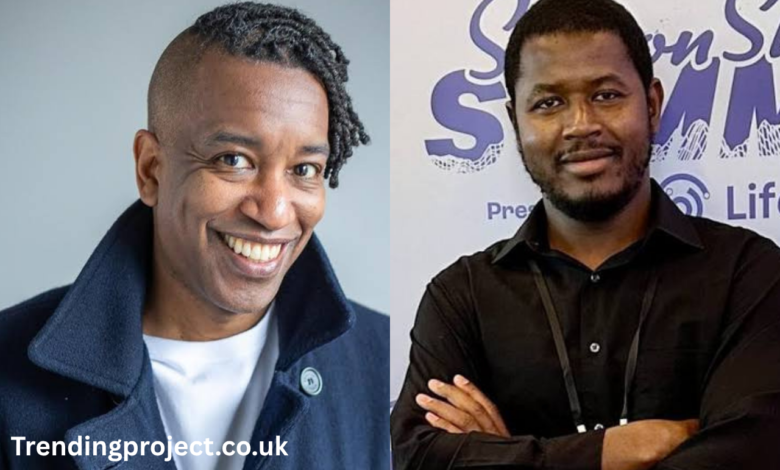
Amadou Diallo was only 23 when his life came to a devastating end in the Bronx, but the story he left behind has endured for more than two decades. Born in Liberia to a Guinean family, raised across several countries, educated in international schools, and driven by a deep desire to attend college, Diallo was building a future that combined education, technology, independence, and opportunity. He came to New York believing that the United States could provide the environment he needed to achieve his ambitions. Instead, on February 4, 1999, his life was cut short during a fatal encounter with four plainclothes NYPD officers. The officers fired 41 rounds, 19 of which struck Diallo.
Table of Contents
ToggleWhat makes Amadou Diallo’s biography especially powerful is that his story did not end with his death. The circumstances surrounding the shooting triggered protests, a highly publicized criminal trial, a federal civil-rights investigation, litigation against New York City, and years of debate about police accountability and racial profiling. His mother, Kadiatou Diallo, eventually transformed her grief into an educational mission through the Amadou Diallo Foundation. Today, that foundation continues to provide educational opportunities and youth programs, meaning that the dreams Diallo could not complete himself continue through other young people.
Amadou Diallo’s Early Life and Family Background
Amadou Bailo Diallo was born on September 2, 1975, in Sinoe County, Liberia. His parents were Kadiatou Diallo and Amadou Saikou Diallo, and the family had strong connections to Guinea. According to the Amadou Diallo Foundation, Amadou was the eldest of four children and grew up with his younger siblings Laouratou, Ibrahim, and Abdoul. His childhood was far from ordinary because his family’s circumstances gave him exposure to several countries and cultures from a young age.
His father’s international business contributed to the family’s mobility. Amadou spent parts of his childhood in Liberia, Guinea, Togo, and Thailand, experiencing different educational environments and developing an unusually broad worldview. The foundation’s biography records that he attended kindergarten in Monrovia, primary and secondary school in Lomé, middle school in Conakry, and later the French International High School in Bangkok. This international upbringing helped shape him into someone comfortable navigating different languages, cultures, and communities.
Education was particularly important to Diallo. The foundation describes him as a child who loved reading and encouraged his younger siblings to pursue college. He also enjoyed basketball and soccer, giving him interests that went beyond academics. Remarkably, he spoke five languages—Fulani, French, English, Spanish, and Thai—which reflected the international environment in which he had been raised. His childhood experiences would later influence his ambitions after moving to the United States.
Amadou Diallo’s Education and Interest in Technology
Diallo’s educational journey continued beyond traditional schooling. During his teenage and young-adult years, he developed an interest in computers and information technology. The Amadou Diallo Foundation records that he attended an informatics computer school in Singapore during 1994–95. At a time when the internet and digital technology were beginning to transform the global economy, his interest in computing offered a promising direction for his future.
His education was not simply about collecting qualifications. It was connected to a larger personal ambition. Diallo wanted to continue his education in the United States and believed college could provide the pathway toward independence and a professional career. His interest in technology made that ambition particularly significant because he was seeking to enter a field that was expanding rapidly during the 1990s.
The importance he placed on education later became one of the central themes of his family’s work. The Amadou Diallo Foundation was established partly around his dream of attending college, and its scholarship programs have continued to support students pursuing higher education. In this sense, his educational ambitions became one of the most enduring parts of his legacy.
Amadou Diallo’s Move to the United States
In 1996, Diallo left his international life behind and moved to New York City. He eventually settled in the Bronx, where he began working and saving money while pursuing his goal of going to college. His move reflected the hopes of countless immigrants who arrive in the United States believing that education and hard work can create new opportunities. The foundation describes his decision as part of his determination to build a future of his own.
His arrival in New York did not immediately translate into the professional career he imagined. Like many young immigrants, Diallo worked available jobs while trying to establish himself. Accounts of his life describe him working as a bicycle messenger and later as a street vendor selling items such as gloves, socks, and videos. These jobs provided income while he worked toward his larger objective of attending college.
One particularly revealing detail preserved by the Amadou Diallo Foundation is a handwritten note he left for his mother before leaving for America. The note expressed his belief that the United States offered a solution to the difficulties facing his family and urged his mother to protect his younger siblings. Whether viewed as youthful optimism or determination, the message illustrates how strongly Diallo associated America with opportunity and the possibility of a better future.
Amadou Diallo’s Life and Career in New York
Diallo’s career was still in its early stages when he died. He was not a famous businessman, technology executive, celebrity, or established professional. Instead, he was a young immigrant working to support himself while preparing for the next stage of his education. His street-vending work therefore represented a temporary step rather than the final destination of his career.
His interest in information technology gives important context to his ambitions. Having already studied computing in Singapore, he hoped to continue developing his education and eventually establish himself professionally. His life illustrates how career development often happens gradually, particularly for immigrants who must balance immediate financial responsibilities with long-term educational plans.
The final days of his life were actually filled with excitement about that future. According to his mother’s account on the foundation’s website, Diallo called her on January 31, 1999, just four days before his death, and enthusiastically told her that he was going to enroll in college. She asked whether he needed her help, and he reportedly told her that he only needed her prayers.
The Fatal Shooting of Amadou Diallo
Shortly after midnight on February 4, 1999, four plainclothes NYPD officers encountered Diallo outside his Bronx apartment building. The officers were members of the Street Crime Unit and were conducting patrol activity in the neighborhood. The encounter developed rapidly, and the officers opened fire. Diallo was unarmed, and the object he had reached toward was ultimately identified as his wallet rather than a firearm.
The officers fired 41 shots, hitting Diallo 19 times. The scale of the shooting immediately attracted national attention and raised serious questions about police training, perception, use of force, and racial profiling. Diallo’s death was especially shocking because he had no weapon and was a young immigrant who was attempting to establish a life in New York.
The United States Department of Justice later conducted its own investigation. In January 2001, the department announced that federal criminal civil-rights charges would not be brought against the four officers because prosecutors concluded that they could not prove beyond a reasonable doubt that the officers had acted with the specific intent required for a federal civil-rights conviction. The department nevertheless acknowledged the profound tragedy of Diallo’s death and the importance of maintaining trust between police departments and the communities they serve.
The Trial and Public Reaction
The shooting provoked enormous public reaction in New York and across the United States. Demonstrators argued that Diallo’s death represented a broader problem involving aggressive policing and racial profiling. The case became a major focal point for civil-rights organizations and community activists, while Diallo’s mother emerged as one of the most recognizable voices calling for accountability and reform.
The four officers involved in the shooting were ultimately tried on criminal charges. The case was moved from the Bronx to Albany, New York, and the officers were acquitted in 2000. The verdict generated further public debate because many people believed the circumstances surrounding Diallo’s death demanded criminal accountability, while the defense maintained that the officers genuinely believed they were confronting an armed suspect.
The legal story continued after the criminal trial. Diallo’s family pursued civil action against New York City, eventually reaching a $3 million settlement in 2004. The settlement was a civil resolution rather than a criminal conviction and did not represent a personal fortune accumulated by Diallo during his lifetime. Instead, it formed part of the legal aftermath of his death and the family’s effort to obtain accountability and compensation.
Amadou Diallo’s Mother and the Creation of His Foundation
After losing her son, Kadiatou Diallo devoted herself to preserving his memory and turning his educational ambitions into opportunities for other young people. The Amadou Diallo Foundation was established in 2001, with education and racial equity at the center of its mission. Rather than allowing Amadou’s story to remain solely associated with tragedy, the foundation sought to create something constructive from his unfinished dreams.
The foundation’s mission now includes advocating for racial equity and police accountability, promoting scholarships and leadership development, and empowering young people. Its work is particularly focused on helping students transition from high school to college and eventually develop careers and leadership roles in their communities.
The foundation also emphasizes that its programs are open to people of all racial groups, even though it places particular emphasis on students of African descent. Its broader goal is to promote educational opportunity and create connections between communities in the United States and Africa. In this way, the organization reflects the international character of Diallo’s own life.
Amadou Diallo Memorial Scholarship
One of the clearest expressions of Diallo’s legacy is the Amadou Diallo Memorial Scholarship. The program was created because Diallo himself came to the United States with the goal of continuing his education. His interrupted educational journey became the inspiration for helping other students complete degrees that could open doors to professional and personal opportunity.
The scholarship has been associated with Bronx Community College, creating a direct connection between Diallo’s life in the Bronx and the educational opportunities available to students there. Scholarship criteria have included academic standing and financial need, with preference in some years given to students pursuing STEM or criminal justice studies.
That focus is especially meaningful because it connects several parts of Diallo’s story. He had an interest in technology, he wanted a college education, and his death became central to discussions about policing and criminal justice. Supporting students in these areas therefore creates a living educational connection between his ambitions and the issues raised by his death.
Amadou Diallo Foundation’s Work and Community Impact
The foundation has expanded its work beyond scholarships. According to its current mission, it supports leadership, workforce development, youth empowerment, racial-equity advocacy, and global mentorship. It also operates the ADF Computer Center in Conakry, Guinea, where students can learn coding and digital technology skills.
The technology component is particularly appropriate given Diallo’s own educational interests. He had studied informatics in Singapore, and the foundation’s computer programs provide young people with access to skills that can help them participate in the modern digital economy. His unfinished interest in technology has therefore been transformed into opportunities for another generation.
The foundation also works to connect young people in Africa with members of the African diaspora. This international perspective echoes Diallo’s own childhood, which stretched across Liberia, Guinea, Togo, Thailand, and Singapore. His life was shaped by movement between cultures, and his legacy continues to emphasize connections across borders.
Amadou Diallo’s Legacy in 2026
Amadou Diallo’s name remains active in educational and community programs more than 27 years after his death. In 2026, the Amadou Diallo Foundation continued its scholarship activities, with information published about full-tuition scholarships for the 2026–27 academic year. This demonstrates that the organization’s work remains directly connected to the educational purpose established after Diallo’s death.
Bronx Community College also hosted the 12th Annual Amadou Diallo Youth Arts & Sci-Tech Day on February 7, 2026. The event brought more than 150 students together for workshops, performances, discussions, and activities centered on youth leadership and community problem-solving.
The continuation of these programs demonstrates how the meaning of Diallo’s name has expanded. He is remembered not only as a victim of a controversial police shooting but also as a young immigrant who valued education, technology, family, and opportunity. The educational programs carrying his name encourage students to become leaders and problem-solvers, turning remembrance into active community engagement.
Amadou Diallo’s Personality, Interests and Beliefs
Although Diallo never had the opportunity to become a public figure in his own lifetime, accounts from his family provide insight into his personality. He was described as someone who loved reading, enjoyed sports, valued education, and encouraged his younger siblings to attend college. These details reveal a young man whose ambitions were rooted in both personal advancement and concern for his family.
His multilingual background was another remarkable part of his identity. Speaking Fulani, French, English, Spanish, and Thai, Diallo was genuinely international in outlook. His experiences across Africa and Asia exposed him to different cultures before he ever reached the United States, giving him a perspective that was unusual for someone his age.
Family was also central to his life. His mother remained one of the most important influences on his legacy, while his relationship with his siblings was reflected in his repeated encouragement that they pursue education. His belief in education was therefore not simply an abstract idea; it was something he wanted his family to embrace and something he intended to pursue himself.
Amadou Diallo Net Worth and Sources of Income
Questions about Amadou Diallo’s net worth require careful treatment because he died before reaching the professional stage of his career. There is no reliable evidence that he had accumulated significant wealth. At the time of his death, he was working in New York while preparing to pursue higher education.
His reported sources of income included street vending and other work he performed while living in the Bronx. These jobs were part of his effort to support himself and save for his future. It would therefore be misleading to assign him a large net-worth figure based on speculative online estimates.
The $3 million settlement reached by his family with New York City in 2004 should also not be confused with Diallo’s net worth. That was a civil settlement reached after his death and does not represent money he personally earned or accumulated. Because no authoritative source provides a verified personal net-worth figure, the most accurate description is that Amadou Diallo’s net worth cannot be reliably determined.
Amadou Diallo’s Social Media Presence
Unlike modern public figures, Diallo had no personal social-media presence. He died in 1999, years before platforms such as Facebook, Instagram, and Twitter/X became part of everyday communication. Consequently, there are no legitimate personal Instagram, X, or LinkedIn profiles that can be confidently attributed to him.
Today, online information about Diallo is primarily maintained through organizations connected to his legacy. The Amadou Diallo Foundation publishes information about scholarships, programs, events, and educational initiatives, while Bronx Community College provides information about the memorial scholarship and youth programs associated with his name.
This distinction is important because Amadou Diallo is a relatively common name. Social-media profiles belonging to other people with the same name should not automatically be presented as accounts belonging to the young Guinean immigrant who died in 1999. Responsible biography writing should separate verified historical information from unrelated modern profiles.
Awards, Recognition and Historical Importance
Diallo did not receive professional awards during his lifetime because he died before his career could develop. His recognition instead came through the continued public remembrance of his life and the educational programs created in his name. The memorial scholarship and annual youth programs are among the clearest examples.
His death became an important reference point in discussions about policing, racial profiling, civil rights, and police accountability in the United States. The shooting and its aftermath contributed to a wider national conversation about how police officers assess threats and use force, particularly in encounters involving Black and immigrant communities.
His historical importance also comes from the way his family responded to tragedy. Through the Amadou Diallo Foundation, his mother and supporters created an institution that does more than commemorate him. It actively helps students pursue education, promotes leadership, supports technology training, and encourages dialogue about racial equity and policing.
Why Amadou Diallo’s Story Still Matters
The story of Amadou Diallo remains powerful because it represents both an individual tragedy and larger social questions. He was a young immigrant who had traveled across continents, learned multiple languages, studied technology, worked to support himself, and arrived in New York with the hope of going to college. His ambitions were ordinary in one sense, but deeply meaningful because they represented his vision for a better future.
His death forced difficult questions into public discussion. How should police officers respond when they believe they face danger? How should departments train officers to distinguish real threats from mistaken perceptions? What safeguards should exist to prevent unnecessary loss of life? And how can communities maintain trust when a police encounter ends in tragedy? These questions remain relevant long after the original case ended.
Perhaps the most enduring lesson comes from what happened afterward. Diallo could not finish his education, but other students have been given opportunities through programs established in his memory. His unfinished dream of college became a pathway for others. His interest in technology inspired educational initiatives. His mother’s grief became advocacy. And his name became associated not only with tragedy but also with opportunity.
Conclusion: The Lasting Legacy of Amadou Diallo
Amadou Diallo’s biography is ultimately the story of a young man whose life crossed continents before ending unexpectedly in New York. Born in Liberia to a Guinean family, educated in several countries, interested in computers and technology, and determined to attend college, he represented the aspirations of a generation seeking opportunity across borders. His life was still developing when it was suddenly interrupted at the age of 23.
The events of February 4, 1999, changed how many Americans discussed police use of force and racial profiling, while the legal aftermath generated years of debate. Yet focusing exclusively on the shooting risks overlooking the person Diallo was before that night. He was a son, brother, student, worker, multilingual traveler, sports fan, reader, and young immigrant who believed education could change his future.
More than two decades later, his legacy continues through scholarships, technology programs, youth initiatives, and community events. In 2026, students were still gathering through programs carrying his name, and educational opportunities connected to his foundation continued to support young people.
Amadou Diallo never got the chance to complete the future he imagined for himself. But through the work of his family and supporters, his belief in education continues to open doors for others. His story stands as a reminder that a person’s legacy is not always defined by how long they live, but by what their life inspires others to build. As future generations learn his story and benefit from opportunities created in his memory, Amadou Diallo remains a powerful symbol of perseverance, education, family, and the continuing pursuit of a more just and hopeful future.