Jane Hawking Biography: Her Life, Education, Marriage, Books and Legacy

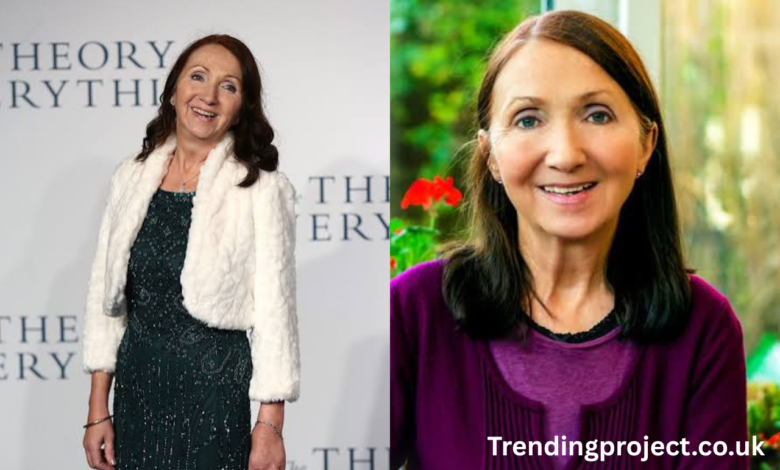
Some lives are remembered because of fame, while others become unforgettable because of everything a person quietly endures behind that fame. Jane Hawking’s story belongs to both worlds. For decades, she was publicly known primarily as the first wife of Stephen Hawking, one of the most recognizable theoretical physicists of the modern era. Yet behind that famous association was a woman with her own academic ambitions, literary interests, religious convictions, musical passions and remarkable determination. Jane was not simply a supporting character in Stephen Hawking’s extraordinary life; she developed a distinct identity through education, motherhood, teaching, writing and eventually telling her own version of a complicated and deeply human marriage.
Table of Contents
ToggleJane Hawking became especially well known after publishing her memoir about life with Stephen Hawking. Her experiences formed the foundation for Travelling to Infinity: My Life with Stephen, the book that later inspired the 2014 film The Theory of Everything. The memoir offered an intimate perspective on a relationship shaped by love, ambition, disability, family responsibilities and enormous personal pressure. Unlike a conventional celebrity biography, Jane’s story explores what happened inside the family while Stephen’s public reputation was growing and his physical abilities were progressively declining.
What makes Jane Hawking’s biography particularly compelling is the contrast between her private responsibilities and her own intellectual ambitions. She studied languages, pursued doctoral research in medieval Spanish poetry and continued developing herself academically while raising three children and helping care for a husband with motor neurone disease. Her life therefore offers a broader story about resilience, education, caregiving, family and the importance of maintaining a personal identity even when circumstances appear overwhelming.
Jane Hawking: Early Life and Family Background
Jane Beryl Wilde was born on March 29, 1944, in St Albans, Hertfordshire, England. She grew up in Britain during the post-war period, a time when educational opportunities and expectations for women were changing considerably. Her upbringing was influenced by the Anglican Christian tradition, and religion remained an important element of her worldview throughout her life. That spiritual outlook later became particularly interesting because Stephen Hawking’s scientific approach to questions about the universe often differed sharply from Jane’s faith-based perspective.
From an early stage, Jane showed a strong interest in languages and literature rather than the mathematical sciences that would eventually make her future husband famous. Her academic interests gave her a separate intellectual identity and eventually led her toward specialist study of medieval Spanish poetry. This distinction is important because it demonstrates that Jane did not enter Stephen Hawking’s world without ambitions of her own. She was already developing a scholarly path based on language, culture and literature.
Her early life also helped establish qualities that would become essential later. Jane was academically curious, culturally interested and strongly connected to music and religion. These interests provided sources of meaning during some of the most demanding periods of her adulthood. Rather than defining herself exclusively through her marriage, she repeatedly returned to education, music, family and writing as ways of preserving a sense of individuality.
Education and Academic Career
Jane studied modern languages at Westfield College, University of London, where she developed the academic foundation for her later research. Her interest in Romance languages eventually led her toward medieval Spanish literature. This was a highly specialized field, quite separate from Stephen Hawking’s theoretical physics, and it became an important part of Jane’s effort to establish herself as a scholar in her own right.
Her academic journey was anything but straightforward. Jane was married, raising children and dealing with the increasingly serious effects of Stephen’s motor neurone disease while continuing her studies. According to accounts of her life, she worked on her doctoral research over many years and eventually received her PhD in medieval Spanish poetry in 1981. The achievement mattered to her not simply as an academic qualification but as a way of establishing an identity independent of her husband’s growing international reputation.
That achievement reveals an important side of Jane Hawking that is sometimes overlooked in popular accounts. She was not simply the woman caring for a famous scientist. She was an educated woman pursuing serious scholarship under exceptionally difficult circumstances. Continuing doctoral research while managing motherhood, household responsibilities and caregiving required persistence that is easy to underestimate when looking backward from the present.
Meeting Stephen Hawking
Jane met Stephen Hawking in the early 1960s, when both were young and still at the beginning of their adult lives. Stephen was studying physics and was developing the intellectual interests that would eventually make him one of the world’s best-known cosmologists. Their relationship began during a period when neither could know how dramatically their lives would change in the years ahead.
Stephen’s health soon became a defining part of their relationship. He was diagnosed with motor neurone disease while still a young man, and doctors initially expected the illness to severely shorten his life. Jane nevertheless chose to remain with him, and they married in 1965. Their decision to begin a family came during a period of profound uncertainty, making their early relationship very different from an ordinary young marriage.
Jane later explained that she believed in Stephen’s abilities and wanted him to have the opportunity to continue his scientific work. She understood that his illness was serious, but she also believed that his intellectual gifts could lead somewhere extraordinary. Her confidence in him became one of the recurring themes in her later reflections, particularly when she discussed how strongly she supported his scientific ambitions.
Marriage, Children and Family Life
Jane and Stephen Hawking had three children: Robert, born in 1967, Lucy, born in 1970, and Timothy, born in 1979. Their family grew while Stephen’s physical condition progressively deteriorated, creating an unusual combination of ordinary family responsibilities and extraordinary medical challenges. Jane’s role increasingly extended beyond that of a wife and mother as she became deeply involved in supporting Stephen’s daily needs.
For years, Jane had to balance several demanding responsibilities simultaneously. She was raising young children, maintaining a household, continuing her own education and supporting Stephen’s academic career. As his motor neurone disease advanced, ordinary activities became increasingly difficult for him, meaning that practical care became a major part of family life. Her memoir later became important precisely because it documented this side of the story from the perspective of someone living inside it.
The family situation became even more complicated as Stephen’s scientific reputation expanded. His work attracted increasing attention, while his disability made everyday life more dependent on other people. Jane’s experience therefore involved both emotional and practical responsibilities. She had to help preserve family life while the person at the center of the household was simultaneously becoming a global scientific celebrity.
Jane Hawking and the Challenge of Caregiving
Caregiving is one of the most important themes in Jane Hawking’s life. Stephen’s motor neurone disease progressively affected his physical abilities, and the demands placed on the family became increasingly intense. Jane’s memoir describes the challenge of trying to care for a severely disabled husband while also raising children and attempting to maintain a life of her own.
The public often saw Stephen Hawking as a symbol of intellectual determination: a brilliant scientist who continued working despite profound physical disability. Jane’s perspective adds another dimension to that image. Behind his public achievements was a family structure involving extensive care, emotional support and practical assistance. Her story does not diminish Stephen’s accomplishments; instead, it provides a fuller understanding of the environment in which those accomplishments were pursued.
Jane’s experience also demonstrates why caregiving can be emotionally complicated. Love and exhaustion can exist at the same time. Commitment can coexist with frustration. A person can deeply believe in another individual’s abilities while still feeling overwhelmed by the demands placed upon them. Jane’s willingness to write honestly about these contradictions is one of the reasons her memoir became such an important part of the public story surrounding Stephen Hawking.
Building an Identity Beyond Stephen Hawking
As Stephen’s fame grew, Jane increasingly faced the challenge of being identified primarily through her husband. The situation was particularly difficult because Stephen’s scientific reputation became enormous following the success of his research and popular science writing. Jane, meanwhile, had her own academic interests and ambitions that could easily disappear behind the Hawking name.
Her decision to complete a doctorate was therefore personally significant. It provided evidence of her scholarly abilities and allowed her to claim an academic identity separate from her husband’s scientific achievements. Contemporary descriptions of her life emphasize that she felt the need for an intellectual identity of her own within the Cambridge academic environment.
Jane’s identity also developed through music, religion and literature. She sang in choirs and later married Jonathan Hellyer Jones, a musician and choirmaster. Music became an important part of her life and helped provide a different form of emotional expression. Her interests show that Jane’s personality cannot be understood solely through the lens of caregiving or marriage; she was also a scholar, writer, music lover and woman of faith.
Jane Hawking’s Divorce from Stephen Hawking
Jane and Stephen’s marriage eventually changed dramatically. They separated in 1990 after Stephen became involved with Elaine Mason, one of his nurses. Their divorce was finalized in 1995, bringing an end to a marriage that had lasted roughly three decades. The separation represented a major turning point in Jane’s life after years of living within the demanding circumstances created by Stephen’s illness and international scientific career.
In 1997, Jane married Jonathan Hellyer Jones, a musician and longtime family friend. Their relationship developed through the musical community in which Jane was involved, and the marriage offered her a different kind of partnership after the enormous pressures of her first marriage. Her later life therefore represented not simply an ending but a rebuilding of personal identity and family relationships.
Despite the divorce, Jane and Stephen eventually developed a more cooperative relationship. Their shared children remained a permanent connection, and after Stephen’s second marriage ended, Jane and Stephen were reportedly able to spend more family occasions together. Their story consequently did not end with the divorce; it continued to evolve into a different form of family relationship.
Jane Hawking as an Author
Jane’s first major memoir, Music to Move the Stars: A Life with Stephen, was published in 1999. The book gave readers access to a side of Stephen Hawking’s life that could not be found in his scientific publications. Instead of focusing on black holes, cosmology or theoretical physics, Jane wrote about marriage, parenting, disability, emotional strain and the everyday realities of living with a person whose body was progressively failing.
The memoir was later revisited and published as Travelling to Infinity: My Life with Stephen. The updated version became the basis for the 2014 film The Theory of Everything. The book’s importance lies partly in its willingness to present a complicated relationship rather than an uncomplicated inspirational narrative. Jane described difficult periods as well as the affection and belief that had originally brought the couple together.
Her writing also allowed Jane to reclaim control over her own story. For years, the public had largely encountered Stephen Hawking through interviews, scientific books and media coverage. Jane’s memoir introduced another perspective. She could explain what it was like to live beside his illness, raise their children and experience the enormous transformation of their family life as his scientific reputation grew.
The Theory of Everything and Felicity Jones
Jane Hawking’s memoir became the foundation for the 2014 film The Theory of Everything, directed by James Marsh and starring Eddie Redmayne as Stephen Hawking and Felicity Jones as Jane. The film introduced Jane’s story to millions of viewers who may never have read her memoir. It presented the relationship as both a love story and an exploration of disability, ambition, family and the passage of time.
Felicity Jones met Jane during the preparation for the role and spent time learning about her mannerisms, personality and family history. Jones described Jane as a complex woman with both analytical and emotional depth rather than a simple supporting character. Jane’s involvement helped the filmmakers understand aspects of her life that could not easily be recreated through research alone.
Jane ultimately expressed admiration for the film and for Felicity Jones’s portrayal of her, while acknowledging that filmmaking inevitably involves compromises. She understood that a feature film could not reproduce every detail of a decades-long marriage. Her memoir remains valuable for readers who want the fuller and more complicated version of events, while the film introduced her personal story to an enormous international audience.
Jane Hawking’s Faith, Music and Personality
Faith has played an important role in Jane Hawking’s worldview. Her Christian beliefs offered her a framework for understanding questions of suffering, purpose and human existence. This became especially significant because her husband approached many of the same philosophical questions through theoretical physics and cosmology. Their different perspectives created an intriguing contrast between scientific inquiry and religious belief.
Music was another major part of Jane’s life. Her involvement with choirs connected her to Jonathan Hellyer Jones, who was a musician and choirmaster. Music offered a social and creative environment that was separate from the highly technical academic world surrounding Stephen Hawking. It also became part of Jane’s personal identity and emotional life.
Her personality, as reflected in interviews and accounts of her life, is difficult to reduce to one description. She was academically ambitious yet deeply family-oriented, religious yet intellectually curious, and devoted to Stephen while also struggling with the demands of their relationship. Those contradictions make her story more authentic. Rather than presenting resilience as constant strength, Jane’s life demonstrates that resilience can include uncertainty, exhaustion, reinvention and the courage to tell an uncomfortable truth.
Jane Hawking’s Relationship With Stephen’s Legacy
After Stephen Hawking’s death in 2018, Jane’s perspective remained an important part of how his life was understood. She had lived alongside him during the years when his career was still developing and his illness was becoming increasingly severe. Few people had a comparable view of the private circumstances surrounding his rise to international fame.
Her memoir continues to provide an important human perspective on Stephen’s scientific legacy. Academic biographies naturally concentrate on his theories, research collaborations and contribution to cosmology, while Jane’s account focuses more closely on the personal environment surrounding those achievements. Together, these perspectives produce a fuller picture of the man behind the public icon.
Interest in Stephen Hawking’s personal history remains strong in 2026. An authorized biography by physicist and science writer Graham Farmelo is scheduled for publication in September 2026 and draws upon previously unseen family records, diaries, letters and interviews with people close to Hawking. The project was developed with access to family material, making it a significant new contribution to the historical record surrounding Stephen Hawking and those closest to him.
Jane Hawking’s Net Worth and Sources of Income
There is no dependable, independently verified public figure establishing Jane Hawking’s current net worth. Numerous celebrity websites publish estimated figures for public personalities, but these estimates often lack financial documentation. A responsible biography should therefore avoid presenting a precise net-worth number as fact when reliable evidence is unavailable.
Jane’s professional income over the years has been associated with her academic and educational work, writing, book royalties and public appearances. Her memoirs became internationally recognized, particularly after Travelling to Infinity was adapted into The Theory of Everything. However, the precise financial arrangements relating to publishing, adaptation rights and other private income are not publicly documented in sufficient detail to calculate a trustworthy personal fortune.
Her financial story is ultimately less significant than her professional accomplishments. Jane’s major contribution has been cultural and personal rather than commercial. Through her writing, she preserved an important perspective on disability, marriage and family life, while her academic career demonstrated that she maintained intellectual ambitions of her own despite circumstances that could easily have overwhelmed them.
Jane Hawking and Social Media
Jane Hawking has never developed the kind of highly visible social-media presence associated with modern celebrities and influencers. There is no sufficiently reliable basis for confidently identifying an official Instagram, X or LinkedIn account belonging to her. For that reason, social-media profiles claiming to represent Jane should be approached cautiously unless their authenticity can be independently established.
Her public communication has traditionally come through books, television interviews, radio conversations, documentaries and newspaper interviews rather than daily social-media posts. This makes her public profile somewhat different from that of younger authors and celebrities who communicate directly with audiences through platforms such as Instagram and X.
The absence of a large social-media following does not mean that Jane lacks public influence. Her memoir reached readers internationally, and The Theory of Everything brought her story to an even wider audience. Her influence has largely been built through storytelling and personal testimony rather than through online popularity.
Jane Hawking’s Life Today and Recent Developments
Jane Hawking remains a figure of continuing public interest because of her connection to Stephen Hawking and because of the enduring relevance of her memoir. While she generally maintains a relatively private public profile, renewed interest in Stephen’s life periodically brings attention back to her experiences and perspective.
A particularly significant development in 2026 is the forthcoming authorized biography Hawking: His Life and Work by Graham Farmelo. Publishers list the book for release in September 2026, with Penguin Random House and John Murray editions drawing upon extensive family archives and interviews. The biography is expected to provide new context about Stephen Hawking’s upbringing, personality, scientific career and relationships.
The renewed examination of Stephen’s life also reinforces the importance of Jane’s contribution to the historical record. Her memoir already provided a personal account from inside their marriage, while newly examined family papers may add further context to the circumstances that shaped the Hawking family. Together, these sources continue to demonstrate that Stephen’s public achievements were part of a much larger human story.
Jane Hawking’s Enduring Legacy
Jane Hawking’s legacy cannot be measured solely by her relationship with Stephen Hawking. She was an academic who earned a doctorate, a mother who raised three children, a writer who documented an extraordinary marriage and a woman who continued searching for her own identity under exceptionally difficult circumstances. Her achievements deserve recognition independently of the fame attached to her first husband.
Her story also provides an important lesson about the invisible work surrounding extraordinary achievement. Stephen Hawking became a global symbol of scientific brilliance and determination, but Jane’s experience reminds readers that public success often exists alongside enormous private responsibilities. Caregiving, family management and emotional support rarely receive the same attention as scientific discoveries, yet they can profoundly shape the lives of the people making those discoveries.
Perhaps the most powerful aspect of Jane Hawking’s journey is her determination to remain intellectually and emotionally alive despite years of extraordinary pressure. She pursued education, found strength through music and faith, raised a family, rebuilt her life after divorce and eventually transformed difficult memories into literature. Her story is not a simple tale of sacrifice, nor is it merely a story about living beside a genius. It is a story about finding one’s own voice when the world keeps trying to define you through someone else.
Conclusion
Jane Hawking’s life is a remarkable example of perseverance, personal growth and the search for identity in circumstances that could easily have erased individuality. Her marriage to Stephen Hawking placed her at the center of an extraordinary scientific story, but her own journey extended far beyond that relationship. Through education, motherhood, caregiving, music, faith and writing, she created a life with its own meaning and purpose.
Her memoirs gave readers an unusually intimate view of the human realities behind Stephen Hawking’s public image. They showed that extraordinary lives are rarely simple and that relationships can contain love, loyalty, frustration, ambition, sacrifice and change at the same time. The success of The Theory of Everything ensured that Jane’s perspective reached an even broader audience, while her own academic and literary achievements gave her a legacy independent of Hollywood.
Ultimately, Jane Hawking’s story is a reminder that resilience does not mean never struggling. It means continuing to learn, adapt and search for purpose even when life takes an unexpected direction. Her journey shows the value of maintaining one’s identity, pursuing meaningful goals and having the courage to tell one’s own story. As interest in the Hawking family continues into 2026, Jane’s voice remains an important part of that history—a reminder that behind every celebrated achievement are human relationships, difficult choices and people whose quiet strength can be just as remarkable as the achievements that make headlines.