Emily Lloyd Biography: The Rise, Challenges, and Enduring Legacy of a Remarkable British Actress

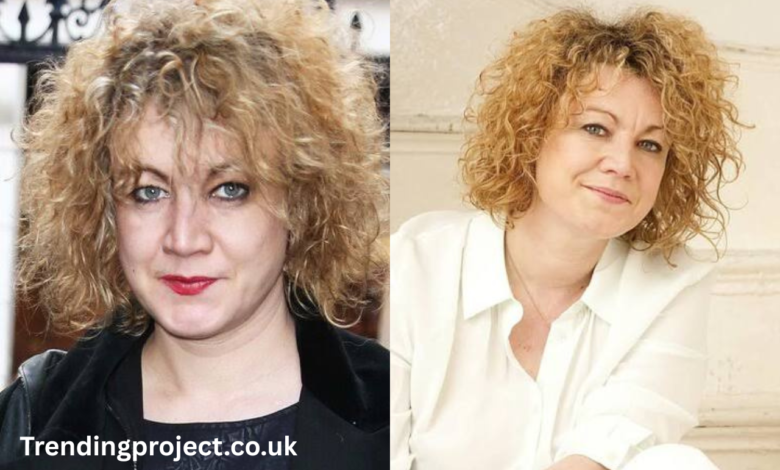
Few actresses have experienced a career quite as extraordinary and unpredictable as Emily Lloyd. Bursting onto the international film scene as a teenager, she quickly became one of Britain’s brightest acting talents. Critics praised her natural screen presence, emotional depth, and fearless performances, with many predicting she would become one of Hollywood’s biggest stars. Yet behind the applause and growing fame, Emily faced deeply personal struggles that dramatically altered the course of her career. Her life is a powerful story of remarkable talent, resilience, and the determination to keep moving forward despite overwhelming obstacles.
Table of Contents
ToggleUnlike many celebrities whose journeys follow a predictable path to success, Emily Lloyd’s biography is filled with unexpected turns. She experienced critical acclaim at an age when most teenagers were still in school, worked alongside acclaimed filmmakers and actors, and received prestigious awards before turning twenty. At the same time, she quietly battled mental health challenges that remained largely misunderstood during the early years of her career. Today, her story is recognized not only as one of artistic achievement but also as an important example of courage, honesty, and perseverance.
Emily Lloyd Facts
| Fact | Details |
|---|---|
| Full Name | Emily Alice Lloyd-Pack |
| Known As | Emily Lloyd |
| Date of Birth | 29 September 1970 |
| Age | 55 (as of 2026) |
| Birthplace | Islington, London, England |
| Nationality | British |
| Profession | Former Actress, Author |
| Education | Italia Conti Academy of Theatre Arts |
| Father | Roger Lloyd-Pack |
| Mother | Sheila Hughes (née Ball) |
| Siblings | Half-sister Charlotte Ball and three younger half-brothers |
| Marital Status | Private |
| Children | One |
| Years Active | 1986–2016 |
| Estimated Net Worth | Approximately $1–3 million (estimated) |
| No verified public account | |
| X (Twitter) | No verified public account |
| No verified official public page | |
| Not publicly available |
Early Life and Family Background
Emily Alice Lloyd-Pack was born on 29 September 1970 in Islington, London, into a family where creativity and performance were already part of everyday life. Her father, Roger Lloyd-Pack, became one of Britain’s most respected character actors, while her mother, Sheila Ball, worked in the entertainment industry as a theatrical agent. Growing up around actors, writers, and theatre professionals exposed Emily to storytelling from an early age and helped develop her fascination with acting.
Although she belonged to a well-known artistic family, Emily’s childhood was not without difficulties. Her parents separated when she was very young, and she was primarily raised by her mother. Despite the family changes, she remained surrounded by creativity and encouragement. Her grandfather, Charles Lloyd-Pack, had also enjoyed a successful acting career, making performance almost a family tradition that stretched across generations. These influences naturally shaped Emily’s imagination and inspired her ambition to become an actress herself.
From an early age, Emily displayed confidence, curiosity, and a vivid personality. She enjoyed expressing herself through drama and storytelling rather than following conventional childhood interests. Her teachers and family members noticed her unusual ability to communicate emotion naturally, something that later became one of her greatest strengths as a performer. Rather than simply memorizing dialogue, Emily had a rare instinct for making characters feel authentic and believable.
Education and Discovering Her Passion for Acting
Emily attended the prestigious Italia Conti Academy of Theatre Arts, one of Britain’s best-known performing arts schools. The academy has trained numerous successful actors, dancers, and entertainers, giving students intensive preparation for professional careers. During her time there, Emily refined her natural abilities while learning the discipline required for film and theatre work.
Unlike many aspiring actors who spend years searching for opportunities, Emily’s breakthrough arrived almost immediately. At only fifteen years old, she caught the attention of director David Leland during casting for Wish You Were Here. Her screen test impressed producers because she possessed an effortless realism that couldn’t easily be taught. Instead of appearing like someone acting, she seemed to become the character completely.
This early success transformed her life almost overnight. While many teenagers were preparing for examinations and planning university education, Emily suddenly found herself working on a major motion picture. The transition from student to internationally recognized actress happened with remarkable speed, opening doors that most performers spend decades trying to unlock.
Breakthrough Role and Instant Rise to Fame
Emily Lloyd’s life changed forever when she landed the leading role of Lynda Mansell in the 1987 coming-of-age drama Wish You Were Here. Directed by David Leland and loosely inspired by the early life of British madam Cynthia Payne, the film introduced audiences to a fearless young actress who possessed extraordinary emotional depth. Although it was her first feature film, Emily delivered a performance that felt remarkably mature and authentic. Critics praised her ability to portray vulnerability, rebellion, humor, and heartbreak with equal conviction, making her one of the year’s biggest discoveries. The film became both a commercial and critical success, winning international recognition at the Cannes Film Festival and launching Emily onto the global stage.
The praise Emily received was extraordinary for someone only sixteen years old. She won the National Society of Film Critics Award for Best Actress and the Evening Standard British Film Award for Best Actress, achievements that placed her among the finest performers of her generation. She also earned a prestigious BAFTA nomination, confirming that Britain’s film industry had found an exceptional new talent. Film critics frequently commented on her natural acting style, describing her performance as refreshingly honest and emotionally powerful. Many believed she was destined to become one of the defining actresses of the late 1980s and 1990s.
Her overnight success brought opportunities that most actors only dream about. Hollywood studios began competing for her attention, influential directors wanted to cast her, and entertainment magazines celebrated her as Britain’s newest rising star. Looking back years later, Emily recalled that the sudden fame was exciting but also overwhelming. At such a young age, she found herself navigating international film offers, media attention, and enormous expectations without fully understanding the pressures that accompanied celebrity.
Hollywood Career and Expanding Filmography
Following her remarkable debut, Emily relocated to Manhattan while still in her teens to pursue an international acting career. The move represented a major turning point, placing her at the heart of the American film industry. Producers quickly recognized her talent, and she secured leading roles in films such as Cookie (1989), where she starred alongside Peter Falk, and In Country (1989), appearing opposite Bruce Willis. These performances demonstrated that she could successfully transition from British cinema to Hollywood productions while adapting to different accents, genres, and filmmaking styles.
Her career continued with memorable appearances in films including Chicago Joe and the Showgirl, Scorchers, and Robert Redford’s acclaimed drama A River Runs Through It. She later appeared in When Saturday Comes, Welcome to Sarajevo, Boogie Boy, The Honeytrap, and the television film Riverworld. Although some of these projects achieved greater commercial success than others, Emily consistently earned praise for bringing emotional honesty and realism to every role she accepted. Her performances often reflected a quiet intensity that distinguished her from many of her contemporaries.
Several respected filmmakers believed Emily possessed the potential to become one of Hollywood’s biggest stars. Throughout the late 1980s and early 1990s, she was frequently linked to high-profile productions and considered for major leading roles. Industry insiders admired her screen presence, while audiences appreciated the authenticity she brought to complex female characters. Even when individual films received mixed reviews, critics often highlighted Emily’s acting as one of their strongest elements.
Career Challenges and Personal Struggles
Despite her remarkable professional achievements, Emily’s personal life became increasingly difficult during her late teenage years. While adapting to Hollywood life, she began experiencing significant mental health challenges that affected both her personal well-being and her ability to work consistently. At a time when conversations surrounding mental health were far less open than they are today, Emily often struggled without receiving the understanding or support she truly needed. She later spoke honestly about experiencing anxiety, depression, attention deficit disorder, Tourette syndrome, chronic insomnia, and other conditions that complicated both her daily life and professional career.
These health struggles unfortunately resulted in several lost opportunities. Emily famously turned down the lead role in Pretty Woman because she had already committed to another project, Mermaids, only to later lose that role as well. She was also replaced in productions including Husbands and Wives and Tank Girl as her health continued to decline. These setbacks created a public perception that overshadowed her extraordinary talent, leading some media outlets to focus more on missed opportunities than on her impressive body of work.
One particularly difficult period followed a trip to India in the late 1990s, during which Emily later said that a severe reaction to anti-malaria medication, combined with other traumatic experiences, worsened her mental health significantly. Although she stepped away from the spotlight for extended periods, she never completely abandoned her love for acting. Instead, she focused on recovery, treatment, and gradually rebuilding her life. Her willingness to discuss these experiences publicly later helped raise awareness about the importance of understanding and supporting people living with mental health conditions.
Awards, Recognition, and Lasting Influence
Emily Lloyd’s achievements during the early years of her career remain remarkable because they came at such a young age. Her unforgettable debut in Wish You Were Here earned her the National Society of Film Critics Award for Best Actress, making her one of the youngest performers ever to receive such recognition. She also won the Evening Standard British Film Award for Best Actress and received a BAFTA Award nomination for Best Actress in a Leading Role. These honors reflected the widespread belief that Britain had discovered an exceptional new acting talent capable of building a long and distinguished international career.
Beyond formal awards, Emily earned admiration from many respected figures in the film industry. Legendary film critic Roger Ebert described her performance in Wish You Were Here as one of the finest screen debuts by a young actress. Director Steven Spielberg, recognizing both her extraordinary talent and the pressures of sudden fame, famously advised her to enjoy being young rather than rushing into the demanding world of Hollywood. Although her career later faced unexpected interruptions, the respect she earned from critics, directors, and fellow actors has never disappeared.
Emily’s influence extends beyond the films she appeared in. In recent years, her story has become an important example in conversations about mental health within the entertainment industry. Many commentators now view her career through a more compassionate lens, recognizing how limited public understanding of mental illness affected performers during the late 1980s and 1990s. Rather than being remembered only for the roles she lost, Emily is increasingly celebrated for the extraordinary talent she displayed and for her openness in discussing personal struggles that many people face in silence.
Personal Life, Net Worth, and Life Away from the Spotlight
Unlike many celebrities who regularly share details of their private lives, Emily Lloyd has generally chosen to maintain a low public profile. She has spoken openly about her mental health journey but has remained respectful of her family’s privacy. Over the years, she has focused more on her well-being than on publicity, avoiding the constant media attention that often accompanies celebrity culture. She is also a mother, and much of her personal life has remained intentionally out of the public eye.
Emily’s experiences have given her a unique perspective on success and resilience. Rather than measuring achievement solely through awards or blockbuster films, she has often emphasized the importance of recovery, self-understanding, and maintaining hope during difficult times. Her honesty has inspired many readers and fans, particularly after the publication of her memoir, Wish I Was There, in which she reflected candidly on her childhood, career, and mental health challenges. The book received praise for its openness and emotional depth, helping audiences better understand the realities behind her public image.
Emily Lloyd’s estimated net worth is generally believed to be between $1 million and $3 million, although no official financial figures have been publicly confirmed. Her income has primarily come from film and television acting, royalties from previous work, and earnings from her memoir. While she no longer maintains the busy acting schedule she once had, her performances continue to reach new audiences through streaming services, television broadcasts, and home media releases, preserving her legacy within British and international cinema.
Social Media Presence, Recent Updates, and What’s Next
In today’s entertainment industry, social media often plays a major role in connecting celebrities with their audiences. Emily Lloyd, however, has taken a different path. She does not maintain verified public accounts on Instagram, X (formerly Twitter), Facebook, or LinkedIn. This reflects her long-standing preference for privacy and a quieter lifestyle away from the constant attention that accompanies online celebrity culture. Fans usually follow news about her through interviews, film retrospectives, and entertainment publications rather than personal social media posts.
Although Emily has stepped back from regular acting, interest in her career remains strong. Film historians, critics, and movie enthusiasts continue to revisit Wish You Were Here as one of the most memorable British coming-of-age films of the 1980s. Retrospectives celebrating director David Leland’s work and discussions about classic British cinema frequently highlight Emily’s remarkable debut performance and its lasting influence. Her story is also increasingly referenced in conversations about improving mental health awareness and support within the film industry.
Looking ahead, there have been no official announcements confirming major new acting projects. Nevertheless, Emily Lloyd’s legacy continues to grow through renewed appreciation of her films and the honesty she has shown about her personal experiences. For many admirers, her greatest contribution extends beyond the screen—it lies in demonstrating that talent, vulnerability, and resilience can coexist, and that personal struggles should never define an individual’s entire story.
Emily Lloyd’s Complete Filmography and Notable Performances
Emily Lloyd may not have appeared in dozens of blockbuster films, but the quality of her performances has ensured that her work remains respected by critics and cinema enthusiasts. Her breakthrough role in Wish You Were Here is still regarded as one of the finest acting debuts in British film history. She followed it with memorable performances in Cookie (1989), In Country (1989), Chicago Joe and the Showgirl (1990), and A River Runs Through It (1992), directed by Robert Redford. In each project, Emily demonstrated a remarkable ability to portray emotionally layered characters with honesty and realism rather than relying on dramatic exaggeration.
Throughout the 1990s and early 2000s, she continued appearing in films that showcased her versatility. Some of her notable credits include Scorchers, When Saturday Comes, Welcome to Sarajevo, Boogie Boy, The Honeytrap, and the television movie Riverworld. While commercial success varied from project to project, critics consistently recognized her natural screen presence and emotional authenticity. Even when cast in supporting roles, Emily often left a lasting impression because of her ability to connect with audiences through subtle, believable performances.
Some of Emily Lloyd’s best-known acting credits include:
- Wish You Were Here (1987)
- Cookie (1989)
- In Country (1989)
- Chicago Joe and the Showgirl (1990)
- A River Runs Through It (1992)
- When Saturday Comes (1996)
- Welcome to Sarajevo (1997)
- Boogie Boy (1998)
- The Honeytrap (2002)
- Riverworld (2003)
These films collectively represent a career that, although interrupted by personal challenges, demonstrated remarkable artistic ability and versatility across drama, romance, historical films, independent cinema, and television productions.
Emily Lloyd’s Legacy in British Cinema
Emily Lloyd occupies a unique place in British film history. While some actors are remembered for long careers filled with dozens of leading roles, Emily is remembered for the extraordinary impact she made in a relatively short period. Her debut performance alone influenced how filmmakers viewed young actresses capable of combining vulnerability with emotional strength. Even decades later, film critics continue to revisit Wish You Were Here as one of the defining British films of the late 1980s, with Emily’s portrayal of Lynda Mansell frequently cited as the heart of its success.
Her legacy also extends beyond cinema. Emily became one of the earliest well-known actresses to speak openly about mental health conditions that had affected both her personal life and professional career. At a time when such conversations were rare and often surrounded by stigma, her honesty helped broaden public understanding of mental illness within the entertainment industry. Today, her story is viewed with greater empathy, and many believe she was navigating challenges that would likely have been handled very differently in today’s more supportive environment.
Although Emily never fulfilled every expectation placed upon her as a teenage star, her influence remains significant. Her work continues to inspire aspiring actors, while her personal resilience serves as a reminder that success is not measured solely by fame or awards. Instead, it can also be found in the courage to confront adversity, speak openly about difficult experiences, and continue moving forward despite setbacks. Through both her performances and her life story, Emily Lloyd has earned a lasting place among Britain’s most memorable actresses.
Conclusion
Emily Lloyd’s journey is one of remarkable talent, early success, unexpected hardship, and extraordinary resilience. From becoming an award-winning actress as a teenager to working with acclaimed filmmakers in Britain and Hollywood, she experienced achievements that many performers only dream of. Yet her story is equally defined by the personal battles she fought away from the cameras. Instead of allowing those struggles to erase her accomplishments, Emily chose to share her experiences honestly, helping others better understand the realities of mental health and the importance of compassion.
Her film career remains a testament to her exceptional ability as an actress. Whether portraying rebellious young women, emotionally complex characters, or thoughtful supporting roles, Emily consistently brought authenticity to the screen. Even years after stepping away from regular acting, audiences continue discovering her films, while critics regard her debut as one of British cinema’s finest breakout performances. Her autobiography, Wish I Was There, further deepened public appreciation for the woman behind the fame by revealing the determination that carried her through life’s greatest challenges.
As Emily Lloyd continues to be remembered for both her artistic achievements and her remarkable personal courage, her story stands as a reminder that true success is about far more than celebrity. It is about resilience in the face of adversity, the willingness to remain authentic despite life’s obstacles, and the strength to keep moving forward. Her legacy continues to inspire actors, filmmakers, and readers alike, proving that perseverance, honesty, and passion can leave a lasting mark long after the spotlight has faded.