Wade Dooley Biography: The Towering England Rugby Star Who Became a National Hero

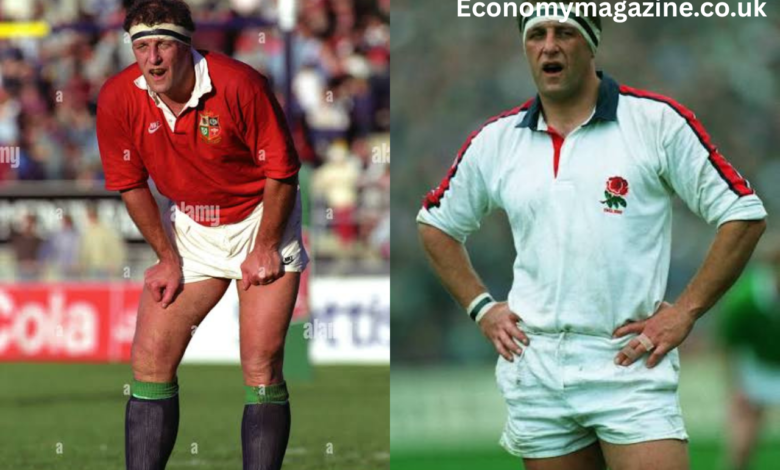
Few rugby players have left as lasting an impression on English rugby as Wade Dooley. Standing an incredible 6 feet 8 inches tall, Dooley was impossible to miss on the field, but it was his determination, discipline, and fearless style of play that truly made him unforgettable. Nicknamed “The Blackpool Tower,” he became one of England’s most respected lock forwards during the late 1980s and early 1990s, helping his country enjoy one of its most successful eras in international rugby union.
Table of Contents
ToggleUnlike many international stars who rose through elite rugby academies, Dooley followed a different path. He balanced a demanding career as a police officer while playing club rugby, proving that passion and hard work could overcome traditional barriers. His journey from local rugby grounds to representing England and the British & Irish Lions remains one of the sport’s most inspiring success stories.
Today, Wade Dooley is remembered not only for his remarkable achievements on the rugby field but also for his humility, resilience, and commitment to life beyond sport. His story continues to inspire rugby players, sports enthusiasts, and anyone pursuing success through perseverance.
Wade Dooley Quick Facts
| Fact | Details |
|---|---|
| Full Name | Wade Anthony Dooley |
| Popular Name | Wade Dooley |
| Date of Birth | 2 October 1957 |
| Age | 68 (as of 2026) |
| Birthplace | Warrington, Cheshire, England |
| Nationality | British |
| Profession | Former Rugby Union Player, Former Police Officer |
| Position | Lock Forward |
| Height | 6 ft 8 in (2.03 m) |
| England Caps | 55 official Test caps (57 appearances listed in some records) |
| British & Irish Lions | 1989 Australia Tour, 1993 New Zealand Tour |
| Club | Preston Grasshoppers, Fylde, New Brighton |
| Parents | Not publicly disclosed |
| Siblings | Not publicly known |
| Spouse | Sharon Dooley |
| Children | Private |
| Estimated Net Worth | Approximately $1–2 million (estimated) |
| Current Residence | Lancashire, England |
| No verified public account | |
| X (Twitter) | No verified public account |
| No verified official public page |
Early Life and Family Background
Wade Anthony Dooley was born on 2 October 1957 in Warrington, Cheshire, England, a region with a proud sporting culture. Growing up in northern England exposed him to competitive sports from an early age, particularly rugby, which has long been deeply rooted in local communities. His exceptional height became noticeable during childhood, but it would take years before he fully realized how much of an advantage it could become on a rugby field.
Interestingly, Dooley did not begin his sporting career in rugby union. Like many young athletes in northern England, he initially played rugby league, a sport with different rules and traditions. It wasn’t until he was around 19 years old that he switched to rugby union. That decision would completely transform the course of his life, eventually leading him to international recognition.
Although detailed information about his parents and siblings has remained private throughout his life, those who have worked with Dooley often describe him as grounded, respectful, and hardworking. These qualities became evident both during his rugby career and later in his professional life outside the sport.
Education, Personal Development, and Becoming a Rugby Player
Unlike many modern professional athletes who specialize in one sport from an early age, Wade Dooley developed gradually. His transition from rugby league to rugby union required learning different tactical systems, line-out techniques, and positional responsibilities. Fortunately, his impressive athleticism and willingness to improve quickly caught the attention of experienced coaches.
One of the most influential figures in his development was former England international Dick Greenwood, who recognized Dooley’s enormous potential while he played for Preston Grasshoppers. Greenwood helped refine his technical skills, especially his line-out jumping, defensive positioning, and leadership within the forward pack. Under this guidance, Dooley transformed from a talented local player into an international prospect.
Away from rugby, Dooley also pursued a demanding career in law enforcement. Serving with Lancashire Constabulary, he balanced police duties with elite-level rugby—a remarkable achievement during an era when professionalism had not yet arrived in rugby union. His ability to manage both careers demonstrated extraordinary discipline and commitment.
International Rugby Career and Rise to National Fame
Wade Dooley’s international breakthrough came on 5 January 1985, when he made his England debut against Romania at Twickenham. Although he was already 27 years old—older than many first-time internationals—his maturity, physical presence, and work ethic quickly justified his selection. Standing at 6 feet 8 inches, he became one of the tallest players in world rugby, giving England a major advantage during line-outs and set pieces. His towering frame, combined with surprising mobility, made him an intimidating opponent for teams across Europe.
The early years of his England career were not always straightforward. English rugby was going through a period of transition, with frequent coaching changes and new players entering the national squad. As a result, consistency was difficult to achieve. Dooley later admitted that his first few seasons at international level were challenging, but instead of becoming discouraged, he worked relentlessly on improving every aspect of his game. His determination gradually earned the trust of selectors and teammates alike.
Everything changed when Dooley formed a second-row partnership with fellow police officer Paul Ackford. The duo became one of England’s most dependable locking combinations, providing stability in the scrum, dominance in the line-out, and leadership around the field. Their understanding developed into one of the foundations of England’s resurgence at the end of the 1980s, helping establish a powerful forward pack that competed with the world’s best teams.
British & Irish Lions Tours and Career Highlights
Dooley’s consistent performances for England earned him selection for the 1989 British & Irish Lions Tour to Australia, one of the highest honours available to a rugby union player. Initially not selected for the opening Test, he forced his way into the team for the second and third Tests. His physicality and dominance in the forward pack played an important role as the Lions recovered from losing the first Test to win the series 2–1. Those performances elevated his reputation beyond England and established him among the finest lock forwards in international rugby.
His success with the Lions carried into England’s golden period under coach Geoff Cooke and captain Will Carling. England captured consecutive Five Nations Grand Slam titles in 1991 and 1992, with Dooley serving as one of the team’s key leaders in the pack. His line-out expertise, relentless tackling, and tireless work rate became trademarks of England’s forward dominance during those memorable seasons. He also played an important role in England’s journey to the 1991 Rugby World Cup Final, where they finished runners-up after losing to Australia at Twickenham.
Another major chapter came with the 1993 British & Irish Lions Tour to New Zealand. Unfortunately, the tour ended under heartbreaking circumstances. During the trip, Dooley learned that his father had passed away. He returned home to attend the funeral and was subsequently replaced by a young Martin Johnson, who would later become one of England’s greatest captains. Following this emotional experience, Dooley decided to retire from international rugby, bringing an outstanding career to a close.
Playing Style, Leadership, and Reputation
Wade Dooley built his reputation on far more than his extraordinary height. While his 6-foot-8-inch frame naturally made him a dominant line-out jumper, coaches and teammates consistently praised his commitment, physical strength, and willingness to do the difficult work that often goes unnoticed by spectators. He excelled in winning possession, disrupting opposition attacks, clearing rucks, and providing stability during scrums. His contribution rarely appeared on the scoreboard, yet it was invaluable to every team he represented.
His nickname, “The Blackpool Tower,” perfectly reflected both his imposing stature and his connection with Lancashire, where he served as a police officer. Opposing players respected his competitive spirit, even though his career occasionally included moments of controversy. One of the most talked-about incidents occurred during the 1987 Five Nations Championship against Wales, when he struck Welsh forward Phil Davies during a heated match. The incident resulted in disciplinary action, but Dooley later apologized, and even Davies acknowledged the emotional intensity of the encounter.
Despite isolated controversies, Dooley’s overall reputation remained that of a committed professional and respected teammate. Coaches admired his consistency, younger players valued his experience, and supporters appreciated his honest, hard-working approach. His ability to balance elite international rugby with a demanding policing career further strengthened his image as one of England’s most dedicated sportsmen.
Personal Life, Family, and Life Beyond Rugby
Away from the rugby field, Wade Dooley has always preferred a quiet and private life. Unlike many modern sports personalities who actively seek media attention, he has consistently kept his family out of the spotlight. He is married to Sharon Dooley, and the couple have built a life centered on family, community, and hard work. Even during the height of his playing career, Dooley was known for staying grounded and focusing on his responsibilities rather than chasing fame.
One of the most emotional moments of his life came during the 1993 British & Irish Lions tour of New Zealand. While representing one of rugby’s most prestigious teams, Dooley received the heartbreaking news that his father had passed away. He immediately returned to England to attend the funeral, placing family above his sporting ambitions. His departure from the tour opened the door for a young Martin Johnson, who would later become one of England’s greatest captains. Soon after, Dooley decided to retire from international rugby, bringing an outstanding career to a dignified close.
Retirement did not mean stepping away from meaningful work. After leaving professional rugby, Wade and Sharon became involved in running Dizzy Ducks Tea Room in Wrea Green, Lancashire. The business reflected the couple’s desire for a quieter lifestyle while remaining active within their local community. The transition from international rugby to small business ownership demonstrated Dooley’s practical nature and his willingness to embrace new challenges beyond sport.
Net Worth, Income Sources, and Life After Retirement
Although Wade Dooley never earned the enormous salaries enjoyed by today’s professional rugby stars, he built a stable and respectable career through multiple professions. During his playing days, rugby union was still an amateur sport, meaning players did not receive the lucrative contracts common in the modern era. Alongside representing England and the British & Irish Lions, Dooley worked as a police officer with Lancashire Constabulary, providing him with a reliable income throughout his sporting career.
Following retirement, his financial stability has come from a combination of his policing career, business ventures, public appearances, speaking engagements, and continued involvement in rugby events. Various online estimates place his net worth at around $1–2 million, although Dooley himself has never publicly confirmed his financial position. As with many retired athletes from the amateur era, his wealth is better measured by his long-term career, reputation, and business success than by endorsement deals or celebrity earnings.
Dooley’s story also highlights the remarkable contrast between past and present generations of rugby players. Today’s international stars often earn substantial club contracts and sponsorships, whereas players of Dooley’s era balanced elite sport with full-time employment. His success in both policing and rugby remains a testament to his discipline, resilience, and commitment to excellence in every aspect of life.
Social Media Presence, Recent Updates, and Lasting Legacy
Unlike many former athletes, Wade Dooley does not maintain a verified public presence on platforms such as Instagram, X (formerly Twitter), or LinkedIn. Instead, he occasionally appears through rugby interviews, historical features, reunion events, and museum projects celebrating England’s rugby heritage. Fans continue to remember him through archival match footage, interviews, and photographs that capture one of England’s most successful rugby eras.
In recent years, Dooley has remained closely connected with rugby history. His interviews with the World Rugby Museum have offered fascinating insights into England’s Grand Slam-winning teams, his experiences touring with the British & Irish Lions, and the unforgettable moments that shaped his international career. These reflections have allowed younger generations of supporters to appreciate the sacrifices and achievements of players who competed before rugby became fully professional.
Today, Wade Dooley is widely regarded as one of England’s finest lock forwards. His 55 England caps, two British & Irish Lions tours, Grand Slam victories, and Rugby World Cup Final appearance represent a career filled with memorable achievements. More importantly, his humility, professionalism, and commitment to balancing elite sport with public service have made him an enduring role model within the rugby community.
Conclusion
Wade Dooley’s journey is one of perseverance, dedication, and quiet excellence. From growing up in Warrington and discovering rugby union as a teenager to becoming one of England’s most dependable international forwards, every stage of his career reflects determination and hard work. His remarkable height may have made him instantly recognizable, but it was his leadership, toughness, and unwavering commitment to his teammates that truly defined his legacy.
His achievements—including representing England more than fifty times, touring twice with the British & Irish Lions, winning consecutive Five Nations Grand Slams, and helping England reach the 1991 Rugby World Cup Final—place him among the most respected figures of his generation. At the same time, his successful career as a police officer and later as a small business owner illustrates that sporting greatness can coexist with humility and service to the community.
As Wade Dooley continues to be remembered as one of English rugby’s most influential second-row forwards, his story stands as a powerful reminder that success is built through resilience, discipline, and character. His legacy extends far beyond trophies and international caps, inspiring future generations to pursue excellence, remain grounded, and embrace every opportunity with determination and integrity.