Iain Robertson Biography: From BAFTA-Winning Actor to a Life Marked by Triumph and Controversy

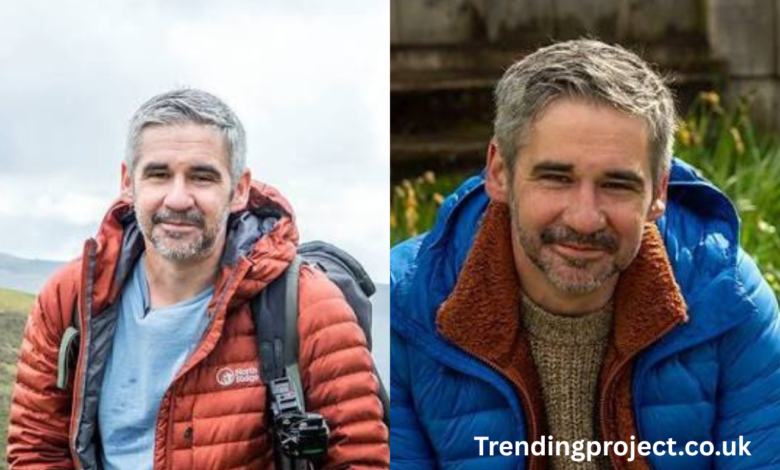
Scottish actor Iain Robertson has experienced one of the most dramatic journeys in modern British entertainment. Celebrated for his natural talent, powerful screen presence, and memorable performances in television, film, and theatre, he built a respected career that earned critical acclaim and industry recognition at a young age. From growing up in the working-class streets of Glasgow to starring in internationally recognized productions alongside renowned actors, Robertson’s story once represented ambition, resilience, and artistic success.
Table of Contents
ToggleYet, his life has also become a reminder that public success does not shield anyone from accountability. In 2026, Robertson became the focus of widespread media attention after being convicted of multiple serious criminal offences, bringing an abrupt end to a career that had spanned more than three decades. His biography therefore reflects both remarkable professional achievements and the profound consequences of personal actions.
Understanding Iain Robertson’s life means looking beyond headlines. His journey includes childhood determination, award-winning performances, acclaimed theatre work, international film appearances, and, ultimately, legal proceedings that significantly altered his public legacy. This biography explores every stage of that remarkable and complex story.
Iain Robertson Quick Facts
| Fact | Details |
|---|---|
| Full Name | Donald Iain Robertson |
| Known As | Iain Robertson |
| Date of Birth | 27 May 1981 |
| Age | 45 (as of 2026) |
| Birthplace | Glasgow, Scotland |
| Nationality | Scottish |
| Profession | Actor |
| Years Active | 1995–2023 (acting career) |
| Famous For | Small Faces, River City, Band of Brothers, Sea of Souls |
| Parents | Not publicly disclosed |
| Siblings | Grew up in a family of seven; individual names not publicly known |
| Marital Status | Divorced |
| Former Spouse | Judith Milne |
| Estimated Net Worth | Approximately $1–2 million (estimated before legal issues) |
| No verified public account | |
| X (Twitter) | No verified public account |
| No verified public profile |
Early Life and Childhood
Iain Robertson was born on 27 May 1981 in Govan, Glasgow, one of Scotland’s best-known working-class communities. Growing up in a large family of seven children, he experienced a childhood that demanded resilience, determination, and a strong sense of community. Although financial comforts were limited, the environment helped develop the confidence and grit that later became evident in many of his performances. Robertson has spoken about how growing up in Govan gave him “fire in my belly,” motivating him to work harder and appreciate every opportunity that came his way.
His interest in acting did not begin with dreams of celebrity. Instead, it started when a primary school teacher recognized his creative abilities and encouraged him to explore drama. That simple encouragement became the turning point that redirected his future. At only eleven years old, Robertson joined a local drama group where he not only performed but also helped write and direct small productions with friends. These early experiences introduced him to storytelling, stage performance, and teamwork.
Another major milestone arrived when Robertson won a scholarship to the prestigious Sylvia Young Theatre School in London. The opportunity exposed him to professional acting training at a young age and allowed him to refine his natural talent. The combination of Glasgow’s working-class values and London’s professional theatre education created the foundation for a career that would soon gain national attention.
Acting Career and Breakthrough Success
Iain Robertson’s professional acting career began remarkably early, proving that talent and determination can open doors regardless of age or background. After receiving formal training at the Sylvia Young Theatre School, he quickly started appearing in British television dramas. His early screen credits included well-known series such as Kavanagh QC, Silent Witness, Bramwell, The Bill, and Grange Hill. These productions introduced him to professional television audiences while allowing him to gain valuable experience working alongside established actors and directors. Each appearance strengthened his confidence and demonstrated his ability to portray emotionally complex characters despite his young age.
Robertson’s true breakthrough arrived in 1996 when director Gillies MacKinnon cast him as Lex Maclean in the critically acclaimed Scottish film Small Faces. Set in Glasgow during the late 1960s, the coming-of-age drama explored family, friendship, and gang rivalries with remarkable realism. Robertson’s performance earned widespread praise for its authenticity and emotional maturity. Critics admired his ability to portray vulnerability, courage, and youthful determination in equal measure, helping establish him as one of Scotland’s brightest young acting talents. The film became a landmark in Scottish cinema and remains one of the defining projects of his career.
Winning recognition so early created enormous expectations, but Robertson embraced the challenge. Rather than limiting himself to one genre, he continued building a diverse acting portfolio across television, feature films, theatre, and radio. His willingness to take on dramatically different characters demonstrated his versatility and earned respect from casting directors throughout the United Kingdom.
Career Highlights
- Starred as Lex Maclean in Small Faces.
- Appeared in numerous acclaimed British television dramas.
- Successfully transitioned between film, television, theatre, and radio.
- Established a reputation as one of Scotland’s most versatile performers.
Rise in Television, Film, and Theatre
Following the success of Small Faces, Robertson steadily expanded his career throughout the late 1990s and 2000s. He joined Steven Spielberg’s award-winning World War II miniseries Band of Brothers, exposing him to an international audience. Although his role was relatively small, participating in one of television’s most celebrated war dramas added considerable prestige to his résumé. He later appeared alongside globally recognized stars including Sharon Stone in Basic Instinct 2 and Wesley Snipes in The Contractor, proving he could comfortably work in both British and international productions.
Television remained one of Robertson’s strongest platforms. He delivered memorable performances in productions including Sea of Souls, Rab C. Nesbitt, Casualty, Holby City, Taggart, and later River City, where he portrayed Stevie O’Hara between 2017 and 2023. His role in River City introduced him to a new generation of viewers and became one of his longest-running television characters. Audiences appreciated the realism and emotional depth he brought to the role, reinforcing his reputation as a dependable dramatic actor.
Beyond television and cinema, Robertson developed an impressive theatre career. He appeared in productions for the Royal National Theatre, Citizens Theatre, Old Vic, Traverse Theatre, and Royal Lyceum Theatre. His performances in Shakespearean plays such as Romeo and Juliet, The Tempest, and contemporary Scottish productions showcased his remarkable range. Theatre critics frequently praised his stage presence, emotional honesty, and command of challenging roles, making him equally respected on stage and screen.
Awards, Critical Recognition, and Lasting Contributions
Iain Robertson earned respect within the British entertainment industry not simply because of the number of productions he appeared in, but because of the quality and consistency of his performances. His breakout role in Small Faces brought him one of Scotland’s highest acting honours when he received a Scottish BAFTA Award. The film itself became a landmark in Scottish cinema, and Robertson’s portrayal of Lex Maclean established him as one of the country’s most promising young actors. Winning such a prestigious award early in his career immediately raised expectations and opened doors to larger film, television, and theatre opportunities.
His success was not limited to the screen. Robertson also gained recognition in theatre, where his classical performances impressed critics and industry professionals alike. In 1999, he received an Ian Charleson Award Commendation for his work in The Mysteries at the Royal National Theatre. A few years later, his portrayal of Trinculo in The Tempest earned him Third Prize at the prestigious Ian Charleson Awards, which celebrate outstanding performances by young actors in classical theatre. These honours confirmed that Robertson possessed exceptional versatility, capable of excelling in Shakespearean drama as well as contemporary television and film.
Throughout his acting career, Robertson developed a reputation for choosing challenging roles instead of simply pursuing commercial success. Whether portraying troubled young men, historical figures, soldiers, or emotionally complex characters, he consistently brought authenticity and emotional depth to his performances. His body of work across cinema, television, theatre, and radio demonstrated a commitment to the craft of acting that earned admiration from colleagues and audiences alike before his later legal troubles overshadowed those accomplishments.
Major Awards and Recognition
- Scottish BAFTA Award – Small Faces (1996)
- Ian Charleson Award Commendation – The Mysteries (1999)
- Ian Charleson Award – Third Prize – The Tempest (2002)
- Scottish BAFTA Recognition for Sea of Souls
- Edinburgh Fringe First Award (2010) for the acclaimed stage production My Romantic History.
Personal Life, Marriage, and Interests
Away from the spotlight, Iain Robertson generally maintained a private personal life. He married Judith Milne, and the couple remained together for several years before divorcing in 2009 after approximately three years of marriage. Following the divorce, Robertson rarely discussed his relationships publicly, preferring to keep his personal affairs away from media attention. Throughout much of his career, interviews focused primarily on his work rather than his private life, contributing to an image of someone dedicated to his profession rather than celebrity culture.
Robertson often credited his upbringing in Glasgow for shaping his values and determination. Growing up in a modest household taught him resilience, hard work, and appreciation for opportunities that many aspiring actors never receive. Friends and colleagues frequently described him as passionate about acting and committed to developing his craft. He enjoyed theatre, literature, and creative storytelling, interests that complemented his long career across multiple performance mediums.
Unlike many modern celebrities, Robertson maintained only a limited public presence on social media. He never built a significant online personal brand through platforms such as Instagram or X (formerly Twitter). Instead, audiences primarily followed his professional work through television appearances, theatre productions, interviews, and entertainment news coverage. His relatively low-profile digital presence reflected an older generation of performers who focused more on traditional acting careers than social media influence.
Legal Proceedings and Recent Developments
The final chapter of Iain Robertson’s public career has been dominated by serious criminal proceedings that dramatically changed how he is viewed by the public and the entertainment industry. In June 2026, following a trial at the High Court in Glasgow, a jury found Robertson guilty of five offences committed against three women between 2004 and 2019. The convictions included rape, sexual assault, assault, and domestic abuse. Throughout the trial, Robertson denied the allegations, but the jury found him guilty after considering the evidence presented.
On 23 July 2026, the High Court in Edinburgh sentenced Robertson to an extended sentence of 12 years, consisting of nine years in prison followed by three years of supervised release in the community. Lady Drummond, who delivered the sentence, stated that his offending involved “violence, coercion, intimidation and sexual abuse” and formed a pattern of controlling behaviour that caused lasting psychological harm to the victims. The court also imposed indefinite non-harassment orders and ordered that Robertson remain on the Sex Offenders Register.
The convictions effectively ended Robertson’s acting career and significantly altered how his professional achievements are remembered. Productions with which he had been associated, including River City, became part of media coverage surrounding the case. While his earlier work continues to be recognized as part of British television and Scottish cinema history, biographies and retrospective discussions now inevitably acknowledge both his artistic accomplishments and the criminal convictions that reshaped his public legacy.
Key Recent Developments
- Convicted in June 2026 of five offences involving three women.
- Sentenced on 23 July 2026 to a 12-year extended sentence, including nine years’ imprisonment.
- Subject to a further three years of supervised release after prison.
- Placed on the Sex Offenders Register and made subject to indefinite non-harassment orders.
Net Worth, Income Sources, and Public Legacy
Before the criminal proceedings, Iain Robertson had built a successful career spanning more than thirty years in film, television, theatre, and radio. Although he was never regarded as one of Britain’s highest-paid actors, industry estimates generally placed his net worth at approximately $1–2 million, accumulated through acting salaries, theatre productions, television appearances, film roles, voice work, and occasional public engagements. Because Robertson was a private individual, no official financial records have ever been published, so these figures remain estimates rather than verified totals.
His principal income came from long-running television productions, stage performances, feature films, and acclaimed theatre work. Roles in productions such as Small Faces, Band of Brothers, Sea of Souls, River City, and numerous stage plays provided steady employment throughout his career. Unlike many modern entertainers, Robertson was not widely known for endorsement deals, influencer partnerships, or substantial commercial ventures outside acting, making his professional performances the primary source of his earnings.
Today, Robertson’s legacy is deeply divided. On one hand, he remains a talented Scottish actor whose performances earned prestigious awards and critical praise during the early and middle stages of his career. On the other, his criminal convictions have fundamentally changed how his life and career are remembered. His story illustrates that artistic achievement and public recognition do not place anyone above the law, and that personal conduct can ultimately define a person’s legacy as much as professional success.
Filmography and Notable Acting Roles
Across more than three decades in the entertainment industry, Iain Robertson built an impressive portfolio that spanned feature films, television dramas, theatre productions, and radio performances. Rather than becoming associated with only one type of character, he consistently sought roles that challenged him emotionally and creatively. This willingness to explore different genres—from historical dramas and crime series to Shakespearean theatre and independent Scottish cinema—helped establish him as one of Scotland’s most versatile actors. His performances were often praised for their realism, emotional intensity, and ability to portray complex human experiences.
One of Robertson’s most celebrated performances came in Small Faces (1996), where he played Lex Maclean, a young Glasgow boy navigating friendship, family struggles, and gang conflict. The film became a landmark in Scottish cinema and earned Robertson widespread critical acclaim. He later appeared in the award-winning HBO miniseries Band of Brothers, adding an internationally recognized production to his résumé. Other film credits included The Contractor, Basic Instinct 2, and several independent British productions that showcased his ability to move comfortably between mainstream and arthouse cinema.
Television audiences came to know Robertson through numerous British dramas, including Sea of Souls, Taggart, Casualty, Holby City, Silent Witness, The Bill, Rab C. Nesbitt, and, most notably, River City, where he portrayed Stevie O’Hara from 2017 until 2023. His performances on stage were equally respected, with appearances at the Royal National Theatre, Old Vic, Citizens Theatre, Royal Lyceum Theatre, and Traverse Theatre, where he demonstrated a remarkable command of both classical and contemporary drama.
Selected Film and Television Credits
Films
- Small Faces (1996)
- The Match
- One Last Chance
- The Contractor
- Basic Instinct 2
Television
- Band of Brothers
- River City
- Sea of Souls
- Taggart
- Casualty
- Holby City
- Silent Witness
- The Bill
- Rab C. Nesbitt
Legacy, Influence, and Lessons from His Story
For many years, Iain Robertson’s career was regarded as an example of what a talented young Scottish actor could achieve through dedication, training, and perseverance. Rising from a working-class background in Glasgow, he earned prestigious awards, worked with internationally respected filmmakers, and established himself across film, television, theatre, and radio. His artistic contributions remain part of Scotland’s cultural and entertainment history, particularly through productions such as Small Faces and River City. His performances continue to be remembered for their emotional authenticity and technical skill.
At the same time, Robertson’s criminal convictions fundamentally altered the way his life and career are viewed. His story now serves as a reminder that professional success and public recognition do not excuse unlawful behaviour or protect anyone from accountability. The legal proceedings and sentencing in 2026 became a defining part of his biography, overshadowing many of the achievements that had once earned him admiration within the acting community. Media coverage, public discussion, and historical accounts of his career now necessarily include both his artistic accomplishments and the serious offences for which he was convicted.
Ultimately, Iain Robertson’s life is one of extraordinary contrasts. It reflects the heights that talent, determination, and opportunity can achieve, while also demonstrating how personal actions can reshape a lifetime of professional accomplishment. His biography stands as a complex record of success, responsibility, and consequence. For readers, it offers a broader lesson: lasting respect is built not only through achievement and recognition but also through integrity, accountability, and the choices made throughout one’s life.
Conclusion
Iain Robertson’s life is a powerful example of how a person’s legacy can be shaped by both remarkable achievements and deeply consequential personal actions. Rising from a working-class upbringing in Glasgow, he earned recognition as one of Scotland’s most gifted actors, winning prestigious awards and building a respected career across film, television, theatre, and radio. His performances in productions such as Small Faces, Band of Brothers, Sea of Souls, and River City demonstrated exceptional talent and left a lasting mark on British entertainment. At the height of his career, he was admired for his versatility, dedication to his craft, and ability to bring complex characters to life with authenticity.
However, Robertson’s legacy was fundamentally transformed by his 2026 criminal convictions and subsequent sentencing. Those events became an inseparable part of his public story, illustrating that professional success, awards, and public recognition do not place anyone above the law or exempt them from accountability. His biography now reflects both his artistic contributions and the serious consequences of his actions, serving as a reminder that character and personal responsibility are just as important as professional accomplishments.
As history continues to remember Iain Robertson, his story stands as a complex narrative of talent, ambition, achievement, and accountability. His early career remains a testament to what determination and hard work can accomplish, while the later chapters of his life underscore the importance of integrity and ethical conduct. Ultimately, his journey reminds readers that true legacy is measured not only by success or fame, but by the values a person upholds and the impact their choices have on others.