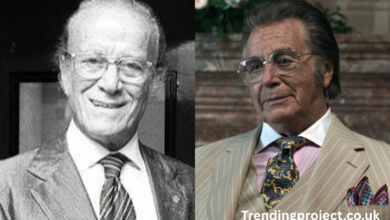
Few true-crime stories are as unusual as that of Gilbert Galvan Jr. His life became a strange mixture of crime, deception, family and reinvention, eventually turning him into one of the most notorious bank robbers associated with Canadian criminal history. Born in Los Angeles in 1957, Galvan spent much of his early adult life involved in crime before escaping from a Michigan prison in 1984 and crossing into Canada. There, he abandoned his real identity and began living as Robert Lee Whiteman, a name that would eventually become associated with an extraordinary string of bank and jewelry-store robberies.
What made Galvan’s story so remarkable was not simply the amount of money involved or the number of robberies. It was the double life he managed to maintain. While his wife knew him as Robert Whiteman and he presented himself as a respectable working man, he was secretly traveling across Canada and carrying out robberies. During a crime spree lasting approximately 33 months, he committed 59 robberies across 14 Canadian cities, with the total proceeds reported at more than $2 million and, in some accounts, approximately $2.3 million.
The unusual way Galvan traveled between cities eventually earned him the nickname “The Flying Bandit.” He could board commercial flights, reach another Canadian city, commit a robbery and return home, sometimes carrying out multiple robberies during a single trip. His story later became the subject of Robert Knuckle and Ed Arnold’s 1996 true-crime book The Flying Bandit: Bringing Down Canada’s Most Daring Armed Robber and inspired the 2022 film Bandit, starring Josh Duhamel.
Gilbert Galvan Jr. Facts at a Glance
| Category | Details |
|---|---|
| Full name | Gilbert William Galvan Jr. |
| Known alias | Robert Lee Whiteman |
| Nickname | The Flying Bandit / Phantom Bandit |
| Born | 1957 |
| Birthplace | Los Angeles, California, United States |
| Nationality | American |
| Known for | Bank and jewelry-store robberies in Canada |
| Crime spree | Approximately 33 months |
| Reported robberies | 59 |
| Cities involved | 14 Canadian cities |
| Reported proceeds | More than $2 million; some sources report approximately $2.3 million |
| Wife | Janice Whiteman, formerly Janice McKenzie |
| Children | At least two reported |
| Book | The Flying Bandit |
| Film adaptation | Bandit (2022) |
| Portrayed by | Josh Duhamel |
| Verified Instagram | No reliably verified official account found |
| Verified X/Twitter | No reliably verified official account found |
| Verified LinkedIn | No reliably verified professional account found |
| Current net worth | No reliable verified figure |
Several details about Galvan’s life remain difficult to establish from authoritative public records. His birth year and birthplace are consistently reported, while information about his parents, siblings, formal education and present-day finances is much less certain. For that reason, claims circulating online about his family background, current wealth or private life should not automatically be treated as established facts. The strongest biographical material comes from the documented criminal case and the book The Flying Bandit.
Early Life and Family Background
Gilbert William Galvan Jr. was born in Los Angeles, California, in 1957. The Canadian Book Review Annual’s review of The Flying Bandit describes his early family environment as dysfunctional and notes that his family eventually moved to Texas. Beyond those broad details, however, the publicly available biography of Galvan does not offer a complete portrait of his childhood, parents or siblings. That lack of information makes it difficult to reconstruct precisely what his early family life was like.
What is much better documented is the beginning of Galvan’s criminal path. According to accounts of his life, he became involved in criminal activity while still young and spent significant portions of his adult life moving through different jurisdictions and using aliases. His criminal activities included fraud, robbery and other offenses, and he developed experience that would later become important to his Canadian crime spree. Rather than emerging suddenly as a bank robber, Galvan’s criminal career developed over years.
His early history also demonstrates why the Canadian chapter of his life was not an isolated incident. Galvan had already learned how to manipulate identities and avoid straightforward detection before arriving in Canada. The escape from a Michigan prison in 1984 became the decisive turning point, because it gave him the opportunity to leave his established identity behind and attempt something much more ambitious: creating a completely different life across the border.
Escape From Prison and the Robert Whiteman Identity
In 1984, Galvan escaped from the penal institution in Centreville, Michigan, and made his way into Canada through the Windsor area. Instead of remaining Gilbert Galvan Jr., he adopted a new identity and became known as Robert Lee Whiteman. This transformation was central to everything that followed. His real criminal record remained in the United States, while his new Canadian identity allowed him to present himself as someone with an entirely different background.
The new identity did more than help Galvan evade authorities. It enabled him to establish personal relationships and construct a household that appeared legitimate. Accounts of the period say that he met Janice McKenzie, a social worker from the Pembroke area, and eventually married her. The couple had at least two children according to available biographical accounts. To his family, he was Robert Whiteman, a husband and father attempting to build a stable life in Canada.
That contrast between domestic life and criminal activity became the defining feature of the Galvan story. The 1996 book describes him as maintaining a double existence in which he appeared to be a family man while secretly operating as a highly productive armed robber. The deception continued for years, demonstrating how effectively Galvan separated his public identity from the criminal persona that investigators were trying to identify.
How Gilbert Galvan Became the Flying Bandit
Galvan’s Canadian robbery career eventually developed into an operation that stretched across a remarkable geographical area. During approximately 33 months, he robbed 59 banks and jewelry businesses in 14 Canadian cities. The locations extended from Vancouver to Halifax, making his activities far broader than the typical local robbery pattern. His ability to move between cities quickly was one of the major reasons investigators and journalists became fascinated by the case.
His preferred method involved using commercial air travel to reach different cities before returning home. Instead of relocating every time he committed a crime, Galvan could maintain his residence near Pembroke while traveling for what appeared to be legitimate business. Reports describe him presenting himself as a traveling computer salesman or systems analyst. This provided a convenient explanation for his frequent trips and helped him preserve the illusion of a normal professional life.
The result was an unusual rhythm of crime in which aviation became part of his modus operandi. He could arrive in another city, conduct a robbery and return home within a relatively short period. The nickname “Flying Bandit” captured precisely what distinguished him from other robbers of the period. His criminal activities were not confined to one neighborhood or even one province; they became a nationwide operation carried out through Canada’s commercial airline network.
The Scale of the Robbery Spree
The numbers associated with Galvan’s Canadian crime spree help explain why his name became so well known. The Canadian Book Review Annual records 59 bank robberies in 14 cities and says the total take exceeded $2.3 million. Google Books’ description of The Flying Bandit similarly describes 59 robberies and more than $2 million in combined proceeds.
Later accounts provide additional details about the money. One recent biographical reconstruction reports that Galvan stole roughly $251,333 in cash as well as more than $2 million worth of jewelry, with one jewelry robbery alone producing approximately $1.2 million in jewels. His first robbery reportedly yielded only about $600, illustrating how dramatically the value of his targets increased as his criminal operation developed.
The number of robberies also reflected Galvan’s ability to repeat his strategy across different locations without immediately attracting national attention. He sometimes committed more than one robbery during a day, making his productivity unusually high. Yet the apparent sophistication of the operation did not mean it was flawless. Eventually, investigators began connecting evidence that revealed the identity behind Robert Whiteman, bringing the long-running deception closer to an end.
Disguises, Planning and Criminal Method
One of the most frequently discussed aspects of Galvan’s robberies was his use of disguises. Reports describe him changing his appearance with wigs, facial alterations and different clothing combinations. His ability to look different from one robbery to another made identification more difficult, while his professional appearance outside the robbery environment helped him return to ordinary life without immediately drawing suspicion.
Galvan’s approach was also characterized by speed. Rather than lingering at a target, he attempted to complete robberies rapidly and leave before police could respond. Some accounts note that although he carried weapons, he did not fire his gun during the Canadian robberies. His manner was reportedly controlled and relatively polite, a contrast that made the situation even more deceptive for victims and investigators.
The most significant strategic advantage, however, was the separation between Galvan’s criminal travel and his family life. His wife believed his trips were connected to legitimate employment, while investigators initially lacked a clear connection between the robberies and the man living under the Whiteman identity. This combination of disguise, mobility, aliases and a convincing domestic routine allowed the crime spree to continue far longer than might otherwise have been possible.
Gilbert Galvan Jr. Wife and Children
Galvan’s relationship with Janice McKenzie became one of the most important personal elements of his story. After arriving in Canada under his new identity, he met Janice, a social worker from the Pembroke area. Their relationship eventually led to marriage, and together they established a family. The available historical sources indicate that they had at least two children, although public information about their family remains limited.
The tragedy of the relationship was that the foundation of the marriage was built around an assumed identity. Janice knew her husband as Robert Whiteman rather than Gilbert Galvan. While she believed he was pursuing legitimate employment, he was secretly traveling across Canada and committing armed robberies. His arrest therefore did not merely expose a criminal; it exposed an entirely different identity to the family he had built.
This aspect of his biography later became a major part of the cinematic version of the story. The 2022 film Bandit changed names and dramatized certain relationships, so viewers should distinguish between the fictionalized movie narrative and the documented historical record. Paramount’s official description confirms that the film is based on the story of Galvan’s escape, assumed identity, marriage and subsequent series of 59 robberies.
Arrest and Investigation
Galvan’s double life eventually began to unravel through police investigation into stolen goods and jewelry. Investigators encountered information surrounding a man operating under the name Robert Whiteman and discovered irregularities in his identity. According to historical accounts, Whiteman lacked expected documentation such as a social insurance number and birth certificate, prompting authorities to investigate his background more closely.
The investigation gradually connected different pieces of information, including credit-card records and airline receipts. Those records helped establish a pattern linking the apparently ordinary resident of Pembroke with travel to cities where robberies had taken place. Surveillance of his residence provided investigators with additional evidence, ultimately allowing them to identify Robert Whiteman as Gilbert Galvan Jr.
Galvan was arrested in 1987, bringing the remarkable Canadian crime spree to an end. He later pleaded guilty to 59 armed robberies along with 17 related charges. His case became one of the most extensive robbery prosecutions in Canadian history, and the details of his arrest and double life ensured that the story would remain in public memory long after his imprisonment.
Prison Sentence and Later Legal Troubles
Following his guilty pleas, Galvan received a lengthy prison sentence. The Canadian Book Review Annual records a 70-year sentence imposed on March 18, 1988, while other summaries of the case describe subsequent changes in his legal status and eventual deportation to the United States. These differences illustrate why his prison history is best presented using the underlying historical sources rather than relying on a single simplified online biography.
After serving time in Canada, Galvan was eventually deported to the United States. His criminal history, however, did not end permanently with the Canadian case. Following his release, he was later involved in additional bank robberies in Illinois, resulting in another federal sentence. According to available biographical records, he was released from federal custody in December 2014.
His later legal history is an important reminder that the Flying Bandit story was not simply a closed chapter after the 1980s. Galvan’s repeated return to criminal activity complicated the idea of a clean second chance. Public records also indicate that he was arrested for retail theft in Illinois in 2015 and received a short jail sentence, although details of his subsequent life are much less extensively documented.
Gilbert Galvan Jr. Net Worth
There is no dependable, independently verified figure for Gilbert Galvan Jr.’s present-day net worth. Numerous websites publish estimated values, but these numbers generally do not provide audited financial records, verified assets or reliable evidence showing what happened to the proceeds from his crimes. Therefore, assigning him a specific current net worth would be misleading.
The historical value of the money involved in his crimes is much easier to establish. The principal biography records more than $2.3 million in proceeds from the 59 Canadian robberies, while other sources divide the amount between cash and jewelry. These figures represent the estimated value of stolen property, not legitimate personal income or a conventional accumulation of wealth.
For SEO purposes, it is common to see searches such as “Gilbert Galvan Jr. net worth,” “Flying Bandit wealth” and “how much money did Gilbert Galvan steal?” grouped together. The most responsible answer is that his criminal proceeds were substantial, but his actual personal net worth today is unknown. Any precise modern figure should therefore be regarded as an estimate rather than an established financial fact.
Education and Professional Life
Unlike many public figures whose biographies contain detailed educational histories, Galvan’s formal education is not well documented in reliable public sources. There is no strong evidence establishing a major university degree or conventional professional qualification that played a defining role in his later life. His public biography instead focuses on his criminal history and the professional identities he used while living under the Robert Whiteman name.
During his Canadian years, Galvan reportedly presented himself as a legitimate professional, with sources describing roles connected to computer systems, computer sales or securities courier work. These occupations were useful because they gave him a plausible explanation for frequent travel. To his family and acquaintances, his trips could therefore appear to be part of normal employment rather than criminal activity.
It is important not to confuse these assumed professional roles with a documented long-term career. Galvan’s public notoriety comes from his criminal operation, not from legitimate business achievements. His ability to construct convincing professional identities was instead one of the mechanisms that allowed his double life to continue for so long.
The Flying Bandit Book
In 1996, Robert Knuckle and Ed Arnold published The Flying Bandit: Bringing Down Canada’s Most Daring Armed Robber. The 258-page book transformed the extraordinary criminal case into a detailed true-crime narrative, examining Galvan’s robberies, family life and the police investigation that ultimately brought him down. Google Books identifies the work as a biography and autobiography title focused on criminals and outlaws.
The book remains one of the most important sources for understanding how the Galvan story entered Canadian true-crime culture. Its description emphasizes the central contradiction of the case: Robert Whiteman was apparently a husband and father at home while secretly operating as an exceptionally successful armed robber on the road. The book’s account also highlights the scale of his 33-month crime spree.
The title itself helped cement the “Flying Bandit” identity in popular memory. Instead of being remembered merely as Gilbert Galvan Jr., the former robber became associated with a nickname that summarized his unusual method of operation. The continuing availability of the book helped preserve the story for a later generation and eventually contributed to its adaptation for film.
Bandit Movie and Popular Culture
Interest in Gilbert Galvan Jr. experienced another major revival with the 2022 film Bandit. Directed by Allan Ungar, the crime drama stars Josh Duhamel as Galvan/Robert Whiteman, with Elisha Cuthbert, Nestor Carbonell and Mel Gibson among the supporting cast. Paramount describes the movie as being based on the exploits of the Flying Bandit and his record-breaking series of robberies.
The movie takes the real events and shapes them into a dramatic story involving crime, romance, family pressure and law enforcement. Some characters were renamed or fictionalized, and certain events were altered for entertainment purposes. The historical core, however, remains recognizable: a career criminal escapes from a U.S. prison, assumes a new Canadian identity, builds a family life and carries out 59 bank and jewelry-store robberies.
Josh Duhamel also had the opportunity to interact with Galvan while preparing for the role. Director Allan Ungar has described the project as a story about a real person with a complicated dream and a willingness to pursue it at extraordinary cost. The movie’s popularity demonstrates how Galvan’s unusual biography moved beyond Canadian crime reporting and became part of modern true-crime entertainment.
Social Media Presence
Gilbert Galvan Jr. does not have the kind of documented social-media presence associated with modern celebrities or influencers. There is no reliably verified official Instagram, X/Twitter or LinkedIn profile that can confidently be attributed to him. Accounts using his name may exist, but without authoritative verification they should not automatically be presented as belonging to the former Flying Bandit.
This is especially relevant because Galvan’s modern fame is largely indirect. People discover his story through the Bandit movie, the Flying Bandit book, true-crime programs and online articles rather than through his own social-media posts. Unlike contemporary public figures who regularly communicate with followers, Galvan’s public identity has been constructed primarily through reporting and retellings by others.
As a result, readers searching for Gilbert Galvan Jr. on social platforms should be careful about impersonation and misinformation. A lack of a verified account is preferable to inventing a social-media presence simply to complete a biography. In his case, the most reliable way to understand his story remains through documented historical sources and reputable reporting.
Where Is Gilbert Galvan Jr. Now?
Information about Galvan’s life after his release from federal custody in 2014 is relatively limited. Publicly available accounts provide much more detail about his criminal career than his present-day activities. That makes it difficult to make confident claims about his current residence, employment, finances, relationships or daily routine without relying on unverified sources.
The renewed attention surrounding Bandit did, however, bring some information about Galvan’s later life back into public discussion. Reporting connected to the movie indicated that screenwriter Kraig Wenman had maintained communication with Galvan and that Galvan was doing well around the time of the film’s release.
Beyond those limited reports, his current private life remains largely outside the public record. There is no substantial evidence of a major contemporary career, business empire or influencer-style public presence. For that reason, a responsible biography should acknowledge the uncertainty rather than inventing details about his present circumstances.
Gilbert Galvan Jr.’s Legacy
The legacy of Gilbert Galvan Jr. is complicated because it rests on criminal activity rather than conventional achievement. His 59 Canadian robberies, nationwide travel pattern and ability to maintain a false identity made his case unusually memorable. The combination of crime, aviation, family deception and investigative work gave the story characteristics that have continued to attract true-crime audiences for decades.
At the same time, his story illustrates the difference between fascination and admiration. The ingenuity involved in avoiding detection should not obscure the victims of the robberies or the consequences of his actions. Banks, jewelry businesses, employees and law-enforcement agencies were all affected by the crime spree, while his own family was eventually forced to confront the reality behind the identity he had created.
Perhaps the most enduring lesson is that a carefully constructed false life can survive for years but cannot necessarily survive forever. Galvan successfully reinvented himself as Robert Whiteman, yet investigators eventually reconstructed the trail connecting the two identities. His story therefore remains a powerful example of how identity, deception, ambition and consequence can collide in unexpected ways.
Conclusion
Gilbert Galvan Jr.’s biography is ultimately a story of transformation—but not the conventional kind. He began as an American criminal with a history of offenses, escaped from prison, crossed into Canada and reinvented himself as Robert Whiteman. He then created a family life while secretly carrying out an extraordinary robbery campaign that eventually involved 59 banks and jewelry stores across 14 Canadian cities.
The Flying Bandit’s story has survived because it contains the ingredients of a remarkable true-crime narrative: a prison escape, an assumed identity, a secret marriage, nationwide robberies, commercial air travel, disguises, a determined police investigation and a dramatic arrest. The 1996 book The Flying Bandit preserved the case in detail, while the 2022 movie Bandit introduced the story to an entirely new audience.
Yet the most valuable way to view Galvan’s life is not as a celebration of criminal cleverness, but as a study in consequences. His determination and ability to adapt were undeniable, but the direction in which he used those qualities ultimately brought imprisonment, broken trust and lasting notoriety. As the story of Gilbert Galvan Jr. continues to be revisited, the legacy of the Flying Bandit serves as a reminder that reinvention can change a person’s identity, but only choices determine what kind of legacy that identity leaves behind.