Freddie Hunt Biography: Racing Career, Family, James Hunt Legacy, Net Worth and Life Today

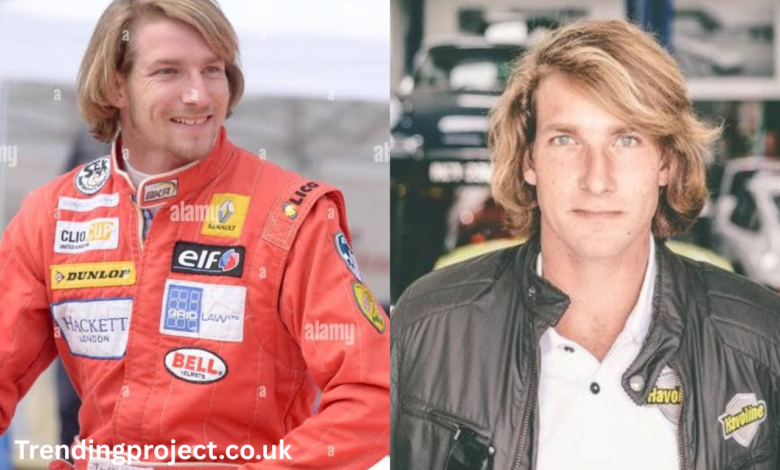
Freddie Hunt was born into a name that already carried enormous weight in the world of motorsport. As the son of 1976 Formula 1 World Champion James Hunt, he grew up connected to one of the most fascinating personalities in British racing history. Yet Freddie’s own journey has never been simply about following his father’s footsteps. His career has involved junior single-seaters, sports cars, endurance racing, historic Formula 1 machinery and LMP3 prototypes, while his personal life has increasingly moved toward a quieter existence away from the racetrack.
Table of Contents
ToggleWhat makes Freddie Hunt’s biography particularly compelling is the tension between opportunity and expectation. His surname helped him gain access to racing opportunities, something he has acknowledged publicly, but it also brought intense scrutiny and comparisons with his father. He has spoken about struggling with pressure during the early stages of his career, especially when he could not reproduce his strong testing pace during qualifying and races. Over time, however, he learned to approach motorsport differently, eventually achieving significant results of his own.
Today, Freddie Hunt represents much more than “James Hunt’s son.” His career includes a notable LMP3 victory at the Nürburgring, appearances in endurance racing and a connection with the Road to Le Mans. More recently, his story has expanded into documentary filmmaking and sustainable farming in Scotland, giving his biography a surprisingly different second act. A 2026 report also confirms that Freddie is contributing his personal perspective to a new feature-length documentary about his father, Hunt: We Need to Talk About James.
Freddie Hunt Facts and Personal Details
| Category | Details |
|---|---|
| Full name | Freddie Hunt |
| Date of birth | June 28, 1987 |
| Age | 39 years old in 2026 |
| Birthplace | Guildford, Surrey, England |
| Nationality | British |
| Profession | Racing driver, producer |
| Father | James Hunt |
| Mother | Sarah Lomax |
| Brother | Tom Hunt |
| Uncle | David Hunt |
| Motorsport disciplines | Single-seaters, sports cars, endurance racing, LMP3 |
| Notable team | Reiter Engineering |
| Major racing achievement | 2022 Prototype Cup Germany Nürburgring victory |
| Car | Ligier JS P320 LMP3 |
| Racing number at Nürburgring | 24 |
| @freddiehuntofficial | |
| Freddie Hunt Official | |
| Verified net worth | Not publicly disclosed |
Freddie Hunt’s date of birth is listed by IMDb as June 28, 1987, with Guildford, Surrey, England, given as his birthplace. His professional Reiter Engineering profile also lists June 28, 1987, and identifies him as British. Some secondary websites have published conflicting birth information, so the June 28 date is the better-supported public record.
His family connections are particularly significant. Freddie is the son of James Hunt and Sarah Lomax and the brother of Tom Hunt. His father’s career made the Hunt surname internationally recognizable, while Freddie later created his own identity through competitive motorsport and media projects. Public sources do not establish a reliable current figure for Freddie Hunt’s personal net worth, so estimates circulating online should not be treated as confirmed financial facts.
Freddie’s public social-media information includes Instagram under @freddiehuntofficial and a Facebook presence under Freddie Hunt Official, both listed in professional material associated with his racing career. His public-facing profiles have primarily centered on motorsport, historic racing, James Hunt’s legacy and aspects of his own life rather than presenting an extensively documented celebrity lifestyle.
Early Life and Family Background
Freddie Hunt was born in Guildford, Surrey, in 1987, more than a decade after his father had won the Formula 1 World Championship. James Hunt’s 1976 championship remains one of the most famous seasons in Formula 1 history, particularly because of his rivalry with Austrian driver Niki Lauda. By the time Freddie was growing up, James had already become a major figure in British sporting culture, known not only for his racing talent but also for his unconventional personality and public image.
However, Freddie’s childhood experience of his father was different from the public mythology surrounding James Hunt. James died in 1993 at the age of 45, when Freddie was still a young child. Consequently, much of Freddie’s understanding of his father’s wider public legacy developed through memories, family stories, photographs and the continuing fascination of motorsport fans. This distinction between James Hunt the racing celebrity and James Hunt the father has become an important theme in Freddie’s later interviews and documentary work.
Freddie’s family background therefore gave him an unusual relationship with motorsport. He was connected to racing history without initially having the same technical obsession with cars that might be expected from the son of a Formula 1 champion. In a Guardian interview, Freddie recalled that when he was very young he knew his father had been world champion but did not fully understand what that meant. His eventual decision to race came much later, and once he entered the sport he quickly discovered how difficult it was to escape comparisons with his famous father.
Freddie Hunt’s Education and Formative Years
Public information about Freddie Hunt’s formal education is relatively limited. Unlike his father’s highly documented Formula 1 career, Freddie’s early academic life has not been extensively covered by major biographical sources. Most reliable public information about him begins to become more detailed once his involvement in competitive motorsport developed.
What is better documented is the gradual process through which Freddie discovered racing. He began competitive racing in 2007 at the age of 19, meaning his path was considerably later than that of many professional drivers who spend their childhood years progressing through karting. This late start made his eventual development in motorsport particularly demanding because he was learning racecraft while simultaneously dealing with intense media attention.
His formative racing years also exposed the psychological side of professional competition. Freddie has explained that he could demonstrate impressive pace during testing but found it much harder to reproduce that performance when qualifying and racing actually mattered. The pressure of being James Hunt’s son became part of the challenge, and he eventually recognized that his own expectations were contributing to his struggles. That realization later became one of the most important turning points in his career.
Beginning of Freddie Hunt’s Racing Career
Freddie Hunt officially began his competitive racing career in 2007. His early experience included British Formula Ford, where he entered competition with Joe Tandy Racing. Formula Ford is traditionally regarded as an important development category because it places considerable emphasis on fundamental driving skills, racecraft and consistency rather than relying on powerful aerodynamic machinery.
His first years were far from effortless. Freddie has spoken openly about the difficulties of his debut season, including mistakes that attracted media attention. The Guardian reported that he was quickly given an unflattering nickname after a chaotic early race, demonstrating how quickly the press focused on him because of his surname. The experience illustrates one of the unusual challenges of being a famous driver’s child: ordinary rookie mistakes can receive extraordinary attention.
Rather than ending his ambitions, those experiences became part of his education as a racing driver. Freddie moved through additional categories, gaining experience in different cars and competitive environments. His early career included ADAC Formel Masters and the ADAC Volkswagen Polo Cup, while later seasons brought him into other forms of touring and sports-car competition. His development was therefore gradual rather than an immediate rise toward Formula 1.
The Challenge of Living in James Hunt’s Shadow
The biggest obstacle in Freddie Hunt’s racing career was arguably not a technical one. It was the psychological burden attached to his surname. When a driver’s father is a Formula 1 world champion, every result can be compared with an extraordinary standard. Freddie has acknowledged that his father’s name helped him obtain opportunities, but he also made clear that access to a drive is only the beginning. A driver still has to deliver results.
This distinction became especially important as Freddie’s career developed. The Hunt surname could attract sponsors, media coverage and racing opportunities, but it could not guarantee speed, consistency or success. Freddie eventually came to understand that his own reputation would have to be built through performance. That realization helped him move away from the idea that he needed to reproduce his father’s Formula 1 achievements.
His eventual shift in perspective was significant. Instead of treating Formula 1 as the only possible definition of success, Freddie began considering endurance racing and the 24 Hours of Le Mans as a realistic long-term goal. He explained that after several years he recognized just how difficult reaching Formula 1 and becoming world champion would be, particularly when starting later than many professional drivers. Le Mans offered another route toward becoming a respected professional racer.
Historic Racing and James Hunt’s Cars
One fascinating element of Freddie Hunt’s career has been his opportunity to drive cars associated directly with his father. This has included historic racing machinery connected with James Hunt, allowing Freddie to experience the cars that helped create his family’s place in Formula 1 history.
Driving historic Formula 1 machinery is obviously different from competing in a modern championship. The cars require a different driving approach, while the emotional significance can be considerable when the vehicle was previously driven by a parent. For Freddie, these appearances offered an opportunity to connect his personal family history with his own career as a racing driver.
The historic racing world has therefore given Freddie a unique role. He is not merely a driver participating in classic-car events; he is also someone capable of explaining what those machines and their driver meant personally. That perspective has helped make him a natural contributor to projects examining James Hunt’s career and legacy.
Return to Competitive Motorsport
After stepping away from racing for a period, Freddie eventually found himself drawn back toward motorsport. Time away gave him an opportunity to reassess the pressure he had experienced during his early career and to think about what he genuinely wanted from racing.
His return also coincided with renewed interest in the story of James Hunt and Niki Lauda. The 2013 film Rush brought the 1976 Formula 1 rivalry to a new generation, and Freddie became involved in events connected with the film’s release. IMDb lists Freddie as appearing in Hunt Vs Lauda: The Next Generation, reflecting the continuing connection between the next generation of the two famous racing families.
That connection became particularly symbolic because Freddie later raced alongside Mathias Lauda, Niki Lauda’s son. The original Hunt-Lauda rivalry is one of Formula 1’s most famous stories, but the appearance of their sons in motorsport created an entirely different relationship. It transformed a historic sporting rivalry into a new-generation motorsport connection.
Endurance Racing and the Road to Le Mans
Endurance racing gradually became a major focus for Freddie Hunt. Instead of concentrating exclusively on short sprint races, he became involved in sports-car and prototype competition, where drivers must combine speed with consistency, mechanical sympathy and teamwork.
The attraction of endurance racing also aligned with Freddie’s stated ambitions. He had spoken about wanting to reach the 24 Hours of Le Mans, one of the world’s most prestigious endurance races. Rather than viewing Le Mans as an impossible extension of his father’s Formula 1 career, he treated it as a different professional target that could allow him to build a reputation within sports-car racing.
His association with Reiter Engineering became particularly important during this period. Reiter expanded into LMP3 competition with the Ligier JS P320, and Freddie became part of the team’s sports-car program. The move provided him with modern prototype experience and brought him closer to the endurance-racing environment he had been pursuing.
Freddie Hunt’s 2022 Nürburgring Victory
One of the clearest competitive highlights of Freddie Hunt’s career came at the Nürburgring in July 2022. Driving the No. 24 Reiter Engineering Ligier JS P320 alongside Norwegian driver Mads Siljehaug, Hunt won the Saturday Prototype Cup Germany race. The victory was especially meaningful because it was Hunt’s first win in the championship and his first victory in an LMP3 car.
The official Prototype Cup Germany entry list confirms Hunt and Siljehaug as the drivers of Reiter Engineering’s No. 24 Ligier JS P320. The Nürburgring weekend included a competitive LMP3 field featuring Ligier, Ginetta and Duqueine machinery, making the victory a genuine modern prototype-racing achievement rather than simply a historic exhibition.
The achievement became even more impressive because Hunt and Siljehaug followed their Saturday victory with another podium on Sunday, finishing third. Reiter Engineering described the Nürburgring weekend as a major success for its new LMP3 program, while ADAC highlighted the team’s first victory in the category.
Freddie Hunt and Le Mans
Le Mans has remained one of the most important themes associated with Freddie Hunt’s motorsport ambitions. The 24 Hours of Le Mans represents one of endurance racing’s ultimate challenges, combining speed with reliability, strategy, teamwork and physical concentration over an entire day and night.
Freddie’s participation in the Road to Le Mans environment provided an important step toward that ambition. In one Road to Le Mans event, Freddie Hunt and Mads Siljehaug finished second for Reiter Engineering. The result came on the Circuit de la Sarthe during the wider Le Mans event and placed the pair on the podium in front of the huge audience associated with the French endurance classic.
Reiter Engineering itself described its LMP3 program as a step toward returning to Le Mans competition. The team’s 2022 season included a victory and third place at the Nürburgring, while its broader Michelin Le Mans Cup campaign produced additional strong results. Freddie’s involvement therefore placed him within a genuine endurance-racing pathway rather than merely an aspirational one.
Personal Life Away From Racing
Although Freddie Hunt has spent much of his public life around racing, his personal direction has increasingly moved away from the traditional motorsport spotlight. A documentary project titled HUNT explored his life in Scotland, where he has been associated with farming, horses, conservation and efforts toward a more self-sufficient lifestyle.
This aspect of his life adds an important layer to his biography. For many years, Freddie’s public identity was almost automatically connected with James Hunt and Formula 1. Life on a Scottish farm provides a dramatically different environment, emphasizing nature, land management and independence rather than racing circuits, sponsorships and media attention.
The change does not necessarily mean that his relationship with motorsport has disappeared. Instead, it suggests that Freddie’s understanding of a fulfilling life has evolved. His story demonstrates that stepping away from one ambition does not mean abandoning everything that came before; experiences from one chapter can remain valuable even when the next chapter takes a completely different direction.
Freddie Hunt’s Documentary Projects
Freddie Hunt has also developed an involvement in documentary storytelling. IMDb credits him as a producer on Hunt: We Need to Talk About James, while listing him as himself in Hunt Vs Lauda: The Next Generation.
In 2026, a new feature-length Hunt: We Need to Talk About James entered production with the backing of the Hunt estate. The project is designed to examine James Hunt’s life and legacy, with contributions from Formula 1 figures and Freddie providing a personal perspective as his son.
This is a natural extension of Freddie’s life story. He is uniquely positioned to contribute to a documentary about James Hunt because he can discuss not only the public racing legend but also the private family perspective. His involvement allows the story to move beyond statistics, championships and famous photographs and toward a more personal understanding of the man behind the Formula 1 image.
Freddie Hunt’s Social Media Presence
Freddie Hunt maintains a public social-media presence connected to his racing identity. His Reiter Engineering profile lists Instagram as @freddiehuntofficial and Facebook as Freddie Hunt Official, providing fans with channels through which they can follow his public activities.
His online presence is particularly relevant because the Hunt family has a large international motorsport following. James Hunt remains popular decades after his championship, and Freddie’s own racing career provides fans with a way to follow the next generation of the family.
Rather than relying solely on his father’s reputation, Freddie’s social-media identity allows him to present his own experiences. Racing events, historic cars, personal projects and documentary-related activity all contribute to a broader picture of who he is beyond being the son of a Formula 1 champion.
Freddie Hunt Net Worth and Sources of Income
There is currently no authoritative public financial disclosure establishing Freddie Hunt’s exact net worth. Various websites may publish estimated figures, but without audited accounts, verified contracts or direct financial statements, those estimates cannot responsibly be presented as fact.
Freddie’s career has included professional racing, sponsorship relationships, media and documentary work and other motorsport-related activities. His professional racing profile confirms his position with Reiter Engineering, while his IMDb credits demonstrate involvement in production work as well. These activities provide a more credible picture of his professional income sources than speculative celebrity-net-worth websites.
It is also important to understand that motorsport finances are complicated. Drivers can receive sponsorship support, team contracts, appearance opportunities and commercial partnerships, but racing itself can involve significant expenses. Therefore, the absence of a verified net-worth figure should not be interpreted as evidence for any particular level of wealth. Freddie’s personal financial position remains private.
Recent Developments and Future Direction
Freddie Hunt’s recent story is particularly interesting because it combines several different aspects of his life. His earlier career was centered on competitive racing and the ambition to reach Le Mans, while his more recent public profile has included farming, documentary projects and reflection on his father’s legacy.
The 2026 production of Hunt: We Need to Talk About James represents a significant continuation of his connection to motorsport history. Freddie’s involvement means that audiences may receive a perspective that is difficult to obtain from conventional Formula 1 documentaries: the perspective of James Hunt’s son.
At the same time, the documentary about Freddie’s Scottish life demonstrates that his future interests extend beyond racing. His involvement with farming and conservation suggests that the next phase of his life may be defined less by competitive results and more by independence, land, sustainability and storytelling. These different projects make his current direction considerably broader than his early ambition of reaching Formula 1.
Freddie Hunt’s Legacy
Freddie Hunt’s legacy is inevitably linked to James Hunt, but the two careers are fundamentally different. James became a Formula 1 world champion in 1976, while Freddie developed his career through junior racing, sports cars, endurance competition and LMP3. Comparing the two solely through championship statistics would miss the more interesting story of Freddie’s personal journey.
What distinguishes Freddie’s career is the way he has confronted expectations. He openly acknowledged that his father’s name helped him access opportunities, but he also understood that a famous surname could not substitute for performance. His eventual LMP3 victory at the Nürburgring provided a concrete achievement that belonged entirely to his own generation.
His later movement toward farming and documentary work also adds another dimension to his legacy. Freddie Hunt’s story is not simply about becoming another famous racing driver. It is about understanding inherited expectations, pursuing a difficult ambition, recognizing when circumstances need to change and building a life that feels personally meaningful.
Conclusion
Freddie Hunt’s life is a fascinating example of what happens when personal ambition meets an extraordinary family legacy. Born to James Hunt, one of Formula 1’s most famous champions, Freddie entered motorsport carrying a surname that opened doors but also created enormous expectations. His early difficulties showed just how challenging it could be to compete while constantly being compared with a world champion father.
Yet his career eventually produced achievements that stand on their own. From junior racing and historic Formula 1 machinery to endurance competition and the 2022 Nürburgring LMP3 victory, Freddie built a motorsport identity that was different from his father’s but still connected to the family’s passion for racing. His Road to Le Mans experience further demonstrated his commitment to endurance racing and sports-car competition.
Perhaps the most meaningful part of Freddie Hunt’s story, however, is that his definition of success has continued to evolve. Today, his life includes farming, conservation, documentary work and preserving the personal side of James Hunt’s legacy. His journey serves as a reminder that a meaningful legacy does not always come from following the path others expect. Sometimes it comes from understanding where you began, learning from the pressure along the way and having the courage to build something that is genuinely your own.