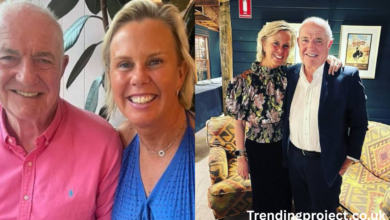
Laurence Akers is a British writer, producer, director and former magazine editor whose professional life has developed largely away from the glare of celebrity culture. Although his name is widely searched because he is married to acclaimed British actress Suranne Jones, his own career stretches across television production, specialist publishing, screenwriting, directing and television development. From early work behind the scenes on British television to his later involvement with TeamAkers Productions, Akers has gradually built a career around storytelling rather than personal publicity.
What makes Laurence Akers particularly interesting is the breadth of his professional journey. He did not simply enter the entertainment industry through one highly visible breakthrough. Instead, his career developed through a mixture of production roles, editorial experience and creative projects, eventually leading him into writing and directing. His 2018 short film Gone provided one of the clearest opportunities to see him as a filmmaker in his own right, while his work with TeamAkers has expanded his role into television and documentary development.
At the same time, much of Akers’ private biography remains deliberately out of the public record. Reliable sources do not establish his exact date of birth, age, birthplace, parents, siblings or a verified personal net-worth figure. That makes it important to separate genuine career information from unsupported celebrity-biography claims. What can be documented, however, is a long-running relationship with television and publishing, a substantial body of behind-the-scenes experience, and a continuing commitment to developing original stories through production.
Laurence Akers Quick Facts
| Detail | Information |
|---|---|
| Full Name | Laurence Akers |
| Nationality | British |
| Profession | Writer, producer, director and former magazine editor |
| Known For | Gone, television production and TeamAkers Productions |
| Production Company | TeamAkers Productions |
| Spouse | Suranne Jones |
| Marriage | 2015 |
| Children | One son |
| Date of Birth | Not reliably established in authoritative public sources |
| Age | Not reliably established |
| Birthplace | Not reliably established |
| Parents | Not reliably documented |
| Siblings | Not reliably documented |
| Education | Specific educational history is not reliably documented |
| Early Television Work | What’s Up Doc?, Wogan’s Web, The Pop Zone, The O-Zone, Gamer.tv |
| Film | Gone (2018) |
| Role on Gone | Writer, director and executive producer |
| TeamAkers Role | Managing Partner |
| Net Worth | No independently verified public figure |
| Instagram / X / LinkedIn | No reliably verified personal accounts established |
The facts above illustrate an important distinction in Akers’ biography. His professional credits are considerably easier to verify than the personal details commonly repeated by entertainment websites. IMDb, for example, lists production, directing, writing and music-department credits going back to the early 1990s, while industry sources identify him as a Managing Partner of TeamAkers Productions.
Early Life and Family Background
Very little authoritative information has been published about Laurence Akers’ childhood. Unlike his wife, whose career as an actor has generated extensive interviews and biographical profiles, Akers has generally maintained a lower public profile. There is no sufficiently reliable public source that establishes his exact birthday, birthplace, parents or number of siblings, and these details should therefore not be treated as confirmed simply because they appear on lesser-known biography websites.
This privacy gives an unusual shape to his biography. Rather than tracing his childhood through a series of public interviews, the clearest way to understand Akers is through the professional choices he made later. His career indicates an early interest in media and storytelling, eventually taking him into television production and editorial work. Those experiences provided a practical education in how stories are researched, shaped, packaged and delivered to audiences.
The absence of extensive information about his childhood does not make his career less significant. In fact, it reinforces one of the defining characteristics of his professional identity: Akers has generally allowed his work to speak louder than his personal life. His public record becomes much clearer from the 1990s onward, when he began accumulating television credits and developing the production and editorial skills that would later become central to his career.
Education and Professional Development
Specific information about Laurence Akers’ formal education is not reliably documented in the major public sources available today. There is no authoritative record that can confidently establish the schools, university or degree qualifications associated with his name. For that reason, claims about particular institutions should be approached carefully unless supported by a direct interview or official biography.
What is much more visible is his practical professional development. Akers’ early television work exposed him to the demands of production, while his later editorial career introduced him to another side of the media business. Working in these environments requires an understanding of audiences, deadlines, creative collaboration, editorial judgment and the practical limitations that affect a finished production.
Over time, these experiences appear to have developed into a broad creative skill set. Rather than remaining permanently within one occupational category, Akers moved between production, publishing, writing and directing. That progression helps explain why his later work has been connected not only with individual programmes but also with the development of original television projects and production-company activities.
Laurence Akers’ Early Television Career
Laurence Akers’ documented television career reaches back to the early 1990s. IMDb credits him as a music associate on What’s Up Doc? between 1992 and 1994, with 54 episodes listed under that credit. He subsequently accumulated production roles on programmes including Wogan’s Web, The Pop Zone, The O-Zone and Gamer.tv.
These early credits are important because they show that Akers’ career was established long before his name became associated with Suranne Jones. IMDb lists him as an assistant producer on Wogan’s Web, a producer on The Pop Zone and Gamer.tv, and a co-producer on The O-Zone. These roles placed him directly inside the practical machinery of television production.
Working behind the scenes can be an especially valuable foundation for a future writer or director because it provides insight into the entire production process. A producer has to understand how creative ideas become practical programmes, how teams communicate and how schedules, budgets and editorial decisions interact. Akers’ later transition toward writing and directing can therefore be seen in the context of years of accumulated production experience rather than as a sudden career change.
Career in Magazine Publishing
Television was only one part of Laurence Akers’ professional development. He also worked in magazine publishing and became associated with Nikon Pro, a specialist publication serving the professional photography community. This editorial experience added another dimension to his career and strengthened his relationship with visual storytelling and specialist audiences.
Magazine editing requires a different set of skills from television production, even though the two fields share many fundamental principles. An editor has to identify stories that matter to a particular audience, work with contributors, shape written material, consider visual presentation and maintain a consistent editorial identity. Akers’ experience in this area therefore broadened his understanding of how audiences engage with information and creative content.
His move between publishing and television also reveals an important pattern in his career. He has repeatedly worked in environments where the central task is to communicate a story effectively. Whether the medium is a specialist magazine, a television programme or a short film, his professional development has involved understanding the relationship between content, audience and presentation.
Laurence Akers as a Screenwriter and Director
A major creative milestone came with Gone, the 2018 short drama that Akers wrote and directed. IMDb identifies him as both writer and director and also credits him as an executive producer. The film stars Daniel Betts, Suranne Jones and Robert Perkins and was produced through TeamAkers Productions and Feather Productions.
The story focuses on the emotional consequences of a relationship ending when one person is not ready to move on. Its short running time gives the project a concentrated structure, allowing the emotional tension between the characters to become the central element. Rather than relying on a large-scale production, the film uses a personal situation to explore separation, attachment and the difficulty of accepting change.
Gone is particularly significant because it demonstrates Akers’ direct involvement in several stages of filmmaking. He was not merely connected to the project as a producer; he wrote the screenplay and directed the film. The Guardian reported that Akers and Jones put the short film together and entered it into festivals, further illustrating how the project represented a collaborative step in their creative relationship.
The Story Behind Gone
The production of Gone also attracted attention because Suranne Jones appeared in the film while Akers directed it. Their professional relationship therefore became part of a creative partnership rather than remaining solely a personal connection. The project gave them an opportunity to work together in a different capacity from the television and acting environments with which Jones was already associated.
From Akers’ perspective, the film provided a platform for demonstrating a more personal creative voice. Writing and directing require decisions about tone, pacing, performances and visual storytelling that differ from the responsibilities of a conventional television producer. The project consequently represents an important point in understanding Akers as a filmmaker rather than simply as a production executive.
The film’s relatively intimate subject matter also fits a wider pattern in Akers’ subsequent work. Many of the projects associated with his professional career focus on character, relationships, personal struggle or people challenging established expectations. That emphasis on human stories has remained visible as his work has expanded into television development and documentary production.
TeamAkers Productions
TeamAkers Productions represents one of the most important developments in Laurence Akers’ career. The production company was established by Akers and Suranne Jones and became a vehicle for developing screen projects beyond their individual work. Industry sources identify Akers as a Managing Partner, placing him in a leadership role within the company.
The company has enabled the pair to become involved in projects from the development stage rather than simply participating after a programme has already been commissioned. This distinction matters in modern television production because producers can influence the material selected for development, creative partnerships, packaging and the eventual direction of a project.
TeamAkers has also allowed Akers’ professional interests to intersect with Jones’ experience as an actor and executive producer. Their different backgrounds create a partnership in which acting knowledge, writing, production experience and industry relationships can contribute to the same creative projects. The company’s development work has consequently become a significant part of Akers’ professional identity.
The Final Round and Jane Couch
One of the clearest examples of TeamAkers’ interest in character-driven stories is the planned television adaptation of boxer Jane Couch’s memoir The Final Round. In January 2020, Lookout Point announced that it had optioned the memoir with TeamAkers Productions. The project was to be developed by Lookout Point alongside Suranne Jones and Laurence Akers.
The story centres on Couch’s pioneering career in women’s boxing and her legal fight for the right of women to box professionally in Britain. Lookout Point described Couch’s story as involving both sporting achievement and a wider struggle against barriers faced by women in the sport. Akers said at the time that her story deserved to be told and emphasized the historical significance of women not being permitted to box professionally in Britain until 1998.
The project is revealing because it shows the kind of material TeamAkers was interested in developing: real-life stories involving determined individuals who challenged established systems. It also demonstrated Akers’ interest in adapting memoir and biography into dramatic television, combining factual foundations with the storytelling possibilities of scripted drama.
Television Development and Maryland
TeamAkers has also been associated with Maryland, the ITV relationship drama created by Suranne Jones and writer Anne-Marie O’Connor. The production was made by Monumental Television in association with TeamAkers Productions and ITV Studios, with Jones also serving as an executive producer.
The series follows two sisters whose lives have moved in different directions and who are brought back together following the death of their mother. Its central themes include family relationships, hidden truths and the complicated emotional bonds that can remain even after years of distance. The project illustrates TeamAkers’ growing role in television drama development and production.
For Akers, Maryland is another example of the evolution from individual production credits toward broader creative development. His contribution through TeamAkers places him within the production structure of a major television drama, even though he is not its principal writer or on-screen performer. This behind-the-scenes role is essential to understanding the nature of his current career.
Documentary and Theatre Work
TeamAkers’ interests have not been restricted to scripted television. Sheringham Little Theatre has described TeamAkers as a company associated with Suranne Jones and Laurence Akers and has highlighted their involvement with documentary work as well as theatre. The company has been connected with projects including Suranne Jones: Witches and the play SpyforSpy.
Their relationship with Sheringham Little Theatre has also demonstrated an interest in supporting new theatrical voices. The theatre has identified TeamAkers as a patron and has described initiatives connected with playwriting and the development of new work. This adds another layer to Akers’ professional profile because it moves his contribution beyond producing established screen content into supporting emerging writers.
Such projects suggest that the wider ambition behind TeamAkers is not limited to one medium. Television, documentary and theatre each require different production approaches, but they share a common emphasis on developing compelling stories and giving creative ideas an opportunity to reach audiences. Akers’ varied background makes this multidisciplinary approach a natural extension of his career.
Laurence Akers and Suranne Jones
Laurence Akers’ personal life is closely connected with Suranne Jones, the British actor known for roles including Doctor Foster, Scott & Bailey, Gentleman Jack and Vigil. The couple married in 2015 and have one child. IMDb’s biography for Jones records the marriage and one child, while public reporting has generally noted the couple’s preference for keeping their son’s identity private.
Their relationship has also developed into a professional partnership. The creation and growth of TeamAkers Productions means that their connection extends into television development and production. Their collaboration on Gone offered an especially direct example of this relationship, with Jones acting in a film written and directed by Akers.
At the same time, it would be misleading to define Akers solely through his marriage. His television credits predate his relationship with Jones becoming a major public-interest story, and his professional record includes independent production, magazine editing, writing and directing. His relationship with Jones is an important part of his life, but it is only one component of a much broader career.
Personal Life and Privacy
Akers appears to maintain a relatively private public profile. There is considerably more reliable information about his professional activities than about his day-to-day life, personal routines, friendships or private interests. This is consistent with his position as a behind-the-scenes creative professional rather than an actor whose career naturally places personal appearances at the centre of public attention.
His approach to privacy is particularly evident in relation to his family. Although his marriage to Jones is publicly known, the couple have generally avoided turning their child into a public celebrity figure. This has allowed their family life to remain comparatively separate from the entertainment coverage surrounding Jones’ acting career.
There is also no reliably established public personal social-media presence that should be confidently presented as belonging to Akers. Various websites may list accounts under his name, but without strong verification it is safer not to attribute those accounts to him. For readers researching Laurence Akers online, his professional credits and official production-company information provide a much more dependable picture than unverified social profiles.
Laurence Akers’ Net Worth and Sources of Income
Laurence Akers’ exact net worth has not been independently established by a reliable public financial source. Online celebrity websites sometimes publish specific estimates, but such figures are usually not supported by audited financial statements, disclosed contracts or verified personal asset information. Consequently, a precise number would create a false impression of certainty.
His professional career nevertheless provides several plausible sources of income. His work has included television production, editorial work, writing, directing and production-company activities. Income for professionals in these areas can come from salaries, production fees, development agreements, writing or directing payments, executive-producer arrangements and company interests, depending on the individual contract.
It is therefore more responsible to describe Akers as an experienced British media professional with multiple creative and production roles than to attach an unsupported net-worth figure to his biography. The financial details of his private life remain undisclosed, and company activity should not automatically be interpreted as the individual’s personal wealth.
Social Media and Public Presence
Unlike many contemporary entertainment personalities, Laurence Akers does not appear to have built his public identity around a heavily promoted personal social-media presence. Searches for his name frequently produce information about his work, TeamAkers Productions and Suranne Jones rather than a clearly verified personal Instagram or X account.
This limited online footprint is understandable given the nature of his profession. Producers and writers can have considerable influence over a project without becoming its public face. A successful television programme may be associated primarily with its actors, writers or network, while the producers who helped make the project possible remain largely unknown to the general audience.
For readers interested in following his work, production-company announcements and industry sources are therefore generally more useful than trying to identify an unofficial personal account. TeamAkers-related information provides a clearer window into the professional projects connected with Akers and Jones.
Recent Career and Ongoing Direction
Laurence Akers’ more recent professional direction appears to centre on creative development, television production and supporting original storytelling. His work with TeamAkers has expanded the range of projects connected with his name, while the company’s theatre involvement demonstrates an interest in nurturing new writing as well as producing screen entertainment.
His professional journey also continues to reflect the combination of skills developed throughout his career. The television producer of the 1990s, the magazine editor, the filmmaker behind Gone and the Managing Partner of TeamAkers are not separate identities so much as different stages of the same creative progression.
Looking ahead, the most meaningful aspect of Akers’ career may be his continued involvement in developing stories rather than pursuing celebrity recognition for himself. Whether through scripted drama, documentary projects, independent film or theatre development, his work demonstrates an ongoing interest in creating opportunities for stories and storytellers.
Achievements and Professional Legacy
Laurence Akers’ achievements are perhaps best understood through the diversity and longevity of his career rather than through a long list of conventional awards. His IMDb record documents television work extending from the 1990s into later production and filmmaking, while Gone established him as a writer-director as well as a producer.
His work with TeamAkers represents another major achievement because it demonstrates a transition from participating in productions to helping develop the projects themselves. The company’s association with television drama, documentary storytelling and theatre reflects an increasingly broad creative footprint.
What makes his professional legacy particularly interesting is its emphasis on collaboration. Akers has worked with actors, writers, directors, production companies, broadcasters and theatre organizations. His career illustrates that creative influence does not always depend on being the person most visible on screen. Sometimes the most important contribution comes from the person helping an idea move from a concept into a finished production.
Conclusion
Laurence Akers’ biography is ultimately a story about creative evolution. He began building his professional reputation through television production and editorial work, accumulated experience across different areas of the media industry, and eventually expanded into screenwriting, directing and production-company leadership. His journey demonstrates how experience in apparently different fields can eventually combine into a distinctive creative career.
His work on Gone showed his ability to move directly into writing and directing, while TeamAkers Productions opened a larger platform for developing television, documentary and theatre projects. The company’s work on projects such as The Final Round and Maryland demonstrates a continuing interest in stories centred on relationships, resilience, identity and people who have challenged expectations.
Perhaps the most valuable lesson from Laurence Akers’ career is that success in the creative industries does not always follow a straight or highly visible path. His story has been built through years of practical experience, changing roles, collaboration and a willingness to explore different forms of storytelling. As he continues developing projects through TeamAkers and supporting new creative work, his career stands as a reminder that perseverance, versatility and a genuine passion for storytelling can gradually become the foundation of a meaningful and lasting legacy.