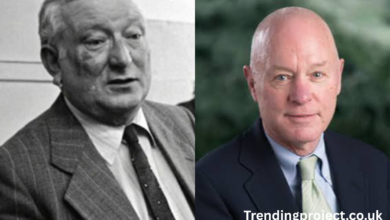
David Emanuel Biography: The Welsh Designer Behind Princess Diana’s Iconic Wedding Dress


David Emanuel is a name permanently woven into the history of British fashion. For many people, his legacy begins with one extraordinary commission: the wedding dress worn by Lady Diana Spencer when she married Prince Charles on July 29, 1981. Created with his then-wife and creative partner Elizabeth Emanuel, the spectacular ivory gown—with its enormous skirt, romantic detailing and famous 25-foot train—became one of the most recognizable dresses of the 20th century. But the story of David Emanuel is far richer than a single royal commission. He built a remarkable career spanning couture, bridal fashion, television, theatre, costume design and creative media, establishing himself as an internationally recognized British couturier.
Table of Contents
ToggleBorn and raised in Bridgend, Wales, Emanuel developed his artistic instincts long before he became associated with royalty. His background was strongly connected to music and performance as well as visual art, giving him a creative foundation that would later become visible in the theatrical quality of his clothing. He studied fashion at leading British art institutions, gained experience working with Queen Elizabeth II’s celebrated couturier Hardy Amies, and eventually created a fashion house with Elizabeth Emanuel. Their romantic, elaborate designs attracted attention during a period when much of British fashion was moving in very different directions.
The extraordinary opportunity to dress Diana transformed the young designer into a global figure, but Emanuel’s career did not end with royal fame. He continued building an independent fashion identity after his professional partnership with Elizabeth ended, launched David Emanuel Couture in 1990, worked with celebrities and members of royal families, designed costumes for theatre and ballet, and developed an extensive television career. His official biography describes a designer whose interests have continually crossed the boundaries between fashion, performance, photography, television and music.
David Emanuel’s Early Life and Welsh Background
David Emanuel was born on November 17, 1952, in Bridgend, Wales, and his Welsh upbringing remained an important part of his identity throughout his career. His early life was not centered exclusively on fashion. Instead, he grew up surrounded by music, art and performance, developing a broad creative curiosity that later distinguished him from designers who focused solely on clothing. His official biography notes that he came from a Welsh-speaking and musical background and that music played a significant role during his youth.
As a young man, Emanuel was deeply involved in music. He played piano, became head chorister at his church, performed as a violinist with a county youth orchestra and sang in a county youth choir. He also taught himself to play the cello. This early exposure to performance is particularly interesting when viewed alongside his later fashion career because Emanuel’s designs have frequently been described as theatrical, romantic and dramatic. His clothes were often conceived not simply as garments but as visual statements capable of creating a mood or transforming a person’s presence.
His artistic interests eventually led him toward fashion education. Emanuel studied at Cardiff School of Art and Design before continuing his training in London, ultimately graduating from the Royal College of Art with a Master’s degree in Fashion Design. His education provided the technical foundation for couture construction while his musical and artistic background gave him the imagination to develop the distinctive romantic aesthetic that later became associated with the Emanuel name.
Education, Elizabeth Emanuel and the Beginning of His Fashion Career
London became the setting for one of the most important relationships in David Emanuel’s professional life. During his fashion studies, he met Elizabeth Weiner, who would later become Elizabeth Emanuel. Their relationship developed both personally and creatively, and the pair eventually married and established themselves as a husband-and-wife fashion team. Together they became one of Britain’s most recognizable young design partnerships of the late 1970s.
After graduating from the Royal College of Art, David and Elizabeth established their own business. Their early work quickly attracted attention because of its elaborate romanticism. At a time when punk and other rebellious fashion movements were commanding attention, the Emanuels were developing lavish evening gowns and wedding dresses filled with ruffles, lace, volume and theatrical detail. The Royal College of Art’s historical research describes them as early representatives of the romantic aesthetic that would become associated with New Romanticism in Britain.
Emanuel also gained invaluable experience before his own name became internationally famous. As a fashion student, he spent two seasons working for Hardy Amies, the renowned British couturier who served as Queen Elizabeth II’s dressmaker. This experience exposed him to the standards of royal couture, including precision, craftsmanship, discretion and the relationship between designer and high-profile client. Years later, those lessons would become extremely valuable when he found himself working directly with Lady Diana Spencer.
Building the Emanuel Fashion House
The Emanuels’ fashion house grew rapidly during the late 1970s. Their work attracted influential clients and fashion insiders, while their romantic approach offered something distinctive in a British fashion scene that was becoming increasingly diverse. Their designs were particularly effective for eveningwear and bridalwear because they combined traditional craftsmanship with an exaggerated sense of glamour. This ability to create clothing that looked almost dreamlike would eventually become central to their work for Diana.
Their reputation also benefited from early support from influential figures in the British fashion industry. Research from the Royal College of Art notes that clients and retailers helped establish the Emanuels’ prestige, while their elaborate gowns began attracting attention beyond their immediate circle. Their success demonstrated that there was still a substantial audience for highly decorative, romantic fashion, even during a period of dramatic cultural change.
The Emanuels’ growing profile eventually brought them into contact with Lady Diana Spencer. Before she became Princess of Wales, Diana was developing her public image and increasingly experimenting with fashion. The young designer duo offered her a fresh alternative to the established couture houses, and their work helped create the elegant yet youthful image that would become one of the most photographed styles in modern royal history.
David Emanuel and Princess Diana
The connection between David Emanuel and Princess Diana began before the royal wedding. Diana had already worn Emanuel designs, including a blouse associated with her early public image. The relationship developed into a personal level of trust, and when Diana became engaged to Prince Charles, she approached David and Elizabeth Emanuel about creating her wedding dress. According to accounts from the designers, the request came directly from Diana and initially seemed almost unbelievable because the couple were still young designers.
For Emanuel, the commission represented an extraordinary professional responsibility. Diana was only 20 years old when she married, and the wedding was expected to become a major international spectacle. The designers therefore needed to create a dress that was unmistakably royal while also reflecting Diana’s youth and personality. Their solution was an intentionally romantic and dramatic gown that became an almost perfect visual representation of the fairy-tale image surrounding the wedding.
The dress was made from ivory silk taffeta and featured elaborate lace, embroidery, pearls, sequins, voluminous sleeves and a massive train. Historic Royal Palaces notes that the bodice incorporated antique Carrickmacross lace associated with Queen Mary, adding an important historical connection to the garment. The gown’s combination of traditional royal references and extravagant early-1980s fashion helped turn it into a landmark in bridal and fashion history.
The Famous Princess Diana Wedding Dress
Princess Diana’s wedding dress remains the single creation most closely associated with David Emanuel’s name. The dress featured an extraordinary 25-foot train, making it one of the most dramatic royal bridal gowns ever produced. Its voluminous silhouette, puffed sleeves, ruffles and intricate surface decoration captured the romantic fashion mood of the early 1980s while simultaneously creating a look that was unmistakably Diana.
The scale of the gown was extraordinary because it had to function not only as a beautiful dress but also as a garment capable of surviving one of the world’s most scrutinized ceremonies. The train was so long that it became part of the visual spectacle as Diana walked through St Paul’s Cathedral. The dress was also carefully constructed with historical details, including antique lace and decorative elements intended to provide good fortune.
The global reaction was immediate. Diana’s wedding was watched by hundreds of millions of people around the world, and the gown quickly became one of the most influential bridal designs of its generation. Copies and interpretations appeared in the marketplace, while the overall aesthetic of enormous sleeves, elaborate bodices and dramatic trains became strongly associated with 1980s wedding fashion. The Fashion Institute of Technology describes its influence on bridal fashion as continuing long after the original ceremony.
The Pressure Behind a Historic Royal Commission
Designing a royal wedding gown involved enormous pressure. The Emanuels knew that the finished dress would be photographed from almost every angle and viewed by a worldwide audience. The project therefore required extraordinary secrecy as well as meticulous craftsmanship. David Emanuel has spoken about the intense attention surrounding the design process and the need to protect the details from photographers and reporters.
The relationship with Diana was also important to the final result. Emanuel has consistently described her warmly when discussing the period, remembering her as personable and good-humored. In interviews, he has rejected some later fictionalized portrayals of Diana’s emotional state around the wedding, emphasizing that his direct memories of working with her were different from some dramatic versions presented in popular culture.
The project ultimately became a defining example of how fashion can intersect with history. Emanuel was not simply creating a wedding dress; he was participating in an event that would become part of the global visual record. Every detail—from the fabric and lace to the train and veil—was subsequently examined, copied and remembered, ensuring that the designer’s work would remain relevant decades after the wedding itself.
David Emanuel’s Career After Princess Diana
Although the Princess Diana wedding dress became his signature achievement, David Emanuel continued to build his career across many areas of creative work. His official biography lists an impressive range of clients, including Madonna, Joan Collins, Faye Dunaway, Jane Seymour, the Princess Royal, the Duchess of Kent and Elizabeth Taylor. This breadth demonstrates that his reputation extended well beyond royal bridal fashion.
In 1990, Emanuel launched his solo career and the David Emanuel Couture label. This marked an important new phase in his professional life. Rather than remaining permanently defined by his partnership with Elizabeth or by the Diana commission, he established an independent identity as a couturier. His work continued to emphasize craftsmanship, individuality, glamour and personalized design.
His career also moved naturally into costume and theatrical design. Emanuel created sets and costumes for productions including Frankenstein, The Modern Prometheus, commissioned by the Royal Ballet and premiered at the Royal Opera House in Covent Garden. The production was subsequently staged at La Scala in Milan. He also designed for Cinderella, opera-related projects, concerts and film and television productions.
Television Career and Public Recognition
Television became another major part of David Emanuel’s professional identity. His ability to explain fashion, discuss style and interact comfortably with audiences made him particularly suited to television. His official biography records appearances across breakfast television, makeover programming, quiz and panel shows, documentaries and specialist fashion programs.
His television career also allowed the public to see a different side of the designer. Couture can sometimes appear distant or inaccessible, but Emanuel’s television work helped translate his expertise into conversations about clothing, personal style, weddings and presentation. He became not merely a designer working behind the scenes but a recognizable media personality capable of communicating directly with viewers.
His international profile was further strengthened by his involvement in television programming surrounding major royal occasions. His official career history notes that he became a key commentator and presenter for programming around the 2011 royal wedding across multiple international networks. His unique connection to Diana’s wedding made his perspective particularly valuable whenever royal fashion became a subject of public interest.
David Emanuel’s Personal Life and Creative Interests
David Emanuel’s personal and professional histories are closely connected because Elizabeth Emanuel was both his former wife and creative partner. Their marriage produced two children, but their professional partnership eventually ended. After their separation, David continued his own career while Elizabeth also maintained her connection to fashion and the legacy of their shared design work.
Emanuel’s interests have always extended beyond fashion. His early involvement in music never completely disappeared, and his official biography describes a later return to singing after years concentrated primarily on fashion. He studied voice with Ian Adam, a vocal coach associated with major West End and Broadway performers, and subsequently appeared as a singer on television.
This broad range of interests helps explain why Emanuel is sometimes presented as a kind of Renaissance figure rather than simply a fashion designer. His work has crossed couture, photography, television, theatre, music and costume. His career demonstrates that creative identity does not necessarily have to fit inside a single professional category.
David Emanuel’s Net Worth and Sources of Income
There is no reliable, independently verified public figure establishing David Emanuel’s exact current net worth. Online celebrity-wealth estimates should therefore be treated cautiously because they frequently rely on assumptions rather than audited financial information. A responsible biography should distinguish between documented professional achievements and speculative personal-finance figures.
Emanuel has generated income through multiple areas of his long career, including couture, fashion design, bridalwear, commercial projects, television appearances, presenting, styling and costume design. His official website continues to present his work across couture, fashion and media, illustrating the diverse professional activities that have contributed to his public career.
His most valuable professional asset may ultimately be his reputation. The association with Princess Diana’s wedding dress gave Emanuel extraordinary name recognition, while decades of subsequent fashion and television work helped ensure that the recognition did not disappear after the royal wedding. His career shows how a landmark commission can provide a foundation, but sustained relevance depends on continuing to create and adapt.
David Emanuel’s Social Media and Online Presence
David Emanuel maintains an official online presence through his personal website and social-media channels. His digital platform provides information about his fashion work, couture, career history and media activities, giving followers a direct way to explore the designer’s projects beyond traditional fashion coverage.
His online identity is particularly useful because Emanuel’s career spans several generations. People who know him primarily through Princess Diana’s wedding dress can discover his later couture work, television appearances and theatrical projects, while younger bridal-fashion audiences can encounter him through his continued involvement with wedding design and fashion media.
The digital era has also made it easier for Emanuel’s historical work to remain part of the contemporary conversation. Photographs and archival material surrounding Diana’s wedding continue to circulate online, while fashion historians and royal publications regularly revisit the gown. Recent coverage in 2026 continues to place the Emanuel-designed dress among the world’s most iconic royal wedding gowns.
Awards, Recognition and Lasting Influence
David Emanuel has received professional and academic recognition throughout his career. His official career history records honorary fellowships from organizations including the Chartered Society of Designers, Cardiff Metropolitan University and the Welsh College of Music and Drama. He has also been included in Who’s Who, reflecting the broader recognition attached to his career.
His influence extends beyond awards because his designs have repeatedly entered cultural memory. The Princess Diana wedding dress is now studied by fashion historians and preserved through exhibitions and archival research. Historic Royal Palaces has examined the garment’s lace and construction as part of the history of royal fashion, demonstrating how the gown has moved from celebrity clothing into the territory of cultural heritage.
The continuing interest in the dress also means Emanuel’s work remains relevant to contemporary bridal designers. The romantic silhouette, elaborate craftsmanship and dramatic train continue to appear in modern interpretations of royal and celebrity wedding fashion. The gown’s influence illustrates the unusual power a single garment can have when fashion, personality, history and global media converge.
David Emanuel’s Enduring Legacy
David Emanuel’s biography is ultimately much more than the story of the man who designed Princess Diana’s wedding dress. It is the story of a Welsh-born creative professional who developed an early love of music and art, received rigorous fashion training, learned from one of Britain’s leading royal couturiers and established a distinctive fashion house with Elizabeth Emanuel. His rise demonstrates how education, craftsmanship and creative courage can create opportunities even for young designers entering a highly competitive industry.
The Princess Diana commission remains the defining chapter because few fashion designers have ever been given the opportunity to create a garment seen by such a vast international audience. Yet Emanuel’s subsequent career proves that the royal wedding was not simply the peak of his story. Couture, celebrity fashion, television, theatre, costume design, photography and music all became parts of his continuing creative journey.
Perhaps the most enduring lesson from David Emanuel’s career is the importance of evolution. He took the extraordinary opportunity presented by Diana’s wedding dress, but he did not allow one historic achievement to become the boundary of his ambition. Instead, he continued experimenting, designing and communicating with audiences in different ways. His journey from a musical and artistic childhood in Wales to international couture offers a powerful reminder that a lasting legacy is built not only through one unforgettable moment, but through the determination to keep creating after that moment has passed. As David Emanuel’s work continues to be remembered, his story remains an inspiring example of how passion, imagination, resilience and craftsmanship can transform a creative career into a lasting part of fashion history.