George Oldfield Biography: Early Life, Police Career, Yorkshire Ripper Investigation and Legacy

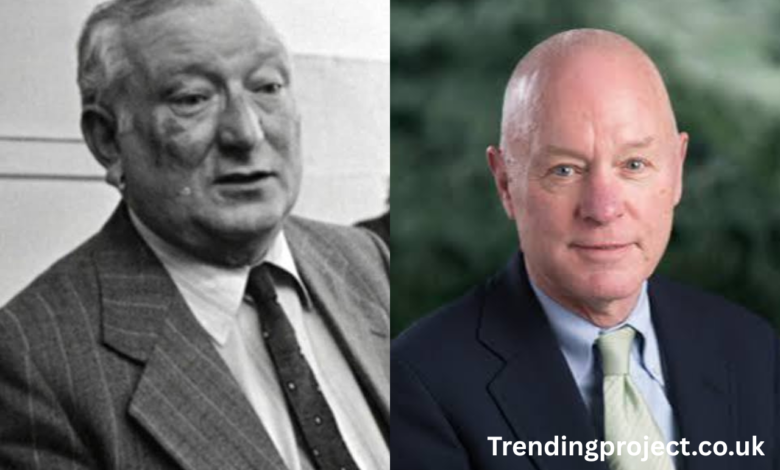
George Oldfield’s name is inseparable from one of the most notorious criminal investigations in British history. A senior Yorkshire police officer who spent decades building a reputation in criminal investigation, Oldfield eventually found himself at the centre of the enormous search for the man who became known as the Yorkshire Ripper. His career was marked by ambition, professional advancement and major investigations, but it was ultimately the Ripper case that shaped how generations would remember him.
Born Godfrey Alexander Oldfield in 1923, he grew up in Yorkshire and joined the West Riding Police in 1947. He developed a career in the Criminal Investigation Department and eventually became Assistant Chief Constable for Crime at West Yorkshire Police. His earlier work included the investigation of the 1974 M62 coach bombing, while his later career became dominated by the five-year hunt for Peter Sutcliffe.
What makes George Oldfield’s biography particularly fascinating is its complexity. He was not simply an inexperienced policeman overwhelmed by a difficult case. He was a senior detective with years of service and considerable authority. Yet his leadership of the Yorkshire Ripper inquiry became associated with major investigative failures, particularly the confidence placed in the fraudulent communications sent by the man later identified as Wearside Jack. His story therefore offers a powerful look at both the dedication and the dangers that can accompany high-pressure criminal investigation.
George Oldfield Facts at a Glance
| Fact | Details |
|---|---|
| Full name | Godfrey Alexander Oldfield |
| Known as | George Oldfield |
| Date of birth | 10 October 1923 |
| Birthplace | Monk Fryston, West Riding of Yorkshire, England |
| Date of death | 4 July 1985 |
| Age at death | 61 |
| Profession | Police detective and senior police officer |
| Police force | West Riding Police / West Yorkshire Police |
| Final senior role | Assistant Chief Constable |
| Best known for | Leading the Yorkshire Ripper investigation |
| Other major case | M62 coach bombing investigation |
| Spouse | Margaret Curtis |
| Children | Four |
| Net worth | Not reliably documented |
| None; Oldfield died in 1985 | |
| Twitter/X | None |
| None |
These details are important because some online biographies attach modern celebrity-style information to historical police figures without reliable evidence. There is no trustworthy public record establishing George Oldfield’s net worth, and social-media profiles obviously did not exist during his lifetime. His historical importance comes from his police career and involvement in major investigations rather than from personal wealth or an online following.
Early Life and Yorkshire Roots
George Oldfield was born on 10 October 1923 in Monk Fryston, a small farming community in the historic West Riding of Yorkshire. His birth name was Godfrey Alexander Oldfield, but he disliked the name Godfrey while attending Archbishop Holgate’s School in York and became known as George. His family reportedly continued to call him “Goff,” giving him several names by which he was known at different points in his life.
Oldfield grew up in an era when Yorkshire communities were considerably more traditional and locally connected than they are today. His upbringing in the region was significant because Yorkshire would remain the centre of his professional life. His siblings included twin brothers, while detailed information about his parents is comparatively scarce in the historical record. That lack of information is worth acknowledging rather than filling the gaps with unsupported claims.
His private family life was also largely kept away from public attention. In 1954, Oldfield married Margaret Curtis, and the couple had four children. One of their children sadly died from leukaemia. Unlike modern public figures, Oldfield did not have a public-facing personal brand, and newspapers generally focused on his professional responsibilities rather than documenting his everyday life, hobbies or family relationships.
Joining the Police and Building His Career
George Oldfield joined the West Riding Police in 1947, shortly after the Second World War period had reshaped British society and its public institutions. He specialized in the Criminal Investigation Department, commonly known as CID, where detectives handled serious offences and complex investigations. His progression through the organization reflected the importance placed on practical investigative experience in British policing at the time.
Oldfield developed a reputation as a determined and sometimes gruff figure. His personality fitted the traditional image of the senior British detective: direct, forceful and intensely focused on the case in front of him. That approach helped him establish himself within the police hierarchy, but it would later become a subject of criticism when investigators under his command struggled with the enormous volume of information generated by the Yorkshire Ripper inquiry.
His advancement was not based solely on one famous investigation. By the 1970s he had become an experienced senior officer trusted with major criminal cases. In 1974 he was Detective Chief Superintendent and head of West Yorkshire CID when the M62 coach bombing occurred. Two years later, in May 1976, he was promoted to Assistant Chief Constable for Crime at West Yorkshire Police, demonstrating the level of professional confidence placed in him at that stage of his career.
The M62 Coach Bombing Investigation
On 4 February 1974, an IRA bomb exploded aboard a coach travelling on the M62 motorway. Twelve people were killed, including members of the British armed forces and their families. Oldfield took charge of the investigation and immediately became involved in the effort to establish how the attack had been carried out and who was responsible. He contacted the Garda Síochána in Ireland and ordered forensic examination of the wreckage.
The investigation resulted in Judith Ward being charged and later convicted for the bombing. Ward had made confessions that implicated her in the attack, and forensic evidence was also used during the prosecution. At the time, securing a conviction in such a high-profile terrorist case enhanced Oldfield’s standing within British policing and contributed to his subsequent promotion.
However, the case was later exposed as a major miscarriage of justice. Ward’s conviction was eventually overturned, and later legal scrutiny highlighted serious problems with the investigation, including the handling of interviews and evidence. The M62 case therefore became an important part of Oldfield’s biography for a second reason: it demonstrated that an investigation that initially appears successful can later be subjected to profound criticism when evidence and investigative practices are examined more closely.
Becoming the Senior Officer in the Yorkshire Ripper Hunt
By the late 1970s, Oldfield was an established senior police officer when a series of murders and attacks across Yorkshire became increasingly connected. Beginning in the mid-1970s, women were murdered or attacked in Leeds, Bradford and surrounding areas, and investigators increasingly believed that the crimes were being committed by the same man. Oldfield took the lead in the investigation in 1977.
The scale of the operation was extraordinary. Police officers had to investigate individual murders, review previous attacks, interview witnesses, examine suspects and process an enormous quantity of information. Modern digital databases did not exist, meaning investigators depended heavily on paper files and traditional methods of indexing and cross-referencing information. The sheer size of the investigation created an environment in which important details could easily become buried.
Oldfield devoted enormous energy to the case. Accounts describe him working exceptionally long hours and taking very little leave. The investigation became more than a professional assignment; it increasingly dominated his working life. His determination was understandable given the continuing murders, but the intense pressure also created an environment in which investigative assumptions could become increasingly difficult to challenge.
The Wearside Jack Tape and Letters
One of the most consequential moments in the investigation came in 1979, when police received letters and a tape recording claiming to come from the Yorkshire Ripper. The communications were sent by John Humble, who later became known as Wearside Jack. The tape included a man speaking with what investigators believed was a North-East English accent, apparently linking the sender to the Sunderland area.
Oldfield became convinced that the communications were genuine. The supposed Sunderland connection consequently became an important part of the investigative theory. Police resources were directed toward identifying a murderer who appeared to have a North-East connection, while the possibility that the communication itself was fraudulent did not receive the level of skepticism that later events showed it deserved.
The problem was not simply that the tape was false. The larger issue was the influence that the false evidence exerted over the investigation. Investigators began interpreting information through the framework created by the supposed Ripper communication. The case became an enduring example of how a convincing false lead can become dangerous when it is allowed to reinforce an existing theory rather than being independently tested against all available evidence.
Investigative Pressure and George Oldfield’s Health
The enormous strain of the Yorkshire Ripper inquiry eventually affected Oldfield’s health. On 6 August 1979, he became ill with what was initially described as a chest infection. He remained away from work for more than four months, and it was subsequently acknowledged that he had suffered a heart attack. He did not return to the Ripper investigation in the same role.
His illness demonstrated the extraordinary personal pressure associated with the investigation. The murders had generated intense public fear, relentless newspaper coverage and enormous political and institutional pressure. For a senior officer responsible for the operation, the burden was particularly severe because every new attack was another reminder that the investigation had not yet identified the killer.
Even after leaving the central Ripper investigation, Oldfield remained a senior police officer. West Yorkshire Police maintained that he was not being dismissed or demoted but moved to less onerous responsibilities because of his health. In June 1981 he moved from CID to operational support, and in February 1982 he became Assistant Chief Constable in charge of the Western Division, based in Bradford.
Peter Sutcliffe’s Arrest and the Failure of the Sunderland Theory
The mystery finally changed in January 1981, when Peter Sutcliffe was arrested by South Yorkshire Police in Sheffield. Sutcliffe was subsequently identified as the Yorkshire Ripper. Crucially, he was from West Yorkshire and had no connection to Sunderland, exposing the central assumption surrounding the Wearside Jack communications as fundamentally wrong.
The arrest also revealed the extent of the investigative tragedy. The man police had been searching for was not the person represented by the tape and letters. The communications had been a hoax, and the false accent had helped create an investigative direction that consumed considerable attention. Oldfield’s association with this theory became one of the most criticized aspects of his professional legacy.
Yet the case should not be reduced to the actions of one individual. The investigation involved many officers, multiple levels of management and an extraordinary volume of evidence. Modern assessments of the case have highlighted broader problems involving hierarchy, investigative culture, attitudes toward victims and the technical difficulty of managing a huge investigation. The later television drama The Long Shadow similarly emphasizes the wider institutional and human context rather than presenting the case as the responsibility of one person alone.
Retirement and Final Years
After the Ripper investigation and his subsequent reassignment, Oldfield continued working in senior policing positions despite his health problems. His career had already reached a high point, but his physical condition increasingly limited his ability to maintain the demands of senior police work. He suffered another heart attack in 1983 and was absent from duty for several months.
In July 1983, it was announced that Oldfield would retire at the end of August because of ill health. His retirement came after decades in policing and only a few years after the conclusion of the investigation that had made him a nationally recognizable figure. His professional life therefore ended under very different circumstances from the period when he had been promoted to Assistant Chief Constable for Crime.
Oldfield died on 4 July 1985 at Pinderfields Hospital in Wakefield. He was 61 years old, and the recorded cause of death was congestive heart failure. His death occurred less than five years after Peter Sutcliffe’s arrest, meaning that Oldfield did not live long enough to see the investigation’s place in British cultural history develop into the extensive books, documentaries and television productions that exist today.
George Oldfield’s Personal Life and Character
Outside policing, George Oldfield lived a comparatively private life. His marriage to Margaret Curtis lasted from 1954 until his death, and the couple raised a family of four children, although one child died from leukaemia. Beyond these details, reliable sources provide relatively little information about his personal routines, friendships, hobbies or private beliefs.
Descriptions of Oldfield frequently emphasize his forceful personality. He was regarded as a blunt and sometimes gruff senior detective, a style that was not unusual within British policing during the middle decades of the twentieth century. His approach was rooted in an older investigative culture that emphasized experience, authority and personal judgment.
That character becomes particularly important when examining his role in the Yorkshire Ripper inquiry. Confidence can be a valuable quality in a police leader facing enormous pressure, but confidence can also become problematic when it prevents a working theory from being sufficiently challenged. Oldfield’s story therefore illustrates the importance of intellectual flexibility in investigative leadership, especially when evidence is incomplete or contradictory.
George Oldfield Net Worth and Sources of Income
There is no reliable public record giving George Oldfield’s personal net worth. Unlike contemporary entertainers, business figures and influencers, Oldfield was a career police officer whose salary and pension arrangements were not commonly reported in newspapers as part of his public identity. Any precise net-worth figure found online should therefore be treated as speculation rather than established fact.
His primary income came from his employment in British policing. As he progressed from the West Riding Police into senior Criminal Investigation Department roles and eventually to Assistant Chief Constable, his professional earnings would have reflected his increasing responsibilities. However, detailed salary records and personal financial statements are not readily available in the public historical record.
For an accurate biography, the responsible conclusion is therefore that George Oldfield’s net worth is unknown. His legacy was not built through wealth, commercial endorsements or media income. His historical significance comes from the decisions he made as a police officer, the cases he investigated and the lessons that later generations drew from the Yorkshire Ripper investigation.
George Oldfield in The Long Shadow
Interest in Oldfield has experienced a renewed life through modern true-crime storytelling. One of the most significant examples is The Long Shadow, a seven-part British drama that aired on ITV in 2023. The series explores the hunt for Peter Sutcliffe while placing considerable emphasis on the victims, their families and the officers involved in the troubled investigation.
Actor David Morrissey portrays George Oldfield in the series, bringing the senior officer back into the public imagination more than three decades after his death. Rather than presenting the investigation as a conventional detective adventure, The Long Shadow examines the wider social and institutional environment in which the murders occurred. The production company describes the drama as drawing on archival research and conversations with people connected to the period.
The renewed interest is significant because it demonstrates how historical figures can be reconsidered as new evidence, perspectives and storytelling methods emerge. Oldfield is no longer remembered solely through newspaper accounts from the late 1970s and early 1980s. Modern audiences can examine his role alongside the experiences of victims, surviving witnesses and other officers, producing a more complicated picture of one of Britain’s most controversial police investigations.
Legacy and Lessons From His Career
George Oldfield’s legacy is ultimately a complicated one. He was an experienced detective who rose to one of the highest operational positions within West Yorkshire Police, yet his name became permanently connected with an investigation that suffered serious strategic and organizational problems. His belief in the Wearside Jack communications is particularly important because it shows how investigators can become committed to an explanation that later evidence proves to be wrong.
There is also a broader lesson in the scale of the investigation itself. The Yorkshire Ripper inquiry was so large that conventional information-management methods were placed under enormous strain. The experience demonstrated why major investigations need reliable systems for evaluating evidence, challenging assumptions and ensuring that potentially significant information is not lost within thousands of reports and statements.
Perhaps the most useful way to understand Oldfield is neither as a hero nor as a villain. He was a professional police officer working in a difficult historical period who demonstrated determination and commitment while also making decisions that later attracted severe criticism. His story reminds modern investigators and the public that experience does not eliminate human error, and that the strongest investigative culture is one in which assumptions can be questioned without fear.
Conclusion: Remembering George Oldfield
George Oldfield’s journey from a Yorkshire schoolboy named Godfrey to a senior British police officer is a remarkable story of professional advancement. He joined the West Riding Police in 1947, developed expertise in criminal investigation, became head of West Yorkshire CID and eventually reached the rank of Assistant Chief Constable. His career included major cases and moments of professional recognition before the Yorkshire Ripper investigation changed his public reputation forever.
The most enduring chapter of his life remains the search for Peter Sutcliffe. Oldfield devoted enormous energy to the investigation, but the confidence placed in the Wearside Jack tape and letters contributed to a false investigative direction. When Sutcliffe was eventually arrested in 1981, the Sunderland theory collapsed, leaving behind difficult questions about police leadership, investigative bias, evidence management and the consequences of institutional assumptions.
George Oldfield died in 1985 at just 61, but his story has continued to attract attention through historical research, true-crime books and television. The 2023 drama The Long Shadow is evidence that the case still resonates with audiences and that the people involved continue to be examined from new perspectives.
Ultimately, George Oldfield’s biography is a reminder that a legacy can contain both achievement and failure. His career demonstrates the value of dedication and persistence, but it also illustrates why even experienced leaders must remain open to doubt, alternative explanations and uncomfortable evidence. His story continues to matter not because it offers a simple answer, but because it encourages a deeper question: how can people entrusted with enormous responsibility remain determined enough to solve difficult problems without becoming so convinced of one explanation that they stop seeing the evidence in front of them?