Jason Lee Footballer Biography: The Inspiring Journey of Nottingham Forest’s Cult Hero

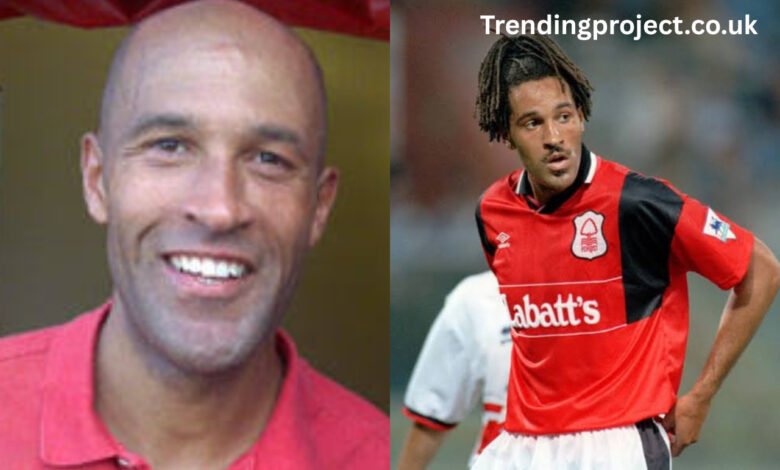
Few footballers from the Premier League era have experienced a career quite like Jason Lee. While many supporters remember him for his unmistakable hairstyle during the 1990s, those who followed English football closely know there was much more to his story. Lee built a professional career spanning more than two decades, represented numerous clubs across England and Scotland, competed in the Premier League and European football with Nottingham Forest, and later became one of football’s leading voices on equality, diversity, and inclusion. His journey reflects resilience, determination, and the ability to rise above adversity while remaining committed to the sport he loves. Today, Jason Lee is respected not only for his achievements on the pitch but also for his influential work helping create a more inclusive football community.
Table of Contents
ToggleQuick Facts About Jason Lee
| Fact | Details |
|---|---|
| Full Name | Jason Benedict Lee |
| Date of Birth | 9 May 1971 |
| Age | 55 (as of 2026) |
| Birthplace | Forest Gate, London, England |
| Nationality | British (English) |
| Profession | Former Professional Footballer, Football Manager, Equality & Diversity Executive |
| Playing Position | Striker / Centre-Forward |
| Height | 1.91 m (6 ft 3 in) |
| Parents | Not publicly disclosed |
| Siblings | Not publicly disclosed |
| Education | Staffordshire University |
| Marital Status | Private |
| Net Worth | Estimated $2–4 million (unofficial estimate) |
| @theofficialjasonlee | |
| Jason Lee – The Professional Footballers’ Association | |
| X (Twitter) | No widely verified public account |
Early Life and Childhood
Jason Benedict Lee was born on 9 May 1971 in Forest Gate, London, where football formed an important part of everyday life for many young people. Growing up in East London exposed him to a competitive sporting culture, with parks, school grounds, and local clubs serving as breeding grounds for talented footballers. Like many boys of his generation, Lee dreamed of making it as a professional footballer, spending countless hours improving his technique, physical strength, and understanding of the game.
Unlike many modern academy graduates who benefit from highly structured youth systems, Lee developed during an era when persistence and self-belief often mattered just as much as coaching. His tall frame and natural athleticism quickly made him stand out, but he also learned that technical improvement required relentless hard work. Friends and coaches noticed his willingness to compete against older players, an experience that strengthened both his confidence and resilience.
His family has remained largely private throughout his career, something Lee has consistently respected. Rather than attracting attention through his personal life, he preferred allowing his football performances to define his reputation. This approach has continued even after retirement, reflecting a personality grounded in professionalism rather than celebrity culture.
Education and Personal Development
Although football became Jason Lee’s profession at a young age, he understood the importance of education beyond the playing field. During the later stages of his career, he studied through a partnership between the Professional Footballers’ Association (PFA) and Staffordshire University, successfully earning a university degree while still involved in football.
Balancing professional football with academic studies required exceptional discipline. Training sessions, matches, recovery, and travel already consumed much of his schedule, yet Lee remained committed to preparing for life after retirement. His decision demonstrated long-term thinking, a quality that later proved invaluable when transitioning into football administration.
His education also broadened his understanding of leadership, communication, and equality. These experiences helped prepare him for roles beyond coaching and management, eventually leading him toward becoming an influential advocate for diversity and inclusion throughout English football.
Beginning a Professional Football Career
Jason Lee’s professional journey started with Charlton Athletic, where opportunities were limited. Like many young strikers attempting to establish themselves, he needed regular first-team football to continue developing. Short spells, including a loan at Stockport County, gave him valuable experience but also highlighted the competitive nature of professional football.
His career truly began to gather momentum after moving to Lincoln City, where he enjoyed consistent playing time and scored goals regularly. The confidence gained during this period transformed him from a promising young forward into a dependable Football League striker capable of troubling defenders with his physical presence and aerial ability. Scouts increasingly recognized his potential, leading to greater opportunities.
Lee later joined Southend United, where another productive spell convinced bigger clubs that he was ready for the next level. His performances demonstrated not only his goalscoring ability but also his willingness to work tirelessly for teammates. Managers valued his commitment, strength, and ability to hold up the ball, qualities that would define his career.
Nottingham Forest Years and Rise to Premier League Recognition
Jason Lee’s move to Nottingham Forest in March 1994 marked the defining chapter of his football career. Signed for around £200,000 from Southend United by manager Frank Clark, Lee joined a club determined to return to the top flight after relegation. Forest already possessed an exciting squad filled with talented players, and Lee had to work hard to earn opportunities. Rather than becoming discouraged by competition, he embraced the challenge, using his strength, aerial ability, and relentless work ethic to make himself valuable whenever called upon. His contributions helped Nottingham Forest secure promotion back to the Premier League, proving he could compete at a higher level.
The departure of star striker Stan Collymore to Liverpool before the 1995–96 season created an opportunity for Lee to establish himself in Forest’s starting lineup. He responded with one of the finest seasons of his career, scoring eight league goals in 28 appearances while helping Forest finish comfortably in mid-table. Although he was never considered the most technically gifted striker in English football, his determination, intelligent movement, and willingness to battle defenders made him a favourite among teammates and supporters. Managers appreciated his selfless style of play, as he regularly created space and chances for those around him.
Forest also enjoyed an impressive run in the 1995–96 UEFA Cup, reaching the quarter-finals. Lee appeared in six European matches, gaining valuable experience against continental opposition and demonstrating that he could perform on bigger stages. Competing in European football represented a significant achievement for a player who had worked his way through the lower divisions, highlighting just how far dedication and perseverance had taken him.
Playing Style and Reputation on the Pitch
Standing over 6 feet 3 inches (1.91 metres) tall, Jason Lee possessed the physical attributes managers desired in a traditional centre-forward. His height allowed him to dominate aerial duels, while his strength enabled him to shield the ball and bring teammates into attacking moves. Rather than relying purely on pace, Lee built his game around positioning, determination, and an impressive ability to compete against physically imposing defenders.
One of Lee’s greatest strengths was his work ethic. Coaches consistently praised his willingness to press defenders, chase seemingly lost causes, and sacrifice personal statistics for the benefit of the team. Modern football often celebrates pressing forwards, but Lee was displaying many of those qualities long before they became fashionable tactical principles. His attitude earned him respect throughout the Football League, regardless of which club he represented.
Supporters also admired Lee because he rarely hid during difficult matches. Even when confidence was low or results were disappointing, he continued working tirelessly for every minute he spent on the pitch. While he was never among the league’s highest scorers, his influence frequently extended beyond goals, making him an important squad player capable of changing the momentum of games through sheer determination.
Life Beyond Nottingham Forest and an Extraordinary Football Journey
Following his departure from Nottingham Forest in 1997, Jason Lee continued enjoying an exceptionally long football career. He joined Watford, helping the club win the 1997–98 Second Division title by scoring ten league goals during their successful promotion campaign. Although his time at Watford was relatively short, it demonstrated his ability to make meaningful contributions wherever he played.
Lee later represented a remarkable number of clubs, including Chesterfield, Peterborough United, Falkirk, Boston United, Northampton Town, Notts County, Mansfield Town, Kettering Town, Corby Town, Ilkeston Town, and several others before finally retiring. Across more than two decades in professional football, he accumulated over 600 league appearances, an achievement that reflects incredible consistency, professionalism, and physical durability.
His willingness to continue competing at different levels of English football also demonstrated genuine passion for the sport. Rather than chasing glamour or prestige, Lee simply loved playing football. Whether performing in the Premier League, the Football League, or non-league competitions, he approached every match with the same level of commitment, earning admiration from teammates, coaches, and supporters alike.
Challenges, Media Attention, and Overcoming Adversity
Jason Lee’s football career was not without significant challenges. While he earned admiration from teammates and managers for his commitment, he also became the subject of widespread public ridicule during the mid-1990s. Comedy programme Fantasy Football League, hosted by David Baddiel and Frank Skinner, repeatedly mocked Lee’s distinctive dreadlocked hairstyle—often referring to it as a “pineapple.” At the time, many viewers saw the sketches as harmless comedy, but in later years they became an important example in discussions about racism, stereotyping, and bullying in British media. Lee himself has since reflected that, although he coped with the attention, the jokes could have had a much more damaging effect on someone else.
Rather than allowing criticism to define him, Lee focused on his football. He continued playing professionally until the age of 40, appearing for clubs across England and Scotland and demonstrating remarkable resilience. Looking back, he has explained that experiences of racism and personal criticism actually strengthened his determination to succeed. His career became proof that perseverance, rather than public opinion, ultimately shapes a player’s legacy.
Years later, many observers—including David Baddiel himself—acknowledged that some of the humour surrounding Lee crossed important boundaries. The discussion has become part of wider conversations about representation, unconscious bias, and respect within sport and entertainment. Lee’s dignified response throughout the years has earned him even greater admiration, with many considering him an example of professionalism under intense public scrutiny.
Coaching, Management, and Life After Playing Football
Following retirement, Jason Lee remained closely connected to football. He briefly moved into management, most notably with Boston United, where he gained valuable experience leading a senior football club. Although management presented its own challenges and his spell ended after a relatively short period, the experience broadened his understanding of football beyond the role of a player. It also strengthened his interest in player development, education, and leadership.
In 2013, Lee began a new chapter by joining the Professional Footballers’ Association (PFA) as an Equality Education Executive. This role allowed him to combine his personal experiences with his passion for helping others. Working directly with current and former professional footballers, he encourages players to prepare for life after retirement through education while also supporting those facing discrimination within the game.
Over time, Lee’s responsibilities expanded, and he now serves as the Senior Equality, Diversity and Inclusion (EDI) Education Executive at the PFA. His work includes visiting clubs, delivering educational workshops, supporting players from underrepresented backgrounds, and helping create pathways into coaching, management, and football administration. His transition from striker to respected football executive demonstrates that success in football extends far beyond goals and trophies.
Championing Equality, Diversity, and Inclusion
One of Jason Lee’s greatest contributions has come away from the football pitch. Having personally experienced discrimination and stereotyping during his playing career, he has dedicated much of his post-football life to making the sport more inclusive. Through the PFA, he works with clubs, governing bodies, broadcasters, and players to challenge discrimination and improve opportunities for people from all backgrounds.
Lee has also played an important role in educational programmes that encourage footballers to think beyond their playing careers. He frequently reminds young professionals that the average football career is relatively short and that education provides security, confidence, and future opportunities. Drawing on his own experience of earning a university degree while playing professionally, he encourages players to invest in personal development just as seriously as they invest in training.
His influence has been recognised throughout English football. In 2020, Lee was named in the Football Black List, which celebrates influential Black figures making a positive impact across the game. The recognition highlighted his work tackling racial bias, supporting diversity initiatives, and helping educate broadcasters and football organisations about unconscious bias and discrimination.
Career Achievements and Lasting Legacy
Although Jason Lee never won the Premier League or represented England at senior international level, his career is filled with achievements that deserve recognition. He made more than 650 professional appearances across an extraordinary career spanning over twenty years, represented 18 professional clubs, competed in the Premier League and UEFA Cup, and helped teams secure promotion at various stages of his career. Such longevity is rare in professional football and reflects outstanding dedication and professionalism.
Some of the highlights of his playing career include:
- Helping Nottingham Forest win promotion to the Premier League.
- Playing in the UEFA Cup during Forest’s successful European campaign.
- Winning the Second Division title with Watford in 1997–98.
- Making over 650 senior professional appearances across England and Scotland.
- Successfully transitioning into one of English football’s leading Equality, Diversity and Inclusion executives.
Today, Jason Lee’s reputation extends far beyond statistics. Younger generations increasingly know him as an educator, mentor, and advocate rather than simply a former striker. His story demonstrates that character, resilience, and service to the game can create an enduring legacy every bit as meaningful as medals or individual awards.
Personal Life, Family, and Interests Away from Football
Despite spending more than two decades in professional football, Jason Lee has always preferred to keep his personal life away from the public eye. Unlike many modern football personalities who regularly share family moments on social media, Lee has consistently maintained a private lifestyle. Publicly available information about his parents, siblings, marriage, or children is limited because he has chosen to let his work speak for itself rather than seek attention through his personal affairs. This quiet approach has earned him respect from colleagues and supporters who appreciate his professionalism and discretion.
Away from football, Lee has long been passionate about education, leadership, and personal development. Completing a university degree while still playing professionally demonstrated his belief that learning should continue throughout life. He frequently encourages younger players to prepare for life after retirement, reminding them that a football career can be unpredictable and relatively short. His own transition from player to senior football executive is a powerful example of how education can open new opportunities beyond the pitch.
Friends and colleagues often describe Lee as thoughtful, approachable, and committed to helping others succeed. Rather than seeking media attention, he prefers working behind the scenes to improve opportunities for footballers across all levels of the game. His calm leadership style and willingness to mentor younger professionals have become defining characteristics of his post-playing career, reinforcing the respect he has earned throughout English football.
Jason Lee’s Net Worth and Sources of Income
Jason Lee’s exact financial position has never been publicly disclosed, making any estimate unofficial. Based on his lengthy professional playing career, coaching roles, and senior executive position with the Professional Footballers’ Association (PFA), various publications estimate his net worth to be in the region of $2 million to $4 million. Since Lee has never confirmed these figures, they should be viewed as informed estimates rather than verified facts.
His primary source of income during his playing days came from professional football contracts with clubs including Nottingham Forest, Watford, Chesterfield, Peterborough United, Falkirk, Boston United, Northampton Town, and several others. Playing for more than twenty years provided financial stability while also establishing his reputation as one of English football’s most dependable professionals. After retiring, his career continued through coaching and senior leadership positions within the PFA, ensuring a steady professional income beyond his playing days.
Unlike many retired athletes, Lee has never been associated with extravagant spending or high-profile commercial endorsements. Instead, his career reflects careful planning, professional development, and a long-term commitment to football. His emphasis on education and career planning has become one of the key messages he now shares with younger players entering the professional game.
Social Media Presence and Public Engagement
Jason Lee maintains a much lower social media profile than many modern football personalities. Rather than posting frequently about his private life, he uses professional platforms and football-related appearances to discuss equality, diversity, education, and player welfare. His public communication generally focuses on improving the game rather than promoting himself.
Much of Lee’s public engagement comes through his work with the Professional Footballers’ Association, where he regularly participates in educational programmes, conferences, workshops, and interviews. These appearances allow him to share his experiences with current and former players while promoting inclusive practices throughout football. His expertise is frequently sought on issues relating to discrimination, unconscious bias, leadership, and career development.
Although fans occasionally search for official Instagram, X (formerly Twitter), or Facebook accounts, Lee has chosen not to build a significant public social media presence. This decision reflects his longstanding preference for privacy and professionalism, ensuring that his influence comes through meaningful work rather than online popularity.
Recent Updates and What Jason Lee Is Doing Today
In recent years, Jason Lee has continued serving as the Senior Equality, Diversity and Inclusion (EDI) Education Executive at the Professional Footballers’ Association. His work focuses on supporting current and former players, helping clubs develop inclusive environments, and delivering educational programmes across English football. He remains an important voice in conversations about representation, equality, and opportunities within the sport.
Lee also continues contributing to initiatives that prepare footballers for life after retirement. Through workshops, mentoring, and educational partnerships, he encourages players to pursue qualifications alongside their sporting careers. His own experience of successfully transitioning from professional football into senior leadership gives his advice considerable credibility and practical value.
As football continues evolving, Jason Lee remains committed to ensuring that future generations experience a more inclusive, respectful, and supportive environment. While his playing days may be over, his influence within the game continues to grow through education, advocacy, and leadership, ensuring his legacy extends well beyond his achievements on the pitch.
Conclusion
Jason Lee’s story is far more than that of a former Premier League striker. It is the story of a man who overcame criticism, embraced education, enjoyed a professional career spanning more than twenty years, and transformed his experiences into a platform for positive change. From the football pitches of London to the Premier League with Nottingham Forest, from promotion-winning campaigns to influential leadership within the Professional Footballers’ Association, Lee has consistently demonstrated resilience, humility, and a commitment to making football better for everyone.
His legacy is measured not only by the goals he scored or the clubs he represented, but also by the lives he continues to influence through education, equality, and inclusion. In an era where football increasingly values leadership beyond the pitch, Jason Lee stands as an outstanding example of how determination, professionalism, and lifelong learning can shape a remarkable career.
As Jason Lee continues to inspire players, coaches, and football professionals through his advocacy and leadership, his journey serves as a powerful reminder that true success is built on resilience, integrity, continuous growth, and the courage to create lasting change for future generations.