James Chadwick Biography: The Brilliant Physicist Who Discovered the Neutron

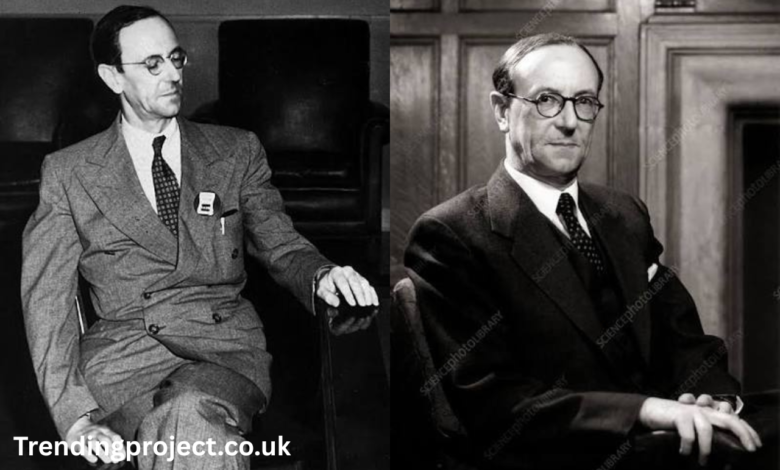
James Chadwick is remembered as one of the greatest physicists in modern history, yet his name is often overshadowed by other scientific giants. His groundbreaking discovery of the neutron in 1932 completely transformed the understanding of atomic structure and opened the door to remarkable advances in nuclear physics, nuclear energy, and medical science. At the same time, his work also played an indirect role in the development of the atomic bomb, making his legacy both inspiring and complex. Chadwick’s journey from a modest English family to becoming a Nobel Prize-winning scientist is a story of intelligence, patience, and unwavering dedication to scientific discovery. Even decades after his death, his research continues to influence physics, engineering, medicine, and countless technologies that shape modern life.
Table of Contents
Toggle| Quick Facts | Details |
|---|---|
| Full Name | Sir James Chadwick |
| Date of Birth | 20 October 1891 |
| Age | Passed away at 82 years old |
| Place of Birth | Bollington, Cheshire, England |
| Nationality | British |
| Profession | Physicist, Nuclear Scientist |
| Known For | Discovery of the neutron |
| Father | John Joseph Chadwick |
| Mother | Anne Mary Knowles |
| Siblings | Had younger brothers |
| Wife | Aileen Stewart-Brown |
| Children | Twin daughters |
| Education | University of Manchester, University of Cambridge |
| Nobel Prize | Physics (1935) |
| Net Worth | Not publicly documented; earned through academic and scientific positions |
| None (historical figure) | |
| X (Twitter) | None |
| None | |
| None | |
| Died | 24 July 1974, Cambridge, England |
Early Life and Family Background
James Chadwick was born on 20 October 1891 in Bollington, Cheshire, England, into a hardworking family that valued education despite having limited financial resources. His father, John Joseph Chadwick, worked in different occupations during his lifetime, while his mother, Anne Mary Knowles, devoted herself to raising the family. Although they were not wealthy, they encouraged their children to study and develop practical skills. Growing up during the late Victorian era, James experienced a childhood that emphasized discipline, responsibility, and determination rather than luxury.
As a young boy, Chadwick displayed an unusual curiosity about mathematics and science. Teachers quickly recognized his exceptional intelligence and encouraged him to continue his education. Unlike many famous scientists who grew up surrounded by laboratories or wealthy patrons, Chadwick’s path was built through scholarships and academic excellence. His ability to solve mathematical problems and understand scientific concepts distinguished him from many of his classmates at an early age.
Life was not always easy for the future Nobel Prize winner. Financial challenges meant he had to rely heavily on scholarships and academic performance to continue studying. These early experiences taught him humility and perseverance, qualities that remained visible throughout his scientific career. Rather than seeking fame or public recognition, Chadwick always focused on discovering the truth through careful research and experimentation.
Education and Academic Journey
James Chadwick’s remarkable scientific career began when he entered the University of Manchester in 1908. Interestingly, historians note that he originally intended to study mathematics but accidentally enrolled in physics. Rather than correcting the mistake, he decided to continue with the subject, a decision that would ultimately change the course of modern science. Under the guidance of the legendary physicist Ernest Rutherford, Chadwick quickly demonstrated exceptional talent in experimental physics and radioactivity research. He graduated with first-class honours in physics in 1911 and earned his Master of Science (M.Sc.) degree in 1913.
That same year, Chadwick received the prestigious 1851 Exhibition Scholarship, allowing him to continue his studies in Berlin, Germany, under Professor Hans Geiger, the scientist famous for developing the Geiger counter. Working in one of Europe’s leading research laboratories exposed him to cutting-edge experiments and advanced scientific methods. His time in Germany was expected to be the beginning of a brilliant international research career, but history had different plans. The outbreak of the First World War dramatically interrupted his studies and forced him into circumstances that tested both his character and determination.
During World War I, Chadwick was interned in the Ruhleben civilian prison camp near Berlin because he was a British citizen. Instead of allowing the difficult conditions to end his scientific ambitions, he joined other educated prisoners in organizing lectures and even conducting simple scientific experiments using limited equipment. This period demonstrated his resilience and passion for learning. After the war ended in 1918, he returned to England and resumed his research with Ernest Rutherford at the famous Cavendish Laboratory at the University of Cambridge, where some of the world’s greatest discoveries in physics were taking place.
Scientific Career and the Discovery of the Neutron
Back at Cambridge, James Chadwick immersed himself in research on atomic nuclei. During the early twentieth century, scientists already knew that atoms contained positively charged protons and negatively charged electrons. However, many mysteries remained unsolved. One major puzzle was why the measured mass of many atomic nuclei was much greater than could be explained by protons alone. Ernest Rutherford had proposed the possibility of a neutral particle inside the nucleus, but no one had been able to prove its existence experimentally.
Everything changed in 1932. Chadwick carefully investigated mysterious radiation produced when alpha particles struck beryllium. Many researchers believed this radiation consisted of high-energy gamma rays, but Chadwick suspected something different. Through a series of precise experiments, he demonstrated that the radiation was actually made up of electrically neutral particles with a mass nearly equal to that of a proton. These particles became known as neutrons, forever changing scientists’ understanding of atomic structure. His discovery immediately solved several long-standing problems in nuclear physics and opened an entirely new field of scientific research.
The importance of the neutron cannot be overstated. Because neutrons carry no electrical charge, they can penetrate atomic nuclei far more easily than positively charged particles. This property made them an ideal tool for studying nuclear reactions and eventually led to the discovery of nuclear fission. Chadwick’s work became the foundation for advances in nuclear energy, cancer treatments using radiation, medical imaging, scientific research reactors, and many other technologies that continue to benefit humanity today. At the same time, the discovery also contributed to the development of nuclear weapons during World War II, making it one of the most influential scientific breakthroughs of the twentieth century.
Why the Discovery of the Neutron Was Revolutionary
- It completed scientists’ understanding of the basic structure of the atomic nucleus.
- It made controlled nuclear reactions and nuclear fission possible.
- It paved the way for nuclear energy, modern nuclear medicine, and advanced scientific research.
- It significantly influenced both peaceful scientific progress and wartime nuclear technology.
Nobel Prize and Worldwide Recognition
James Chadwick’s revolutionary work earned immediate recognition from the global scientific community. In 1932, the same year he announced the discovery of the neutron, he received the Hughes Medal from the Royal Society for his outstanding contributions to radioactivity and nuclear science. His experiments were praised for their extraordinary precision and for solving one of physics’ greatest mysteries. Scientists across Europe and America quickly confirmed his findings, establishing the neutron as a fundamental particle of matter.
In 1935, Chadwick was awarded the Nobel Prize in Physics “for the discovery of the neutron.” The Nobel Committee recognized that his work fundamentally changed humanity’s understanding of atomic structure and opened entirely new directions in scientific research. By this time, Chadwick had also accepted the Lyon Jones Chair of Physics at the University of Liverpool, where he continued building one of Britain’s strongest nuclear physics research programs.
His achievements did not stop with the Nobel Prize. Chadwick later received numerous honorary doctorates from universities around the world and prestigious awards including the Copley Medal and the Franklin Medal. In 1945, following his important contributions during World War II, he was knighted by the British government and became Sir James Chadwick, one of the highest honours awarded in the United Kingdom.
Manhattan Project and Contributions During World War II
By the late 1930s, the world was moving toward another global conflict, and scientific discoveries were becoming increasingly important for national security. James Chadwick understood earlier than many scientists that nuclear fission had the potential to produce an incredibly powerful weapon. After reviewing the available evidence, he became convinced that an atomic bomb was not just a theoretical possibility but a realistic one. His expertise made him one of Britain’s most trusted scientific advisers during World War II, and he played a key role in shaping the country’s nuclear research program.
In 1941, Chadwick prepared the final draft of the influential MAUD Report, which concluded that an atomic bomb could be built using uranium-235. The report had a profound impact on Allied scientific strategy and helped encourage the United States to accelerate what later became the Manhattan Project. In 1943, Chadwick was appointed head of the British Mission to the Manhattan Project in the United States, where he worked closely with leading scientists and military officials to coordinate British contributions. His scientific knowledge, diplomatic skills, and calm leadership earned him enormous respect from both British and American colleagues.
As leader of the British Mission, Chadwick spent time at Los Alamos and later in Washington, D.C., overseeing cooperation between the United Kingdom and the United States. He became the only civilian and the only non-American granted access to virtually every part of the Manhattan Project, reflecting the exceptional trust placed in him. Although the successful development of the atomic bomb was considered essential to ending the war, Chadwick later acknowledged the immense moral responsibility that accompanied nuclear weapons. His wartime work remains one of the most significant—and most debated—chapters of his career.
Major Wartime Contributions
- Completed the final draft of the MAUD Report.
- Led the British Mission to the Manhattan Project.
- Strengthened scientific cooperation between Britain and the United States.
- Advised government leaders on nuclear science and atomic energy policy.
- Helped shape the future of nuclear research after World War II.
Personal Life, Family, and Interests
Despite becoming one of the world’s most respected physicists, James Chadwick remained a remarkably private and humble individual. In 1925, he married Aileen Stewart-Brown, and together they built a happy family life. The couple had twin daughters, and Chadwick made every effort to balance his demanding scientific career with his responsibilities as a husband and father. Friends and colleagues often described him as quiet, thoughtful, and deeply dedicated to both his family and his work.
Outside the laboratory, Chadwick enjoyed simple pleasures rather than public attention. According to his Nobel Prize biography, his favorite hobbies included gardening and fishing, activities that allowed him to relax away from the pressures of scientific research. Unlike many famous public figures today, Chadwick preferred a peaceful lifestyle and rarely sought media attention. His personality reflected patience, discipline, and careful thinking—the same qualities that made him an outstanding experimental physicist.
Those who worked with Chadwick admired not only his intelligence but also his fairness and modesty. He encouraged younger scientists, valued teamwork, and believed that scientific progress depended on careful experimentation rather than personal ambition. Even after receiving international recognition, he continued to approach research with humility, focusing on advancing knowledge instead of seeking fame.
Net Worth and Sources of Income
Because James Chadwick lived during the first half of the twentieth century, there are no reliable public records estimating his personal net worth. Unlike modern celebrities or entrepreneurs, scientists of his era were rarely evaluated by their wealth. His financial stability came primarily from his academic appointments, research fellowships, university salaries, government advisory roles, and prestigious scientific awards rather than commercial ventures or business investments.
Throughout his career, Chadwick held several respected positions that provided a steady income. These included his professorship at the University of Liverpool, leadership roles at the University of Cambridge, and advisory positions with Britain’s scientific and governmental organizations. Receiving the Nobel Prize in Physics also brought international recognition and prize money, although Chadwick remained focused on scientific research rather than financial success.
Today, James Chadwick’s true legacy cannot be measured in monetary terms. His discovery of the neutron has generated immeasurable value for humanity by enabling advances in nuclear medicine, energy production, materials science, and fundamental physics. His contribution continues to benefit millions of people around the world through scientific knowledge and technological innovation.
Social Media Presence and Public Recognition
As a historical figure who passed away in 1974, James Chadwick did not have personal social media accounts such as Instagram, X (formerly Twitter), Facebook, or LinkedIn. Nevertheless, his legacy remains highly visible online through universities, museums, scientific organizations, and educational institutions that continue to celebrate his work and explain its importance to new generations.
Students, researchers, and science enthusiasts regularly encounter Chadwick’s name in textbooks, documentaries, museum exhibitions, and educational websites. His discovery of the neutron is taught in schools and universities across the world as one of the defining moments in the history of modern physics. The Nobel Prize organization, government archives, and scientific museums continue to preserve detailed records of his achievements for future generations.
Although Chadwick never experienced the digital age, his influence has successfully crossed generations. Every discussion about atomic structure, nuclear reactions, or particle physics inevitably includes his groundbreaking work, ensuring that his contributions remain relevant in the twenty-first century.
Later Years, Retirement, and Continuing Influence
After World War II, Sir James Chadwick returned to the University of Liverpool before accepting an invitation in 1948 to become the Master of Gonville and Caius College, Cambridge. This prestigious position allowed him to guide one of Britain’s oldest colleges while continuing to influence scientific education and research. Although he gradually stepped away from laboratory work, he remained deeply committed to nurturing future generations of scientists and strengthening academic excellence. His leadership helped enhance the college’s reputation as a center for advanced research.
Chadwick officially retired from his role as Master in 1959, but retirement did not mean complete withdrawal from science. Between 1957 and 1962, he served as a part-time member of the United Kingdom Atomic Energy Authority, where he contributed his expertise to the peaceful development of nuclear science and government policy. His advice was highly respected because it was based on decades of pioneering research and practical experience in nuclear physics.
During his later years, Chadwick lived a quiet and private life. His health gradually declined in the early 1970s, and he rarely appeared at public events, although he attended celebrations marking his eightieth birthday at the University of Liverpool. Sir James Chadwick passed away peacefully in his sleep on 24 July 1974 in Cambridge at the age of 82. His death marked the end of an extraordinary scientific career, but his discoveries continue to shape the modern world.
Awards, Honors, and Lasting Legacy
James Chadwick received numerous honors throughout his lifetime in recognition of his extraordinary contributions to science. His greatest achievement came in 1935, when he was awarded the Nobel Prize in Physics for discovering the neutron. The Nobel Committee acknowledged that his work fundamentally changed the understanding of atomic structure and laid the foundation for modern nuclear physics. This discovery remains one of the most important milestones in twentieth-century science.
Beyond the Nobel Prize, Chadwick received many other prestigious awards. He was awarded the Hughes Medal by the Royal Society in 1932, the Copley Medal in 1950, and the Franklin Medal in 1951. In 1945, the British government honored him with a knighthood, after which he became known as Sir James Chadwick. He also received honorary doctorates from several distinguished universities, including Oxford, Birmingham, Leeds, Reading, Liverpool, Edinburgh, McGill, and Dublin. These honors reflected the global appreciation for his contributions to science and education.
Perhaps Chadwick’s greatest legacy is not the awards he collected but the doors he opened for future scientific discoveries. His work made possible the development of nuclear reactors, medical radiation therapy, neutron scattering techniques, and countless advances in materials science and particle physics. Every student who learns about the structure of the atom encounters the neutron—a lasting reminder of Chadwick’s revolutionary discovery. His influence extends far beyond physics into medicine, engineering, chemistry, and modern technology.
Major Awards and Honors
- Nobel Prize in Physics (1935)
- Hughes Medal (1932)
- Knighted by King George VI (1945)
- Copley Medal (1950)
- Franklin Medal (1951)
- Honorary doctorates from leading universities worldwide.
Recent Relevance and Historical Importance
Although Sir James Chadwick passed away decades ago, his work remains more relevant than ever. Modern nuclear power plants, cancer treatments involving neutron radiation, particle accelerators, and advanced materials research all rely on scientific principles that became possible because of his discovery. Researchers continue to study neutrons to better understand the universe, improve clean energy technologies, and develop innovative medical treatments. His name appears regularly in physics textbooks, scientific publications, and university courses around the world.
In recent years, historians of science have revisited Chadwick’s career to highlight not only his discovery of the neutron but also his leadership during the Manhattan Project and his influence on post-war scientific policy. Museums, academic conferences, and educational institutions continue to celebrate his achievements, ensuring that new generations understand both the scientific breakthroughs and the ethical questions surrounding nuclear technology.
As scientific research continues to push the boundaries of quantum mechanics, particle physics, and nuclear engineering, James Chadwick’s work remains a cornerstone of modern science. Few discoveries have had such a profound impact on both theoretical knowledge and practical applications. His contribution serves as a powerful example of how careful experimentation and intellectual curiosity can transform humanity’s understanding of nature.
Conclusion
Sir James Chadwick’s life is a remarkable story of perseverance, curiosity, and scientific excellence. From his humble beginnings in Cheshire to becoming one of the most influential physicists in history, he demonstrated that dedication to knowledge can change the world. His discovery of the neutron revolutionized the study of atomic structure, earned him the Nobel Prize in Physics, and laid the groundwork for countless advances in science, medicine, and technology. At the same time, his involvement in the Manhattan Project reminds us that scientific discoveries often carry profound ethical responsibilities alongside their enormous benefits.
Even decades after his passing, Chadwick’s legacy continues to inspire students, researchers, and innovators across the globe. Every breakthrough in nuclear science, every lesson about atomic structure, and every application of neutron technology reflects the lasting importance of his work. His life proves that patience, precision, and a commitment to truth can leave an impact that extends far beyond one’s own lifetime.
As James Chadwick’s remarkable legacy continues to inspire scientists and innovators around the world, his story stands as a powerful reminder that curiosity, resilience, and purpose can reshape our understanding of the universe. His pioneering work continues to pave the way for future generations, proving that one discovery has the power to transform history and create a lasting legacy for humanity.