Alexander Thynn Biography: The Eccentric Marquess Who Transformed Longleat Into a World-Famous Landmark

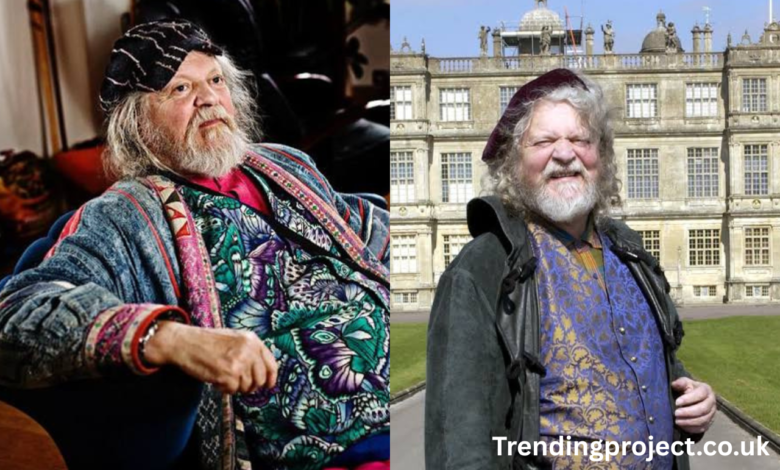
Alexander Thynn was one of Britain’s most recognizable aristocrats, but he was never content with simply living a traditional nobleman’s life. With his colorful clothes, flowing hair, artistic personality, outspoken opinions, and unconventional lifestyle, he became a figure who fascinated the public for decades. While many knew him for his unusual personal life and the nickname “the Loins of Longleat,” there was far more to his story than sensational headlines. He was an accomplished landowner, painter, author, politician, conservation supporter, and the long-time guardian of one of England’s most famous country estates.
Table of Contents
ToggleThroughout his life, Alexander Thynn balanced centuries of family tradition with a determination to follow his own path. As the owner of the historic Longleat Estate, he helped preserve one of Britain’s greatest stately homes while embracing tourism, wildlife conservation, and public engagement. His legacy extends beyond aristocracy, as he became a cultural figure whose personality was almost as famous as the magnificent estate he inherited.
His journey was filled with privilege, creativity, controversy, and dedication. From his childhood at Longleat House to his years in the House of Lords and his passion for art, Alexander Thynn left behind a remarkable story that continues to attract historians, royal enthusiasts, and visitors from around the world.
| Fact | Details |
|---|---|
| Full Name | Alexander George Thynn |
| Popular As | Alexander Thynn, 7th Marquess of Bath |
| Born | 6 May 1932 |
| Died | 4 April 2020 (Age 87) |
| Birthplace | London, England |
| Nationality | British |
| Profession | Landowner, Artist, Author, Politician |
| Father | Henry Thynn, 6th Marquess of Bath |
| Mother | Daphne Fielding |
| Siblings | Included Christopher Thynne and other siblings |
| Education | Ludgrove School, Eton College, Christ Church, Oxford |
| Spouse | Anna Gaël (Anna Gyarmathy) |
| Children | Lady Lenka Thynn, Ceawlin Thynn (8th Marquess of Bath), and another acknowledged daughter |
| Political Party | Liberal Democrats |
| Estimated Net Worth | About £157 million (2009 estimate) |
| Residence | Longleat House, Wiltshire |
| No official account | |
| Twitter/X | No official account |
| No official account |
Early Life and Family Background
Alexander George Thynn was born on 6 May 1932 in London into one of Britain’s oldest aristocratic families. His father, Henry Thynn, later became the 6th Marquess of Bath, while his mother, Daphne Fielding, came from another respected noble family. From birth, Alexander was surrounded by history, tradition, and responsibility. Long before he inherited the family title, he was expected to play an important role in preserving the family’s heritage.
Much of his childhood was spent at Longleat House in Wiltshire, one of England’s finest Elizabethan stately homes. The estate had been home to the Thynne family since the sixteenth century and stood among the country’s most celebrated historic properties. Growing up among grand architecture, beautiful gardens, priceless artwork, and extensive countryside gave Alexander a deep appreciation for history, creativity, and nature that remained with him throughout his life.
Although he enjoyed the privileges of aristocratic life, Alexander developed a personality that differed from the traditional image of a British peer. Even as a young man, he showed an independent spirit, preferring artistic expression and unconventional ideas over rigid social expectations. Those qualities would later define his public image and make him one of Britain’s most distinctive noblemen.
Education and the Experiences That Shaped Alexander Thynn
Alexander Thynn received an education that reflected both his family’s aristocratic standing and his own intellectual curiosity. He first attended Ludgrove School, one of England’s best-known preparatory schools, before continuing to the prestigious Eton College, where many members of the British royal family, politicians, and influential leaders have studied. At Eton, he developed an interest in literature, history, philosophy, and the arts, subjects that would remain central to his life for decades.
After finishing school, Thynn completed his National Service with the Life Guards, one of the British Army’s most distinguished cavalry regiments. Commissioned as a lieutenant in 1951, military service helped strengthen his confidence and discipline while exposing him to leadership responsibilities. Although he appreciated the experience, his true passions remained creativity, politics, and intellectual exploration rather than a military career.
He later enrolled at Christ Church, Oxford, one of the University of Oxford’s most famous colleges. During his time there, he served as President of the exclusive Bullingdon Club, an organization traditionally associated with Britain’s social and political elite. After Oxford, Alexander traveled across Europe on a modern version of the traditional Grand Tour and spent time studying art in Paris. These experiences broadened his cultural outlook and strengthened the artistic identity that would become one of the defining features of his life.
Discovering His Passion for Art, Literature, and Creative Expression
Unlike many hereditary peers who devoted themselves entirely to estate management or politics, Alexander Thynn viewed himself first and foremost as an artist. From a young age, he loved drawing, painting, and writing, believing that creativity allowed people to express ideas that ordinary conversation could never fully capture. His colorful imagination became one of the reasons he stood apart from other members of Britain’s aristocracy.
During the 1950s and beyond, he dedicated countless hours to painting murals, many of which decorated the walls of Longleat House itself. Instead of treating the estate purely as a historical monument, he transformed parts of it into a living art gallery. His murals ranged from historical themes to philosophical ideas and personal symbolism, demonstrating both technical skill and an unconventional artistic vision. His willingness to experiment earned admiration from some observers while surprising many traditionalists.
Writing also became an important outlet for Alexander. Over the years, he published novels, autobiographical works, political writings, essays, and books about his murals and beliefs. Through these publications, readers gained insight into his thoughts on society, politics, history, and personal freedom. His books revealed a thoughtful, highly educated individual who enjoyed challenging accepted ideas and encouraging debate rather than simply maintaining aristocratic traditions.
Taking Responsibility for Longleat Estate
Alexander Thynn inherited the title of 7th Marquess of Bath following the death of his father in 1992. Along with the title came responsibility for Longleat Estate, one of Britain’s most famous country estates and a landmark with centuries of history. Rather than seeing the inheritance simply as a symbol of status, he viewed himself as a caretaker responsible for preserving an important part of Britain’s cultural heritage for future generations.
Longleat House had already become famous after Alexander’s father opened it to the public in 1949 and later introduced the groundbreaking Longleat Safari Park in 1966—the first drive-through safari park outside Africa. Alexander embraced this legacy and continued supporting tourism, conservation, and public engagement. Under his stewardship, Longleat remained one of the United Kingdom’s most visited historic attractions, welcoming hundreds of thousands of visitors every year.
Alexander also added his own creative touch to the estate. He designed several famous mazes and labyrinths, including the Hedge Maze, Love Labyrinth, Sun Maze, Lunar Labyrinth, and King Arthur’s Maze. These attractions reflected both his imagination and his desire to make Longleat more than just a stately home. By combining history, art, architecture, gardens, wildlife, and entertainment, he helped ensure that Longleat remained relevant to modern audiences while preserving its historic character.
Political Career and Public Service
Although Alexander Thynn inherited one of Britain’s oldest aristocratic titles, he never believed that tradition alone should define a person’s contribution to society. Politics became one of the many areas where he expressed his independent thinking. During the 1970s, while still known as Viscount Weymouth, he became an advocate for greater regional autonomy within England, particularly for the historic region of Wessex. His ideas differed from those of the major political parties, reflecting his belief that local communities should have greater influence over their own affairs.
In the February 1974 General Election, Alexander stood as a Wessex Regionalist candidate. Although he was not elected, the campaign demonstrated his willingness to challenge established political structures rather than simply relying on his hereditary status. Shortly afterward, he helped establish the Wessex Regionalist Party, continuing to campaign for regional devolution. He also represented the party in the first elections to the European Parliament in 1979. While these campaigns attracted only modest electoral support, they reflected his commitment to promoting ideas he genuinely believed in rather than seeking political popularity.
When he inherited the Marquessate in 1992, Alexander automatically gained a seat in the House of Lords, where he sat as a Liberal Democrat. During his years in Parliament, he continued to support constitutional reform, regional government, and issues relating to heritage and rural Britain. His time in the House of Lords ended in 1999 after reforms removed the automatic right of most hereditary peers to sit in the chamber. Even after leaving Parliament, he remained interested in public affairs and regularly voiced his opinions on national issues.
Books, Art, and Creative Achievements
Alexander Thynn believed that creativity should never be limited by convention. Alongside managing Longleat, he devoted thousands of hours to painting, writing, and exploring philosophical ideas. Visitors to Longleat House often admired the vibrant murals he painted throughout several rooms of the mansion. These colorful works combined mythology, history, symbolism, and personal imagination, making the estate unlike any other stately home in Britain. His artwork became one of Longleat’s most distinctive attractions and reflected his lifelong passion for artistic freedom.
His literary career was equally impressive. Over several decades, Alexander authored numerous books, including The Carry Cot, The King Is Dead, Pillars of the Establishment, The New World Order of Alexander Thynn, and his autobiographical series Strictly Private to Public Exposure, Top Hat and Tails, and Two Bites of the Apple. His writing explored politics, personal philosophy, British society, aristocratic life, and his own experiences, giving readers an unusually candid look inside one of Britain’s best-known noble families.
His artistic contributions extended beyond paintings and books. At Longleat, he personally designed several famous mazes and themed gardens that continue to entertain visitors today. These include:
- Hedge Maze
- Love Labyrinth
- Sun Maze
- Lunar Labyrinth
- King Arthur’s Maze
These additions demonstrated his belief that history, art, landscape design, and entertainment could exist together, helping Longleat appeal to visitors of all ages.
Television Appearances and Public Recognition
Alexander Thynn’s charismatic personality made him a natural television figure. His colorful clothing, long hair, thoughtful conversations, and unconventional lifestyle often attracted filmmakers and documentary producers. Unlike many members of the British aristocracy who preferred privacy, he welcomed media attention when it allowed him to showcase Longleat, discuss his artwork, or explain his philosophical views. His appearances introduced millions of viewers to both his personality and the historic estate he managed.
One of his most recognizable television roles came through the BBC documentary series Animal Park, which followed the daily life of Longleat Safari Park, its animals, staff, gardens, and estate operations. Alexander appeared regularly throughout the series, giving audiences an authentic look at life inside one of Britain’s most famous country estates. His humorous conversations and distinctive character made him one of the programme’s most memorable personalities.
He also appeared on programs such as Time Team, where archaeological investigations were conducted on land owned by Longleat, and Heston’s Feasts, further increasing public interest in both the estate and its eccentric owner. These appearances helped transform Alexander from simply an aristocrat into a recognizable public figure whose personality became almost as famous as Longleat itself.
Personal Life, Marriage, and Family
Despite his public image as one of Britain’s most unconventional aristocrats, Alexander Thynn valued family life and maintained close ties with Longleat throughout his lifetime. In 1969, he married Hungarian-born actress Anna Gaël (born Anna Abigail Gyarmathy), whom he had first met while she was living in Paris. Their marriage attracted considerable public attention because both were well-known personalities, yet they chose to maintain an unusually open relationship that challenged conventional expectations.
Together, Alexander and Anna had two children: Lady Lenka Thynn and Ceawlin Thynn, who would later inherit the title as the 8th Marquess of Bath. Alexander also acknowledged another daughter from a separate relationship. He and Anna ensured that their children received a grounded upbringing despite growing up on one of Britain’s grandest estates. Rather than following the traditional aristocratic path of exclusive private boarding schools throughout their education, they chose comprehensive schooling for their children, reflecting Alexander’s belief that privilege should not isolate people from everyday society.
Perhaps the most talked-about aspect of Alexander’s personal life was his openness about having numerous romantic partners, whom he famously referred to as his “wifelets.” Over the years, he claimed to have had relationships with more than seventy women, many of whom stayed in cottages on the Longleat estate. While this lifestyle generated endless media headlines and public curiosity, Alexander insisted that honesty, mutual respect, and openness were central to these relationships. His personal choices often divided opinion, but they also reinforced his reputation as someone who refused to live according to social conventions.
Net Worth and Sources of Wealth
Alexander Thynn inherited one of the United Kingdom’s most valuable privately owned estates, making him one of Britain’s wealthiest hereditary peers. Although estimates varied over the years, his personal fortune was widely reported at around £157 million, with the majority of that wealth connected to the Longleat Estate, its historic house, agricultural land, commercial properties, forestry, and tourism businesses rather than liquid personal assets.
His income came from multiple sources, demonstrating that modern estate management required far more than simply owning historic property. Longleat generated revenue through admissions to Longleat House, the internationally renowned Longleat Safari Park, seasonal events, gardens, hedge mazes, accommodation, retail outlets, restaurants, and agricultural operations. These diverse businesses helped preserve the estate while creating employment opportunities across Wiltshire and supporting local tourism.
Alexander also earned income from his creative pursuits. His published books, artwork, lectures, television appearances, and licensing opportunities added to his financial portfolio, although they represented a relatively small portion of his overall wealth. More importantly, these creative endeavors reflected his genuine passions rather than simply serving as commercial ventures. Throughout his life, he emphasized that preserving Longleat for future generations mattered far more than accumulating personal wealth.
Social Media Presence and Public Image
Alexander Thynn belonged to a generation that built its public reputation long before the rise of social media. As a result, he did not maintain official accounts on platforms such as Instagram, X (formerly Twitter), Facebook, or LinkedIn. Instead, his public presence was shaped through newspapers, documentaries, television interviews, books, and public appearances at Longleat, where thousands of visitors met him in person over the years.
His distinctive appearance became almost legendary. Flowing hair, colorful waistcoats, bright clothing, large hats, and an unmistakable beard made him instantly recognizable. Inspired partly by his time studying art in Paris during the 1950s and 1960s, he adopted a bohemian style that contrasted sharply with the formal image traditionally associated with British nobility. This unique fashion sense, combined with his philosophical conversations and artistic temperament, earned him a loyal following as well as significant media attention.
Although he never embraced digital platforms personally, Longleat itself maintains an active online presence, allowing new generations to learn about the estate and the legacy Alexander helped preserve. Through documentaries, archived interviews, photographs, and books, his personality continues to reach audiences around the world long after his passing.
Final Years, Death, and Enduring Legacy
In his later years, Alexander gradually handed greater day-to-day responsibility for Longleat to his son, Ceawlin Thynn, while continuing to paint, write, welcome visitors, and share his views on politics, history, and society. Even in his eighties, he remained deeply involved in the estate he loved, often greeting guests personally and discussing everything from architecture to wildlife conservation with remarkable enthusiasm. His lifelong dedication ensured that Longleat remained one of Britain’s most celebrated heritage attractions.
In March 2020, Alexander was admitted to the Royal United Hospital in Bath after becoming unwell. While receiving treatment, he tested positive for COVID-19 during the early stages of the global pandemic. On 4 April 2020, he died aged 87, with tributes arriving from political leaders, conservationists, historians, television personalities, and thousands of visitors who had admired his warmth, creativity, and unmistakable character over many decades.
Alexander Thynn left behind far more than an aristocratic title. He transformed Longleat into an internationally admired destination, encouraged public appreciation of British heritage, supported wildlife conservation, produced a substantial body of artwork and literature, and demonstrated that individuality could flourish even within centuries-old traditions. His colorful life ensured that he would be remembered not only as the 7th Marquess of Bath, but also as one of the most fascinating, unconventional, and influential figures in modern British aristocratic history. As Alexander Thynn’s remarkable journey continues to inspire historians, artists, conservationists, and visitors alike, his story stands as a powerful reminder that authenticity, imagination, and the courage to follow one’s own path can leave a legacy that endures for generations.