Peter Townsend Biography: The Battle of Britain Hero Behind Princess Margaret’s Famous Love Story

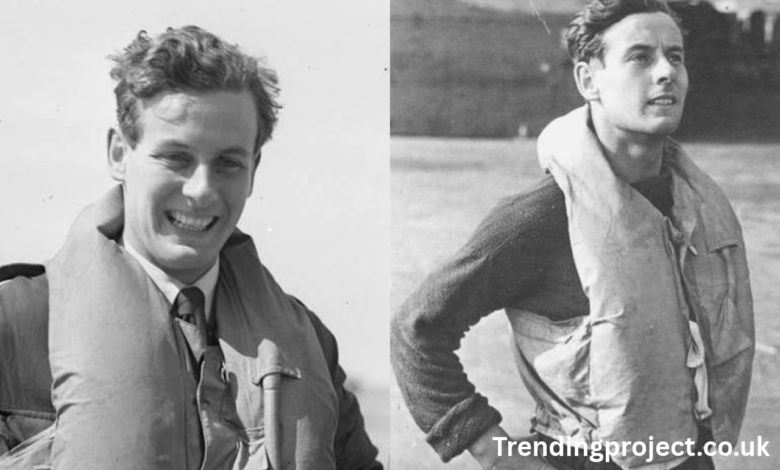
There are some historical love stories that survive because they ended happily, and others that become unforgettable precisely because they did not. Peter Townsend’s story belongs firmly to the second category. Long before newspapers around the world became fascinated by his relationship with Princess Margaret, Townsend had already lived an extraordinary life as a Royal Air Force fighter pilot, wartime commander, decorated hero and trusted member of the British royal household. His romance with the king’s younger daughter eventually transformed him into one of the most recognizable men associated with the British monarchy during the 1950s, but that dramatic chapter was only one part of a much larger life.
Born in Rangoon, Burma, in 1914, Townsend belonged to a generation that came of age between two world wars and was eventually forced to confront the enormous challenge of Nazi Germany. He joined the RAF while still a young man and developed into a highly accomplished fighter pilot. During the Second World War, he flew Hurricanes and Spitfires, commanded No. 85 Squadron during the Battle of Britain and earned the Distinguished Flying Cross and Bar as well as the Distinguished Service Order. The historical record shows that his wartime achievements were substantial enough that his later reputation should never be reduced simply to the phrase “Princess Margaret’s lover.” The Independent
What makes Peter Townsend particularly fascinating is the contrast between the different worlds he inhabited. He experienced the terrifying reality of aerial combat, then found himself inside Buckingham Palace as an equerry to King George VI. He later became closely connected to the Queen Mother’s household, served as an air attaché in Brussels, built a new family life in France and established himself as an author. His autobiography, Time and Chance, eventually allowed readers to see the man behind the headlines in his own words, including his childhood, wartime experiences, royal service and relationship with Princess Margaret. Google Books
Peter Townsend Quick Facts
| Category | Details |
|---|---|
| Full Name | Peter Wooldridge Townsend |
| Born | November 22, 1914 |
| Birthplace | Rangoon, Burma, British India (present-day Yangon, Myanmar) |
| Died | June 19, 1995 |
| Age at Death | 80 |
| Profession | RAF officer, fighter pilot, courtier, diplomat and author |
| Military Rank | Group Captain |
| Famous For | Battle of Britain service and relationship with Princess Margaret |
| Father | Lieutenant Colonel Edward Copleston Townsend |
| Mother | Gladys Townsend |
| First Wife | Rosemary Pawle |
| Second Wife | Marie-Luce Jamagne |
| Children | Five |
| Major Honors | DSO, DFC and Bar, CVO |
| Notable Books | Duel of Eagles, Time and Chance, The Last Emperor, Duel in the Dark |
| Nationality | British |
| None | |
| Twitter/X | None |
| None | |
| Net Worth | No reliable historical public estimate |
Early Life and Family Background
Peter Wooldridge Townsend was born on November 22, 1914, in Rangoon, then part of British India and today known as Yangon, Myanmar. His father, Lieutenant Colonel Edward Copleston Townsend, served in the British Indian Army, and the family had strong connections to military and public service. Townsend’s upbringing therefore began within a world where discipline, duty and service were not abstract concepts but ordinary parts of family life. Historical biographical accounts identify him as one of several children in the Townsend family, whose roots were associated with Devon. Wikipedia
His early childhood was shaped by movement between Burma and Britain. That experience exposed him to two very different environments during the final years of the British Empire. Eventually, his education and upbringing in Britain helped establish the cultural background that would remain evident throughout his adult life. He grew up at a time when Britain was still deeply influenced by traditional institutions, military service and social hierarchy, all of which later became important themes in his life.
Townsend’s childhood also coincided with an extraordinary period in world history. He was born only months after the beginning of the First World War, meaning that the world of his childhood was already being transformed by industrial warfare, political upheaval and technological development. Aviation in particular was changing rapidly. What had been a relatively new technology during the First World War was becoming an increasingly important part of military strategy. For a young man who would eventually enter the RAF, this changing world created an environment in which courage and technical skill could lead to an extraordinary career.
Education and the Road Toward the Royal Air Force
Townsend’s education helped prepare him for the disciplined environment of military life. He attended Wychwood and developed interests that reflected the culture of his generation, including sport and religion. His early years were not marked by the celebrity that would eventually surround his name; instead, he was growing up as the son of a military family during a period when Britain was still recovering from the First World War.
The young Townsend eventually chose the Royal Air Force, entering a profession that demanded a combination of physical courage, technical understanding and emotional control. Becoming a fighter pilot was not simply a matter of learning how to fly. RAF pilots needed to understand aircraft performance, navigation, tactics, aerial gunnery and the rapidly evolving nature of air combat. Townsend’s later success suggests that he possessed both the discipline and adaptability required to succeed in such an environment.
His decision proved significant because the RAF would become the central institution of his early adult life. By the time Europe moved toward another major war, Townsend was no longer simply an inexperienced young officer. He had developed into a professional aviator capable of taking responsibility for other men. That experience would become particularly important when Britain faced the Luftwaffe during the Battle of Britain.
Peter Townsend and the Battle of Britain
Townsend’s military reputation was established during the Second World War, particularly through his service as a fighter pilot and squadron commander. He flew the Hawker Hurricane and later the Supermarine Spitfire, two aircraft permanently associated with Britain’s aerial defense during the war. His career placed him at the center of the RAF’s struggle against the Luftwaffe at a time when Britain faced the possibility of German invasion. Contemporary obituaries noted that he brought down the first German bomber to crash on British soil since the First World War and later became credited with eleven enemy aircraft. The Independent
In 1940, Townsend commanded No. 85 Squadron. Leadership during the Battle of Britain was an enormous responsibility. Squadron commanders were expected not only to fight but also to organize their units, make tactical decisions and maintain morale while pilots were being killed or wounded around them. Townsend’s record during this period helped establish his reputation as a courageous and capable officer. His wartime service ultimately brought him the Distinguished Flying Cross and Bar and the Distinguished Service Order. The Independent
The significance of Townsend’s wartime career is easy to underestimate because his later royal romance became so famous. Yet his military achievements came first. He had already demonstrated exceptional bravery before his name appeared in newspapers because of Princess Margaret. The decorated fighter pilot who later entered the royal household was therefore not an ordinary officer who suddenly became famous through romance; he was already a respected war veteran with a distinguished record.
His Rise to Senior RAF Leadership
Townsend continued to develop professionally after the most intense period of the Battle of Britain. He served in different RAF commands and became involved with night-fighter operations, staff work and senior leadership responsibilities. His career reflected the transition that many experienced wartime officers had to make as the RAF evolved from an emergency wartime organization into a more structured postwar military institution.
His experience was particularly valuable because he understood both frontline combat and command administration. A successful senior officer needed more than the ability to fly an aircraft. He had to understand personnel, organization, strategy and communication. Townsend’s progression through different RAF appointments demonstrated that his abilities were recognized beyond his achievements in individual aerial engagements.
By the middle of the 1940s, Townsend had moved into an entirely different environment: the British royal household. In 1944, he was appointed equerry to King George VI. That appointment placed him in direct contact with the monarch and his family and would ultimately change the course of Townsend’s personal life. BBM
Peter Townsend and King George VI
Townsend’s relationship with King George VI was professionally significant. As an equerry, he became part of the monarch’s close working environment and was responsible for duties that required discretion, reliability and personal trust. His military background made him particularly suitable for such a role, but his personality and ability to handle sensitive situations were equally important.
Serving the king meant that Townsend saw the royal family at close quarters in a way that few members of the public ever could. The royal household was not simply a glamorous environment. It was a demanding institution where protocol, constitutional responsibility and public expectations shaped everyday decisions. Townsend’s position required him to understand these pressures while maintaining a professional distance.
He remained connected with King George VI until the king’s death in 1952. During these years, Townsend’s relationship with the royal family became increasingly familiar. That familiarity was particularly important because Princess Margaret was not merely a distant royal figure to him. She was part of the household in which he worked, and over time their friendship developed into something considerably deeper. BBM
Peter Townsend and Princess Margaret
The relationship between Peter Townsend and Princess Margaret became one of the defining royal stories of the 1950s. Margaret was the younger daughter of King George VI and Queen Elizabeth, while Townsend was an older, decorated RAF officer who had served her father. Their relationship attracted enormous attention because it crossed several boundaries that were highly sensitive in British society at the time.
Their age difference was noticeable, but the more serious obstacle was Townsend’s status as a divorcee. In modern Britain, divorce is generally viewed very differently from the way it was regarded in the 1950s. For a member of the royal family, especially one who might marry within the line of succession, the issue was connected to the Church of England, constitutional expectations and the monarchy’s public image. The romance therefore became far more than a private family matter. The Washington Post
What made the story especially powerful was that the relationship appeared genuine. Townsend’s later autobiography provided his own perspective on the romance and described the emotional bond between them. His book Time and Chance remains particularly valuable because it places the famous relationship within the context of his entire life rather than treating it as an isolated celebrity story. Google Books
Why Peter Townsend Could Not Easily Marry Princess Margaret
The controversy surrounding the relationship was rooted in the values and institutions of the period. Townsend was a divorced man, and the Church of England’s position on remarriage after divorce created a serious obstacle. The monarchy was constitutionally intertwined with the Church, while the royal family was expected to uphold traditions that were increasingly being questioned by wider society.
The Royal Marriages Act and the constitutional role of the monarch also contributed to the complexity of the situation. Contemporary reporting described the potential marriage as capable of creating a constitutional crisis. Margaret was young, but she was also a senior member of the royal family whose decisions were subject to intense public scrutiny. The Washington Post
The eventual result was heartbreaking for the couple. On October 31, 1955, Princess Margaret announced that she had decided not to marry Group Captain Townsend. The statement referred to her duty and the Church of England’s position regarding marriage after divorce. The decision brought an end to one of the most intensely followed royal romances of the twentieth century. BBM
Townsend’s Life After the Royal Romance
One of the most important things to understand about Peter Townsend is that his life did not end emotionally or professionally with the collapse of his relationship with Princess Margaret. He continued building a career and eventually retired from the RAF in November 1956. His years after royal service demonstrate a remarkable degree of reinvention.
In 1959, Townsend married Marie-Luce Jamagne, a Belgian woman. They eventually had three children together, while Townsend already had two sons from his first marriage to Rosemary Pawle. His second marriage marked a new chapter in his private life, one far removed from the intense British media attention that had surrounded his relationship with Margaret. The Independent
Townsend eventually settled in France, where he and Marie-Luce built their family life. He continued to travel and write and became increasingly known as an author rather than simply a former RAF officer or royal romantic figure. In many ways, France gave Townsend the space to create an identity that was separate from the British royal establishment.
Peter Townsend’s Career as an Author
Writing became one of the most important parts of Townsend’s later life. His experience provided him with an extraordinary reservoir of material: childhood in the British Empire, fighter combat, the Battle of Britain, royal service, international travel and his relationship with Princess Margaret. Rather than allowing those experiences to remain simply memories, he turned many of them into books.
His publications included Duel of Eagles, The Last Emperor, Time and Chance, The Girl in the White Ship, The Postman of Nagasaki and Duel in the Dark. His subjects ranged from military history and royal biography to war, humanitarian stories and personal memoir. Wikipedia
Among these works, Time and Chance is particularly significant for anyone researching Peter Townsend. Published in 1978, the autobiography covers his childhood, school years, experiences as a wartime pilot and relationship with Princess Margaret. The book gives historians and readers an opportunity to encounter Townsend’s own account rather than relying entirely on newspaper stories or later dramatizations. Google Books
Peter Townsend’s Family and Personal Life
Townsend’s first marriage was to Rosemary Pawle, and they had two sons before the marriage ended in divorce. That divorce later became central to the controversy surrounding Princess Margaret because it placed Townsend in a position that conflicted with prevailing royal and religious expectations. The personal consequences of that earlier marriage therefore extended far beyond his private life.
His second marriage to Marie-Luce Jamagne began in 1959, several years after the royal relationship had ended. Together they had three children, giving Townsend a family life that continued for decades. Contemporary obituaries noted that Townsend and Marie-Luce remained together for many years after moving to France. UPI
The later Townsend was considerably more private than the celebrity figure created by the newspapers of the 1950s. His interests increasingly revolved around writing, travel, history and international affairs. This quieter period of his life is essential to understanding him as a complete person because it demonstrates that his identity extended well beyond the royal romance that had once dominated public discussion.
Peter Townsend’s Net Worth and Sources of Income
It is difficult to provide a trustworthy modern-style net worth figure for Peter Townsend. Unlike contemporary celebrities, Townsend did not publish financial statements or maintain a public profile centered on personal wealth. Historical records document his professional positions, writing career and other activities, but they do not provide enough reliable information to calculate an exact lifetime net worth.
His income would have come from several different stages of his career. The Royal Air Force provided his primary professional occupation during his military years, while his royal household and diplomatic positions formed another important part of his working life. After leaving military and royal service, he developed additional income through writing, journalism and other professional activities. Contemporary accounts also describe him as pursuing varied work while living in France. The Washington Post
For that reason, any website claiming a precise multi-million-dollar net worth for Peter Townsend should be treated cautiously. There is no strong historical evidence supporting such a precise figure. A more accurate biography should acknowledge that his financial position is not publicly documented in sufficient detail and avoid presenting speculation as fact.
Peter Townsend’s Awards and Military Honors
Townsend’s military decorations provide some of the clearest evidence of his achievements. He received the Distinguished Flying Cross and Bar for his service as a fighter pilot and later received the Distinguished Service Order. He was also appointed a Commander of the Royal Victorian Order, reflecting his service to the royal household. The Independent
His honors were not simply ceremonial achievements. They reflected a period when Townsend had repeatedly placed himself in danger while serving in the RAF. His combat career included aerial engagements against German forces, and his leadership responsibilities meant that he carried the additional burden of command.
His military legacy therefore deserves to be considered independently of his relationship with Princess Margaret. Contemporary obituaries specifically emphasized that Townsend’s wartime achievements were substantial and that he should be remembered as a Second World War hero rather than merely as a royal romantic figure. The Independent
Peter Townsend’s Final Years and Death
Townsend spent much of his later life in France with Marie-Luce. The move gave him a quieter existence after years of military service and intense British media attention. He continued writing and remained connected with subjects that had shaped his life, including aviation, history and international affairs.
His health deteriorated toward the end of his life, and he died on June 19, 1995, at his home in Saint-Léger-en-Yvelines, France. Contemporary reports and obituaries described his death as occurring after cancer. He was buried in France, and the funeral reflected both his military service and his connections with Britain. UPI
The circumstances of his funeral were particularly symbolic. Townsend was remembered not simply as a former royal suitor but as a decorated RAF officer. Representatives connected with Britain’s armed forces and the royal household attended, reflecting the different worlds that had shaped his extraordinary life. UPI
Peter Townsend’s Legacy
Today, Peter Townsend remains famous for several different reasons, and the challenge is deciding which deserves the greatest emphasis. Popular culture has often concentrated on Princess Margaret, especially through dramatizations such as The Crown. Yet historical sources reveal a much broader figure: an accomplished fighter pilot, senior RAF officer, royal courtier, diplomat, traveler and author. Wikipedia
His autobiography and other books have helped preserve his personal perspective for later generations. In particular, Time and Chance provides an unusual combination of military memoir, royal history and personal reflection. It allows readers to examine the famous romance through Townsend’s own recollections while also understanding the many other experiences that shaped him. Google Books
Perhaps the strongest part of Townsend’s legacy is the fact that his life continued after the relationship that made him famous had ended. He did not remain frozen in the public imagination as Princess Margaret’s rejected suitor. He became a husband, father, writer and traveler, creating an independent identity that survived long after the headlines of the 1950s had faded.
Conclusion
Peter Townsend’s life was a remarkable mixture of courage, duty, romance, disappointment and reinvention. He entered history first as a Royal Air Force officer and Battle of Britain fighter pilot, earning decorations through dangerous wartime service. Later, his position inside the royal household brought him into the personal world of King George VI and his family, ultimately leading to his famous relationship with Princess Margaret.
The romance became one of the great stories of twentieth-century British royalty because it placed individual happiness against the expectations of monarchy, religion and public duty. Townsend and Margaret were unable to turn their relationship into marriage, but the end of their romance did not define the entirety of either person’s life. Townsend moved forward, married again, raised a family, settled in France and established a significant career as an author.
His story is therefore more than a tale of forbidden love. It is also the story of a man who repeatedly adapted to circumstances he could not control. From the cockpit of a Hurricane to the corridors of Buckingham Palace, from wartime Britain to diplomatic Brussels and eventually the quiet French countryside, Peter Townsend experienced a life filled with extraordinary contrasts. His journey remains a reminder that a person’s legacy is rarely contained within one chapter. Sometimes the most meaningful part of a life begins after the world believes the story is already over.