Pamela Franklin Biography: Early Life, Acting Career, Movies, Family, Awards and Legacy

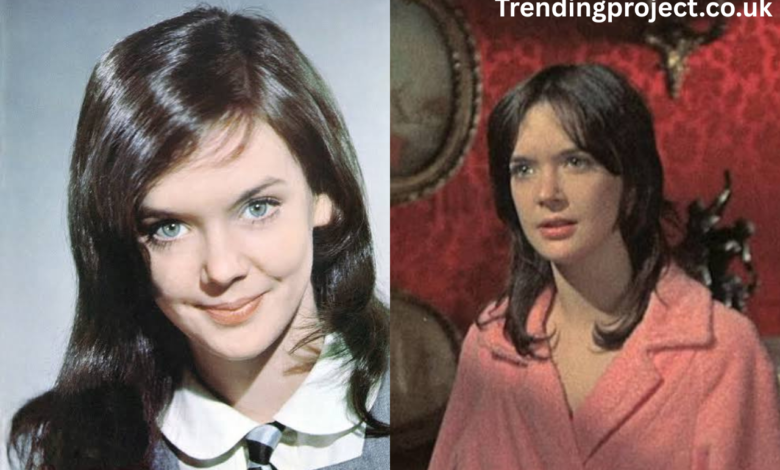
Pamela Franklin’s career began when she was only 11 years old, but there was nothing ordinary about the path that followed. Born in Yokohama, Japan, raised across several countries, trained initially in ballet, and introduced to cinema through one of the most atmospheric psychological horror films of the early 1960s, Franklin grew from a child performer into an acclaimed young actress. Her career eventually included major films such as The Innocents, The Nanny, The Prime of Miss Jean Brodie, And Soon the Darkness, and The Legend of Hell House, as well as numerous American television appearances.
Table of Contents
ToggleWhat makes Pamela Franklin particularly fascinating is the range of her career. She worked with celebrated performers including Deborah Kerr, Bette Davis, Maggie Smith, Marlon Brando and Roddy McDowall, while moving between psychological drama, crime stories, television, suspense and horror. Her portrayal of Sandy in The Prime of Miss Jean Brodie brought her one of the most important honors of her career: the National Board of Review Award for Best Supporting Actress, along with a BAFTA nomination in the same category.
Although Franklin eventually retired from acting in 1981 and largely withdrew from public life, her work has continued to attract classic-film audiences. Her performances have been rediscovered by viewers interested in British cinema, vintage Hollywood, psychological thrillers and 1970s horror. Her story is therefore not simply about a former child star; it is about an actress who experienced extraordinary professional success early in life, navigated the difficult transition into adult roles, and ultimately chose a quieter existence away from the entertainment spotlight.
Pamela Franklin Early Life and Family Background
Pamela Franklin was born on February 3, 1950, in Yokohama, Japan. Her childhood was unusually international because of her father’s work as an importer and exporter. Rather than spending her formative years in one British hometown, Franklin experienced life in several countries and environments, including Japan, Hong Kong, Australia and Ceylon, now known as Sri Lanka. This gave her an unusually broad childhood experience before she eventually returned to Britain for her education.
Franklin was one of four children and had three brothers. Public information about her parents is comparatively limited, so many details about her private family background have never been extensively documented. What is clear from established biographical accounts is that her father’s international business meant that the family moved through different cultural environments, something that distinguished Franklin’s upbringing from that of many British actresses of her generation.
At around eight years old, Franklin was sent to England to attend the Elmhurst School of Ballet. At that stage, dance was an important part of her education and she was initially being prepared for a possible career connected with ballet. The discipline involved in formal dance training would prove valuable later, because acting as a child required concentration, confidence, memorization and the ability to work within demanding professional environments.
Pamela Franklin’s Introduction to Acting
Pamela Franklin’s transition from ballet training to acting happened surprisingly quickly. At only 11, she made her film debut in Jack Clayton’s The Innocents, a 1961 psychological horror film starring Deborah Kerr. The film was adapted from Henry James’s The Turn of the Screw, and Franklin played Flora, one of the children at the center of its mysterious and unsettling story.
Working on such a sophisticated production at that age was a remarkable introduction to cinema. The Innocents relied heavily on atmosphere, suggestion and psychological tension rather than straightforward horror, meaning that Franklin had to perform within a story where subtle expressions and behavior were extremely important. Her early performance helped establish the maturity that critics and biographers would repeatedly associate with her acting.
Her debut was followed by further opportunities. Franklin appeared in The Lion in 1962, working alongside William Holden and Trevor Howard, and subsequently appeared in Flipper’s New Adventure. She was already building a professional résumé while still very young, and by 1963 she had placed tenth in the Laurel Awards’ Top New Female Personality category.
Pamela Franklin and The Nanny
One of Franklin’s most memorable early performances came in The Nanny, the 1965 psychological thriller starring legendary actress Bette Davis. Franklin played Bobbie Medman, a young member of a troubled family, and the film allowed her to demonstrate that she could handle darker and more emotionally complicated material than conventional child roles.
The significance of The Nanny was not simply that Franklin appeared alongside Bette Davis. It also demonstrated the direction in which her career was developing. Rather than being restricted to cheerful family entertainment, she increasingly appeared in stories involving psychological conflict, secrets, fear and suspense. Those themes would become recurring elements in her later filmography.
Around this period, Franklin was also expanding into television. Her performance in Eagle in a Cage, an episode of Hallmark Hall of Fame, earned her a Primetime Emmy nomination for supporting performance. That recognition showed that her abilities were being noticed across both film and television, rather than her reputation being limited to childhood cinema.
Pamela Franklin in The Prime of Miss Jean Brodie
The most important turning point in Pamela Franklin’s career arrived with The Prime of Miss Jean Brodie. Released in 1969, the film was based on Muriel Spark’s novel and starred Maggie Smith as the charismatic teacher Jean Brodie. Franklin played Sandy, one of the students who becomes deeply affected by Brodie’s powerful personality and worldview.
Sandy was a particularly demanding role because the character’s development is central to the film’s examination of influence, loyalty and independence. Franklin had to portray a young woman who is initially fascinated by her teacher but gradually develops a more complicated understanding of Brodie’s influence. Her performance therefore required much more than simply reacting to the leading character; it required her to communicate Sandy’s changing perspective.
Franklin’s work received significant recognition. The National Board of Review honored her with its Best Supporting Actress award, while the British Academy recognized her with a BAFTA nomination in the same category. The film itself also became a major critical success, with Maggie Smith ultimately winning the Academy Award for Best Actress for her portrayal of Jean Brodie.
Pamela Franklin’s Transition Into Adult Roles
Following The Prime of Miss Jean Brodie, Franklin faced the challenge familiar to many actors who begin working as children: proving that their talent could continue to develop as they became adults. Her next projects moved her into more mature material, including The Night of the Following Day, where she appeared alongside Marlon Brando and Rita Moreno.
She also appeared in John Huston’s Sinful Davey, continuing her effort to establish herself beyond the identity of a child actress. While not every project achieved the same level of recognition as The Prime of Miss Jean Brodie, the period was important because Franklin was actively exploring different kinds of adult characters and productions.
Another significant project was And Soon the Darkness, a 1970 suspense thriller in which Franklin appeared with Michele Dotrice. The film placed her once again inside a story built around danger, uncertainty and psychological tension, themes that had already appeared in several of her earlier performances.
Pamela Franklin’s Horror Movie Career
During the 1970s, Pamela Franklin increasingly became associated with horror and supernatural cinema. Her appearances in films such as Necromancy and The Legend of Hell House helped create the reputation that later led genre audiences to remember her as a prominent horror actress of the era.
In The Legend of Hell House, released in 1973, Franklin portrayed Florence Tanner, a psychic medium involved in an investigation of a supposedly haunted mansion. The movie starred Roddy McDowall and became one of the titles most closely associated with Franklin’s later film career. Its combination of haunted-house atmosphere, supernatural themes and psychological suspense fit naturally with the kind of material she had been performing since her childhood debut.
Her horror career continued through projects including Satan’s School for Girls and The Food of the Gods. Although horror eventually became a defining part of her public reputation, it would be misleading to describe Franklin only as a horror actress. Her earlier dramatic work, television appearances and award recognition demonstrate that she had a substantially broader career than the genre label alone suggests.
Pamela Franklin’s Television Career
Television became a major part of Franklin’s professional life during the 1970s. She appeared in numerous popular American programs, including Cannon, Hawaii Five-O, The Six Million Dollar Man, Barnaby Jones, The Love Boat, Fantasy Island and Trapper John, M.D. Her television résumé illustrates how frequently she worked even when major feature-film opportunities were less consistent.
Franklin’s television work also allowed her to move beyond the horror image that had developed around her film career. Guest appearances in crime dramas, adventure programs and mainstream television series gave her opportunities to portray different types of characters. During this period, television was an important professional avenue for established actors, and Franklin participated extensively in that system.
However, Franklin later reflected negatively on the direction her American television career had taken. According to comments associated with the 2014 Blu-ray release of The Legend of Hell House, she believed that becoming identified too strongly with television had limited how some producers viewed her. Her reflections provide an interesting insight into the career pressures experienced by actors working during that era.
Pamela Franklin’s Awards and Achievements
Pamela Franklin’s most notable competitive acting recognition came for The Prime of Miss Jean Brodie. The National Board of Review named her Best Supporting Actress for her performance as Sandy, making the honor one of the central achievements of her career.
She was also nominated for a BAFTA Award for Best Supporting Actress for the same performance. That nomination placed her among the recognized supporting performers of British cinema during an important period of change in the film industry. Her performance remains one of the strongest examples of her ability to make the transition from child performer to mature dramatic actress.
Her achievements were not limited to that film. Franklin had previously received a Primetime Emmy nomination for her supporting performance in Eagle in a Cage, and her early recognition in the Laurel Awards demonstrated that she was receiving attention well before her most famous adult role. Her career therefore contains a series of milestones rather than a single isolated success.
Pamela Franklin’s Husband and Children
Pamela Franklin married actor Harvey Jason in 1970. The couple had met several years earlier and both were involved in the entertainment industry. Their marriage took place during the period when Franklin was transitioning into adult roles and expanding her work across film and television.
Franklin and Jason eventually had two sons. Public biographical sources identify their children as Joshua Jason and Louis Jason. The family later settled in the Hollywood area, but Franklin increasingly moved away from professional acting and public celebrity life.
Harvey Jason also eventually retired from acting. According to biographical information, he and their son Louis became associated with Mystery Pier Books, a specialist first-edition bookstore in West Hollywood. This represents an interesting second chapter for the family, moving from entertainment into the world of collectible literature and books.
Pamela Franklin’s Decision to Leave Acting
Pamela Franklin’s professional acting career lasted approximately two decades, from 1961 to 1981. Her final years included television appearances, but she gradually stepped away from the industry rather than attempting to maintain a permanent presence in Hollywood.
Her decision was significant because she had already demonstrated that she could work successfully in both film and television. However, the entertainment business had changed considerably since her childhood debut, and Franklin later suggested that she wanted a change in direction. Her comments about television also indicate that she had become dissatisfied with the professional limitations created by being perceived primarily as a television actress.
Her retirement also illustrates that an actor’s career does not necessarily have to continue indefinitely to have cultural significance. Franklin had already accumulated major films, award recognition and a substantial television résumé. By stepping away, she allowed her later life to develop largely outside the demands of public celebrity.
Pamela Franklin’s Life After Hollywood
Following her retirement, Pamela Franklin largely maintained a private life. Unlike contemporary actors who can remain constantly visible through Instagram, YouTube, TikTok and other social-media platforms, Franklin did not build a large public online presence. Her relative absence from modern celebrity culture is one reason reliable information about her current day-to-day life is limited.
The available biographies indicate that she continued living in the United States with her family. However, details about her daily routine, personal interests and private activities are not extensively documented in reliable sources. This makes it important to distinguish between confirmed biographical information and the many unsupported claims that can circulate on celebrity websites.
As of 2026, Franklin is 76 years old. There is no reliable indication of a major acting comeback or a new professional project. Her continuing public relevance comes primarily from retrospectives of her films and the renewed interest in classic cinema, particularly among audiences discovering The Innocents, The Prime of Miss Jean Brodie and The Legend of Hell House for the first time.
Pamela Franklin Net Worth and Income
There is no authoritative public financial disclosure that establishes Pamela Franklin’s current net worth. Celebrity websites sometimes publish estimated figures, but these estimates generally do not provide audited documentation or enough information about property, investments, royalties, savings and other assets to treat a specific number as fact.
During her active career, Franklin’s principal professional income would have come from acting in films and television productions. Her filmography includes both major studio productions and genre films, while her extensive television work provided another source of professional earnings. However, the precise contracts and salaries associated with most of those productions are not publicly available.
For that reason, any claim that Pamela Franklin has an exact net worth should be treated cautiously. Her long career undoubtedly produced professional income, but her current financial position is private. A responsible biography should therefore focus on her documented career rather than presenting speculative celebrity wealth estimates as established information.
Pamela Franklin’s Social Media Presence
Pamela Franklin belongs to a generation of performers whose careers were established decades before social media existed. Consequently, there is no widely documented official Instagram, X/Twitter or LinkedIn account that can confidently be attributed to her. Various profiles using celebrity names can exist online, but a name alone is not enough to establish authenticity.
This relative absence from social media is also consistent with Franklin’s post-retirement lifestyle. After leaving acting, she did not pursue the type of public personal branding that is now common among actors. Her legacy has instead remained connected to her films, television appearances, interviews and archival material.
For fans searching for Pamela Franklin online, the most dependable sources are therefore established film databases, archival film organizations and legitimate releases of her movies. Her work continues to provide the clearest window into her professional life, particularly because many of her strongest performances remain available to modern audiences.
Pamela Franklin’s Lasting Legacy
Pamela Franklin’s legacy rests on an unusual combination of early achievement and long-term influence. She began as a child actress in The Innocents, established herself dramatically in The Prime of Miss Jean Brodie, and later became a familiar face to horror and television audiences. Few actors of her generation moved through quite so many different stages of screen work.
Her collaboration with major performers also forms an important part of her story. She shared the screen with Deborah Kerr, Bette Davis, Maggie Smith, Marlon Brando, Rita Moreno and Roddy McDowall, among others. These collaborations placed her inside productions that remain significant parts of film history.
Most importantly, Franklin’s career demonstrates the possibilities and difficulties of growing up professionally in front of an audience. She succeeded as a child, earned serious recognition as a young actress, experienced genre typecasting, worked extensively in television and ultimately chose to leave the profession. Her story remains compelling because it was never simply about fame—it was about adapting to change and eventually deciding what kind of life mattered beyond the screen.
Conclusion
Pamela Franklin’s journey from Yokohama-born child actress to award-winning British screen performer is a fascinating example of how a career can evolve across different eras of cinema. Her early performance in The Innocents introduced audiences to a young actress with unusual maturity, while The Nanny demonstrated her ability to handle psychological material. Then came The Prime of Miss Jean Brodie, the performance that brought her National Board of Review recognition and a BAFTA nomination.
Her later work in And Soon the Darkness, The Legend of Hell House, Satan’s School for Girls and The Food of the Gods established another dimension of her career, while her numerous television appearances kept her professionally active throughout the 1970s. Although her career eventually moved toward retirement, the work she left behind has continued to attract viewers decades later.
Pamela Franklin’s story ultimately offers a broader lesson about success. A person’s legacy does not depend solely on how long they remain in the spotlight. Franklin achieved recognition at a remarkably young age, adapted as she grew older, explored different genres and eventually chose a quieter life. Her performances remain part of film history, allowing new audiences to discover the talent that first appeared on screen more than six decades ago. As Pamela Franklin’s work continues to be revisited, her career stands as a reminder that perseverance, versatility and the freedom to choose one’s own path can shape a lasting artistic legacy.