Denise Black Biography: Age, Career, Family, Movies, TV Shows, Net Worth and Life Story

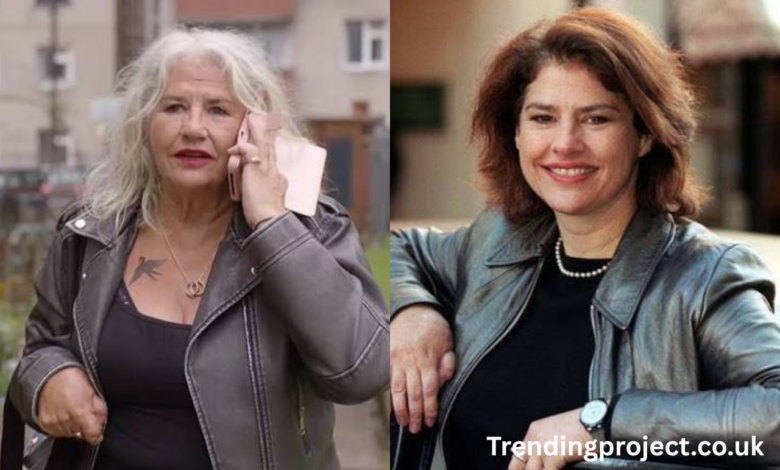
Denise Black has built the kind of acting career that becomes more fascinating with every chapter. For television audiences, she may immediately bring to mind memorable characters such as Denise Osbourne in Coronation Street, Hazel Tyler in Queer as Folk, or Joanie Wright in Emmerdale. Yet those popular roles tell only part of her story. Behind the familiar television face is a highly experienced theatre performer, singer, songwriter and character actress whose professional life has taken her from British stages to international touring productions and from long-running soaps to contemporary streaming dramas. Her recent work in Rivals demonstrates that, even after decades in the entertainment industry, Black continues to develop her screen career rather than simply looking back at earlier successes.
Table of Contents
ToggleWhat makes Denise Black particularly interesting is the unusual route she took into acting. She did not emerge from the entertainment world as an overnight celebrity. Her early professional development involved theatre touring, international performance and challenging dramatic material, experiences that helped shape the versatility that later became one of her greatest strengths. She has worked in productions ranging from Shakespeare and Chekhov to contemporary television dramas, while her musical interests have developed alongside her acting. Her official biography notes that she performs music, writes songs and plays the autoharp, while also describing her passion for sailing and international travel.
Black’s story therefore goes beyond a simple list of television credits. It is a story about longevity, reinvention and the ability to move between very different forms of performance. From her early work with the Actors’ Touring Company to award-winning theatre performances and major British television roles, she has repeatedly demonstrated that a successful acting career can be built through persistence and adaptability. In the following biography, her early life, education, family, theatre career, television success, film work, personal interests, awards, finances and recent projects are explored in detail.
Denise Black Biography Facts
| Fact | Details |
|---|---|
| Full Name | Denise Nixon |
| Profession | Actress, singer, songwriter and performer |
| Born | 1958 |
| Birthplace | Portsmouth area, Hampshire, England |
| Age | 68 in 2026, based on the commonly reported 1958 birth year |
| Nationality | British |
| Education | Studied psychology at the University of London |
| Husband | Paul Sand |
| Children | Sam and Dandy |
| Best Known For | Coronation Street, Queer as Folk, Emmerdale, Cucumber, Rivals |
| Notable Award | UK Theatre Award for Best Performance in a Play, 2018 |
| Theatre Recognition | London Critics’ Circle Theatre Award and Manchester Evening News recognition |
| Music | Singer, songwriter and autoharp player |
| Official Website | DeniseBlack.co.uk |
| No current verified account confidently established | |
| Twitter/X | Older references exist, but current official status is unclear |
| No verified public professional account confidently established | |
| Net Worth | No reliable publicly verified figure |
There is an important point concerning Denise Black’s age and birth information. IMDb currently lists her as born on June 3, 1958, in Emsworth, Hampshire, while her official biography simply says that she was born in Portsmouth. Because publicly available biographical sources do not agree perfectly on the exact details, it is safer to treat 1958 as the reliable birth year rather than presenting a disputed date as unquestionable fact.
Her professional biography, however, is much clearer. The official site identifies her extensive theatre and screen work, including her television appearances, film credits, theatre awards and musical interests. IMDb likewise lists Paul Sand as her spouse and identifies their children as Sam and Dandy.
Early Life and Family Background
Denise Black was born in Portsmouth, England, and grew up with influences that would later become surprisingly visible in her adult life. According to her official biography, she inherited a sense of wanderlust from her father and a love of music from her mother. Those two influences seem almost prophetic when viewed alongside the career she eventually created. Travel became a major part of her early professional life, while music remained a continuing creative passion alongside acting.
Her family background is not documented in the same depth as her professional career, and this is one area where responsible biography requires separating established information from details repeated by secondary websites. IMDb identifies her birth name as Denise Nixon, while older biographical material has identified her parents as Don and Stella Nixon and mentioned an older sister named Carol. Because those family details are not prominently confirmed in her current official biography, they should be regarded as secondary biographical information rather than presented as definitive without qualification.
What is much more firmly established is the creative environment that eventually surrounded her. Black developed an interest in performance, music and travel and later combined those interests in a career that refused to stay within one category. Her background helps explain why she became more than a conventional television actress: she developed the curiosity to explore theatre, music and different cultures, while her academic studies gave her another perspective on human behaviour.
Education and the Decision to Become an Actress
Before becoming professionally established as an actress, Denise Black studied psychology at the University of London. That detail is particularly interesting because psychology and acting can overlap in unexpected ways. Both require close observation of human behaviour, motivation, relationships and emotional responses. Although her professional life ultimately moved decisively toward performance, her academic background gave her a foundation that could be valuable when approaching complex characters.
Her route into the profession was gradual rather than the product of an instant breakthrough. Instead of immediately becoming a television star, she developed her skills through theatre and touring work. The Actors’ Touring Company became an important early stage in her professional life, and she earned her Equity card while performing productions internationally during the early 1980s. Her work took her to locations including South America, Israel, Greece, Yugoslavia and the Orkney Isles.
That experience was significant because touring theatre requires an actor to develop discipline, flexibility and confidence. Unlike television, where scenes can be filmed repeatedly and edited into a finished product, theatre demands that performers maintain concentration and character in real time. Black’s early exposure to international touring therefore gave her a strong foundation before she became familiar to British television audiences.
Denise Black’s Early Theatre Career
One of the major early milestones in Black’s career came when she took the title role in Pam Gems’ La Pasionaria at Newcastle Playhouse. The production became an important professional opportunity and connected her with other performers, including Josie Lawrence and Kate McKenzie. The relationship eventually contributed to the formation of Denise Black and the Kray Sisters, a three-woman harmony group that became associated with the Edinburgh Festival during the 1980s.
The theatre world gave Black opportunities that went far beyond conventional acting. She worked with major writers and performed demanding material, building a reputation for taking on characters that required emotional depth and strong stage presence. Her later theatre credits include works by Chekhov, Rattigan, Albee, Lorca and Shaw, as well as productions staged at respected venues including the Royal Court, Chichester Festival Theatre, Almeida Theatre, Liverpool Playhouse and Manchester Royal Exchange.
Her theatre background remained important even after television made her widely recognisable. This distinction matters when understanding Denise Black as an actress. She was never simply a soap performer who occasionally appeared on stage; she had a substantial theatrical career running alongside her television work. That foundation helped her move comfortably between different genres and explains the range visible across her later film and television performances.
Denise Black and the Kray Sisters
Music became another important part of Denise Black’s creative identity during the 1980s. Together with Josie Lawrence and Kate McKenzie, she became part of Denise Black and the Kray Sisters, a female harmony trio that developed a following through the Edinburgh Festival. The project combined music, comedy and theatrical performance, allowing Black to use a different set of talents from those required in conventional dramatic acting.
The group also demonstrates how naturally performance has crossed boundaries throughout Black’s career. She has never been limited to a single creative discipline. Singing, songwriting and acting have repeatedly overlapped, and her official biography continues to identify music as one of her major interests. Her albums include Kiss The Joy and Denise Black and the Kray Sisters, reflecting a musical side of her career that can easily be overlooked when discussion focuses primarily on television.
This period also contributed to her reputation as a distinctive performer rather than a conventional leading lady. The combination of theatre, music and comedy gave her opportunities to develop timing, vocal performance and audience interaction. Those skills would later complement her screen work, particularly in productions where humour and emotional drama exist side by side.
Denise Black’s Television Debut
Denise Black made her television debut in Casualty in 1990, according to her official biography. Her first television appearance was an early sign that her theatre background could translate successfully to the screen. From there, she began building an impressive collection of television credits across British drama, comedy and serial television.
Her subsequent credits include The Bill, A Touch of Frost, Peak Practice, Where the Heart Is, The Scarlet Pimpernel, Holby City, New Tricks, Dalziel and Pascoe, Doc Martin, Bad Girls, Benidorm and many other productions. The sheer variety of these programmes illustrates how widely she was able to work. Rather than becoming associated with one narrow television genre, she continued moving between crime drama, comedy, medical drama, historical productions and soaps.
This breadth became one of the defining characteristics of her career. Black could appear in a long-running soap one year and a serious theatrical production the next, then return to comedy or contemporary drama. That versatility helped her maintain a professional presence over several decades and ensured that audiences could encounter her in very different kinds of stories.
Coronation Street and Denise Osbourne
For many British television viewers, Denise Black will always be associated with Coronation Street. She played Denise Osbourne, a character who became part of the soap’s storylines during the 1990s. IMDb’s current credits list her as appearing in the programme across multiple periods between 1992 and 2017, illustrating how the character remained connected with her career over many years.
Joining Coronation Street represented a major shift in audience exposure. Theatre had given Black professional credibility, but a long-running ITV soap could place her in front of millions of viewers through regular episodes. Her role as Denise Osbourne therefore became one of the performances that established her recognisability among mainstream British television audiences.
The importance of the role also lies in how it became one part of a much larger career rather than the endpoint. Black did not remain permanently tied to the character. She continued working in theatre, film and other television productions, demonstrating that she could use the visibility provided by soap television while continuing to develop as a broader performer.
Queer as Folk and Hazel Tyler
Another defining role arrived when Denise Black played Hazel Tyler in Russell T Davies’ Queer as Folk. The Channel 4 series became one of the most discussed British television dramas of its era, and Black’s portrayal of Hazel gave the programme a warm, memorable maternal figure. IMDb identifies Hazel among the roles for which Black is particularly known and also connects her later with Cucumber, another Russell T Davies production.
Hazel was important because Black’s performance brought humanity and humour into a series that was breaking ground in its depiction of gay life and relationships. Her character became especially memorable to viewers because she was not treated merely as a supporting presence. Black brought personality, warmth and individuality to Hazel, allowing the character to stand out within an already distinctive ensemble.
The role also became an enduring part of her screen legacy. Decades later, audiences continue to associate Denise Black with Hazel Tyler, demonstrating how a well-developed character can outlive the original production. Her later work in Cucumber strengthened her connection with Davies’ television storytelling and showed that the relationship between actor and writer could extend across different eras of British television.
Emmerdale and Joanie Wright
Denise Black later became a familiar face to another huge British soap audience when she joined Emmerdale as Joanie Wright. Her involvement in the programme added another significant soap character to a career that had already included Coronation Street. The role demonstrated that Black could enter an established television universe and quickly make a character feel part of its existing community.
Joanie’s storylines involved family relationships, emotional conflict and major developments within the village. Black approached the role with the experience of an actress who had already spent decades moving between theatrical drama and television storytelling. That background helped give the character greater texture and made her presence feel substantial rather than simply functional.
Her time on Emmerdale also reinforced a particularly British dimension of Black’s career. Very few actors move successfully between the country’s two most famous long-running soaps while maintaining a serious theatre career at the same time. Black’s ability to do so is one of the clearest indications of the breadth of her professional reputation.
Denise Black’s Theatre Awards and Recognition
Although television introduced her to a huge audience, Denise Black’s theatre career has received substantial critical recognition. IMDb records that she received the London Critics’ Circle Theatre Award for Best Supporting Actress for her performance in Street Wise in the early 1980s. She also received Manchester Evening News recognition for her stage work, including her performance in Roots at the Royal Exchange.
One of the most significant later achievements came in 2018, when Black won Best Performance in a Play at the UK Theatre Awards for The Cherry Orchard. The production was a reimagining of Anton Chekhov’s classic by Welsh playwright Gary Owen and was staged at the Sherman Theatre. Winning major theatre recognition at this stage of her career was an important reminder that her reputation extended far beyond television.
Her theatre résumé includes The Deep Blue Sea, The Shadow Factory, Kindertransport, Machinal, Winter Hill, Sisters, Bedroom Farce, The Long Road, The Seagull, Who’s Afraid of Virginia Woolf?, Yerma, Mrs Warren’s Profession, King Lear and many others. These productions demonstrate the range of dramatic traditions she has worked within and provide a fuller picture of her contribution to British theatre.
Denise Black’s Film Career
Black’s film career has been smaller than her television and theatre résumé, but it contains several notable credits. Her first film was Fred Schepisi’s Last Orders, a British drama featuring a distinguished ensemble cast. Her official biography identifies the film as her first major cinematic credit.
She later appeared in Shola Amoo’s The Last Tree, a British coming-of-age drama released in 2019. The film added another contemporary dramatic project to her résumé and demonstrated that her career continued to move between television, cinema and theatre rather than settling into one medium.
Her film work is best understood within the larger context of her career. Black has generally been valued as a character performer, someone capable of adding depth and personality to an ensemble. Rather than measuring her success purely through the number of leading film roles, her career is better appreciated through the quality and variety of productions in which she has participated.
Personal Life, Husband and Children
Denise Black is married to composer and musician Paul Sand. IMDb lists Sand as her spouse and identifies their children as Sam, born in 1988, and Dandy, born in 1991. Their family life has also included strong creative connections, particularly through music.
Music appears to have remained an important part of Black’s life beyond her professional acting career. She sings, writes songs and plays the autoharp, while her musical recordings include Kiss The Joy and work associated with the Kray Sisters. These interests provide a different perspective on her personality because they reveal a creative life that does not depend entirely on acting opportunities.
Another unusual personal interest is sailing. Black owns a boat named Sunya and has crewed across the Bay of Biscay and in the Caribbean. This connects strongly with the adventurous spirit she attributes to her father and suggests that travel and exploration have remained meaningful parts of her life long after her early international theatre experiences.
Denise Black’s Net Worth and Income
There is currently no dependable public record establishing Denise Black’s exact net worth. Celebrity wealth websites sometimes publish precise estimates for actors, but these figures generally lack access to private contracts, investments, property records, taxes and other financial information needed to establish genuine personal wealth. Consequently, a specific net-worth number would be speculative rather than a verified biographical fact.
Her professional income has presumably been generated through multiple areas of entertainment. These include television acting, theatre performances, film appearances, musical work and other performance-related activities. Her long career and extensive credit list demonstrate sustained professional employment, but they do not provide enough information to calculate how much she has earned or accumulated over her lifetime.
For an accurate biography, therefore, Denise Black’s net worth should be described as not publicly verified. This approach is more useful to readers than repeating an attractive but unsupported figure. Her artistic achievements, awards and extensive résumé are documented much more reliably than her private financial circumstances.
Denise Black on Social Media and Online
Denise Black maintains an official website that provides biographical information and details about her career. The site is particularly valuable because it comes directly from a source associated with the actress and includes information about her theatre credits, television work, music and personal interests.
There have been references over the years to social-media accounts associated with Denise Black, including an older Twitter/X presence, but current verification is not sufficiently clear to confidently list those accounts as official in 2026. The same caution applies to Instagram and LinkedIn. Rather than directing readers toward potentially impersonating accounts, it is safer to use her official website as the primary online source for current professional information.
Her relatively traditional online presence also fits the broader character of her career. Black’s public identity has been built primarily through performance rather than constant social-media visibility. Her theatre work, television roles, music and professional projects remain the central focus of her public profile.
Denise Black’s Recent Career and Rivals
Denise Black continues to work in television, and one of her most visible recent projects is Rivals, the television adaptation of Jilly Cooper’s novel. She plays Joyce Madden, a role that places her within a large British ensemble featuring established performers including David Tennant. IMDb currently lists Black as Joyce Madden across the show’s 2024–2026 run.
The role is particularly interesting because it introduces Black to a new generation of television viewers who may know her from recent streaming productions rather than from Coronation Street or Queer as Folk. It also illustrates the remarkable continuity of her career: an actress who began professionally decades ago is still appearing in contemporary high-profile television.
Her current screen credits also include recent work such as Waterloo Road, Tommy & Tuppence, Am I Being Unreasonable?, My Lady Jane, Three Little Birds, Grantchester, Father Brown, Call the Midwife and other productions. IMDb’s current listing demonstrates that her career remains active across both television and other screen formats.
Denise Black’s Acting Style and Professional Legacy
One of the strongest themes running through Denise Black’s career is versatility. She has portrayed ordinary working characters, dramatic figures, comic personalities and emotionally complex women, often moving between very different productions without losing her individual presence. Her ability to make supporting characters memorable has become one of her professional trademarks.
Her theatre experience is particularly important when assessing her legacy. The extensive list of classical and contemporary plays on her official résumé shows an actor comfortable with demanding literary material as well as popular television. Shakespeare, Chekhov, Lorca, Shaw, Rattigan and Albee all appear in her theatre history, alongside contemporary British playwrights.
At the same time, her television roles have given her a reach that many stage actors never achieve. Coronation Street, Queer as Folk, Emmerdale, Bad Girls, Cucumber and Rivals belong to very different eras and genres, yet Black has left an identifiable mark across them. That combination of stage credibility and television familiarity is a major part of what makes her career distinctive.
Conclusion
Denise Black’s life and career offer a compelling example of how an actor can build longevity through curiosity, versatility and a willingness to keep learning. From her psychology studies and early international theatre touring to her breakthrough in La Pasionaria, her work with the Kray Sisters, her memorable television characters and her award-winning stage performances, her career has continually evolved. She has never been confined to a single role, genre or medium.
Her legacy is also more extensive than the roles for which she is most famous. Denise Osbourne, Hazel Tyler and Joanie Wright may be the characters that many viewers remember first, but behind those performances lies a substantial theatre career, musical work, film appearances and decades of professional experience. Her 2018 UK Theatre Award for The Cherry Orchard demonstrated that her stage work remained significant even after she had become a familiar television personality.
As Denise Black continues to work in contemporary television and other creative projects, her story remains a reminder that a meaningful career does not have to follow a predictable path. Her journey from Portsmouth and psychology studies to international theatre, British soaps, acclaimed drama, music and modern streaming television shows the value of remaining adaptable while protecting a genuine passion for the craft. Her career is ultimately a story of perseverance, creativity and reinvention — qualities that have allowed Denise Black to remain a distinctive presence in British entertainment across generations.