Susannah Harker Biography: Early Life, Family, Career, Pride and Prejudice, Net Worth and More

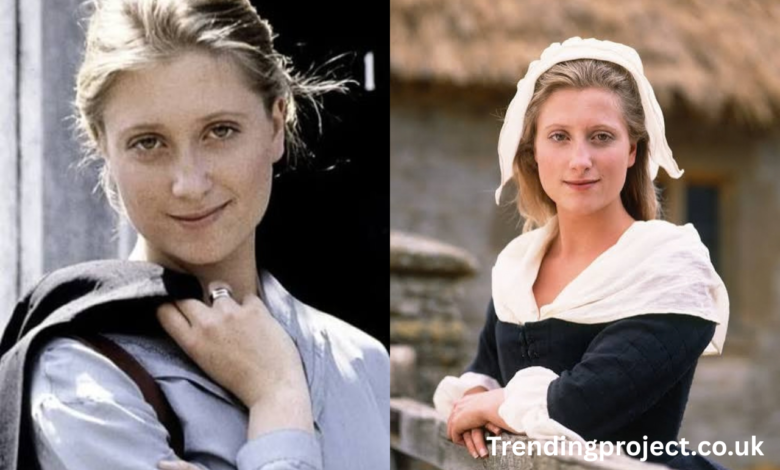
There are actors whose careers are defined by one unforgettable role, and then there are actors whose one unforgettable role becomes only one chapter in a much larger artistic story. Susannah Harker belongs firmly in the second category. For millions of viewers, she remains instantly recognizable as the graceful and compassionate Jane Bennet from the BBC’s celebrated 1995 adaptation of Jane Austen’s Pride and Prejudice. Yet her career extends far beyond the world of Regency England. She has worked in television, cinema, theatre and audio drama, taking on characters that range from literary heroines to ambitious political journalists and complex contemporary women. Her professional career began in the mid-1980s and has continued across several decades.
Table of Contents
ToggleHarker’s story becomes even more intriguing when her family background is considered. She was born into a theatrical family, with actress Polly Adams as her mother and actor Richard Owens as her father. Acting was therefore not an unfamiliar profession that she discovered later in life; it was part of the cultural world in which she grew up. Her own path, however, developed through formal training and a wide variety of professional choices. From House of Cards to Pride and Prejudice, from major stage productions to radio and audio drama, Harker has built a career based on versatility rather than celebrity visibility.
What makes her career especially relevant today is that her connection with Jane Bennet has not simply remained a piece of television history. Harker is currently associated with a developing film project, Jane Bennet’s Second Spring, a comedy-drama inspired by her own experience of playing Austen’s character and exploring ideas around midlife, female visibility and reinvention. In 2026, she also participated in a Jane Austen Society of North America event discussing her iconic role and the project, showing that her relationship with Austen’s world remains creatively active rather than merely nostalgic.
Susannah Harker Facts at a Glance
| Fact | Details |
|---|---|
| Full name | Susannah Harker |
| Birth name | Susannah Owens |
| Date of birth | 26 April 1965 |
| Age | 61 in 2026 |
| Birthplace | London, England |
| Nationality | British |
| Profession | Actress and director |
| Years active | 1985–present |
| Mother | Polly Adams |
| Father | Richard Owens |
| Sibling | Caroline Harker |
| Education | Central School of Speech and Drama |
| Best known for | Jane Bennet in Pride and Prejudice and Mattie Storin in House of Cards |
| Former husband | Iain Glen |
| Child | One son, Finlay |
| Major recognition | BAFTA Television Award nomination for House of Cards |
| Current creative project | Jane Bennet’s Second Spring |
| Net worth | No reliably verified public figure |
| Instagram/X/LinkedIn | No clearly verified official public accounts identified |
Biographical records consistently identify Harker as having been born on 26 April 1965 in London. Her professional credits identify her as an actress and director, with her screen career beginning in the 1980s. IMDb records her parents as Polly Adams and Richard Owens and confirms her marriage to actor Iain Glen from 1993 to 2004 and their son, Finlay.
Early Life and Family Background
Susannah Harker was born Susannah Owens into a family with deep connections to British acting. Her mother, Polly Adams, was an actress, while her father, Richard Owens, was also an actor. This theatrical environment gave Harker an early familiarity with performance, professional actors and the demands of the entertainment industry. Rather than entering a completely unfamiliar world when she eventually chose acting, she grew up around people who understood the profession from the inside.
The family connection to acting became particularly remarkable years later because Polly Adams had herself played Jane Bennet in a 1967 BBC adaptation of Pride and Prejudice. Almost three decades later, her daughter would portray the same Austen character in the acclaimed 1995 adaptation. That mother-and-daughter connection gives Harker’s Jane Bennet performance an unusual place in British television history and adds another layer to what was already a significant role.
Harker also grew up alongside actress Caroline Harker, continuing a family tradition in which performance remained an important part of the household’s identity. Her background did not, however, guarantee a successful career. Like other professionally trained performers, she had to develop the skills required to sustain a career across different productions, directors and mediums. Her later movement between television, film, theatre and audio suggests that she developed a professional identity based on adaptability rather than relying solely on her family name.
Education and Acting Training
Formal training became an important part of Harker’s development as an actress. She attended the Central School of Speech and Drama in London, an institution with a long-standing reputation for professional theatrical training. Such education provides performers with more than basic acting technique, incorporating voice, movement, interpretation, stagecraft and approaches to dramatic text.
That training helps explain the breadth of Harker’s later career. She has been able to work with classic literary material while also appearing in modern television drama and contemporary cinema. Her career has never been confined to a single genre, and the combination of theatrical training and professional experience gave her the flexibility to move between very different performance environments.
Theatre has remained particularly important throughout her professional life. Her agency profile lists work including Uncle Vanya, Abigail’s Party, She Stoops to Conquer, The Glass Menagerie, The Blinding Light and Hogarth’s Progress. These productions demonstrate the extent to which her career has continued to include demanding stage work alongside her better-known screen appearances.
Beginning of Susannah Harker’s Acting Career
Harker’s professional screen career began in the 1980s, with her early credits including Burke & Wills. She subsequently appeared in productions such as White Mischief and A Dry White Season. These early appearances provided a foundation for a career that would eventually encompass British television drama, international film projects and major stage productions.
During this period, Harker gradually established herself as a performer capable of working in both contemporary and period settings. Her filmography includes roles that demanded different accents, physical approaches and emotional registers. Rather than being tied to one screen persona, she continued taking roles that broadened her experience.
Her television career expanded significantly toward the end of the 1980s and into the early 1990s. She appeared in The Fear, Troubles and Chancer, with Chancer placing her alongside Clive Owen. These projects helped move her from emerging performer to a recognizable figure in British television drama.
House of Cards and Mattie Storin
One of the most important early milestones in Harker’s career came with the original British television series ** House of Cards **. Broadcast in 1990, the political drama starred Ian Richardson as the calculating Francis Urquhart, with Harker playing journalist Mattie Storin. IMDb lists Harker in all four episodes of the original miniseries.
Mattie was a young political journalist whose professional ambitions placed her dangerously close to the powerful political world surrounding Urquhart. Harker’s performance required her to convey intelligence, curiosity and professional ambition while navigating a relationship with one of television drama’s most manipulative political characters. It was a very different role from the restrained Jane Bennet she would later play.
The performance brought Harker significant industry recognition. BAFTA’s official television awards archive records her as a nominee in the Television Actress category for House of Cards. This nomination was important because it established that Harker could command attention in contemporary political drama as convincingly as she could in literary adaptations.
Jane Bennet in Pride and Prejudice
For modern audiences, however, Susannah Harker is perhaps most strongly associated with Jane Bennet in the BBC’s 1995 Pride and Prejudice. The six-part adaptation became one of the best-known screen interpretations of Jane Austen’s novel, with Jennifer Ehle playing Elizabeth Bennet and Colin Firth playing Mr. Darcy. Harker portrayed the eldest Bennet sister, whose gentle temperament and romantic storyline provide an important contrast to Elizabeth’s more outspoken personality.
Jane is not a character who dominates scenes through dramatic speeches or confrontational behavior. Much of her personality is communicated through restraint, kindness and emotional subtlety. Harker’s performance consequently depended on small expressions and controlled reactions, particularly in scenes involving Jane’s relationship with Charles Bingley and the misunderstandings surrounding their romance.
The casting carried an extraordinary family connection. Harker’s mother, Polly Adams, had portrayed Jane Bennet in the 1967 BBC version of Pride and Prejudice. The fact that mother and daughter both played the same Austen heroine nearly three decades apart is one of the most memorable details in Harker’s biography.
Film Career Beyond Pride and Prejudice
Although Pride and Prejudice became a defining title in Harker’s career, she continued to work across cinema rather than allowing herself to become associated exclusively with period drama. Her screen credits include A Dry White Season, Surviving Picasso, Intimacy, Offending Angels, The Calling and A Caribbean Dream.
Her appearance in A Dry White Season placed her in an internationally recognized production directed by Euzhan Palcy, while Surviving Picasso was directed by James Ivory. Harker’s work with filmmakers of different backgrounds illustrates the international dimension of her career and the fact that she was not limited to one style of British television acting.
Later film and short-film work continued to add variety to her filmography. Her credits demonstrate a willingness to participate in projects of different sizes rather than measuring professional success only through major commercial releases. This pattern has remained consistent throughout her career: Harker has continued to work where the role or material offers something creatively interesting.
Television Career and Dramatic Range
Harker’s television career after Pride and Prejudice remained diverse. She appeared in Heat of the Sun, Waking the Dead, Midsomer Murders, Moving On, New Tricks and Grantchester, among other productions. IMDb records her as Veronica Stone in Grantchester and Matilda Simms in Midsomer Murders, demonstrating the variety of British television formats in which she has worked.
Her television choices have included literary adaptations, crime stories, mysteries and character-driven drama. That diversity matters because it shows how she has continued to reinvent herself rather than repeating the same kind of character. A performer who begins with period drama can easily become associated with a particular screen image, but Harker’s broader filmography reveals a much more flexible career.
This flexibility has also contributed to her longevity. Her screen appearances have been spread across decades, allowing her to work with different generations of actors and filmmakers. Instead of depending on constant visibility, she has maintained a professional presence through carefully varied acting opportunities.
Theatre Career and Stage Performances
Theatre has been a major part of Harker’s professional identity. Her stage credits include ** Uncle Vanya ** at the Gate Theatre and in New York, Abigail’s Party at the Chocolate Factory and Wyndham’s Theatre, She Stoops to Conquer at the Chichester Festival Theatre, and The Glass Menagerie at Nottingham Playhouse.
These productions illustrate the range of theatrical material she has embraced. Anton Chekhov, Mike Leigh and classic British comedy require very different acting approaches. Moving between them demands precision, timing and an ability to respond directly to other performers and a live audience.
Her stage work is also important when assessing her overall legacy. Film and television audiences may primarily remember Jane Bennet, but theatre has allowed Harker to demonstrate a much wider range of performance skills. Her career therefore belongs not simply to British television history but also to the broader tradition of British stage acting.
Audio Drama and Voice Work
Harker has also explored the distinctive possibilities of audio drama. One notable example is her work as Sapphire in Big Finish’s Sapphire & Steel audio productions. IMDb lists her as Sapphire across multiple episodes between 2005 and 2008.
Audio performance requires an actor to communicate character without relying on facial expression, costume or visual setting. Voice, rhythm, silence and emotional timing become especially important. For an actress with extensive stage experience, audio drama provides another opportunity to demonstrate control and interpretation.
Her work across audio and screen demonstrates a consistent pattern in her career: Harker has not depended on one medium. Whether performing for a theatre audience, appearing in a television close-up or creating a character primarily through voice, she has repeatedly adapted her technique to the demands of the format.
Personal Life, Marriage and Family
Susannah Harker was married to Scottish actor Iain Glen from 1993 until their divorce in 2004. The couple have one son, Finlay. Glen later became internationally recognized for roles including Jorah Mormont in Game of Thrones. IMDb’s biographical information confirms the marriage and their child.
Harker has generally maintained a relatively private public profile. Compared with many contemporary performers, she has not built her professional identity around constant social-media activity or frequent public discussion of her personal life. As a result, information about her private routines, personal beliefs and day-to-day activities is comparatively limited.
That privacy is worth respecting when considering her biography. Publicly documented professional work provides a much stronger basis for understanding Harker than speculative claims about her private life. Her career itself reveals considerable information about her interests: classical literature, theatre, film, radio and character-driven storytelling have remained recurring elements throughout her professional journey.
Susannah Harker’s Net Worth and Sources of Income
There is no reliably verified public figure for Susannah Harker’s current net worth. Celebrity wealth websites sometimes publish estimates, but these figures generally do not provide audited financial statements or enough information about property, investments, taxes, contracts and private earnings to establish an accurate total. It is therefore more responsible to describe her net worth as publicly undisclosed.
Her professional income has presumably come from the various areas of her career, including television acting, film, theatre and audio work. Her extensive stage career and long screen filmography indicate multiple streams of professional activity over several decades, but individual fees for most productions have not been publicly disclosed.
For readers researching Susannah Harker’s net worth, the most important distinction is between documented career information and online speculation. Her acting credits and award recognition can be verified, while exact wealth figures cannot currently be established with the same level of confidence. A balanced biography should therefore avoid presenting an unsupported number as fact.
Awards and Professional Recognition
Harker’s most clearly documented major award recognition is her BAFTA Television Award nomination for House of Cards. BAFTA’s official archive lists her under the Television Actress category for the series. The nomination is an important marker of the critical recognition she received relatively early in her career.
Recognition has also come through the longevity and diversity of her work. She has appeared in acclaimed television productions, internationally distributed films and major theatre productions. Her agency biography specifically highlights both her screen and stage work, reflecting a career that has maintained credibility across several performance disciplines.
Her continuing association with Pride and Prejudice has created another form of lasting recognition. Decades after the series first aired, Harker remains invited to discuss Jane Bennet and the production with Austen-focused audiences. Her participation in the 2026 JASNA event demonstrates that her performance continues to have cultural relevance among Jane Austen enthusiasts.
Recent Work and Jane Bennet’s Second Spring
One of the most intriguing developments in Harker’s recent career is ** Jane Bennet’s Second Spring **. According to her professional agency, she is working on a film script described as a comedy drama that draws on her own experience of playing Jane Bennet and explores a midlife coming-of-age story and female visibility.
The project gives Harker an opportunity to revisit the character that helped make her internationally recognizable while approaching the story from an entirely different stage of life. Instead of simply returning to the world of Austen as an actress, the project appears to use the experience of having played Jane Bennet as a foundation for examining broader questions about women, aging and creative identity.
The project was also discussed publicly in 2026 when Harker appeared with author Gabrielle Malcolm at a Jane Austen Society of North America event. The event specifically connected her iconic 1995 performance with her current creative project, confirming that Jane Bennet’s Second Spring remains part of her ongoing professional story.
Social Media and Public Presence
Unlike many contemporary actors, Susannah Harker does not appear to maintain a strongly visible, easily verifiable official presence across the major social-media platforms. Searches for Instagram, X/Twitter and LinkedIn should therefore be approached carefully, particularly because unofficial fan pages and similarly named accounts can easily be mistaken for genuine profiles.
Her relatively limited online presence is consistent with the broader way she has conducted her career. Harker’s public identity has traditionally been shaped by acting credits, theatre performances, interviews and professional appearances rather than by a constant stream of personal posts.
That does not mean that audiences have lost interest in her work. The continuing attention surrounding the 1995 Pride and Prejudice, together with her appearances at Austen-related events and the development of Jane Bennet’s Second Spring, shows that there remains a strong audience interested in her career.
The Lasting Legacy of Susannah Harker
Susannah Harker’s career is ultimately a story of versatility and longevity. She entered the profession with a strong theatrical family background, received specialist acting training and gradually established herself through television, film and theatre. Her performance as Mattie Storin earned BAFTA recognition, while Jane Bennet gave her a role that remains deeply embedded in the memory of television audiences.
Yet defining Harker only through Jane Bennet would overlook much of what makes her career distinctive. She has worked with major directors, appeared in internationally recognized films, performed at important theatres and contributed to audio drama. Her professional path demonstrates that an actor can maintain relevance without constantly occupying the center of popular culture.
Her story also contains a compelling generational thread. Her mother once played Jane Bennet; Harker later inherited the same role; and now she is developing a new story inspired by her own relationship with that character. Few career narratives provide such a direct bridge between generations, classic literature and modern questions about identity and visibility.
Conclusion
Susannah Harker’s life and career reveal an actress whose contribution to British screen and stage culture extends far beyond the role for which she is most frequently remembered. From her theatrical upbringing and professional training to her BAFTA-recognized performance in House of Cards, she demonstrated early that she could handle sophisticated and demanding material. Her later portrayal of Jane Bennet in the 1995 Pride and Prejudice transformed that professional reputation into a role with remarkable cultural longevity.
What makes her journey particularly compelling is what happened after that celebrated performance. Harker continued working across film, television, theatre and audio, refusing to let one iconic character define the boundaries of her artistic identity. Her stage credits, film appearances and voice performances reveal an actress interested in the craft itself rather than simply in maintaining celebrity visibility.
Today, her connection with Jane Bennet has entered another chapter through Jane Bennet’s Second Spring, a project that draws on her own experience while exploring a woman’s life and creative identity in midlife. Her continuing engagement with Austen audiences in 2026 suggests that the conversation surrounding her most famous role is still evolving.
As Susannah Harker continues to develop her creative work, her story offers a lasting reminder that an artistic career does not have to follow a straight line. Recognition can come from one unforgettable performance, but a meaningful legacy is built through the courage to keep learning, changing and exploring new stories. Harker’s journey—from a young actress raised in a theatrical family to an accomplished performer and creative professional with decades of experience—is ultimately a story about perseverance, reinvention and the enduring power of a life devoted to storytelling.