Simon Weston Biography: The Inspiring Story of the Falklands War Survivor Who Turned Adversity Into Purpose

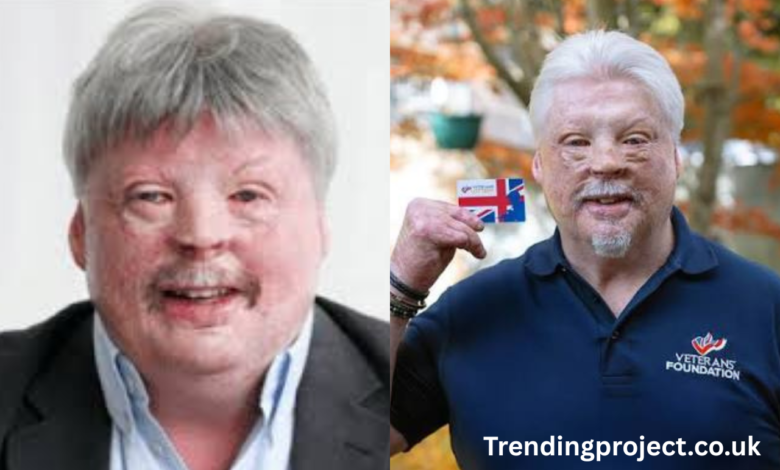
Simon Weston’s life changed forever on 8 June 1982. He was only 20 years old when the RFA Sir Galahad, carrying Welsh Guardsmen during the Falklands War, came under Argentine air attack at Bluff Cove. The ship was destroyed, 48 of his fellow soldiers died, and Weston suffered burns to around 46 percent of his body. What followed was not simply a story of survival but a decades-long journey of medical recovery, emotional struggle, reinvention, charity work, public speaking and service to others. Today, Simon Weston CBE is known not only as a Falklands War veteran but also as an author, businessman, motivational speaker and prominent charity campaigner. His remarkable journey has made him one of Britain’s best-known voices on resilience and overcoming adversity.
Table of Contents
Toggle| Fact | Details |
|---|---|
| Full Name | Simon Weston |
| Date of Birth | 8 August 1961 |
| Age | 65 in 2026 |
| Birthplace | Caerphilly, Wales |
| Nationality | British/Welsh |
| Profession | Falklands War veteran, motivational speaker, author, businessman and charity campaigner |
| Military Regiment | Welsh Guards |
| Military Service | Joined in 1978 |
| Major Event | Survived the 1982 RFA Sir Galahad attack |
| Injuries | Burns to approximately 46% of his body |
| Wife | Lucy Weston |
| Children | James, Stuart and Caitlin |
| Grandchildren | Includes Zachary and Iris |
| Parents | Pauline Weston; biological father David Weston; raised with adoptive father Harold “Lofty” Hatfield |
| Siblings | Older sister Helen and three stepbrothers |
| Honours | OBE in 1992; CBE in 2016 |
| Major Charity Work | Weston Spirit, veterans’ causes, DEBRA, Changing Faces and other organisations |
| Books | Walking Tall, Going Back, Moving On, fiction and children’s books |
| Net Worth | No reliable publicly verified figure |
| Current Work | Speaking, charity advocacy, business and veterans’ support |
| Official Website | SimonWeston.com |
Early Life and Family Background
Simon Weston was born on 8 August 1961 at Caerphilly District Miners Hospital in Wales. His childhood was influenced by a military family environment because both his parents had connections with the Royal Air Force. His early years were not spent entirely in Wales. He lived for a period in Singapore and also spent time at RAF Hospital Nocton Hall in Lincolnshire before the family eventually returned to Nelson when he was around six years old. Those early experiences exposed him to different environments and helped shape a personality that would later prove adaptable in very difficult circumstances.
Weston grew up with his older sister Helen and three stepbrothers. His mother Pauline and adoptive father Harold “Lofty” Hatfield played important roles in his upbringing. His family background gave him an early connection with service, discipline and responsibility, although his teenage years were not particularly conventional. Weston has spoken candidly about getting into trouble when he was younger and about struggling with aspects of school life. Rather than following a straightforward academic route, he gravitated toward practical work and eventually found a completely different sense of direction through the military.
His early experiences are important when understanding the person he became. Weston has never portrayed himself as someone who had everything figured out from childhood. In fact, one of the most compelling aspects of his story is the transformation from a teenager who had difficulties at school into a decorated veteran, bestselling author, businessman and professional motivational speaker. His life demonstrates that a person’s early struggles do not necessarily determine the limits of their future.
Education and Joining the Welsh Guards
Weston’s education was not dominated by academic achievement. He has acknowledged that he did not take the traditional educational path and that he later regretted not having the qualifications that might have opened certain doors. He enjoyed practical subjects and responded better to learning when it had a clear purpose. The Army eventually provided him with an environment in which training, discipline and responsibility were directly connected to real-world duties.
In 1978, at only 16, Weston joined the Welsh Guards. His mother encouraged him toward military service after he had experienced difficulties as a teenager. Joining the Army gave him structure and a new sense of direction. He served in several locations, including Berlin, Northern Ireland and Kenya, before the Falklands conflict brought his military career to its devastating turning point.
The Welsh Guards became an important part of Weston’s identity. Military service taught him lessons about teamwork, discipline, courage and responsibility that would later appear repeatedly in his motivational work. Although his active service was cut short after the Falklands War, the values associated with his regiment remained central to his life. In many ways, the soldier who entered the Army as a teenager continued to influence the public figure he became decades later.
The Falklands War and the Sir Galahad Attack
In 1982, Britain went to war with Argentina following Argentina’s invasion of the Falkland Islands. Weston was deployed as part of the British task force and was aboard the RFA Sir Galahad at Bluff Cove on 8 June when Argentine aircraft attacked. The consequences were catastrophic. Forty-eight Welsh Guardsmen were killed, while Weston survived with severe burns covering approximately 46 percent of his body. The National Portrait Gallery describes the injuries as the event that transformed him into a national figure, while Weston’s own biography describes the attack as the beginning of his extraordinary recovery journey.
The physical damage was only part of the challenge. Weston underwent numerous operations and reconstructive procedures, spending years dealing with the consequences of his injuries. ITV News has reported that he spent the best part of five years in hospital and eventually underwent more than 90 surgical procedures and reconstructive operations. His recovery therefore cannot realistically be described as a single medical success; it was a prolonged process involving repeated treatment, rehabilitation and psychological adjustment.
The attack also placed Weston unexpectedly in the public eye. He became closely associated with the Falklands War in British media, but he eventually developed an important distinction between what happened to him and what he chose to do afterward. His public philosophy has centred on refusing to remain defined exclusively by his injuries. Instead, he has sought to be recognised for the work he accomplished after the tragedy.
Recovery and the Long Road Back
Weston’s recovery was one of the most difficult chapters of his life. Severe burns changed his appearance and physical capabilities, while the loss of fellow soldiers created an emotional burden that could not be addressed by surgery alone. He has been open over the years about the psychological difficulties he encountered, including periods when he struggled to understand how he could build a meaningful life after the war. His story therefore carries a level of honesty that distinguishes it from simple motivational narratives.
One of the most important parts of his recovery was learning to accept that his old life was gone while still believing that a new life could be worthwhile. This distinction became a recurring theme in his later public speaking. His message is not that adversity should simply be ignored. Instead, he encourages people to acknowledge circumstances honestly and then concentrate on what can be done with the situation they have been given.
Over time, Weston moved from being known primarily as an injured soldier to becoming an advocate, speaker and campaigner. His personal experience gave him credibility when discussing resilience, but his continued professional development gave the story a second dimension. He did not simply survive the Falklands War; he built a new career and identity after it.
Simon Weston and Weston Spirit
A major turning point in Weston’s post-war life came through charitable work. He became involved in establishing Weston Spirit, a Liverpool-based charity focused on young people. The organisation sought to help disadvantaged and excluded young people develop confidence, discipline and a more positive outlook. This was particularly meaningful because Weston himself understood what it meant to feel that conventional routes were not working.
Weston Spirit reflected his belief that people should be given opportunities to change direction. Instead of treating troubled young people simply as problems to be managed, the charity aimed to encourage responsibility, self-belief and achievement. His involvement also demonstrated that his understanding of resilience extended beyond his own experiences. He wanted young people to discover possibilities before circumstances became defining barriers in their lives.
Although Weston Spirit ultimately became a chapter in his wider charitable history, its importance should not be underestimated. Weston’s charity work helped transform his public identity. He was no longer simply the badly burned Falklands veteran appearing in documentaries; he was becoming someone who actively used his experiences and platform to support other people.
Career as a Motivational Speaker
Simon Weston eventually established himself as a professional motivational and inspirational speaker. According to his official website, he has nearly three decades of experience in professional speaking and has addressed audiences ranging from schools and community groups to conferences and major companies across the UK and Europe.
His presentation style combines serious personal experiences with humour and enthusiasm. His subjects include overcoming adversity, accepting change, dealing with challenges, diversity, bravery, dignity and inspiring others. Rather than presenting resilience as an abstract business concept, Weston uses his own experiences to demonstrate what happens when circumstances change without warning.
This career became one of the clearest examples of his reinvention. The same injuries that initially placed him in hospital and changed his military career eventually became part of a story that allowed him to connect with audiences around the world. His speaking work has consequently become an important part of his professional life and public legacy.
Books and Writing Career
Weston has also expressed his experiences through writing. His first autobiography, Walking Tall, became a number-one bestseller. He followed it with Going Back, which also achieved bestseller status and remained in the top 10 for eight weeks. These books allowed readers to understand the Falklands experience and his recovery in greater depth than could usually be achieved through a television interview.
His writing career did not stop with autobiography. Weston went on to write fiction, including books such as Cause of Death and Phoenix. He also published Moving On, another autobiographical work that explored his continuing journey and his efforts to come to terms with the ghosts of his Falklands experience. His official website describes the book as part of the stage in which he was happily married with three children while continuing his charity and speaking work.
Weston also wrote children’s books, including A Nod From Nelson, Nelson to the Rescue, Nelson at Sea and Get Fit with Nelson. He later contributed his voice to children’s stories for CBeebies. This side of his career reveals another dimension of his personality: his work has not always been centred on war and trauma, but has also extended into storytelling, education and children’s entertainment.
Television and Media Career
Weston’s story attracted substantial media attention, resulting in several BBC documentaries. His official biography lists programmes including Simon’s War, Simon’s Peace, Simon’s Triumph, Simon’s Return and Simon’s Journey. These programmes followed different stages of his life and recovery and helped establish him as a familiar figure to British television audiences.
His media work also extended beyond documentaries. He presented reports for ITN and returned to the Falkland Islands for a documentary connected with the 30th anniversary of the conflict. His return to the islands was especially significant because the Falklands remained closely connected with both his trauma and his identity as a veteran.
In 2014, viewers of BBC’s The One Show nominated Weston to become the subject of a portrait for the National Portrait Gallery. The resulting painting by Nicky Philipps was added to the National Portrait Gallery collection. The portrait includes his military beret, serving as a reminder of the colleagues he lost in 1982.
Awards, Honours and Recognition
Weston’s charitable contributions have been recognised through a series of major honours. He was appointed an Officer of the Order of the British Empire, or OBE, in the 1992 Queen’s Birthday Honours for charitable work. A decade later, he received the Freedom of the City of Liverpool in recognition of his bravery and charity work in the region.
His public recognition continued. In 2004, he was named among the top 100 Welsh heroes, while his charity and speaking work continued to increase his profile. In 2015, Variety Children’s Charity presented him with a Legend Award for his contribution to motivational speaking and charity.
Perhaps the most prominent formal recognition came in the 2016 New Year Honours, when Weston was appointed a Commander of the Order of the British Empire, or CBE, for charitable services. The Veterans’ Foundation also confirms that he received his OBE in 1992 and CBE in 2016.
Marriage, Children and Family Life
Away from his public career, family has remained a major part of Weston’s life. He has been married to Lucy since May 1990, and together they have three children: James, Stuart and Caitlin. His official biography also describes him as a proud grandfather, while other biographical material identifies grandchildren including Zachary and Iris.
The importance of family becomes particularly striking when considered alongside the extraordinary circumstances of Weston’s early adult life. He went from being a young soldier severely injured during wartime to building a long-term marriage and raising a family. His personal life consequently represents another form of rebuilding that occurred alongside his professional transformation.
Weston has generally kept his family life more private than his professional story. That balance has allowed him to remain a public figure without turning every aspect of his personal life into publicity. His family, however, clearly forms an important part of the life he built after the Falklands War.
Business Career and Income Sources
Simon Weston is not solely a charity campaigner or public speaker. His official biography describes him as a businessman who has run a security business in South Wales and served as a director of Zappawoo, the parent company of start-up Zap Escapes, which specialises in holidays for people with accessibility requirements.
His professional income has therefore come from several areas over the years, including motivational speaking, publishing, television work and business activities. His public-speaking career in particular has provided a natural extension of his personal story, allowing organisations to engage him for keynote speeches and events focused on resilience, leadership, change and overcoming adversity.
There is no reliable, independently verified public figure for Simon Weston’s current net worth. Websites that publish precise celebrity net-worth estimates often provide no transparent financial evidence. It is therefore more accurate to say that Weston has developed multiple professional income streams while avoiding an unsupported claim about the size of his personal fortune.
Charity Work and Advocacy
Charity has remained one of the strongest threads running through Weston’s career. His official biography lists involvement with organisations and causes connected with veterans, disability, disfigurement, young people and accessibility. His work has included roles with the Falkland Veterans Foundation, Enham Trust, Allied Service Trust, Changing Faces and DEBRA, among others.
His relationship with DEBRA was particularly personal because the charity supports people living with epidermolysis bullosa, a painful condition involving extremely fragile skin. Weston served as DEBRA UK’s President for more than nine years, using his public profile to raise awareness, support fundraising and promote understanding of the condition. In April 2026, DEBRA announced that Graeme Souness CBE would succeed him as President, while Weston would continue his relationship with the organisation as Honorary Life Patron.
His advocacy also reflects the connection between his own experience and the needs of other people living with severe physical conditions. Having experienced extensive burns, repeated dressings, surgery and long-term recovery himself, Weston has often been able to speak about pain, visible difference and rehabilitation from a position of personal understanding. His charity work has consequently become a central part of the legacy he is building.
Simon Weston and Veterans’ Causes in 2026
One of the most important recent developments in Weston’s career came in March 2026, when the Veterans’ Foundation announced him as a new ambassador. The organisation highlighted his experience as a Falklands veteran and his longstanding support for military charities. Weston explained that military charities had played a major role in his own recovery and transition into civilian life, making the ambassadorial position especially meaningful.
The role places Weston once again at the centre of efforts to support former service personnel and their families. The Veterans’ Foundation funds organisations addressing challenges including isolation, housing problems, mental health difficulties, injury and the complicated transition from military to civilian life. Weston’s own experiences give him an unusually direct understanding of why such support matters.
This latest chapter also demonstrates that Weston’s charitable career is still evolving. More than four decades after the Falklands War, he continues to use his public platform for causes connected with veterans and vulnerable communities. His career has therefore moved well beyond simply remembering the past; it continues to involve active work intended to improve other people’s futures.
Social Media and Public Presence
Weston’s public profile has increasingly extended into digital communication. His official website provides links and information connected with his public activities, including his speaking career, charity involvement, books and news. His online presence is primarily professional and advocacy-focused, reflecting his role as a speaker and campaigner rather than a conventional entertainment celebrity.
Because social-media accounts can change over time, readers should be cautious about profiles using his name that are not clearly connected with his official work. His official website remains the safest starting point for locating his current public channels and professional information.
His online communication also reflects the themes that have defined his wider career: resilience, charity, veterans’ welfare, accessibility and personal development. Whether speaking from a stage, appearing on television or communicating online, Weston has continued to use his public identity to encourage people to look beyond adversity.
Simon Weston’s Legacy
The most remarkable aspect of Simon Weston’s story is not simply that he survived an extraordinary wartime injury. It is what he did with the decades that followed. He went through years of medical treatment, rebuilt his confidence, established a family, became a bestselling author, developed a business career, founded and supported charitable initiatives, became a professional motivational speaker and received some of Britain’s highest honours for charitable service.
His story also provides a more realistic understanding of resilience. Resilience does not necessarily mean feeling strong every day or overcoming trauma instantly. Weston’s life shows that rebuilding can take years and that progress can involve uncertainty, setbacks and painful memories. His willingness to talk about those difficulties has helped make his message relevant to people far removed from military life.
Perhaps his greatest achievement is that he refused to let the worst day of his life become the definition of the rest of it. The RFA Sir Galahad attack shaped his life, but it did not determine everything that followed. Through charity, public speaking, writing, business and advocacy, Simon Weston transformed an experience of extraordinary suffering into a lifelong commitment to achievement and service. As he continues supporting veterans and charitable causes, his journey remains a powerful reminder that circumstances can change a person’s direction without having to decide where that journey ultimately ends.
:::
This version keeps three substantial paragraphs under each main heading, while adding detail around his military service, recovery, family, books, business, charity work, honours and 2026 developments. The current information is grounded primarily in Simon Weston’s official biography and recent statements from the Veterans’ Foundation and DEBRA.