Barbara Hutton Biography: The Tragic and Glamorous Life of a Woolworth Heiress

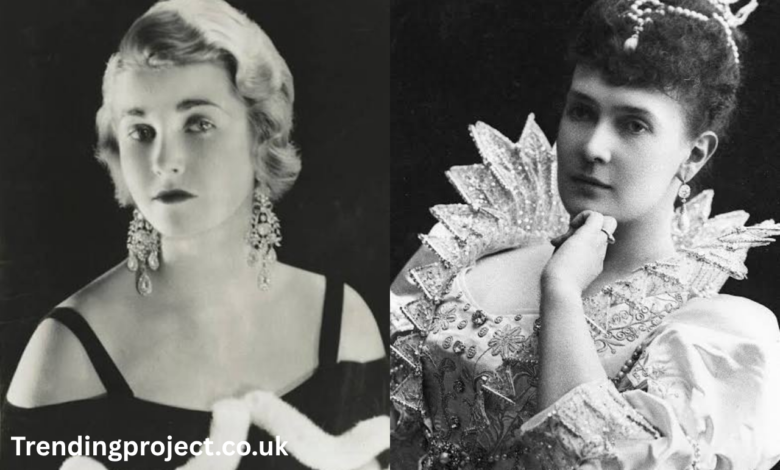
Barbara Hutton was born into a world where extraordinary wealth seemed to promise an extraordinary life. As the granddaughter of retail pioneer Frank Winfield Woolworth, she inherited a fortune that placed her among the richest women of her generation. She grew up surrounded by grand houses, private schools, expensive possessions and the expectations that came with being an American heiress. Yet the woman who appeared to have everything would spend much of her life searching for the one thing money could not easily provide: emotional security. Her story became so filled with glamour, tragedy, romance, jewelry and personal hardship that newspapers eventually gave her the unforgettable nickname “Poor Little Rich Girl.”
Table of Contents
ToggleBarbara Hutton’s life was far more complicated than the image of a wealthy socialite suggests. She entered high society as a young woman, married princes, aristocrats, a Hollywood movie star and other internationally known figures, collected some of the world’s most extraordinary jewelry and lived in magnificent residences across Europe, America and North Africa. She also became a mother, philanthropist and influential collector whose taste in gemstones and historic jewelry remains part of luxury history. Some of her possessions have continued to attract collectors and historians decades after her death.
Behind all of that glamour, however, was a deeply troubled personal journey. Barbara experienced the loss of her mother as a child, struggled with relationships, endured bitter marital conflicts and eventually suffered the devastating death of her only son, Lance Reventlow. Her fortune, meanwhile, gradually declined because of extravagant spending, generosity, financial mismanagement and the enormous costs associated with her lifestyle. By the end of her life, the woman once regarded as one of the world’s wealthiest heiresses was living in dramatically different circumstances.
Barbara Hutton’s Early Life and Family Background
Barbara Woolworth Hutton was born on November 14, 1912, in New York City. She was the only child of Franklyn Laws Hutton and Edna Woolworth Hutton. Her maternal grandfather was Frank Winfield Woolworth, the legendary founder of the Woolworth retail empire, while her father was connected with the influential E. F. Hutton financial family. From birth, Barbara therefore belonged to two highly prominent American business families. Her family background gave her enormous financial advantages, but it also placed her inside a world of wealth, social expectations and complicated family relationships.
Barbara’s childhood was marked by emotional instability and loss. Her mother died when Barbara was still very young, leaving her without the maternal relationship that might have provided comfort and stability. Historical accounts differ over some details surrounding Edna’s death, but there is broad agreement that the event had a profound effect on Barbara. She subsequently spent periods under the care of relatives, governesses and at boarding schools rather than enjoying the conventional family life that most children experienced.
Her relationship with her maternal grandfather was particularly important during these formative years. Frank Winfield Woolworth reportedly treated his granddaughter affectionately and surrounded her with an atmosphere of extraordinary privilege. She spent time at the family’s magnificent Winfield Hall estate on Long Island, a world of formal dining rooms, luxurious furnishings and servants. For a lonely young girl, the affection she received from her grandfather appears to have made a powerful impression. His death in 1919, however, removed another important emotional anchor from her childhood and left Barbara increasingly dependent on a changing circle of adults around her.
Education and the Young Barbara Hutton
Barbara’s education reflected the privileged world into which she had been born. She attended several private schools before completing her education at Miss Porter’s School for Girls in Farmington, Connecticut. The institution was one of America’s prominent schools for young women from wealthy and influential families. Her education placed her within an environment where social manners, cultural awareness and preparation for elite society were highly valued.
Although Barbara had access to educational opportunities that were unavailable to most girls of her generation, her upbringing did not necessarily provide her with emotional confidence. Much of her childhood was spent away from a conventional home environment, surrounded by staff, relatives and institutional settings. The contrast between material abundance and personal loneliness became an important theme in later interpretations of her life. She learned early that money could create beautiful surroundings, but it could not necessarily create dependable human relationships.
That contradiction would become increasingly visible as Barbara entered adulthood. She had been raised around the idea that wealth could open virtually every door, and in many ways it did. Yet she remained intensely concerned with love, acceptance and belonging. Her later relationships with powerful men, royalty and celebrities were often interpreted through this background. Whether every later decision can be explained by her childhood is impossible to know, but her early experiences clearly formed an important part of the story of the woman she eventually became.
Barbara Hutton’s Famous Society Debut
Barbara Hutton officially entered New York high society in 1930, when she was still a teenager. Her debut was anything but modest. Held at the Ritz-Carlton during the difficult economic period of the Great Depression, the celebration became famous for its extraordinary scale. Accounts describe multiple orchestras, hundreds of waiters, thousands of bottles of champagne and elaborate meals for guests. The extravagance attracted attention precisely because millions of ordinary Americans were struggling economically at the same time.
The event effectively transformed Barbara from a wealthy young woman into a public celebrity. She had not earned her fortune through business or entertainment, yet newspapers and society publications became fascinated by her because of her family name, inheritance and lifestyle. Her clothes, jewelry, parties and relationships would increasingly become subjects of public discussion. The enormous debut also helped establish the contradiction that would follow her for decades: she was one of the most privileged young women in America, yet the public became fascinated by the emotional difficulties behind the wealth.
The phrase “Poor Little Rich Girl” eventually became attached to Barbara because her life appeared to contain an almost unbelievable mixture of luxury and unhappiness. The nickname was memorable because it captured the central paradox of her existence. She could purchase a magnificent jewel or travel across continents, but she could not simply buy trust, affection or a stable family life. Her debut therefore represented both the beginning of her glamorous public existence and the start of a lifelong relationship with intense media scrutiny.
Inheriting the Woolworth Fortune
Barbara’s financial position changed dramatically when she became an adult and gained control of a substantial inheritance connected to the Woolworth family. She became one of the wealthiest women of her era, with contemporary and later estimates placing the fortune in the tens of millions of dollars at different points. Adjusted for inflation and changes in economic conditions, such wealth would represent an extraordinary sum in today’s money.
Her inheritance allowed Barbara to live on a scale that few individuals could imagine. She acquired spectacular properties, traveled internationally, commissioned jewelry from elite designers and participated in European aristocratic society. She was able to move between New York, London, Paris, Tangier, Mexico and other glamorous destinations almost as easily as an ordinary person might move between cities. Her money also gave her access to influential people in politics, entertainment, fashion and royalty.
Yet immense wealth also created vulnerabilities. Barbara could never be completely certain whether people were attracted to her personality or to her fortune. Her marriages and friendships repeatedly brought her into contact with people who benefited financially from their relationship with her. She also became known for giving expensive gifts and helping people financially, sometimes without demanding anything in return. Over time, this combination of generosity and vulnerability contributed to the erosion of her fortune.
Barbara Hutton’s Seven Marriages
Barbara Hutton’s romantic life became one of the most heavily documented aspects of her biography. She married seven times, and her husbands came from remarkably different backgrounds. They included Prince Alexis Mdivani, Count Court Haugwitz-Reventlow, Hollywood actor Cary Grant, Prince Igor Troubetzkoy, Dominican diplomat Porfirio Rubirosa, German tennis champion Baron Gottfried von Cramm and artist Raymond Doan. Her marriages connected her to aristocracy, international diplomacy, sport and Hollywood.
Her relationships were often glamorous from the outside but considerably more complicated behind closed doors. Some marriages were short-lived, while others involved serious disputes over money, control and custody. Her marriage to Count Court Haugwitz-Reventlow was particularly significant because it produced her only child, Lance. Their eventual divorce became entangled in a difficult custody battle, adding another layer of emotional strain to Barbara’s life.
Barbara’s marriages also demonstrated the unusual position she occupied as an heiress. Her husbands could possess impressive titles, careers or social reputations, but Barbara’s financial resources often remained the most powerful asset in the relationship. This created an unusual dynamic in which she could simultaneously be one of the most powerful women in the room and one of the most emotionally vulnerable. Her search for a lasting romantic relationship became one of the recurring tragedies of her biography.
Barbara Hutton and Cary Grant
Among all of Barbara Hutton’s husbands, Cary Grant remains the most famous. Grant was already becoming one of Hollywood’s biggest stars when he married Barbara in 1942. Their relationship attracted tremendous attention because it brought together two very different worlds: the glamorous movie industry and the old-money world of American inheritance.
Their marriage lasted only a few years and ended in divorce in 1945, but it has often been regarded as one of the more genuine relationships in Barbara’s life. Unlike several of her other husbands, Grant did not need Barbara’s fortune to establish his own career. He was already successful in Hollywood and had built a reputation independently of her wealth. This difference mattered because it helped create a relationship that was less obviously centered on financial advantage.
Even after the divorce, Grant reportedly remained an important figure in Barbara’s life. Their relationship has therefore become one of the more sympathetic chapters in her biography. It also demonstrates why Barbara’s personal story cannot be reduced to the idea that every person around her was motivated by money. Her relationships were complicated, and some people clearly remained important to her for reasons beyond wealth and status.
Motherhood and Lance Reventlow
Barbara Hutton’s only child, Lance Reventlow, was born during her marriage to Count Court Haugwitz-Reventlow. Lance grew up with access to enormous resources but eventually developed interests of his own, particularly in automobiles and motor racing. Rather than simply remaining a wealthy heir, he pursued a career connected to racing and became associated with some of America’s most interesting sports-car projects of the 1960s.
Barbara’s relationship with Lance was one of the most important connections in her life. Accounts of their relationship vary, especially when discussing Barbara’s parenting, but there is little question that his later success mattered greatly to her. She could celebrate his independence while still remaining deeply protective of him. Lance represented something different from her marriages and social relationships: he was her child and therefore a permanent part of her life.
The tragedy came in 1972, when Lance died in an airplane accident at the age of 36. His death devastated Barbara. By this point, she had already endured years of personal instability, and the loss of her only child became an emotional blow from which she never fully recovered. His death also marked the beginning of an especially bleak final chapter in her life.
Barbara Hutton’s Legendary Jewelry Collection
Barbara Hutton’s reputation as a jewelry collector has survived more successfully than many other aspects of her socialite image. She assembled an extraordinary collection that included diamonds, emeralds, jadeite and historic jewels associated with royalty and famous European families. Her collection also included important works associated with Cartier, Van Cleef & Arpels and other major jewelry houses.
One of the most famous pieces associated with Hutton was the Pasha Diamond. She acquired a remarkable diamond reported to have weighed about 40 carats in its original form and had it recut into a round brilliant stone of approximately 36 carats. This decision demonstrated that Hutton was willing to reshape even an important gemstone to achieve the appearance she wanted. Her collection was not simply a storage of valuable objects; it reflected her personal taste and willingness to work with leading jewelers.
Her collection also included the famous Vladimir emeralds, historic jewels with Russian imperial connections. Modern accounts of Hutton’s collection continue to emphasize the importance of these pieces, demonstrating that her influence reached beyond celebrity culture into the history of high jewelry. Her passion for rare gemstones, historic provenance and exceptional craftsmanship remains one of the most enduring elements of her legacy.
Winfield House and Barbara Hutton’s Philanthropy
Barbara Hutton’s philanthropy is sometimes forgotten because stories about her spending and marriages tend to dominate popular accounts of her life. Yet her donation of Winfield House in London was an extraordinarily significant act of generosity. Hutton acquired the property in Regent’s Park in 1935 and commissioned the construction of a grand Neo-Georgian residence. The house was completed in January 1938 and named after her grandfather, Frank Winfield Woolworth.
During World War II, the property suffered damage, but Barbara later decided to donate Winfield House to the United States government. In 1946, it officially became the residence of the American ambassador to the Court of St. James’s. The property remains associated with the American ambassador’s residence today, giving Barbara Hutton’s philanthropy a tangible legacy that has survived for generations.
Her charitable behavior extended beyond the famous London residence. Historical accounts describe Hutton giving money to organizations and individuals in places where she lived, including Tangier, Morocco. She supported charitable efforts and helped people in need, although her giving was often spontaneous rather than organized around a consistent philanthropic philosophy. Her generosity was therefore both admirable and financially risky, because she frequently gave away valuable possessions and money while continuing to spend heavily on herself.
Barbara Hutton’s Wealth, Spending and Financial Decline
Barbara Hutton inherited a fortune rather than building one through a conventional professional career. Her wealth came primarily through the Woolworth family, giving her access to financial resources from a remarkably young age. At the height of her wealth, she could afford a lifestyle involving luxury residences, international travel, couture fashion, art, antiques, jewelry and large personal staffs. Her name became almost inseparable from the concept of extravagant inherited wealth.
However, the fortune gradually declined. Barbara’s extraordinary generosity was one factor, but it was far from the only one. Her expensive lifestyle, multiple marriages, costly settlements, properties, jewelry acquisitions and reliance on financial advisers all placed pressure on her resources. Historical accounts also allege that some advisers and professionals around her took advantage of her financial vulnerability. The result was a dramatic reduction in the fortune she had inherited.
Exact claims about Barbara Hutton’s final net worth should therefore be treated cautiously. Some biographies have claimed that almost nothing remained, while other people close to her disputed the most extreme versions of that story. What is clear is that she had lost most of the financial security associated with her early adulthood. Her story became a striking example of how even an enormous inheritance can disappear when wealth is combined with extravagant spending, generosity and poor financial management.
Barbara Hutton’s Final Years
The final years of Barbara Hutton’s life were dramatically different from the glamorous decades that had made her famous. After Lance’s death, she became increasingly isolated. She spent significant periods in hotels and residences away from the intense social world that had once surrounded her. Accounts from people who visited her describe a woman who remained intelligent and sensitive but had become physically frail and increasingly withdrawn.
Her health also deteriorated. Historical biographies describe serious problems involving her physical condition, emotional well-being and reliance on medications and substances. She was increasingly dependent on staff and advisers, which created another vulnerability because she was surrounded by people whose motives were not always easy to determine. The tragedy was that the enormous fortune that once allowed Barbara to control every aspect of her life had gradually disappeared, while the emotional problems she had struggled with for decades remained.
Barbara Hutton died on May 11, 1979, in Los Angeles at the age of 66. She was buried in the Woolworth family mausoleum at Woodlawn Cemetery in New York. Her death marked the end of one of the most extraordinary American heiress stories of the 20th century. Yet instead of disappearing from public memory, Barbara became an enduring historical figure whose life continues to be examined through biographies, jewelry exhibitions, documentaries and popular culture.
Barbara Hutton’s Legacy Today
Barbara Hutton’s legacy is not limited to the money she inherited. Her jewelry collection remains an important part of 20th-century jewelry history, particularly because of her relationships with leading jewelry houses and her interest in historically significant gemstones. Modern discussions of her collection frequently focus on the craftsmanship, provenance and cultural significance of the pieces she owned.
Winfield House provides an even more concrete example of her lasting influence. What began as Barbara’s private London residence ultimately became an important diplomatic property for the United States. The house remains connected to the American ambassador in Britain, meaning that a decision Barbara made decades ago continues to have institutional significance.
Perhaps most importantly, Barbara Hutton’s life remains compelling because it challenges the assumption that wealth automatically creates happiness. She possessed almost unimaginable financial resources, yet experienced loss, insecurity, complicated relationships and profound grief. Her story is therefore not simply about diamonds and mansions. It is about the complicated human being who lived inside the heiress persona and struggled to find stability in a world where almost everything could be purchased except genuine emotional security.
Conclusion: What Barbara Hutton’s Life Can Teach Us
Barbara Hutton’s biography reads like a story created for Hollywood: an enormous inheritance, glamorous parties, royal marriages, a famous Hollywood husband, spectacular jewelry, magnificent homes and international travel. But the deeper story is much more human. Behind the headlines was a woman whose childhood losses shaped her adulthood, whose enormous wealth could not protect her from heartbreak and whose greatest tragedy was losing her only son. Her life demonstrates how easily public glamour can hide private pain.
Her story also reveals a more complicated side of wealth. Barbara could be extravagant, but she could also be remarkably generous. She commissioned extraordinary jewelry, yet she also gave away valuable property. She lived among some of the world’s most powerful people, but she often struggled to determine whom she could trust. Her relationship with money was therefore neither simply selfish nor simply reckless; it was deeply connected to her desire for affection, security, independence and recognition.
Decades after her death, Barbara Hutton continues to fascinate because her life refuses to fit neatly into one category. She was an heiress, socialite, collector, philanthropist, mother and celebrity, but none of those labels fully explains her. Her journey is ultimately a reminder that a meaningful legacy is not measured solely by money or possessions. It is shaped by the choices a person makes, the people they touch, the hardships they survive and the things they leave behind. Barbara Hutton’s name remains connected to extraordinary jewels, Winfield House and one of the most remarkable fortunes of the 20th century—but her most enduring lesson may be that even a life surrounded by unimaginable luxury still depends on something money can never guarantee: love, trust and human connection.