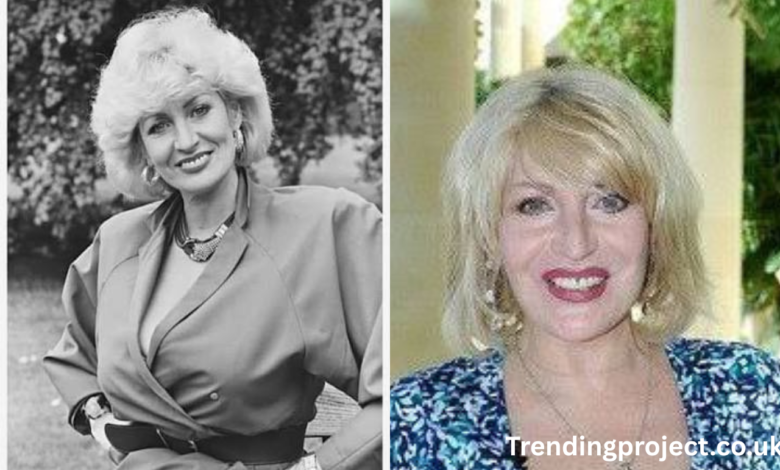
Faith Brown built a career that was far too versatile to be defined by one job title. She became known to British audiences as a singer, comedian, impressionist, actress, television presenter and stage performer, moving effortlessly between music, comedy, celebrity impersonation, television variety and musical theatre. Born in Liverpool on May 28, 1944, under the name Eunice Irene Carroll, she entered show business as a teenager and gradually transformed herself from a young singer into one of Britain’s most recognizable female impressionists. Her career is particularly remarkable because it developed across several generations of entertainment, from live cabaret and 1960s recording sessions to classic ITV variety programmes, theatrical tours and reality television.
What makes Faith Brown’s story especially interesting is the way she repeatedly reinvented herself without abandoning the skills that made her successful in the first place. Singing provided her original foundation, but her talent for mimicry opened the door to comedy and television. Her work on Who Do You Do? established her as a prominent impressionist, while later programmes such as The Faith Brown Awards and The Faith Brown Chat Show made her a television personality in her own right. She subsequently explored serious acting, musical theatre and reality television, proving that her talents extended well beyond celebrity impressions.
By 2026, Faith Brown is 82 years old, and although she is no longer a constant presence on mainstream television, her career remains an important part of British entertainment history. From her early days performing with her brothers to playing Norma Desmond in Sunset Boulevard, appearing in Doctor Who and taking part in I’m a Celebrity…Get Me Out of Here!, Brown created a professional legacy based on adaptability, comic timing and stagecraft. Her story offers a fascinating look at an era when entertainers were expected to sing, act, perform comedy and connect with audiences without the digital platforms today’s celebrities rely upon.
Faith Brown Quick Facts
| Fact | Details |
|---|---|
| Full name | Faith Brown |
| Birth name | Eunice Irene Carroll |
| Alternative birth name reported | Irene Monica Carroll |
| Date of birth | May 28, 1944 |
| Age | 82 in 2026 |
| Birthplace | Liverpool, England |
| Nationality | British |
| Profession | Singer, actress, comedian, impressionist and television personality |
| Education | St Francis De Sales School, Walton |
| Husband | Len Wady |
| Marriage | 1966 |
| Children | Public sources differ; IMDb reports Danielle and four sons, while other databases record one child |
| Brothers | Lee, Ron and Mike are documented as members of The Carrolls |
| Breakthrough programme | Who Do You Do? |
| Major television work | The Faith Brown Awards, The Faith Brown Chat Show, Give Us a Clue |
| Notable acting role | Flast in Doctor Who: Attack of the Cybermen |
| Major stage role | Norma Desmond in Sunset Boulevard |
| Major recognition | TV Times award for “Funniest Woman on TV” |
| Reality television | I’m a Celebrity…Get Me Out of Here! |
| Latest notable screen credit | Kingdom Business (2022) |
| Net worth | No reliably verified public estimate |
| No reliably verified official account identified | |
| X/Twitter | No reliably verified official account identified |
| No reliably verified official account identified |
Some biographical details about Brown vary between sources. The Royal Albert Hall archive identifies her as Irene Monica Carroll, while IMDb and several entertainment databases use Eunice Irene Carroll. Family details also differ, so it is better to distinguish documented information from claims repeated by less authoritative celebrity websites.
Early Life in Liverpool and Family Background
Faith Brown was born in Liverpool, a city with an exceptionally strong tradition of music, theatre, comedy and popular entertainment. Her early environment helped place her close to the world she would eventually enter professionally. According to the Royal Albert Hall archive, she began performing as a singer in Bootle at approximately 15, initially backed by a local group formed with her brothers Lee, Ron and Mike. She later became a resident cabaret singer at Liverpool’s Rialto Ballroom, giving her valuable experience performing directly in front of paying audiences.
Her family played a major role in the beginning of her career. Brown performed with her brothers as part of the vocal group The Carrolls, and the group recorded several records during the 1960s. IMDb similarly records that Brown started singing with a Liverpool band at 16 before forming a group with her brothers and eventually pursuing a solo career. This early exposure to professional performance gave her an understanding of harmony, stage timing and audience interaction that would remain useful throughout her later television and theatre career.
Brown attended St Francis De Sales School in Walton. Detailed information about her formal education is relatively limited, however, and the available biographies suggest that performance became the dominant influence on her professional development. Rather than following a conventional route through higher education, she gained practical experience in entertainment from a young age. Years of singing, cabaret and live performance effectively became her training ground, teaching her how to read an audience and develop the confidence required for a demanding career in show business.
The Carrolls and Her First Steps in Music
The Carrolls represented the first important professional chapter in Faith Brown’s life. Performing with her brothers allowed her to develop as a vocalist while also experiencing the realities of working as part of an entertainment group. During the 1960s, the group released several recordings, giving Brown early exposure to the recording industry at a time when British popular music was undergoing enormous cultural change.
Eventually Brown moved toward a solo career. Her individual recordings demonstrated that she was not dependent on her brothers to maintain a professional identity. The transition from group singer to solo performer was an important step because it placed greater responsibility on Brown herself: she had to develop her own stage personality, repertoire and relationship with audiences. Those skills later became central to her success as an impressionist and television entertainer.
The years she spent singing were also crucial because vocal control would become one of her strongest tools as an impressionist. Faith Brown was not simply copying famous people visually or through mannerisms; her performances relied heavily on voice, rhythm, phrasing and comic timing. Her musical background therefore gave her a natural advantage when she began reproducing the voices of well-known singers, actresses, politicians and television personalities.
Discovering Her Talent for Impressions
The major turning point in Brown’s career came when she began developing her talent for mimicry. Rather than remaining solely a conventional singer, she discovered that audiences responded strongly to her ability to reproduce recognizable voices and personalities. This combination of singing and impersonation provided her with a distinctive niche in British entertainment.
Her breakthrough television appearances came on Who Do You Do?, the ITV impressions programme that showcased performers from a generation of British impressionists and comics. Brown became one of the show’s recognizable performers during the 1975–1976 period. The programme gave her national exposure and transformed her from a talented singer with live experience into a television personality with a clearly identifiable comic style.
Brown’s impersonations were particularly memorable because she combined vocal accuracy with theatrical characterization. She could reproduce the mannerisms and voices of public figures while also finding the humorous aspects of their personalities. One of the impressions most frequently associated with her is Margaret Thatcher, although Brown herself reportedly acknowledged that fellow impressionist Janet Brown offered a more convincing representation of the former prime minister.
Television Breakthrough and Growing Fame
After Who Do You Do?, Brown’s television career expanded rapidly. She appeared on Ken Dodd’s World of Laughter in 1976 and became the resident cabaret singer on For My Next Trick, the BBC programme associated with magician Paul Daniels. These appearances showed how easily she could move between music and comedy rather than being confined to a single entertainment format.
She also became a familiar face on British panel and game shows. Her credits include Celebrity Squares, Blankety Blank, Give Us a Clue, Punchlines, Win, Lose or Draw and Call My Bluff. Programmes such as these were hugely influential in British popular culture, and recurring appearances helped Brown become familiar to viewers across the country. Her combination of quick wit, musical ability and impersonation made her particularly well suited to television formats where performers had to react quickly and entertain without lengthy preparation.
Brown’s growing profile culminated in her receiving opportunities to front programmes of her own. This was an important progression because it demonstrated that she had moved beyond being a supporting performer or guest celebrity. She had developed into an entertainer whose name could itself become the central attraction of a television production.
The Faith Brown Awards and Chat Show
One of the most significant achievements of Brown’s television career was The Faith Brown Awards, a London Weekend Television special broadcast on ITV in September 1978. The programme reportedly attracted approximately 9.8 million viewers, an impressive audience by any measure and especially significant in the era of only a handful of major television channels. Its success confirmed Brown’s popularity with mainstream British viewers.
The success of that special led to The Faith Brown Chat Show, which began in 1980 as a six-part ITV series. The concept was unusually inventive: Brown used split-screen television techniques to appear to interview herself while portraying different celebrity personalities. This format allowed her to demonstrate several skills simultaneously, including acting, mimicry, improvisation and comedy.
Among the personalities she portrayed were Kate Bush, Pam Ayres, Mary Whitehouse, Margaret Thatcher, Angela Rippon, Barbra Streisand, Lene Lovich, Eartha Kitt, Diana Ross and Donna Summer. Her Kate Bush impression was reportedly so well received that Bush herself wrote Brown a lengthy letter expressing her appreciation. Moments like this illustrate why Brown’s impressions were more than simple parody: they could also be affectionate celebrations of the performers she admired.
Recognition as a Female Comedy Star
Brown’s achievements were particularly notable because she established herself as a leading female comedy performer during a period when British television variety was often dominated by male entertainers. Her success demonstrated that a woman could build a national profile through impressions, comedy, music and television presenting.
In 1980, Brown received a TV Times award for “Funniest Woman on TV.” Some biographical sources date the recognition slightly differently, with IMDb listing a 1981 award, but the wider record consistently associates Brown with this distinction around the beginning of the 1980s.
Her television recognition was followed by a major personal milestone in 1982 when she became the subject of This Is Your Life. Eamonn Andrews surprised her during rehearsals for a guest appearance on ITV’s Game for a Laugh. The programme was a significant form of recognition for established British entertainers because it brought together colleagues, friends and people from different stages of a celebrity’s life.
Acting Career and Doctor Who Appearance
Although Brown was strongly associated with impressions, she also demonstrated a genuine interest in acting. One of her best-known television acting credits came in the 1985 Doctor Who serial Attack of the Cybermen, in which she played Flast, a member of the Cryons. The role remains one of the more recognizable entries in her acting résumé because Doctor Who has developed an enormous international following.
Her Doctor Who appearance was not simply a novelty credit. Brown had to work within a science-fiction production with costumes, character makeup and a very different tone from the variety shows that had made her famous. It demonstrated her willingness to move outside her established television persona and accept dramatically different performance challenges.
Brown later appeared in Brookside, the influential Channel 4 soap opera, where she played Anne Bradley in 1996. She also appeared in other television productions, giving her career a broader acting dimension. Her ability to move from impersonation to scripted drama was another example of the adaptability that became one of the defining characteristics of her professional life.
Faith Brown and Musical Theatre
The theatre stage became an increasingly important part of Brown’s career. Her stage credits include Beauty is the Business, Cinderella, Summer Holiday, The Farndale Avenue Housing Estate Townswomen’s Guild Dramatic Society Murder Mystery, Dick Whittington, Nunsense and other productions. She appeared in national tours and regional theatres, demonstrating that her appeal extended beyond television audiences.
Her most prestigious theatrical role was arguably Norma Desmond in the UK touring production of Andrew Lloyd Webber’s Sunset Boulevard. Brown played the faded Hollywood star during the 2001–2002 tour, taking on one of musical theatre’s most demanding female roles. Norma requires a performer to combine glamour, vulnerability, dramatic intensity and powerful musical interpretation, making the role a substantial challenge for any established entertainer.
Brown’s performance in Sunset Boulevard also demonstrated the maturity of her career. By this stage, she had already spent decades performing for television audiences, but she was still prepared to take on a role that demanded a different kind of discipline. The production became an important part of her stage legacy and showed that she could successfully transition from variety entertainment into substantial musical-theatre performance.
Family Life and Marriage to Len Wady
Faith Brown married Len Wady in 1966, and their relationship has been an important part of her personal biography. IMDb describes Wady as a musician who also became Brown’s personal manager, meaning their relationship combined family life with the practical demands of a professional entertainment career.
Publicly available information about Brown’s children is inconsistent. IMDb states that she and Wady have a daughter named Danielle and four sons, while TVMaze and other databases list the couple as having one child. Because the sources do not agree, claims about the exact number of children should be treated cautiously rather than presented as indisputable fact.
What is clearer is the importance of family and long-term partnership in Brown’s career. Performing professionally for decades required considerable commitment, especially during an era when entertainers frequently travelled for theatre tours, television appearances and cabaret engagements. Her long association with Wady, both personally and professionally, forms an important part of the story behind her unusually sustained career.
Faith Brown on Reality Television
Brown entered a very different kind of television environment in the 2000s. In 2004, she appeared on I’m Famous and Frightened!, and in 2006 she joined the sixth series of I’m a Celebrity…Get Me Out of Here!. Her appearance introduced her to viewers who may have known little about the classic television variety era in which she had become famous.
Reality television required Brown to reveal a more personal side of herself than traditional variety programmes typically allowed. Instead of appearing for a few minutes to sing or perform an impression, she had to live alongside other celebrities and participate in the unusual challenges of the programme. According to the Doctor Who Guide, Brown spent fourteen days in the jungle and was the third contestant voted out.
The appearance was significant because it demonstrated her ability to remain recognizable to the public decades after her television breakthrough. Her participation connected two different generations of British entertainment: the classic variety star who had built her career through live performance and television and the modern reality-TV celebrity format that had become increasingly popular by the 2000s.
Later Stage Work and Trapped!
Brown continued performing after her reality television appearances. In 2007, she toured the United Kingdom with Faith Brown: Up Front, a one-woman production celebrating her long career through songs, comedy and impressions. The tour gave audiences an opportunity to see the performer in a more intimate setting and demonstrated that live performance remained central to her identity.
She also appeared at the Edinburgh Festival in Boys in the Buff, a musical revue, showing once again that she was comfortable experimenting with different theatrical formats. Her later stage work included productions such as Nunsense and pantomime roles, extending a career that had already crossed television, music, comedy and musical theatre.
Another notable later television role came through the CBBC series Trapped!, in which Brown provided the voice of “The Voice.” This was an interesting extension of her career because voice performance had always been central to her work as an impressionist. Even decades after her television breakthrough, her vocal abilities remained a valuable part of her professional identity.
Faith Brown’s Net Worth and Income Sources
There is no reliable, independently verified public figure for Faith Brown’s current net worth. Celebrity websites sometimes publish specific estimates, but these figures are generally unsupported by audited accounts, confirmed property information or verified financial statements. Presenting such estimates as fact would therefore create a misleading picture of her finances.
Brown’s career nevertheless provides a clear picture of the kinds of income streams she developed over the decades. Her professional earnings have included television appearances, comedy performances, singing, recordings, theatre productions, national tours, presenting work and guest appearances. Her long résumé suggests that her financial success came from a diversified entertainment career rather than a single blockbuster project.
It is also important to remember that the economics of Brown’s career were different from those of modern social-media celebrities. Much of her working life took place before streaming platforms, influencer marketing and digital advertising became major sources of entertainment income. Her professional reputation was built through television ratings, theatre audiences, touring work, recordings and traditional broadcasting, making the longevity of her career more meaningful than any speculative online net-worth number.
Faith Brown’s Social Media and Public Presence
Unlike many modern entertainers, Faith Brown did not build her fame through social media. Her major television achievements occurred decades before Instagram, TikTok, Facebook and X existed, and there is no widely verified official social-media account that can confidently be attributed to her today.
This distinction matters because searches for “Faith Brown” can produce accounts belonging to unrelated people. Without direct confirmation from Brown herself or a trusted representative, attaching an Instagram, X or LinkedIn account to her biography would risk misidentification. For that reason, it is more accurate to say that no reliably verified official social-media presence has been established from the major sources reviewed.
Her continued online visibility instead comes from entertainment archives, television databases, theatre records and retrospective coverage. Classic clips, programme information and biographies allow newer audiences to discover her work even though her original fame was created entirely through traditional media. That is an interesting reflection of how television history survives in the digital age.
Faith Brown’s Recent Career and Current Status
Faith Brown’s later television credits demonstrate that she remained active long after her peak period of British variety television. TVMaze lists a 2022 appearance in Kingdom Business, where she was credited as a P.A. in the episode “Dear God.” This is among her later documented screen credits.
There is comparatively little authoritative public reporting about Brown’s private life or professional plans in 2026. That does not provide evidence that she has retired permanently, nor does it establish any particular personal circumstances. It simply means that recent information about her day-to-day life is limited in the major entertainment sources available.
Her absence from constant mainstream coverage is understandable given the changing entertainment landscape. Brown’s greatest television success came during the golden age of British variety and game shows, while her later career increasingly moved toward theatre, touring and selected television appearances. Her body of work, rather than her current media visibility, remains the strongest measure of her importance.
The Lasting Legacy of Faith Brown
Faith Brown’s legacy rests above all on versatility. She entered entertainment as a young singer, performed with her brothers, pursued a solo music career, developed into a celebrity impressionist, became a television star, hosted her own programmes, acted in major television productions, performed in musical theatre and eventually appeared on reality television. Very few performers sustain such a broad career across several distinct eras of popular entertainment.
Her career also illustrates the value of reinvention. When the entertainment industry changed, Brown did not simply attempt to repeat the same performance indefinitely. She expanded into new formats and used her existing talents in different ways. Her musical background strengthened her impressions, her impressions strengthened her television career, her television fame created acting opportunities, and her stage experience allowed her to take on demanding musical-theatre roles such as Norma Desmond.
Perhaps the most enduring lesson from Faith Brown’s life is that longevity comes from remaining willing to learn and adapt. Her career was not built around a single moment of fame but through decades of work, experimentation and performance. From Liverpool cabaret stages to national television, from Who Do You Do? to Sunset Boulevard, and from Doctor Who to I’m a Celebrity…Get Me Out of Here!, she repeatedly demonstrated that an entertainer can evolve without losing the qualities that made audiences connect with them in the first place.
Faith Brown’s story ultimately stands as a reminder that a meaningful entertainment career is about much more than fame. It is about developing a craft, understanding an audience and having the courage to step into unfamiliar territory. Her journey from teenage singer to celebrated impressionist and accomplished actress reflects perseverance, creativity and adaptability. As her work continues to be rediscovered through television archives, theatre histories and digital platforms, Faith Brown remains an enduring example of how talent can evolve across generations—and how a performer can build a legacy that lasts long after the spotlight becomes quieter.