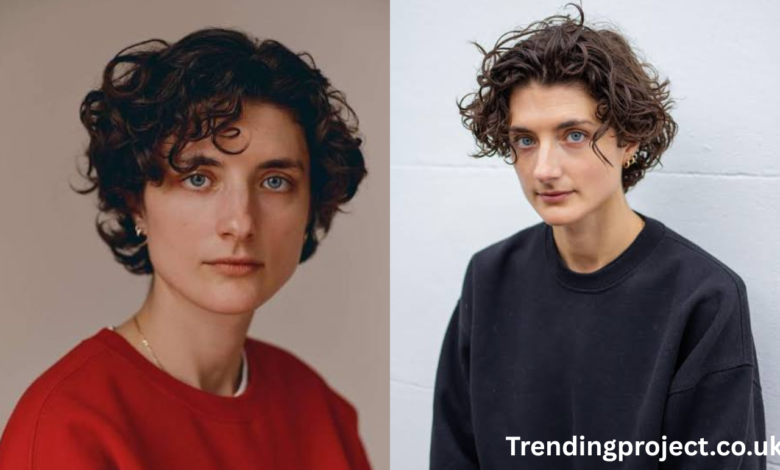
Daisy Bevan’s name carries an unusual combination of history, expectation and creative heritage. Born into the celebrated Redgrave family and raised by actress Joely Richardson and film producer Tim Bevan, she grew up surrounded by the world of cinema and theatre. Yet her story is not simply that of another famous child following a family tradition. Over the years, Daisy has worked to establish herself as a professional actress through film, television and stage performances, developing a career that has included The Two Faces of January, The Outcast, The Alienist, Modern Life Is Rubbish and the Netflix series Too Much. IMDb identifies her as Daisy Carmen Bevan, born on March 28, 1992, in Westminster, London.
What makes Daisy Bevan particularly fascinating is the contrast between her extraordinary family background and her relatively understated public profile. Her grandmother is legendary actress Vanessa Redgrave, her mother is Joely Richardson, her grandfather was acclaimed director Tony Richardson, and her wider family includes Natasha Richardson and Liam Neeson. She therefore grew up within one of Britain’s best-known acting dynasties, but her own career has developed gradually rather than through a conventional celebrity spotlight. Her 2014 interview with The Independent revealed a young actress who understood the privilege of her background while also feeling the nerves and uncertainty that accompany anyone attempting to prove themselves in a demanding profession.
Today, Daisy Bevan remains an intriguing figure in British acting because her career continues to evolve. Her role as Josie in Lena Dunham’s Too Much introduced her to audiences through a contemporary Netflix production, adding another chapter to a résumé that has moved between period drama, independent cinema, television and theatre. Rather than depending on a single defining role, Bevan has built her career through a series of varied performances, allowing her professional identity to develop naturally over time.
Daisy Bevan Quick Facts
| Fact | Details |
|---|---|
| Full name | Daisy Carmen Bevan |
| Date of birth | March 28, 1992 |
| Age | 34 in 2026 |
| Birthplace | Westminster, London, England |
| Nationality | British |
| Profession | Actress |
| Mother | Joely Richardson |
| Father | Tim Bevan |
| Maternal grandmother | Vanessa Redgrave |
| Maternal grandfather | Tony Richardson |
| Education | Bedales School; Lee Strasberg Theatre and Film Institute |
| Acting debut | Elizabeth (1998) |
| Notable films | The Two Faces of January, Modern Life Is Rubbish, Noble Earth |
| Notable television | The Outcast, The Alienist, McDonald & Dodds, Too Much |
| Years active | 1998–present |
| Recent notable project | Too Much |
| Net worth | No reliably verified public figure |
| No confidently verified official account identified | |
| X/Twitter | No confidently verified official account identified |
| No confidently verified public professional account identified |
The basic facts surrounding Daisy Bevan are relatively well documented, although celebrity websites sometimes publish information that is not supported by primary or reputable sources. Her birth date and birthplace are listed by IMDb, while her education, parents and early career are also documented in biographical sources.
Her family background is particularly significant because Daisy represents another generation of an extraordinary British theatrical and cinematic lineage. She is the daughter of Joely Richardson and Tim Bevan and the granddaughter of Vanessa Redgrave and Tony Richardson. This connection has inevitably attracted attention throughout her career, but it is important to distinguish family heritage from her own professional accomplishments.
Financial information requires more caution. There is no reliable public documentation establishing Daisy Bevan’s exact net worth, annual salary or total earnings. Estimates appearing on celebrity-information websites should therefore not be presented as confirmed facts. Her professional income is likely connected primarily with acting work in film, television and theatre, but individual contracts are private.
Early Life and a Remarkable Family Heritage
Daisy Carmen Bevan was born in Westminster, London, in 1992 and grew up in an environment where acting was not an abstract career but an everyday part of family life. Her mother, Joely Richardson, was already pursuing a successful acting career, while her father, Tim Bevan, was building a major reputation as a film producer through Working Title. As a child, Daisy was therefore exposed to film sets, actors, directors and production conversations from an unusually early age.
Her maternal family background is even more remarkable. Vanessa Redgrave is one of Britain’s most internationally respected actresses, while Tony Richardson was an influential film and theatre director. Daisy’s wider family tree includes the late actress Natasha Richardson, making her part of a multigenerational creative dynasty that has had a significant influence on British performing arts. This heritage naturally created interest in Daisy long before she had accumulated a substantial list of acting credits of her own.
Despite the glamorous surroundings, Daisy’s childhood was not simply a straightforward path toward becoming an actress. Her parents separated when she was young, and they were reportedly firm about ensuring that she completed her education before pursuing acting seriously. In a 2014 interview, Bevan recalled that her parents wanted her to finish school and undertake studies before deciding what she would do professionally. Looking back, she said she was glad they had taken that approach.
Education and Professional Acting Training
Daisy Bevan attended Bedales School in Hampshire, an independent school known for its creative and progressive educational environment. Her time there also placed her in the same school environment as other young people who would later become recognizable public figures. Rather than immediately entering the professional acting world, she followed her parents’ wishes and completed her education first.
After school, Bevan travelled to New York and studied acting at the Lee Strasberg Theatre and Film Institute. The training was an important stage in her development because it allowed her to approach acting as a craft rather than merely as an inherited family occupation. In her 2014 interview, she explained that acting was something she had always wanted to do, saying she could not remember a time when she did not want to pursue it.
The decision to undertake professional training also helped Bevan create some distance between her personal identity and her family’s reputation. Having famous relatives can create opportunities, but it can also create unusually high expectations. Formal training gave her an opportunity to develop technique, discipline and confidence before facing the wider industry as an adult performer. Her later work across stage, independent film and television reflects that foundation.
Daisy Bevan’s Childhood Screen Appearances
Although her serious acting career developed later, Daisy Bevan technically entered the film industry as a child. She made her screen debut in Elizabeth in 1998, when she was only five years old. The film was produced by Working Title, the company associated with her father, Tim Bevan. Her appearance was small, but it represented her first experience in professional filmmaking.
In 2001, Bevan appeared in The Affair of the Necklace, another period film in which she worked alongside her mother. The production gave her the unusual experience of portraying a younger version of a character connected with Joely Richardson’s role. It was another early example of how her family life and professional acting environment overlapped during childhood.
These early credits are interesting because they demonstrate that Daisy was familiar with acting long before she began pursuing it professionally. However, they should not be viewed as evidence that she simply moved from childhood appearances directly into a career. She later stepped back to focus on education and training, returning to the profession with a much more deliberate approach as a young adult.
The Two Faces of January and Her Breakthrough
A major milestone in Daisy Bevan’s acting career came in 2014 with The Two Faces of January, the psychological thriller adapted from Patricia Highsmith’s novel. The film starred Viggo Mortensen, Kirsten Dunst and Oscar Isaac, while Hossein Amini wrote and directed the adaptation. Bevan played Lauren, an American tourist whose character becomes part of the film’s complicated network of relationships.
The role was significant because it represented one of Bevan’s first substantial professional screen opportunities after her acting training. She was only 22 at the time and openly admitted that she was nervous about joining the production. Working alongside established performers and filming on location made the experience intimidating, but she later spoke positively about the support she received from her co-stars.
The project also placed Bevan in the middle of an unavoidable conversation about nepotism. Her father was connected to the film as a producer, meaning some observers questioned whether her family background had helped her obtain the part. Bevan acknowledged that such questions were likely to follow her, but she focused instead on learning from the experience and proving herself through her work. Her approach was refreshingly practical: she recognized the privilege of her background while also wanting her acting to be judged on its own merits.
Theatre Career and The Picture of Dorian Gray
The same year that Bevan appeared in The Two Faces of January, she also made an important stage appearance in a production of Oscar Wilde’s The Picture of Dorian Gray at Riverside Studios in London. She played Sybil Vane, a role that gave her the chance to demonstrate a different side of her performance skills. Unlike film, theatre requires an actor to sustain a character in real time before a live audience, making the experience demanding and immediate.
Bevan spoke candidly about the difference between performing for the camera and acting on stage. In her interview with The Independent, she discussed how theatre could leave an actor physically exhausted while also creating a unique relationship with the audience. The production received mixed critical notices, but Bevan regarded completing the play as an accomplishment in itself, particularly because it was her first major theatre experience.
That attitude says something important about her approach to acting. Instead of allowing reviews to determine whether an experience had value, she appeared to view each production as part of her education. Theatre gave her an opportunity to strengthen stage presence, emotional control and live performance skills, all of which can contribute to an actor’s development even when a particular production does not receive universal praise.
The Outcast and Expanding Television Work
In 2015, Bevan appeared as Tamsin Carmichael in the BBC’s two-part adaptation of Sadie Jones’s novel The Outcast. The drama starred George MacKay and Jessica Brown Findlay and explored difficult emotional themes within a post-war English setting. Bevan’s involvement added another television credit to a career that was beginning to move beyond her initial film breakthrough.
The role was part of a broader period in which Bevan began building experience across different genres and production styles. Rather than immediately becoming associated with one type of character, she worked across historical drama, independent film, stage productions and television. This variety is valuable for an actor because it provides opportunities to develop versatility rather than becoming dependent on one screen persona.
Her subsequent film credits included projects such as One Crazy Thing, Sea Sorrow, Modern Life Is Rubbish and Noble Earth. These productions helped broaden her résumé and demonstrated that her ambitions extended beyond the high-profile family connections that had initially attracted attention. Her career began to look increasingly like that of a working character actress building experience project by project.
The Alienist and International Television Exposure
Another important television credit came in 2018 when Bevan appeared in TNT’s period drama The Alienist. The series starred Daniel Brühl, Luke Evans and Dakota Fanning and was based on Caleb Carr’s bestselling novel. Bevan played Esther and appeared in five episodes, giving her the opportunity to work within a large international television production.
The Alienist was substantially different from Bevan’s earlier projects. Its dark historical setting, elaborate production design and ensemble cast required actors to work within a highly controlled period environment. For Bevan, the series represented another step toward establishing herself as a performer capable of contributing to ambitious television productions rather than remaining known primarily for her family connections.
Television has subsequently remained an important part of her career. Bevan also appeared in ITV’s McDonald & Dodds, with the relevant episode airing in 2022. These appearances show a consistent willingness to move between different British television productions while continuing to build a varied acting portfolio.
Daisy Bevan in Too Much
One of the most visible recent additions to Daisy Bevan’s résumé is Too Much, the 2025 Netflix romantic comedy series created by Lena Dunham. The series follows Jessica, played by Megan Stalter, as she attempts to rebuild her life in London after moving from New York. Bevan plays Josie, one of the characters within Jessica’s professional and social circle. IMDb lists the series among Bevan’s most recent major credits.
The project represents an interesting change from several of Bevan’s earlier roles. Instead of a period drama or literary adaptation, Too Much focuses on contemporary relationships, modern work life, emotional uncertainty and cultural differences between Britain and the United States. The production also gave Bevan the opportunity to appear alongside an ensemble featuring performers from both sides of the Atlantic.
Her involvement in a high-profile Netflix production is particularly relevant to the next stage of her career because streaming platforms can expose actors to international audiences on a scale that traditional television does not always provide. While Bevan remains a relatively private figure, Too Much places her work within a contemporary global entertainment environment and could help introduce her to viewers who are discovering her for the first time.
Daisy Bevan’s Personality, Interests and Private Life
Compared with many actors of her generation, Daisy Bevan has maintained a relatively restrained public profile. She has given interviews to promote her work, but she has not built her identity around constant social-media exposure or extensive coverage of her private life. This makes some aspects of her personal life difficult to document with confidence, particularly her current relationships and daily routine.
A 2014 interview provided several glimpses into her personality. At the time, Bevan spoke enthusiastically about music and mentioned Patti Smith and Leonard Cohen among the artists she enjoyed. She also talked about listening to Desert Island Discs, describing herself humorously as something of a “closet rock star” despite admitting that she was not particularly musically talented.
Her comments about acting also reveal a grounded philosophy. Advice from her family emphasized keeping her feet on the ground, maintaining a sense of self and not becoming consumed by the external world surrounding fame. Bevan’s own comments reflected a similar attitude: she recognized that opportunities were valuable but believed an actor should remain connected to the original excitement that made them want to perform in the first place.
Daisy Bevan, Family Legacy and the Question of Nepotism
Few aspects of Daisy Bevan’s biography attract as much discussion as her family background. She is part of a lineage that includes several highly respected performers and filmmakers, so comparisons with her relatives were inevitable from the moment she entered the industry. Even her appearance and manner have frequently been discussed in relation to her mother and grandmother.
Bevan has never pretended that she came from an ordinary background. In interviews, she has acknowledged feeling extremely fortunate and has expressed gratitude for the opportunities associated with her career. At the same time, she has resisted allowing discussions about her family to become the entire definition of her professional identity. Her response has generally been to keep working and allow her performances to speak for themselves.
The broader lesson is that privilege and pressure can exist simultaneously. A famous family can make entry into an industry easier in certain respects, but it can also make every professional achievement subject to greater scrutiny. For Bevan, the challenge has been to turn an inherited connection to the arts into an individual career. Her continued work across film, theatre and television suggests that she has approached that challenge through persistence rather than trying to escape her heritage.
Daisy Bevan’s Net Worth and Sources of Income
Daisy Bevan’s exact net worth is not publicly verified. Although various websites may publish numerical estimates, there is no dependable financial documentation establishing a precise figure. For that reason, assigning her a specific net worth would create a false impression of certainty.
Her principal professional income source is acting. Her résumé includes feature films, television series, theatre and other screen productions, meaning her earnings have likely varied substantially from project to project. Actors do not generally receive a fixed annual salary, and compensation can depend on the size of a production, role, contract terms, number of episodes or performances and other private arrangements.
Her family background is also sometimes mistakenly treated as proof of personal wealth. While her parents and extended family have significant careers in entertainment, their professional success should not automatically be translated into Daisy’s personal net worth. A responsible biography should distinguish between family wealth, professional opportunity and the actress’s own earnings.
Social Media and Public Image
Daisy Bevan does not appear to have a strongly established public social-media identity comparable to celebrities who regularly communicate with millions of followers. Searches can produce accounts bearing her name, but there is not enough reliable evidence to confidently identify a verified official Instagram, X/Twitter or LinkedIn account as belonging to the actress. It is therefore safer not to attach an unverified social-media profile to her.
Her relatively limited digital footprint may actually fit her professional personality. Bevan has generally allowed acting credits and occasional interviews to represent her publicly rather than turning her private life into an entertainment product. This is increasingly unusual in an industry where actors can become as recognizable for their social-media presence as for their performances.
For audiences interested in following Daisy Bevan, reputable film databases, official production announcements and established entertainment publications are more dependable than unverified celebrity-account directories. This approach also helps separate genuine professional information from speculative claims about relationships, income, lifestyle or personal activities.
Recent Career and Future Direction
The arrival of Too Much represents an important recent stage in Bevan’s career. The series places her within a contemporary ensemble and connects her with Lena Dunham’s distinctive style of character-driven comedy and relationship storytelling. For an actress who has previously worked extensively in period drama and independent projects, this provides another opportunity to demonstrate range.
IMDb’s current listings also indicate additional projects associated with Bevan, including Grief Room, The Brink and Notice Me. Because upcoming independent projects can change in development, production or release status, these titles should be regarded as indications of continuing professional activity rather than guarantees of specific release dates.
Looking ahead, Bevan’s greatest opportunity may be to continue moving beyond the narrative of being a member of the Redgrave acting dynasty. She already has more than two decades of screen experience, including childhood appearances and adult professional work. The next phase of her career can therefore focus increasingly on the kinds of characters she chooses, the directors she works with and the stories she wants to tell.
Conclusion: The Continuing Story of Daisy Bevan
Daisy Bevan’s journey is a compelling example of what it means to build an individual identity within a famous creative family. She entered the entertainment world surrounded by extraordinary talent, but her professional path has still required training, auditions, difficult performances and the willingness to accept that not every production will receive universal praise. From her childhood appearance in Elizabeth to her adult work in The Two Faces of January, The Outcast, The Alienist and Too Much, she has steadily expanded her experience.
Her story is also more nuanced than the simple idea of celebrity inheritance. Daisy has openly acknowledged the advantages of her background while recognizing the pressure that comes with it. Her parents encouraged her to finish her education before entering the profession, she pursued acting training in New York, and she has repeatedly emphasized the importance of staying grounded. Those choices suggest an actress who understands that a famous surname may create an introduction, but a sustainable career ultimately depends on commitment to the craft.
As Daisy Bevan continues to explore new roles and projects, her legacy will increasingly be measured not only by the famous family from which she came but by the body of work she creates herself. Her journey offers a useful reminder that opportunity is only the beginning. What follows—learning, adapting, taking risks, surviving criticism and continuing to pursue meaningful work—is what transforms opportunity into a genuine career. Daisy Bevan’s story is still being written, and her next chapters may prove just as interesting as the remarkable family history that came before her.