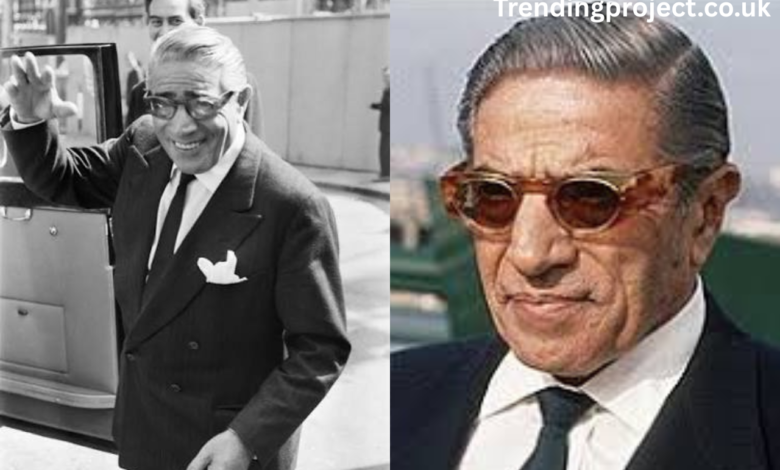
Aristotle Onassis was the kind of man whose life seemed too dramatic to belong to a single person. He survived the destruction of his birthplace, rebuilt his life as an immigrant in Argentina, entered the shipping industry with extraordinary ambition, and eventually created one of the most powerful privately owned maritime empires of the 20th century. His name became associated with oil tankers, international finance, luxury yachts, aviation, private islands, glamorous relationships, and immense wealth. Yet behind the famous photographs and celebrity headlines was a remarkably strategic businessman who understood how global trade was changing and repeatedly positioned himself ahead of his competitors. The Onassis Foundation describes him as a businessman who was often ahead of his time, while modern maritime historians have credited him with helping transform traditional Greek shipping into a genuinely global corporate enterprise.
The story becomes even more compelling because Onassis did not begin life with the certainty that he would become a legendary billionaire. Born in Smyrna in 1906, he belonged to a prosperous Greek family, but the destruction of Smyrna in 1922 forced his family into upheaval and displacement. At just sixteen, he witnessed the burning of his hometown and the collapse of the world he knew. A year later, he traveled to Argentina with a Nansen passport, arriving as a young immigrant with limited resources but enormous determination. In Buenos Aires, he began building his commercial career, first through tobacco and eventually through shipping.
His later life became equally extraordinary. Onassis owned a vast fleet of ships, operated Olympic Airways, acquired luxury properties and a private Greek island, and transformed his yacht Christina O into one of the most famous floating social spaces of the era. His relationships with Maria Callas and Jacqueline Kennedy placed him permanently in the international spotlight. But his story also contained profound tragedy, especially the death of his son Alexander in a plane crash in 1973. Aristotle Onassis died in Paris in 1975 at the age of 69, leaving behind a fortune estimated at roughly $500 million and a legacy that continues through the institutions created in his name.
Aristotle Onassis: Quick Facts
| Fact | Details |
|---|---|
| Full Name | Aristotle Socrates Onassis |
| Born | January 1906 |
| Died | March 15, 1975 |
| Age at Death | 69 |
| Birthplace | Smyrna, Ottoman Empire, now İzmir, Turkey |
| Nationality | Greek and Argentine |
| Profession | Shipping magnate, entrepreneur and businessman |
| Father | Socrates Onassis |
| Mother | Penelope Dologlou |
| Sister | Artemis |
| Children | Alexander Onassis and Christina Onassis |
| First Wife | Athina “Tina” Livanos |
| Second Wife | Jacqueline Kennedy Onassis |
| Famous Partner | Maria Callas |
| Major Business | International shipping and oil tankers |
| Airline | Olympic Airways |
| Famous Yacht | Christina O |
| Private Island | Skorpios |
| Estimated Net Worth at Death | Approximately $500 million |
| Social Media | None; Onassis died decades before social media existed |
Aristotle Onassis Early Life and Family Background
Aristotle Socrates Onassis was born in Smyrna, a major Ottoman port city that is now İzmir, Turkey. His father, Socrates Onassis, was a successful merchant and tobacco businessman, and the family enjoyed a comfortable position within the city’s Greek community. Aristotle’s mother was Penelope Dologlou, and he had a sister, Artemis. After his mother’s death, his father remarried, and Aristotle later had two half-sisters. His childhood therefore combined financial comfort with a strong commercial environment, exposing him early to the world of trade, money, negotiation, and international commerce.
Education played an important role in developing the young Onassis, although his later success came much more from practical experience than from conventional academic credentials. He attended the Evangelical Greek School in Smyrna, where he developed language skills that would eventually become valuable in international business. By his teenage years, he was familiar with Greek, Turkish, English, and Spanish, and he later acquired additional knowledge of European languages. His multilingual ability allowed him to move comfortably through different commercial environments and communicate with people from different countries.
The most important influence on his personality, however, was not the classroom. It was the dramatic political upheaval surrounding Smyrna. In 1922, the city was devastated during the Greco-Turkish conflict, and Onassis witnessed the destruction of his birthplace. His family’s property and security were lost, forcing them to leave. The experience of becoming a refugee at such a young age gave him a profound understanding of insecurity and reinvention. Rather than allowing displacement to define his future, he eventually turned it into motivation to create a life that could not easily be taken away from him.
From Refugee to Entrepreneur in Argentina
In 1923, Onassis left for Buenos Aires, Argentina, carrying a Nansen passport issued to stateless refugees. He arrived in a completely different commercial environment and had to establish himself without the family network and financial security he had once known. His early experiences included working and studying commerce while learning how the Argentine economy operated. These years were crucial because they gave him firsthand experience of how international trade functioned and how relationships could be converted into business opportunities.
His first major commercial breakthrough came through tobacco. Onassis began importing English and Turkish tobacco into Argentina and eventually developed his own cigarette business. Rather than remaining focused exclusively on manufacturing or selling tobacco, however, he noticed that transportation itself represented an enormous business opportunity. Shipping tobacco generated an additional layer of profit and gave him access to a much larger international industry. This realization became a turning point in his career.
Onassis’s transition into shipping demonstrated a characteristic that would define his entire career: he constantly looked beyond the immediate business in front of him. Instead of asking only how he could sell more tobacco, he asked how goods moved across oceans and who controlled that movement. That shift in thinking eventually led him toward cargo ships and, later, the oil tanker business. His early entrepreneurial years in Buenos Aires therefore became the foundation for an empire that would eventually operate across multiple continents.
Aristotle Onassis and the Rise of His Shipping Empire
Shipping became the center of Onassis’s business world. He understood that international commerce depended upon ships, and he recognized that petroleum would become increasingly important to the global economy. Rather than limiting himself to traditional cargo vessels, he moved into oil tankers, a decision that proved extraordinarily important as global energy consumption expanded. The Greek Shipping Hall of Fame describes him as the “first tanker tycoon,” reflecting the importance of his role in the development of modern tanker shipping.
One of his most significant decisions came in the late 1930s, when he commissioned a large oil tanker. His willingness to invest in larger vessels reflected his belief that petroleum transportation would require greater capacity. After the Second World War, he continued expanding his fleet and took advantage of opportunities created by post-war changes in shipping and shipbuilding. His approach was different from that of many traditional shipowners because he treated shipping as a sophisticated international financial and corporate operation rather than simply a family maritime business.
The scale of his operations eventually became extraordinary. The Onassis Foundation’s research into his business history records companies in fourteen countries across three continents, with activities ranging from shipping and aviation to real estate and other commercial ventures. Modern research into his career has emphasized that Onassis pioneered financing techniques and used ships built in challenging post-war conditions to create a new model for international shipping.
How Aristotle Onassis Built His Business Reputation
Onassis became famous not merely because he owned ships but because he approached business with unusual flexibility. He was comfortable operating internationally, negotiating with governments and major corporations, and using complex corporate arrangements. He did not restrict his ambitions to one country or one market. His companies and investments extended across Europe, North America, the Middle East, South America, and other parts of the world.
He also understood the importance of timing. When oil demand was growing, he invested in tankers. When international tourism and aviation were developing, he entered the airline business. When luxury hospitality offered opportunities, he became involved in Monaco and other high-profile properties. His career therefore reveals a consistent pattern: identify an industry with long-term potential, find an unconventional entry point, and invest aggressively enough to become a major player.
This strategy also made him controversial. Onassis was not a businessman who preferred to remain invisible. He negotiated aggressively and sometimes became involved in disputes with governments, regulators, competitors, and other powerful figures. His confidence could look like arrogance, but it was also part of the personality that allowed him to challenge established business practices. His career became an example of how bold entrepreneurship can create enormous rewards while simultaneously generating enormous opposition.
Olympic Airways and His Expansion Into Aviation
Shipping was the foundation of his fortune, but Onassis wanted his business empire to extend beyond the sea. In 1956, he reached an agreement to take control of the Greek aviation industry, and operations under his leadership developed into Olympic Airways. The airline officially began operating under the Olympic Airways name in 1957.
Onassis transformed Olympic Airways into a prestigious international airline. He invested in modern aircraft, training, and passenger service, helping create what later became known as the company’s golden era. In 1959, for example, he signed an agreement to acquire De Havilland Comet 4B aircraft. The airline’s service became famous for its attention to detail and luxury, reflecting Onassis’s belief that a premium experience could differentiate a business from its competitors.
By 1974, the final year of Onassis’s involvement, Olympic Airways carried approximately 2.5 million passengers and employed more than 7,000 people. The airline eventually became difficult for him to operate profitably because of strikes, rising fuel prices, passenger shortages, and regulatory restrictions. He terminated his agreement in December 1974, only months before his death. Even so, his period at Olympic Airways remains one of the most memorable chapters in the history of Greek aviation.
Christina O and the Luxury Lifestyle of Aristotle Onassis
Few possessions represented Onassis’s personality more vividly than his yacht Christina O. Originally a Canadian naval vessel, it was transformed by Onassis into an extraordinarily luxurious private yacht. Named after his daughter Christina, the vessel became a symbol of the post-war international jet set and one of the most recognizable yachts of the 20th century.
Christina O was more than a luxurious retreat. It became a floating meeting place for influential people from politics, business, entertainment, and aristocratic society. Guests associated with the yacht included Winston Churchill, Greta Garbo, Prince Rainier of Monaco, John F. Kennedy, Richard Burton, Elizabeth Taylor, Frank Sinatra, and many other prominent figures.
The yacht also reflected Onassis’s understanding of networking. He recognized that relationships could be just as valuable as financial assets. By bringing powerful people together in an informal and glamorous environment, he created opportunities for conversations and connections that would have been difficult to achieve in ordinary business settings. Christina O therefore became both a symbol of his wealth and an extension of his entrepreneurial strategy.
Skorpios and the Onassis Image
Another important element of Onassis’s lifestyle was his private island of Skorpios in Greece. He acquired the island in the early 1960s and invested heavily in turning it into a personal retreat, adding trees, guesthouses, harbors, beaches, and a farm. Skorpios became one of the defining symbols of his extraordinary wealth and was frequently associated with the international personalities who surrounded him.
The island was also significant because it provided Onassis with something he valued deeply: control over his surroundings. He could host guests away from the constant attention of hotels and public venues. Politicians, artists, businessmen, and celebrities could gather in relative privacy, making Skorpios an important part of his social and business world.
Onassis’s island lifestyle contributed to the mythology surrounding him. He was no longer simply a successful shipping businessman. He had become a global personality whose possessions themselves were symbols of status. His yacht, island, residences, aircraft, and international connections all reinforced the image of a man who had created a private world at the highest level of wealth.
Marriage to Tina Livanos and His Children
In 1946, Onassis married Athina “Tina” Livanos, the daughter of prominent Greek shipping magnate Stavros Livanos. The marriage connected him to one of Greece’s established shipping families and placed him even more firmly within the international maritime elite. The couple had two children, Alexander and Christina, who would later become central figures in the story of his estate.
His relationship with his children was complicated by the extraordinary expectations surrounding the family business. Alexander eventually worked for his father and became involved in aviation, eventually taking a leadership role within Olympic Aviation. Christina was also deeply connected to the family fortune and later became the principal heir to her father’s estate.
The greatest tragedy of Onassis’s life occurred when Alexander died in a plane crash in January 1973. He was only 24 or 25, depending on the source’s calculation of his age at the time. His death devastated his father and had a profound impact on Onassis’s health and emotional state. The Alexander S. Onassis Foundation was subsequently established in his memory, turning a family tragedy into part of a long-term philanthropic legacy.
Aristotle Onassis and Maria Callas
Aristotle Onassis’s relationship with opera singer Maria Callas became one of the most famous romances of the 20th century. The two met in 1959 during a Mediterranean cruise aboard Christina, and their relationship soon became intense. Callas was already one of the world’s most celebrated opera performers, while Onassis was becoming increasingly prominent as a global businessman and social figure.
Their relationship lasted for years and attracted enormous media attention. Callas reportedly hoped that their relationship would eventually lead to marriage and a family, but Onassis ultimately chose a different path. The relationship was particularly painful for Callas after Onassis married Jacqueline Kennedy in 1968. Historical accounts portray the separation as one of the most emotionally difficult episodes of Callas’s private life.
The Onassis-Callas story remains fascinating partly because it reveals another side of Onassis. He was not simply a cold financial strategist. His relationships were passionate, complicated, and sometimes turbulent. Like his business life, his private world was marked by ambition, risk, attraction, competition, and enormous emotional consequences.
Marriage to Jacqueline Kennedy
In 1968, Aristotle Onassis married Jacqueline Bouvier Kennedy, the widow of U.S. President John F. Kennedy. The wedding took place on October 20 on Skorpios, Onassis’s private Greek island. The marriage instantly became one of the biggest international stories of the era because both individuals were already globally famous.
Jacqueline brought a very different kind of fame into Onassis’s life. She was associated with American political history, fashion, culture, and the Kennedy family, while Onassis represented international business, shipping, wealth, and European high society. Their union therefore combined two extraordinarily powerful public identities. The couple maintained several residences and spent time in different countries, reflecting their international lifestyles.
Their marriage was not always harmonious, and the relationship became increasingly complicated over time. Nevertheless, the marriage permanently shaped Onassis’s public image. He was no longer simply the Greek shipping magnate known to businessmen and maritime circles; he became a household name across the world. His association with Jacqueline Kennedy ensured that his life would remain part of popular culture long after his death.
Aristotle Onassis Net Worth and Sources of Wealth
Aristotle Onassis had accumulated extraordinary wealth by the time he died. Time reported shortly after his death in 1975 that his total worth was estimated at least $500 million, despite financial reverses during his final months. His holdings included ocean tankers, airlines, banks, real estate, trading companies, residences, and other investments.
His wealth did not come from one single source. Shipping was by far the central foundation, particularly his large tanker fleet and international maritime operations. He also accumulated wealth through aviation, real estate, tourism, financial interests, and commercial enterprises. His ability to diversify meant that his fortune was supported by several different parts of the global economy rather than depending entirely on one business sector.
Modern websites sometimes convert his historical fortune into today’s money and describe him as a multibillionaire by contemporary standards. Such calculations should be treated cautiously because inflation comparisons do not fully capture the structure of a complex historical estate. The safest historical figure is the approximately $500 million estate value reported around the time of his death.
Aristotle Onassis’s Final Years and Death
The final chapter of Onassis’s life was profoundly different from the glamorous image associated with his earlier years. His son Alexander’s death in 1973 had a devastating psychological effect on him, and his own health was deteriorating. He suffered from myasthenia gravis, a condition that weakened his muscles and contributed to serious health complications.
His business life was also undergoing changes. His relationship with Olympic Airways had become increasingly difficult, and by late 1974 he had ended his agreement with the airline. For a man who had spent decades expanding his empire, the combination of business difficulties, illness, and family tragedy created a stark contrast with the confident entrepreneur of earlier decades.
Aristotle Onassis died on March 15, 1975, at the American Hospital of Paris in Neuilly-sur-Seine, France. He was 69. Historical accounts describe respiratory failure as the immediate cause of death, following years of illness. He was buried on Skorpios beside his son Alexander and his sister Artemis, returning him symbolically to the private island that had represented so much of his extraordinary life.
The Onassis Foundation and His Lasting Legacy
One of the most important aspects of Onassis’s legacy is the philanthropic foundation established in memory of his son. His will directed a significant portion of his estate toward the Alexander S. Onassis Public Benefit Foundation, while the remainder went largely to his daughter Christina. This arrangement ensured that the Onassis name would continue through cultural, educational, and philanthropic work rather than simply remaining associated with private wealth.
The Onassis Foundation has since supported cultural, educational, health, research, and public-benefit initiatives. Its work has helped transform the meaning of the Onassis name. Instead of remembering him only for yachts, shipping fortunes, celebrity relationships, and luxury properties, later generations can also associate the family legacy with education, culture, scholarship, and public contribution.
The Foundation has also invested in preserving and documenting Onassis’s business history. Its major research project on the period from 1924 to 1975 examined the full scope of his multinational business group and highlighted how he helped move Greek shipping toward a more global corporate model. This historical work is particularly important because it places the legend of Onassis within the wider development of international maritime commerce.
Aristotle Onassis’s Influence on Modern Business
The enduring importance of Aristotle Onassis is not simply that he became rich. Many wealthy businessmen existed during the 20th century, but few demonstrated his ability to connect shipping, energy, finance, aviation, tourism, luxury, and international networking into one personal business ecosystem. He understood that global commerce was becoming increasingly interconnected and positioned his companies accordingly.
His career also illustrates the importance of anticipating change. The expansion of oil consumption created demand for larger tankers. The development of international air travel created opportunities for aviation. The growth of luxury tourism created opportunities in hotels and property. Onassis repeatedly moved toward markets where he believed the future would be larger than the present. This forward-looking approach remains one of the most valuable lessons of his career.
At the same time, his life offers a warning about the limitations of wealth. Onassis could purchase ships, islands, residences, aircraft, and businesses, but he could not purchase immunity from grief or illness. The death of his son Alexander affected him profoundly, and his final years were marked by declining health. His story therefore demonstrates that financial success can provide opportunity and freedom, but it cannot eliminate the fundamental vulnerabilities of human life.
Aristotle Onassis Legacy Today
Aristotle Onassis remains one of the most recognizable names in maritime history. The Greek Shipping Hall of Fame identifies him as one of the most famous shipowners ever and emphasizes the combination of courage, controversy, charm, and unconventional thinking that defined his career. His influence can still be seen in the history of Greek shipping and in the broader development of international tanker transportation.
Unlike living celebrities or modern entrepreneurs, Onassis has no Instagram, X, Facebook, LinkedIn, or other personal social-media accounts. He died in 1975, long before the internet and social media existed. His continued public presence instead comes through historical archives, documentaries, books, photographs, museums, the Onassis Foundation, and ongoing interest in his extraordinary business and personal life.
His story also continues to attract attention because it combines entrepreneurship with celebrity culture. Few businessmen have simultaneously been associated with global shipping, a luxury yacht, a private island, Maria Callas, Jacqueline Kennedy, Olympic Airways, and one of the largest private fortunes of his era. That combination makes Aristotle Onassis an unusually enduring historical figure.
Conclusion: The Legacy of Aristotle Onassis
Aristotle Onassis’s life was a remarkable journey from displacement to extraordinary power. He began as a young man whose family lost its security during the destruction of Smyrna, traveled to Argentina as a refugee, built his first fortune through tobacco trading, and then entered shipping at precisely the moment when global commerce was undergoing enormous transformation. Through bold investments, international relationships, and a willingness to challenge established conventions, he built a business empire that reached far beyond traditional Greek shipping.
His achievements were impressive, but his life cannot be understood only through financial success. The same man who owned enormous ships and luxury properties experienced devastating personal losses. His son’s death changed the final years of his life, while illness eventually overtook the businessman who had once seemed almost unstoppable. Those contradictions make his biography more human and more meaningful than a simple story about becoming rich.
Ultimately, Aristotle Onassis left behind two very different but connected legacies. One was the entrepreneurial legacy of the shipping magnate who helped shape modern international maritime business. The other was the philanthropic legacy carried forward through the institutions established in his name. His journey remains a reminder that success often comes from seeing opportunities before they become obvious, having the courage to reinvent oneself after adversity, and understanding that a lasting legacy depends on more than wealth. As generations continue to study Aristotle Onassis, his extraordinary rise from a displaced teenager to a global business icon remains a powerful lesson in resilience, ambition, vision, and the unpredictable human cost of greatness.