Micky McAvoy Biography: Brink’s-Mat Robbery & Legacy

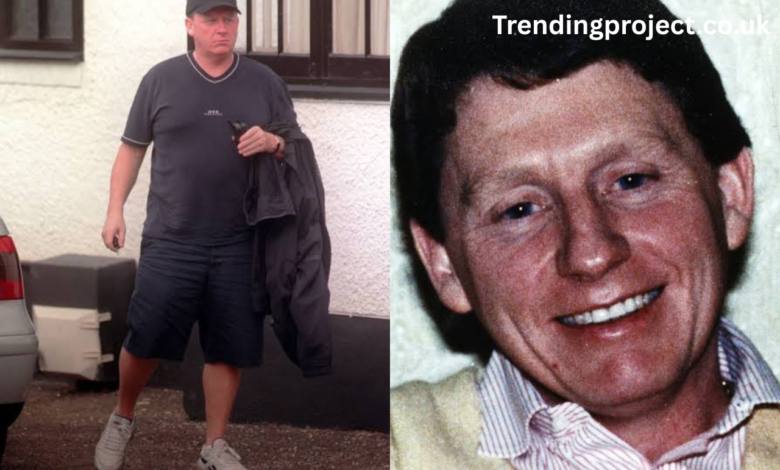
Introduction
Few names in British criminal history are as closely linked to one of the country’s most infamous robberies as Micky McAvoy. Known by the nicknames “Mad Micky” and “The Nutter,” McAvoy became one of Britain’s most notorious armed robbers after helping mastermind the Brink’s-Mat robbery in 1983. What began as a plan to steal a few million pounds in cash unexpectedly turned into the theft of approximately £26 million worth of gold bullion, diamonds, and cash, making it one of the largest robberies ever committed in the United Kingdom. The crime shocked the nation, inspired books, documentaries, and television dramas, and left a lasting mark on Britain’s criminal underworld.
Table of Contents
ToggleMore than four decades later, McAvoy’s story continues to fascinate historians, journalists, and crime enthusiasts. While his role in the Brink’s-Mat heist earned him lasting notoriety, it also resulted in a lengthy prison sentence and a life forever associated with one of Britain’s most famous criminal investigations. His journey serves as a reminder that even the most carefully planned crimes can leave consequences that last a lifetime.
Micky McAvoy Facts
| Fact | Details |
|---|---|
| Full Name | Michael “Micky” McAvoy |
| Nicknames | Mad Micky, The Nutter |
| Born | 1951 |
| Died | 2023 |
| Age at Death | Approximately 71–72 |
| Nationality | British |
| Profession | Armed robber (criminal figure) |
| Known For | Co-masterminding the 1983 Brink’s-Mat robbery |
| Birthplace | London, England (reported) |
| Parents | Not publicly documented |
| Siblings | Not publicly documented |
| Spouse | Kathleen (Kathy) McAvoy |
| Children | Daughter, Keeley Gainey |
| Net Worth | Never publicly verified |
| None | |
| X (Twitter) | None |
| No verified public account | |
| None |
Who Was Micky McAvoy?
Michael “Micky” McAvoy grew up in South London during a period when organized crime had become deeply rooted in parts of the city’s criminal underworld. Although many aspects of his childhood remain private, reports suggest he entered criminal activity at a relatively young age and gradually built a reputation as a fearless and unpredictable armed robber. His aggressive style and willingness to take significant risks earned him the nicknames “Mad Micky” and “The Nutter” among both criminals and police.
Unlike many famous public personalities, McAvoy never became known for business, entertainment, or sport. Instead, his notoriety came entirely from organized crime. By the early 1980s, he was already considered an experienced member of London’s armed robbery scene. Law enforcement regarded him as a dangerous offender capable of planning sophisticated robberies with trusted associates. These connections ultimately led to his involvement in what would become the Brink’s-Mat robbery.
Despite his criminal reputation, people who met McAvoy later in life described him as calm and reflective, especially after serving many years in prison. In interviews conducted decades after the robbery, he appeared willing to discuss parts of his past while acknowledging the consequences of his actions.
Early Criminal Life and Reputation
Very little verified information has been published about Micky McAvoy’s childhood or formal education. Unlike many well-known public figures, his early years remained largely out of the public eye. What is known is that he emerged from London’s criminal underworld during the 1970s and early 1980s, a period when armed robberies involving security vans and cash depots were becoming increasingly common. Over time, McAvoy developed a reputation as a determined and fearless criminal who was willing to undertake high-risk operations.
Within criminal circles, McAvoy became known by the nicknames “Mad Micky” and “The Nutter.” These names reflected his reputation for boldness, careful planning, and his willingness to take significant risks. While such reputations often enhanced a criminal’s standing within organized crime, they also placed individuals under constant surveillance from Britain’s law enforcement agencies. Detectives considered McAvoy an experienced armed robber long before the Brink’s-Mat raid made international headlines.
Although many myths have surrounded his life, historians generally agree that McAvoy was far more than a street-level criminal. He was viewed as someone capable of organizing complex operations, recruiting trusted associates, and planning robberies with military-like precision. Those abilities ultimately played a major role in the events of November 1983, when one carefully planned operation unexpectedly became one of the most famous crimes in British history.
The Brink’s-Mat Robbery That Changed British Criminal History
The robbery took place during the early hours of 26 November 1983 at the Brink’s-Mat warehouse near Heathrow Airport in London. McAvoy and five accomplices relied on inside information provided by security guard Anthony Black, who allowed the gang access to the highly secure warehouse. The original objective was reportedly to steal around £3 million in cash, making the operation profitable but relatively straightforward by organized crime standards.
Once inside, however, events took an unexpected turn. Instead of finding only cash, the gang discovered a massive quantity of gold bullion, diamonds, and cash with an estimated value of £26 million—an astonishing figure in 1983. Faced with an opportunity far greater than anticipated, the robbers loaded the valuables into their vehicle and escaped. The stolen gold alone weighed several tons, transforming what had been intended as a major robbery into one of the largest bullion heists ever recorded anywhere in the world.
The consequences extended far beyond the theft itself. Investigators later connected the stolen gold to extensive money laundering, property investments, international financial transactions, and numerous organized crime networks. Much of the bullion was melted down and gradually reintroduced into legitimate markets, making recovery extremely difficult. The robbery also triggered decades of criminal investigations and has frequently been linked to later acts of violence, earning the Brink’s-Mat case a unique place in British legal and criminal history.
Investigation, Arrest, and Conviction
The Metropolitan Police launched one of the largest criminal investigations ever undertaken in Britain following the robbery. Detectives interviewed hundreds of witnesses, traced financial transactions, and followed leads across several countries. The investigation quickly focused on members of London’s organized crime community, eventually identifying McAvoy and several associates as key participants in the robbery.
In December 1984, Micky McAvoy and fellow robber Brian Robinson stood trial at the Old Bailey. Both men were convicted of armed robbery and each received a 25-year prison sentence, one of the harshest punishments imposed for robbery in Britain at the time. Authorities hoped the lengthy sentence would send a strong message that large-scale organized robberies would receive severe consequences regardless of the value stolen.
Even after the convictions, the legal battle surrounding Brink’s-Mat continued. In 1995, the High Court ordered McAvoy to repay more than £27 million, effectively holding him financially responsible for the value of the stolen property. Investigators spent years tracing hidden assets, recovering millions of pounds through court proceedings and asset seizures. Despite these efforts, much of the stolen wealth was never recovered, adding to the enduring mystery surrounding the robbery.
Life After Prison and Attempts to Move Forward
After serving approximately 16 years, Micky McAvoy was released from prison on parole in 2000, despite originally receiving a 25-year sentence. His release marked the end of one chapter but not the end of the Brink’s-Mat story. By then, the robbery had become part of British criminal folklore, and McAvoy remained one of its most recognizable figures. Although free from prison, he continued to live under the shadow of one of the country’s most famous crimes.
Following his release, McAvoy largely stayed away from the public spotlight. He and his wife, Kathleen (Kathy) McAvoy, spent many years living in Spain, seeking a quieter life away from the constant media attention in Britain. In interviews conducted later in life, McAvoy claimed he had never received the fortune many people assumed he had gained from the robbery. According to his account, much of the stolen wealth disappeared while he was imprisoned, and he believed others involved had taken his intended share. These claims have been widely reported, although the full fate of the missing gold remains one of Britain’s enduring criminal mysteries.
Even decades after the robbery, investigators continued to pursue the financial trail of the Brink’s-Mat gold. In 1995, the High Court ordered McAvoy to repay more than £27 million, holding him financially liable for the unrecovered proceeds. Despite years of legal action and asset recovery efforts, authorities were unable to recover a substantial portion of the stolen wealth, adding further intrigue to the case and ensuring McAvoy’s name remained linked to one of the most complex criminal investigations in British history.
Personal Life and Family
Compared with the extensive reporting on the Brink’s-Mat robbery itself, relatively little has been publicly documented about Micky McAvoy’s personal life. During his years in prison, however, one constant source of support was his second wife, Kathleen “Kathy” McAvoy. The couple married while he was serving his sentence, and according to McAvoy himself, she visited him faithfully throughout his imprisonment when many others had distanced themselves. Their marriage lasted for more than three decades and remained one of the most stable aspects of his life.
McAvoy later spoke warmly about Kathy in what became his only substantial public interview. He expressed frustration that media portrayals often overlooked her loyalty and portrayed their relationship inaccurately. He described her as someone who stood beside him during his most difficult years and credited her unwavering support as an important part of his life after prison. Together they later lived in Spain before eventually returning to England.
The couple also had a close family, including daughter Keeley Gainey, who publicly spoke about her father’s death in 2023. While McAvoy rarely discussed family matters publicly, those close to him described him in later life as someone who valued privacy and preferred spending time with loved ones rather than revisiting his criminal past.
Public Image, Media Attention, and Cultural Legacy
The Brink’s-Mat robbery has remained one of Britain’s most analyzed criminal cases, ensuring that Micky McAvoy’s name continues to appear in books, documentaries, and television productions decades after the event. His role as one of the robbery’s principal organizers has been explored by investigative journalists, historians, and crime writers seeking to understand not only the heist itself but also its far-reaching impact on organized crime, money laundering, and financial investigations in the United Kingdom.
Interest in McAvoy’s story grew again in 2023 with the release of the BBC drama The Gold, inspired by the Brink’s-Mat robbery and its aftermath. In the series, actor Adam Nagaitis portrayed McAvoy, introducing the story to a new generation of viewers. Around the same time, McAvoy agreed to his first and only extensive interview, speaking with author Neil Forsyth while Forsyth was researching a companion book about the robbery. During the interview, McAvoy challenged several long-standing assumptions about the planning of the heist and reflected on how history had portrayed him.
Although many crime enthusiasts remain fascinated by the Brink’s-Mat robbery, historians and law enforcement officials frequently emphasize that its legacy extends far beyond the dramatic theft itself. The crime triggered years of violence, complex financial crimes, murders linked to the laundering network, and one of Britain’s largest criminal investigations. As a result, McAvoy’s legacy is remembered not as one of admiration but as a cautionary example of how organized crime can leave lasting consequences for victims, communities, and even the perpetrators themselves.
Books, Documentaries, and Television Adaptations
The extraordinary scale of the Brink’s-Mat robbery has ensured that Micky McAvoy’s story continues to attract attention from filmmakers, journalists, historians, and true-crime writers. Numerous books have explored the planning of the robbery, the investigation that followed, and the decades-long effort to trace the stolen gold. These works generally portray McAvoy as one of the principal architects of the operation while also examining how the robbery reshaped Britain’s approach to investigating organized crime and money laundering.
Interest in the case reached a new generation in 2023 with the BBC drama The Gold, a critically acclaimed series inspired by the Brink’s-Mat robbery and its aftermath. Actor Adam Nagaitis portrayed Micky McAvoy, presenting him as a determined and calculating figure whose decisions helped set the historic robbery in motion. Rather than focusing solely on the theft, the series explored the enormous criminal network that emerged as authorities attempted to recover the stolen bullion and identify those who profited from it.
Around the same time, McAvoy agreed to participate in his first and only major public interview, speaking with writer Neil Forsyth while Forsyth was completing a companion book about Brink’s-Mat. During the interview, McAvoy disputed several long-held beliefs about the robbery, insisting that the gang had more knowledge about the gold stored at the warehouse than had previously been reported. Although historians continue to debate some of his claims, the interview added an important first-hand perspective to the historical record shortly before his death.
Death and Final Years
Micky McAvoy’s final years were marked by declining health and personal loss rather than the criminal notoriety that had defined much of his public image. Friends and family reported that he struggled deeply following the death of his wife, Kathleen “Kathy” McAvoy, in 2022. Having spent decades together—including the many years during which Kathy regularly visited him in prison—her passing had a profound emotional impact on him.
McAvoy died on 1 January 2023 at the age of 71. Following an inquest held in 2024, the coroner concluded that his death resulted from an intentional overdose of sleeping tablets after a prolonged period of grief and deteriorating health. The hearing also revealed that he had been battling cancer and had declined treatment. His family, however, expressed their belief that they did not view his death as a deliberate act and remembered him primarily as a devoted family man during his later years.
His death marked the passing of one of the last surviving principal figures directly involved in the Brink’s-Mat robbery. While many aspects of the stolen gold remain unresolved, McAvoy’s passing closed an important chapter in a case that has fascinated investigators and the public for more than four decades. Even today, parts of the missing fortune have never been recovered, ensuring that the Brink’s-Mat mystery continues to be studied and discussed.
Legacy and Historical Significance
Micky McAvoy’s legacy is inseparable from the Brink’s-Mat robbery, a crime that transformed British policing, financial investigations, and the fight against organized crime. Although he became one of the most recognizable names in British criminal history, his notoriety was ultimately defined by the consequences of his actions rather than by lasting financial success. The robbery triggered years of investigations, criminal prosecutions, asset recovery efforts, and reforms aimed at combating money laundering and organized criminal enterprises.
Historians often describe Brink’s-Mat as a turning point because it demonstrated how proceeds from major crimes could be hidden through international financial networks, property investments, and legitimate businesses. Investigators spent decades tracing the stolen bullion, and many experts believe that some of the gold entered legitimate markets after being melted down and recast. The case continues to be referenced in discussions about financial crime, criminal intelligence, and the evolution of Britain’s anti-money-laundering laws.
Today, Micky McAvoy is remembered not as a celebrated figure but as a central participant in one of Britain’s most infamous criminal cases. His life illustrates how a single crime can leave a lasting impact on countless victims, investigators, communities, and even those who committed it. The Brink’s-Mat robbery remains a powerful reminder that while spectacular crimes may capture public attention, their consequences can extend across generations, shaping both criminal history and the justice system long after the headlines have faded.
Net Worth and Financial Status
Determining Micky McAvoy’s true net worth has never been possible because there are no verified public financial records documenting his personal wealth. While some websites publish estimates, none are supported by official evidence or court records. What is well documented is that, following the Brink’s-Mat robbery, British authorities pursued the stolen assets for decades, and McAvoy was ordered by the High Court to repay millions of pounds believed to be linked to the robbery. Much of the stolen gold, however, was never recovered, and its ultimate destination remains one of Britain’s greatest criminal mysteries.
In his final public interview, McAvoy insisted that he never benefited from the enormous fortune people believed he had acquired. He claimed that after his arrest, other members of the wider criminal network took control of the gold that had originally been under his responsibility. According to McAvoy, greed and betrayal within the criminal underworld meant he never received the wealth many assumed he possessed. While these statements cannot be independently verified in full, they offer insight into how he viewed the aftermath of the robbery.
Crime experts have echoed the view that very few of the original Brink’s-Mat robbers ultimately enjoyed lasting financial success. The robbery generated decades of investigations, prosecutions, and asset seizures, while the laundering of the stolen bullion became linked to further criminal activity and violence. Rather than creating lives of luxury, the proceeds of the heist became the subject of relentless police inquiries and legal actions that continued for many years.
Social Media Presence and Public Engagement
Unlike many modern public figures, Micky McAvoy did not maintain verified public accounts on platforms such as Instagram, X (formerly Twitter), Facebook, or LinkedIn. Most of his life unfolded long before social media became part of everyday communication, and after his release from prison he generally preferred to stay away from public attention. Any social media profiles using his name have not been verified as authentic.
For many years after leaving prison, McAvoy rarely spoke publicly about the Brink’s-Mat robbery. His silence added to the mystery surrounding the case and fuelled continued speculation among journalists, historians, and true-crime enthusiasts. It was only in late 2022, shortly before his death, that he agreed to give his first and only extensive interview, offering his perspective on events that had shaped British criminal history for nearly four decades.
Although McAvoy himself avoided public platforms, interest in his story has continued to thrive through documentaries, books, podcasts, newspaper features, and television productions. The renewed attention generated by the BBC drama The Gold introduced the Brink’s-Mat case to younger audiences and prompted fresh discussions about the robbery, the missing bullion, and its lasting impact on organized crime in Britain.
Lessons from Micky McAvoy’s Story and Lasting Legacy
Micky McAvoy’s life remains one of the most remarkable—and cautionary—stories in modern British criminal history. As one of the masterminds behind the Brink’s-Mat robbery, he helped carry out a crime that captured international headlines and fundamentally changed how British authorities investigated organized crime, financial fraud, and money laundering. Yet the fame associated with the robbery ultimately brought decades of imprisonment, legal battles, and personal hardship rather than lasting success.
Today, historians view the Brink’s-Mat robbery as far more than an audacious theft of gold bullion. The case exposed the sophisticated methods used to launder criminal proceeds, led to significant changes in financial investigations, and demonstrated how one major crime could influence policing strategies for generations. McAvoy’s role ensures that his name remains permanently linked to one of the most significant criminal investigations in British history.
Ultimately, Micky McAvoy’s story is not one of triumph but of consequence. His life illustrates how ambition pursued through crime can leave a legacy defined by imprisonment, loss, and decades of public scrutiny. While the Brink’s-Mat robbery continues to fascinate researchers and true-crime audiences, the broader lesson is clear: actions driven by greed can produce consequences that extend far beyond a single moment, affecting countless lives for decades. His story endures as a historical reminder that even the most notorious crimes eventually become lessons in accountability, justice, and the enduring impact of personal choices.